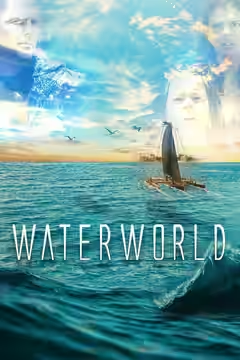
Kevin Reynolds and Kevin Costner built a floating world for real, and when the jet skis hit the atoll it is worth every rivet. Between the set pieces the film drifts, and its hero is a man nobody, including the film, seems to like.
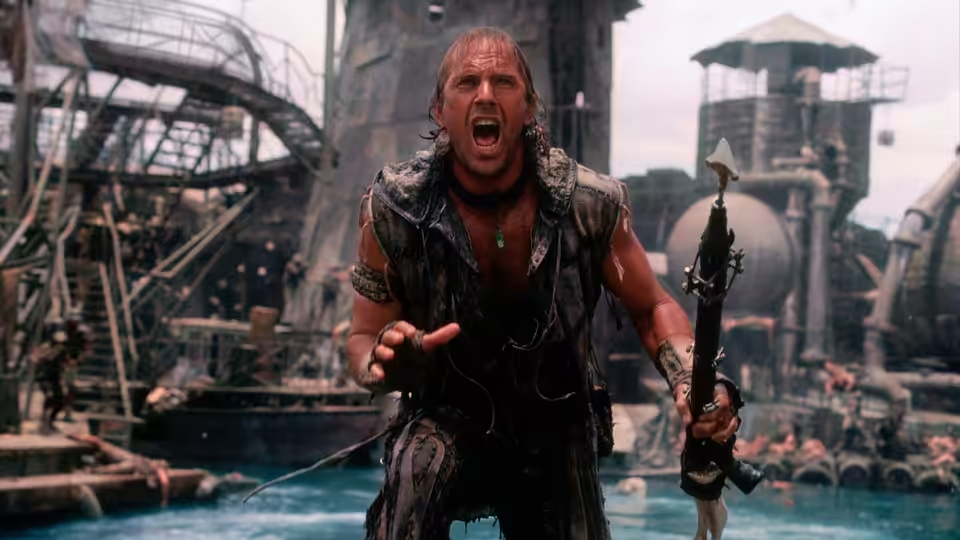
Kevin Reynolds’s Waterworld is Mad Max with the desert replaced by an ocean and the cars by jet skis, and for long stretches it knows exactly what that means. The ice caps have gone, dirt is currency, and a loner with a fast boat is the only man who can cross the water. Peter Rader and David Twohy’s script gives the loner gills and webbed feet, so that he is not just apart from the survivors but a different species, and then asks him to look after a woman and a child. It is a decent adventure with a sulking hero, and it deserves neither the mockery it collected nor the rescue some critics have since attempted.
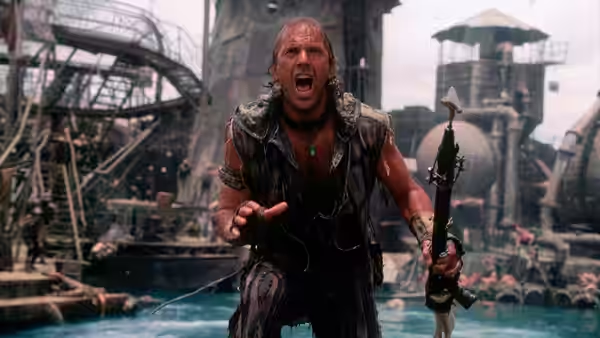
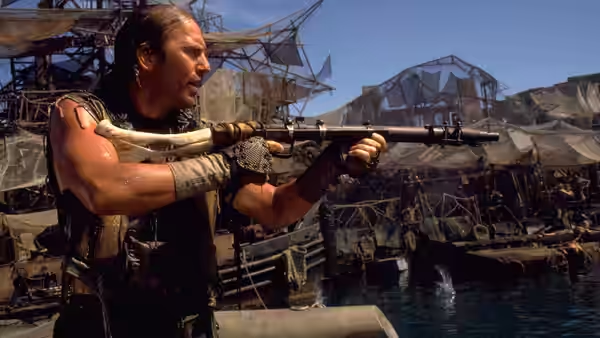
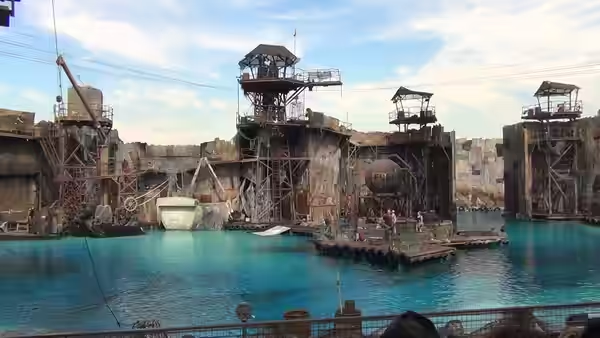
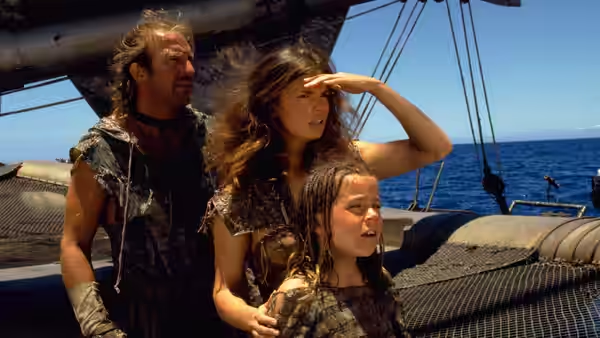
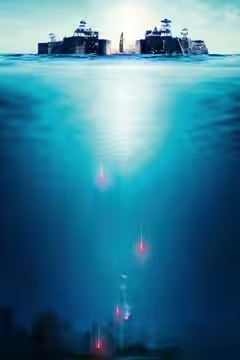
What it does deserve is credit for being real. Dennis Gassner’s atoll is a ring of rusted hulls, scaffolding and rope lashed together on open water, and Dean Semler shoots it in hard, flat Pacific sunlight with the horizon in nearly every frame, so that we never forget there is nothing else out there. John Bloomfield dresses the survivors in netting, sailcloth and salvaged rubber, and gives the Smokers goggles and grease. When the Smokers come over the wall of the atoll on jet skis, with a rusting oil tanker lumbering behind them, we sat forward and stayed there. Real machines hit real water and real things burn, and the sequence has a weight that later computer work has rarely matched.
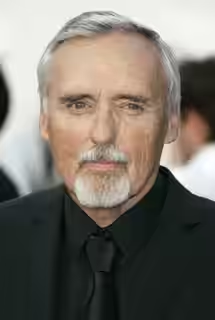
Dennis Hopper is having a marvellous time as the Deacon, preaching to his Smokers from the tanker’s deck and taking each setback as a personal insult. He is funny, which the film badly needs, and he is the only person on screen who seems to enjoy living in this world. Gerard Murphy’s Nord and R. D. Call’s Enforcer give him people to shout at. Michael Jeter’s Old Gregor, the atoll’s inventor, is the film’s one sketch of a civilisation worth saving.
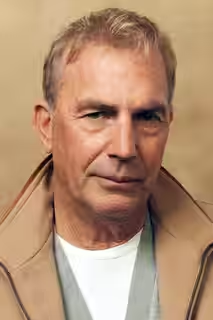
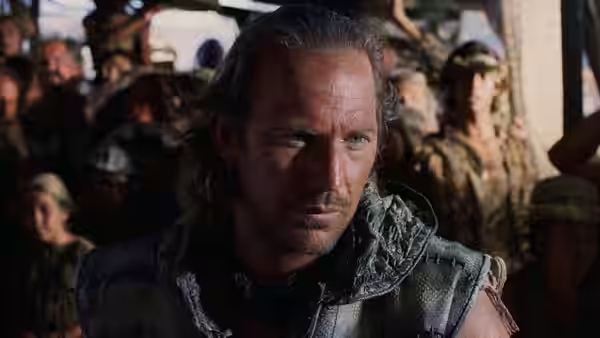
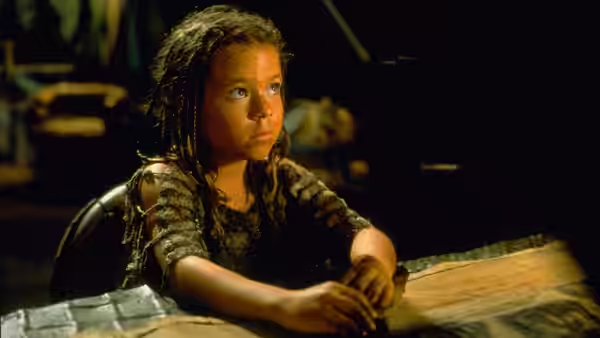
The trouble is the man in the middle. Kevin Costner plays the Mariner as a closed-off customer who would rather be alone, which is the part as written; the film then needs us to warm to him as Helen (Jeanne Tripplehorn) and Enola (Tina Majorino) do, and Costner, who also produced, never lets us in. He is watchful and physically committed, hauling rope and diving off the mast, but he does not appear to like anyone, including himself, and after an hour we found we had stopped minding whether he reached Dryland. Tripplehorn does the work of making him tolerable. Majorino is better still, a chattering, stubborn child who treats the end of the world as mildly inconvenient, and she is the reason the film has any warmth at all.
Once the trimaran leaves the atoll, the film drifts with it. Peter Boyle cuts the action hard and cleanly, but the stretches between are slack, scenes of three people not getting on in a small boat, and there are more of them than the story can bear. James Newton Howard’s score is loud brass for the battles and a soft, wandering theme for the sea, and the soft theme is the better. It carries the film’s one properly beautiful passage, a dive below the surface that Semler lights in dim green from above, and that moved us more than we expected, because for two minutes the film stops shouting and shows us what has been lost.
Against the film it borrows from, it comes off worse. Mad Max 2 (1981) had a hero as taciturn as this one and made him bearable by putting a dog and a talkative pilot next to him; Reynolds has Hopper, but keeps him on the other boat. The reviews so far are split down the middle, with some calling it a folly and others an unjustly maligned B-picture, and for once we find the average about right. It is neither.
See it on the largest screen you have, for the atoll, for the tanker and for Hopper. It runs 135 minutes and carries a 12 certificate, and it opened in British cinemas on 11 August 1995, when it was widely expected to fail. Most of it does not.