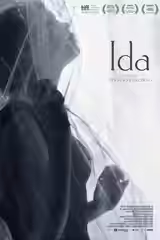
Ingmar Bergman’s eighty minutes in two cold Swedish churches is the plainest film he made and one of his best. Björnstrand and Thulin are extraordinary; if a doubting pastor in flat grey light is not your evening, nothing here will try to persuade you.
Ingmar Bergman’s Winter Light runs 80 minutes and covers about three hours of one Sunday, between the noon service in one Swedish country church and the three o’clock in another. Nothing in it is decorated. A pastor who has stopped believing tries to comfort a frightened man, fails to love a woman who loves him, and drives through the snow to his next service. It is the plainest film Bergman made, and we think it is among his best, which is a higher opinion than most of the reviews we have read will allow it.
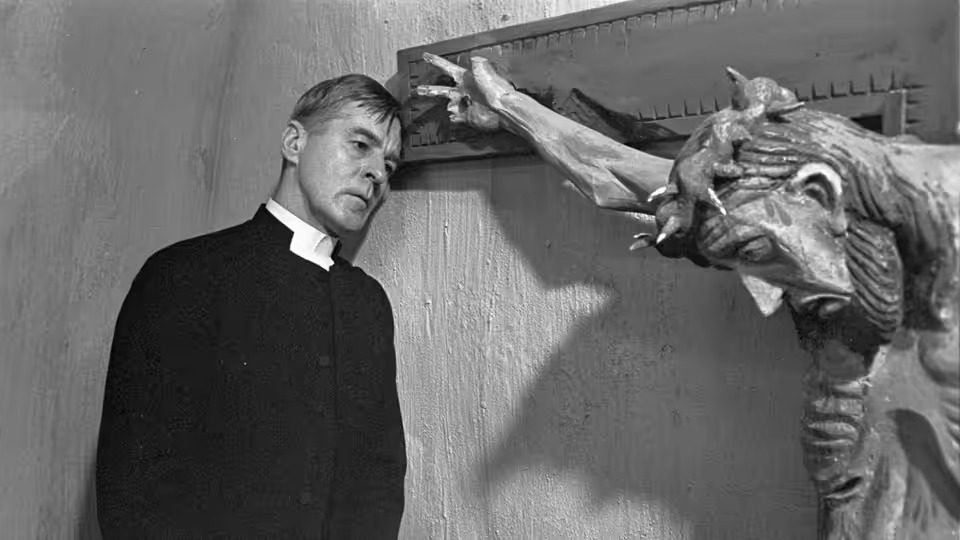
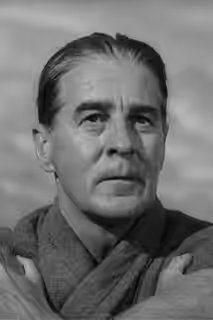
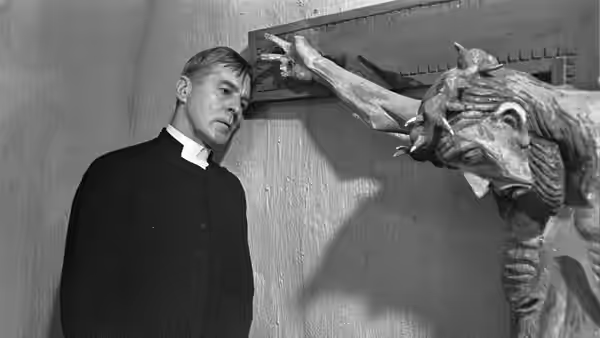
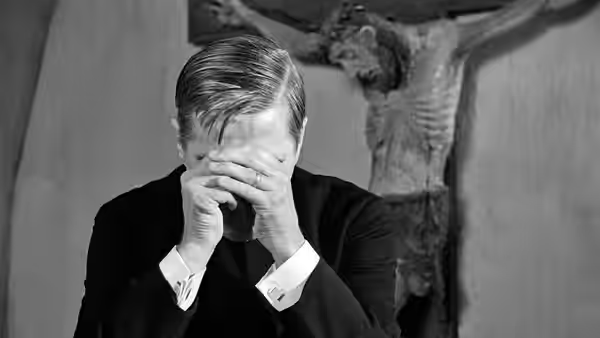
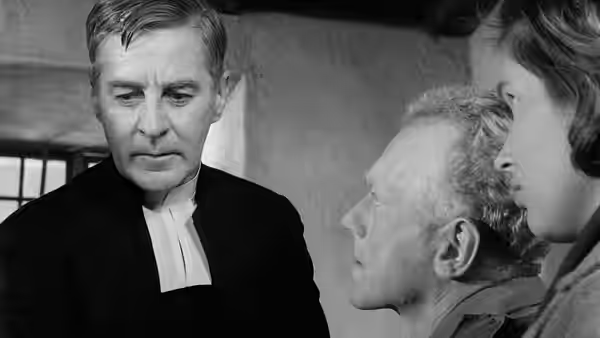
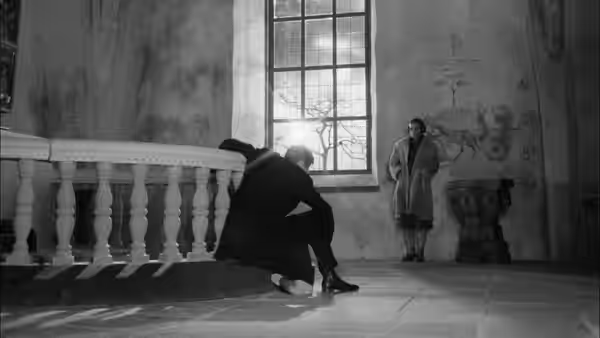
Gunnar Björnstrand had been Bergman’s squire in The Seventh Seal (1957), a man who enjoyed his own disbelief. Tomas Ericsson gets no enjoyment from his. Björnstrand plays him with a streaming cold, sniffing and wiping his nose at the altar rail, and the cold makes the loss of faith physical in a way no speech could. In the vestry with Jonas Persson, Tomas is meant to be listening. Instead he starts talking about himself, his wife, the god he built to keep himself comfortable, and Björnstrand lets us see the pastor realise, a beat too late, what he has done to the man in front of him.
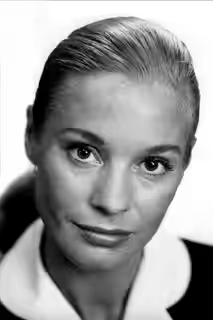
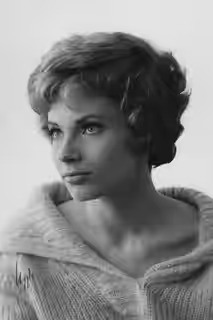
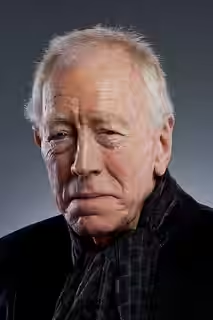
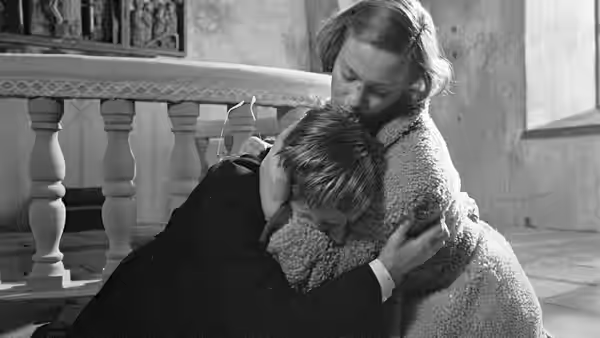
Max von Sydow, the knight from the same film, has perhaps a dozen lines as Jonas and does most of the work sitting still, a big man folded into a small chair, frightened by a newspaper. Gunnel Lindblom’s Karin does his talking for him, and you can see how long she has been doing it. Then there is Ingrid Thulin. Märta writes Tomas a letter, and rather than have him read it Bergman puts Thulin in front of the camera and has her say it straight to us, unbroken, for several minutes. We felt caught out. The letter is about her eczema and her unbelief and how much she wants him; it was not written to us, and by the end we could not look away and were slightly ashamed of watching. She carries it without a cut.
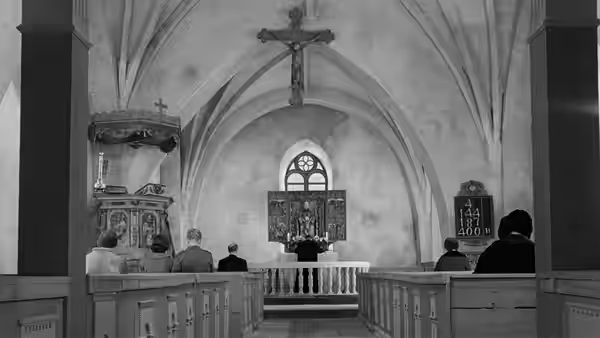
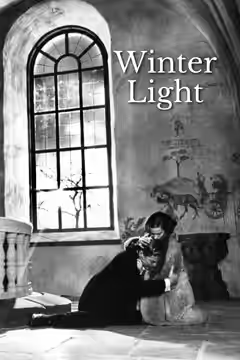
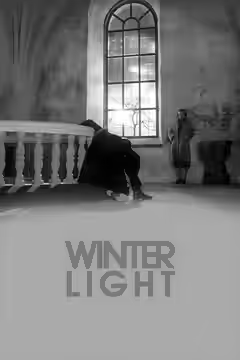
Sven Nykvist shoots it in a light with almost no shadows in it. It comes grey through the high windows and lies flat on the whitewashed walls and the faces, and it does not change from the first frame to the last, so the day never seems to move even as the clock does. P.A. Lundgren gives the two churches bare wood, white plaster and a painted Christ, and the vestry a desk, a stove and a window onto the snow; there is nothing for the eye to rest on but people. Max Goldstein’s costumes are cassocks, overcoats and a cardigan. Ulla Ryghe cuts as little as she can get away with, holding on a face after the line has finished, and a good deal happens in those held seconds.
Evald Andersson has the credit for music and the film has almost none: the organ, the congregation singing thinly, bells across the snow, and otherwise the sound of a cold room. In the second church the film gives its warmest minutes to Allan Edwall as Algot Frövik, a small bent man who has been reading about the Passion and has a question for the pastor about what Christ actually suffered. Edwall plays him with a shy pleasure in having thought of something, and his few minutes contain more theology than Tomas manages all day. The last scene moved us more than we expected a church service to. We will not describe it.
This is usually filed as the middle of Bergman’s trilogy about God’s silence, between Through a Glass Darkly (1961) and The Silence (1963), and treated as the hard one, to be respected rather than liked. That is where the reviews we have read part from us. Austere it is; cold it is not. Every scene is about somebody trying to reach somebody else, a wife for her husband, a woman for a priest, an old man for a pastor who will not look at him, and the film cares about each of them more than it cares about God.
It is not for a Friday night with company. It is for a grey afternoon when the light has gone early and you are prepared to sit still, and if that is your evening we would put it ahead of nearly everything else Bergman made. Eighty minutes. Bring a jumper.