Michael Mann’s biopic opens with ten minutes as good as anything he has made, and Will Smith’s Ali is a real physical feat. But the film grows solemn and scattered in its middle hour, and the loudest man of his age keeps getting hushed.
Michael Mann’s film about Muhammad Ali takes ten years of the man’s life, from the first Sonny Liston fight in 1964 to a night in Kinshasa in 1974, and gives them 157 minutes. Mann wrote it with Stephen J. Rivele, Christopher Wilkinson and Eric Roth, from a story by Gregory Allen Howard, and between them they have made a serious, handsome, slow film about the least slow man of his century. It is good in long stretches and baggy in others. The first ten minutes are close to perfect, and nothing afterwards matches them.
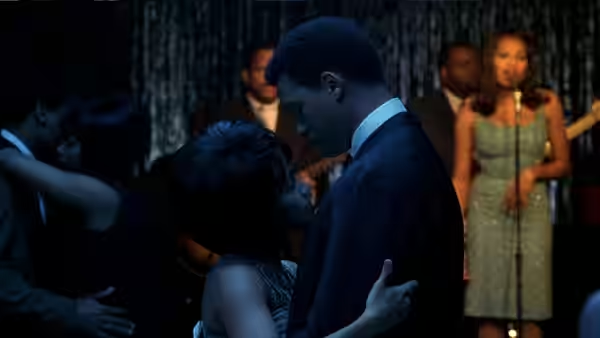
Those ten minutes go like this. Sam Cooke sings on a small stage, sweating through his shirt. Cassius Clay runs through Miami at night with his hood up and a police car crawling along behind him. He hits the heavy bag; Malcolm X speaks at a lectern; the weigh-in looms. Emmanuel Lubezki lights the streets with nothing but the streetlamps and lets the faces fall half into shadow, and Mann cuts between the song and the running until they feel like the same thing. We were moved, and we had not expected to be moved by a boxing film’s warm-up.
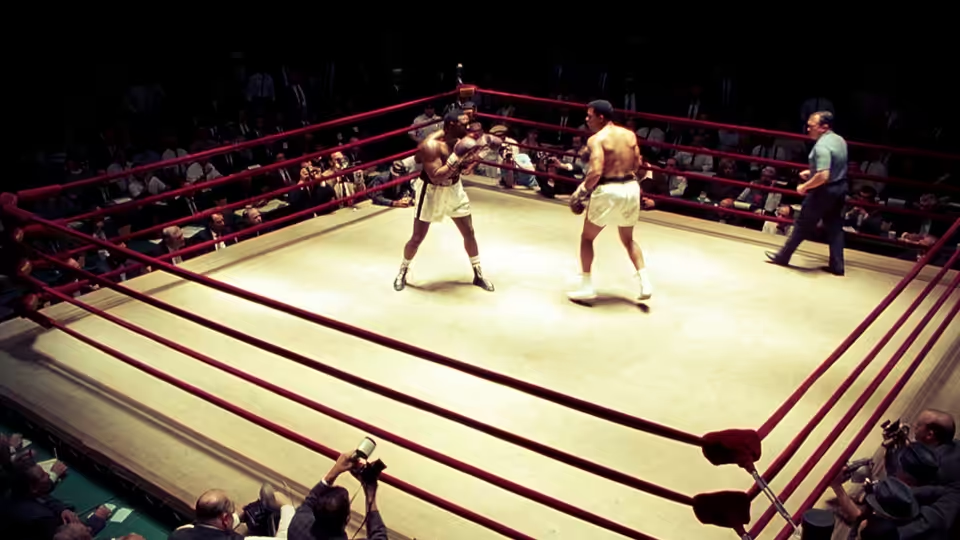
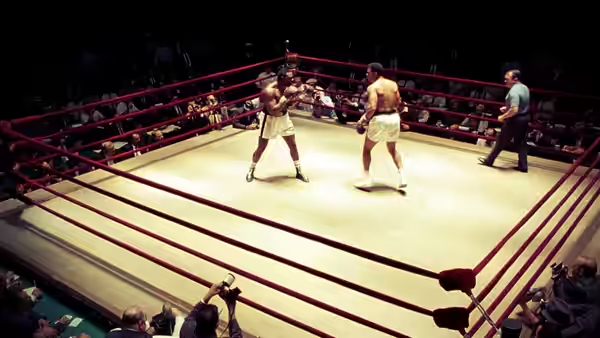
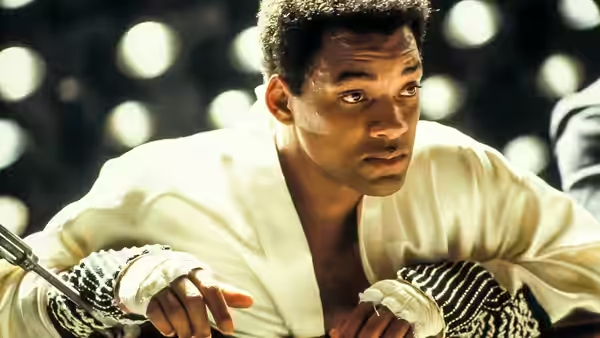
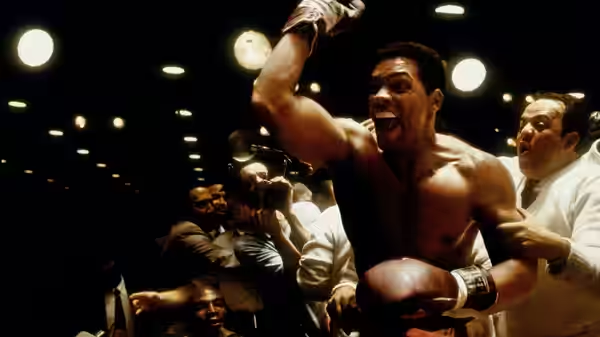
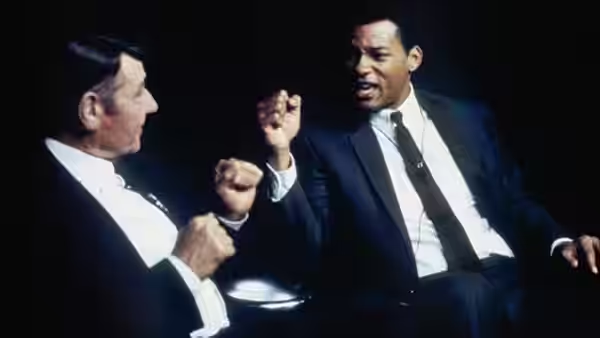
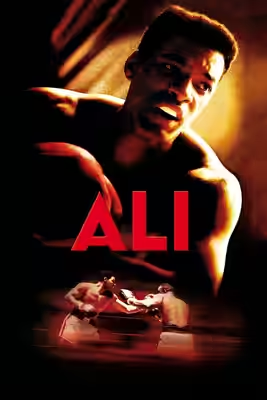
Will Smith has put on the weight and found the voice, the Louisville singsong that rises at the end of every boast, and he has learned how Ali stood: hands low, chin up, leaning back from punches rather than slipping them. Lubezki shoots the boxing from inside the ropes, at shoulder height, with the camera moving as a third man in the ring might, and the punches land near enough that we flinched. The first Liston fight is the best of them. The weigh-in before it, with Smith shouting over Jamie Foxx’s shoulder as Drew ‘Bundini’ Brown feeds him lines, is the one time the film lets Ali be as funny as the man was. Smith is less sure in the quiet scenes, where he settles into a watchful stillness that belongs to Mann rather than to Ali.
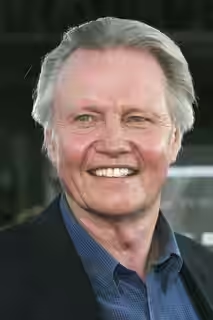
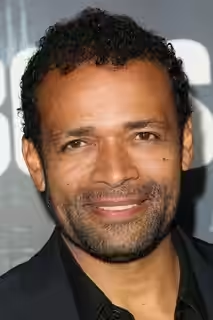
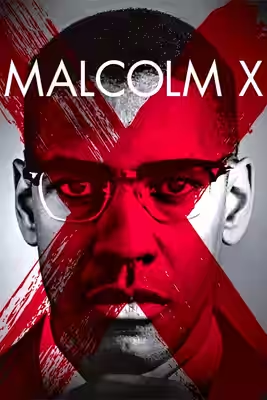
Jon Voight, under a wig and a prosthetic jaw, plays Howard Cosell, and his scenes with Smith are the film’s running comedy, two men who need each other and will not say so. Foxx sweats and talks and is later, briefly, heartbreaking. Mario Van Peebles’s Malcolm X is still, courteous and the best written person in the film after Ali, and when he leaves the story the film loses some of its nerve. Jeffrey Wright, as the photographer Howard Bingham, has almost no lines and spends the film watching. Mykelti Williamson’s Don King arrives late and loud. The wives, Jada Pinkett Smith’s Sonji Roi, Nona Gaye’s Belinda and Michael Michele’s Veronica Porche, get a scene or two each, and marriages begin and end between fights.
The middle hour is the trouble. It covers the Nation of Islam, the draft and the years Ali was kept out of the ring, and Mann stages nearly all of it in dim rooms with men speaking low. Four editors are credited, Stephen E. Rivkin, William Goldenberg, Stuart Waks and Lynzee Klingman, and the film moves as if assembled by four people who agreed about the fights and not about the rest. Years pass under a caption, Joe Morton’s Chauncey Eskridge explains the legal case in a corridor, and the man at the centre of it all is asked to say less and less. Somewhere past the halfway mark we found we were admiring the lighting and had stopped listening, and we were cross about it, because the material is not dull.
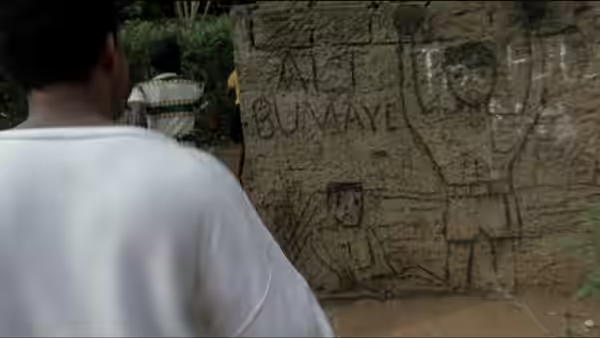
John Myhre’s gyms and hotel rooms are dressed without fuss, and Marlene Stewart’s suits do some of the work the script leaves undone, Clay’s narrow lapels giving way to Ali’s wide ones. Lisa Gerrard and Pieter Bourke’s score is mostly Gerrard’s voice, wordless and long held, and it works in Africa, where the film at last opens its windows and lets the crowds in. In Chicago it tells us to feel grave when we had already got the idea.
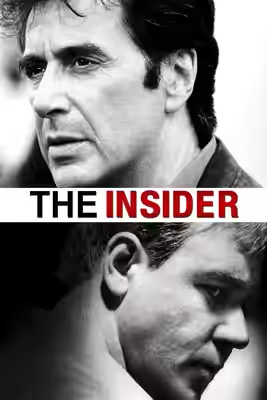
Heat (1995) and The Insider (1999) are about careful men who do their jobs and keep their counsel. Ali was neither careful nor quiet, and the film keeps trying to make him both. It is a Michael Mann film about a man who would have talked all over it.
See it for the opening, for the first Liston fight and for Voight. At home it loses little, and you can take a break at the hour mark without missing a punch. It runs 157 minutes, carries a 15 certificate and opened in British cinemas on 22 February 2002.