Film review

Avatar: The Way of Water

2022 · Directed by James Cameron · 3h 12m · MPA PG-13

In a sentenceBeautiful whales, dreadful dialogue, and a director who would plainly rather be diving than writing

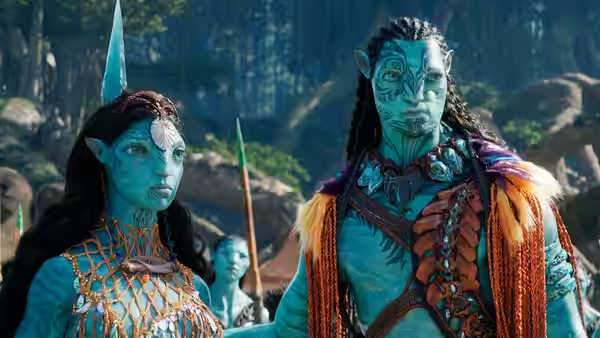
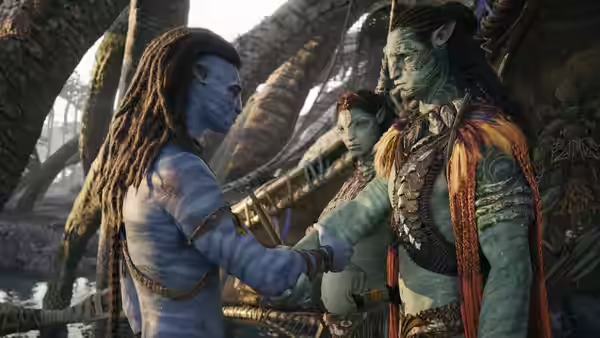
Years after the humans were driven off Pandora, Jake Sully (Sam Worthington) and Neytiri (Zoe Saldaña) are raising a family in the forest: two sons and Kiri (Sigourney Weaver), an adopted teenager whose birth nobody can explain. Then the sky people come back with orders to stay. Among them is Colonel Miles Quaritch (Stephen Lang), killed in the first war and reborn in a Na’vi body with his grudge intact, sent by General Frances Ardmore (Edie Falco) to hunt Jake down. Rather than bring the war to his people, Jake takes his family across the sea to the Metkayina, a reef clan led by Tonowari (Cliff Curtis) and Ronal (Kate Winslet), who do not want forest people on their island. The children must learn the way of water.

Plays from YouTube when you press play; nothing loads from them until then.

Fi1m review

James Cameron takes the Sully family to the seaside and films water better than anyone else working. The whales are extraordinary and the last hour is his old self; the 192 minutes also hold a great deal of dialogue nobody should have had to say.

Thirteen years after Avatar (2009), James Cameron goes back to Pandora and the first thing he does is put it underwater. Avatar: The Way of Water runs 192 minutes, and for perhaps ninety of them it is as handsome a thing as we have seen on a cinema screen: the reef, the whales and the last hour of fighting are Cameron at full stretch. The rest is a family drama with the dialogue of a teenage sitcom, cut with less discipline than anything he has made before. It is decent, flawed in ways that matter, and worth a large screen.

The setup is quick. Jake Sully (Sam Worthington) and Neytiri (Zoe Saldaña) have spent the years since the first war raising children in the forest, among them Kiri (Sigourney Weaver), an adopted girl whose birth nobody can explain. Then the humans come back with more ships and orders to stay. Among them is Stephen Lang’s Colonel Miles Quaritch, killed the first time round and now poured into a Na’vi body with memories and grudge intact. Rather than bring the war home, Jake takes the family across the sea to the Metkayina, a reef clan led by Tonowari (Cliff Curtis) and Ronal (Kate Winslet). Cameron then spends the middle of the film teaching them, and us, to swim.

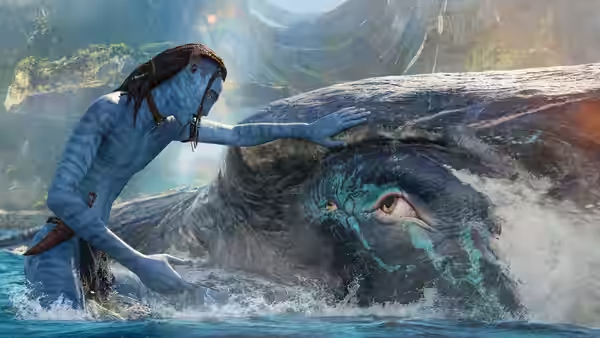
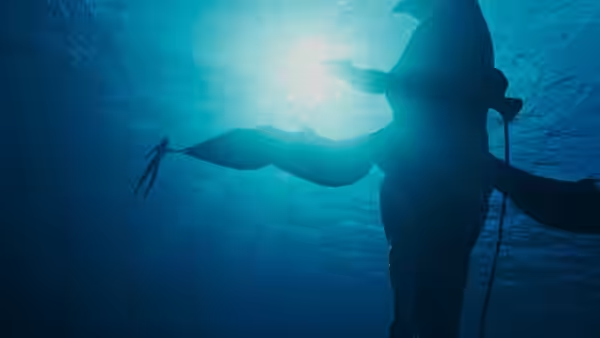
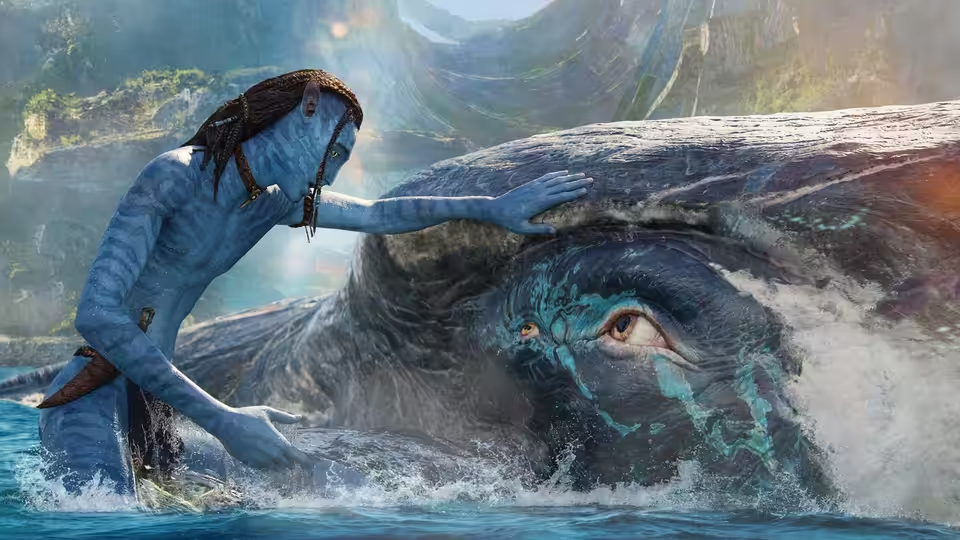
That middle is where the money went, and it shows. Dylan Cole and Ben Procter design a village of woven huts on stilts among mangrove roots, and things to ride: the ilu, a four-finned seal-fish, and the tulkun, whales the size of a house who sing, remember and have names. Russell Carpenter lights the shallows like a real reef, dappled and blue-green, and when the camera comes up for air the sky has the haze of an actual afternoon. Deborah Lynn Scott dresses the reef people in shell, cord and tattoo, so you can tell a Metkayina from a forest Na’vi at a glance.

There is a sequence around the two-hour mark, involving the tulkun, a fleet of human boats and machinery, that we will not describe. We will say that we were horrified, and that the horror was earned. Cameron shoots it with the flat attention of a film about industry, men doing a job with winches and drills and paperwork, and Jemaine Clement’s Dr. Ian Garvin, a scientist, watches with a face that says he has seen this before and is ashamed anyway. For twenty minutes the film’s ideas and its pictures are the same thing. Nowhere else are they.

The trouble is the talking. The screenplay is by Cameron, Rick Jaffa and Amanda Silver, from a story that also credits Josh Friedman and Shane Salerno, and five writers have produced children who call each other bro and cuz and a father who says Sullys stick together often enough that you start to count. Cameron has never written a graceful line, but in Aliens (1986) his people were in a hurry; here everyone has time to talk. Neytiri, the fiercest presence in the first film, gets a bow and some shouting. Weaver plays Kiri, a teenage girl, with a wide-eyed seriousness we found oddly touching, and the script keeps leaving her for another scene in which Lo’ak (Britain Dalton) gets into trouble, is told off, and sneaks out again.

Four editors are credited, Stephen E. Rivkin, David Brenner, John Refoua and Cameron himself, and the middle hour feels like four people each protecting a favourite scene. Some sequences run at a higher frame rate than usual, so movement loses its blur; underwater this makes the reef look like a reef, and on dry land it makes the actors look like a good television broadcast of a play. Simon Franglen’s score, loyal to the themes of the late James Horner, is handsome and never once surprising.

Then the last hour arrives and Cameron is Cameron again: one long fight, on the water and under it and finally inside a ship going over, staged with the clarity he has always had, so you know where everyone is and how far away the air is. We stopped checking our watch. See it in a cinema, as large and as dark as you can find; at home it becomes a long, well-made nature programme interrupted by a family argument, and the water shrinks to an aquarium. The whales are worth it, and by the end we wished the film had been about them.

Critical consensus AI synthesised

64
Positive
12
Mixed
3
Negative
4

Most critics come down in favour, and the praise clusters almost entirely on the ocean. The underwater sequences, the sea creatures and the motion capture are singled out again and again, with several reviews saying the film puts you somewhere you have not been before. A good number also find the family story warmer than the first film’s, and one review calls it Cameron’s most personal work. Even the doubters concede the effects are a technical achievement.

The reservations gather around the script: a thin plot stretched over three hours, characters left underdeveloped, Neytiri in particular, and subplots that pad rather than build. The spread is wide, from admiration to outright dismissal, and the dissent is notably British. The Guardian finds the film inert and its high-frame-rate effects soulless, The Times calls it a slavish remake of the original, and Sight and Sound finds it numbing. Den of Geek also flags the high frame rate as working against the visuals.

Empire
13 December 2022 · Nick de Semlyen
90*

Cameron delivers a dazzling, immersive marine epic that expands Pandora's world with breathtaking visuals, heartfelt family elements, and thrilling action sequences, reminding viewers of his mastery of big-screen spectacle.

Read the full review →
Los Angeles Times
13 December 2022 · Justin Chang
90*

An exercise in Na’vi gazing that immerses viewers in a brilliantly realized ocean-floor nirvana through sophisticated visual effects and buoyant camera movement. Cameron makes stuff glow up real good in this transporting sequel.

Read the full review →
The Hollywood Reporter
13 December 2022 · David Rooney
90*

The critic finds the mega-sequel a hugely entertaining follow-up that delivers on action, emotion, and thrilling 3-D visuals, with persuasive CGI and immersive underwater world-building that pulls viewers in despite basic narrative and dialogue. The expanded bio-diverse environment and visceral warfare keep it mesmerizing.

Read the full review →
Vulture
13 December 2022 · Bilge Ebiri
90*

The critic calls it Cameron’s most personal film, spectacular in its underwater sequences and effects while centering family dynamics, identity, and belonging on Pandora. The dreamy whale-filled passages and cathartic final battles blend sincerity with the director’s signature corny-yet-ruthless emotional style.

Read the full review →
Financial Times
13 December 2022 · ★★★☆☆ · Danny Leigh
70*

The critic views the sequel as drowning in epic sincerity rather than feeling like a lazy cash grab, with exhausting worldbuilding but a grandly spectacular finale. He singles out the hint of Titanic in the closing sequences as a personal touch.

Read the full review →
Screen Daily
13 December 2022
70*

An extraordinary visual spectacle with superior motion-capture and effects, but the narrative lacks focus and emotional nuance compared to the original, making it more compelling as a visceral experience.

Read the full review →

Cast

Awards

Academy Awards, 2023

Nominated
Best Picture
Nominated
Best Production Design
Nominated
Best Sound
Won
Best Visual Effects

Golden Globes, 2023

Nominated
Best Motion Picture – Drama

Kids' Choice Award for Favorite Movie, 2023

Nominated
Kids' Choice Award for Favorite Movie

If you liked this, try…

The Abyss poster

The Abyss

1989 · Cameron’s first long stay underwater, with real actors, real tanks and better arguments.

Whale Rider poster

Whale Rider

2002 · A New Zealand reef community, a stubborn child and whales, with Cliff Curtis and no computers.

Princess Mononoke poster88

Princess Mononoke

1997 · Miyazaki’s forest war between people and nature, drawn by hand and far less certain who is right.

The Big Blue poster

The Big Blue

1988 · Besson’s free divers and dolphins; the same love of deep water, with less plot to get in the way.

Blue Planet II poster

Blue Planet II

2017 · The real reef, photographed with the same patience and considerably more restraint.