Cameron’s third visit to Pandora is as beautifully built as the first two, and it goes somewhere new only in its scenery. Oona Chaplin’s Varang is a proper villain; the film around her repeats itself for well over three hours.
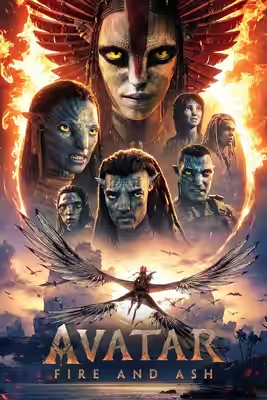
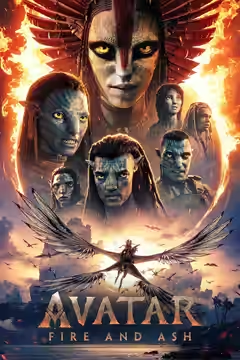
James Cameron has been on Pandora since 2009, and Avatar: Fire and Ash is the third film he has brought back from it. Jake Sully (Sam Worthington) and Neytiri (Zoe Saldaña) and their children are at war again, this time with a Na’vi clan from the moon’s volcanic country, led by Varang (Oona Chaplin), and again with Quaritch (Stephen Lang), who has not stopped hunting them. It runs 198 minutes. Like the two before it, it is built to a standard nobody else in the business is working to, and it is the first of the three that left us feeling we had seen it before.
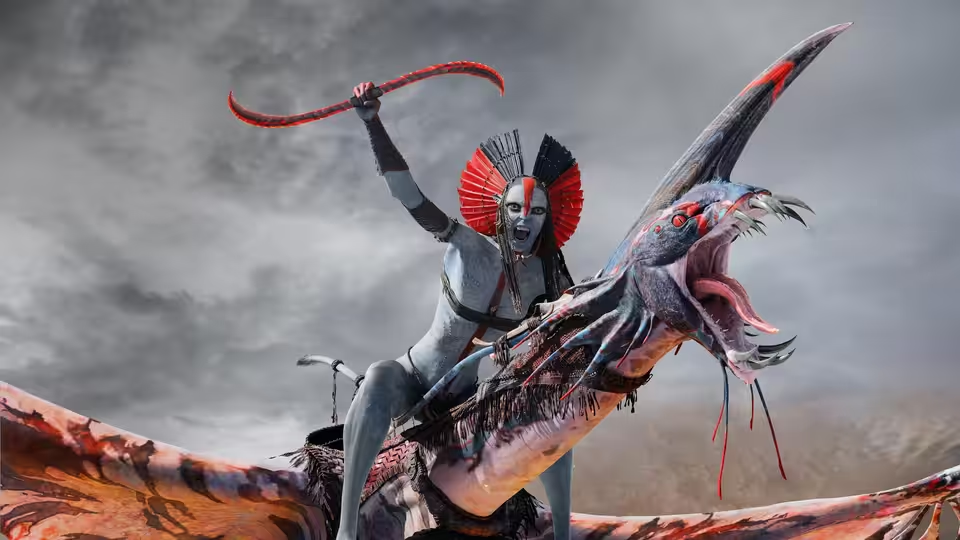
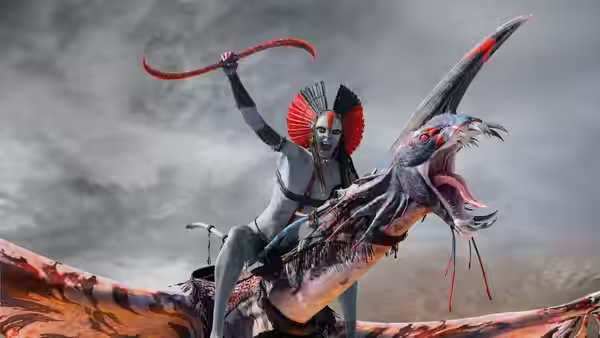
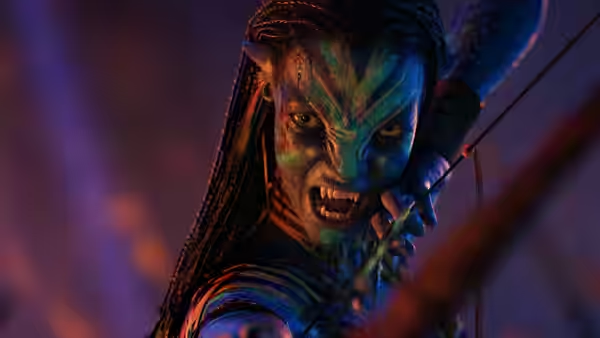
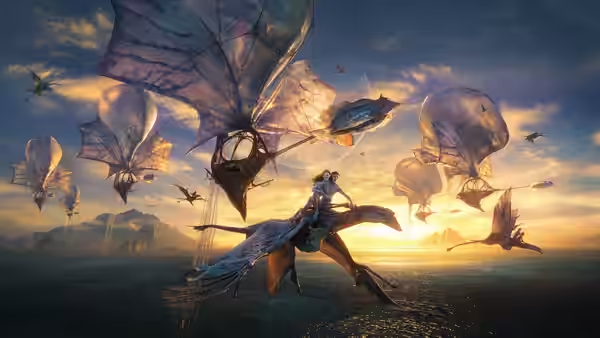
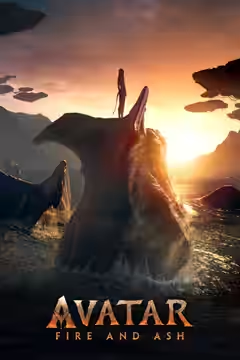
Start with what there is to see, because there is a great deal. Russell Carpenter shoots the ash country in reds and charcoal, so that when the fire clan attacks at night the flames light the Na’vi from below and the blue skin goes purple. Dylan Cole and Ben Procter, the production designers, give the new region a proper geography rather than a backdrop, and a long sequence with a clan called the Windtraders is the best stretch of new invention in the film. Deborah L. Scott dresses Varang’s people as if they have walked through the fire rather than round it. In a cinema, in three dimensions, the depth of it still does something to the stomach.
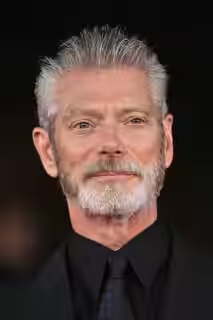
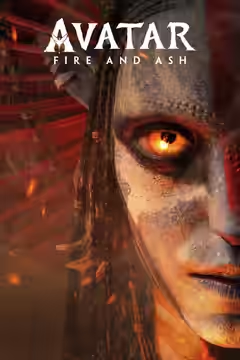
Chaplin is the reason to go. She plays Varang with an appetite the series has never permitted a villain: she enjoys her cruelty, she enjoys her weapons, and she looks at Quaritch in a way nobody has looked at him in three films. Most critics have picked her out and they are right. Lang is still doing the growl and it is still a good growl, though this is the third time he has snarled the same threat at the same family. Edie Falco, as General Ardmore, gets little to do and does it briskly.
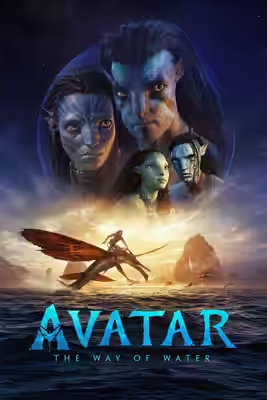
The trouble is the script, by Cameron with Rick Jaffa and Amanda Silver, and the trouble is that we have read it. The Sullys are threatened, the Sullys move, the Sullys are found, there is a battle, and then the shape repeats. The Way of Water did the same, but it had a whole ocean to discover while it did it. Here the new element is fire, and there is not much to swim through in fire. The dialogue is what it has always been: people announce what they feel and then feel it. Worthington is given the word family and says it often. Saldaña gets the film’s rage, and is good at it.
Five editors are credited, Cameron among them, alongside Jason Gaudio, Nicolas De Toth, Stephen E. Rivkin and John Refoua. Between them they could not find forty minutes to lose, and there are forty minutes to lose.
And yet. There is a stretch in the middle about Spider (Jack Champion), the human boy the Sullys have half-adopted, and what the family owes him and what it does not, and it moved us more than we were ready for. Champion plays him as a teenager who knows exactly how much he is tolerated, and Cameron, for once, lets a scene go quiet and stay quiet. Then the third hour arrived, and we noticed we were counting the battles, and then that we were annoyed at being made to count. Simon Franglen’s score rises at each one to tell us this is the important one, and after the fourth time we stopped believing it.
Aliens (1986) and Terminator 2 (1991) each had one idea and ran it to the end. The Avatar films have one idea too, and it was all said in 2009. What has changed since is the machinery, and Cameron now appears to trust the machinery to carry the story on its own.
See it in a cinema or leave it. On a big screen the ash country and the sea battles hold you by size alone, and the three hours pass faster than they have any right to. At home the same pictures will look like an expensive cartoon about a family who keep having the same argument.