The fifth Godzilla film gives the series its best-looking monster and its funniest scene, a summit meeting translated by two fairies. Between those, a princess, an assassin and a psychiatrist wait around for something to happen. Worth it for the monsters.
Ghidorah, the Three-Headed Monster is the Godzilla film where the big lizard changes sides. Ishirō Honda, who directed the original ten years earlier, and Shinichi Sekizawa, who wrote this one, have made a film in two halves that take turns rather than mixing. One half is a police thriller about a princess who insists she is not from this planet. The other half is three monsters being asked, politely, to save the world from a fourth. The second half is a pleasure. The first is 92 minutes’ worth of waiting room, and it is not on screen for 92 minutes only because the monsters keep interrupting.
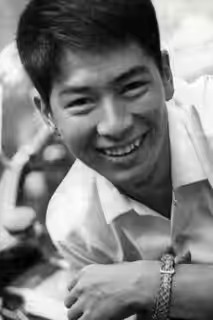
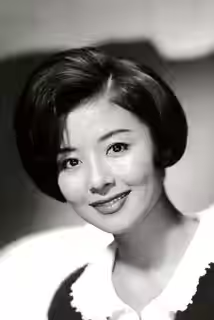
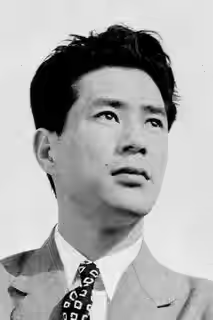
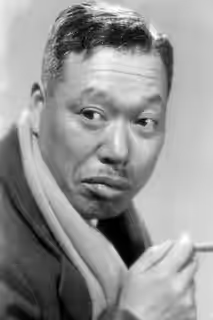
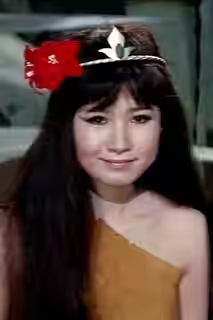
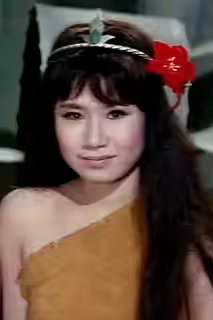
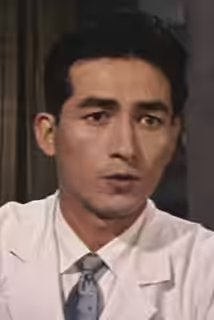
The human plot is more elaborate than the series usually bothers with. Yōsuke Natsuki’s Detective Shindo is a decent, worried man with a gun he never seems to want to fire. Akiko Wakabayashi plays the princess in a trance for most of the film, staring past everyone and announcing disasters in a flat voice, and she is better at it than the part deserves. Hisaya Ito leads a squad of assassins in dark suits and sunglasses who keep turning up at the wrong moment, like a Bond film shot on a fraction of the budget. Takashi Shimura, whom most readers will know from Seven Samurai, is the psychiatrist who examines her, and he lends the hospital scenes a gravity the script has not earned. We were bored in those scenes, and we say so plainly, because the film has cast one of the great actors of Japanese cinema and given him a clipboard.
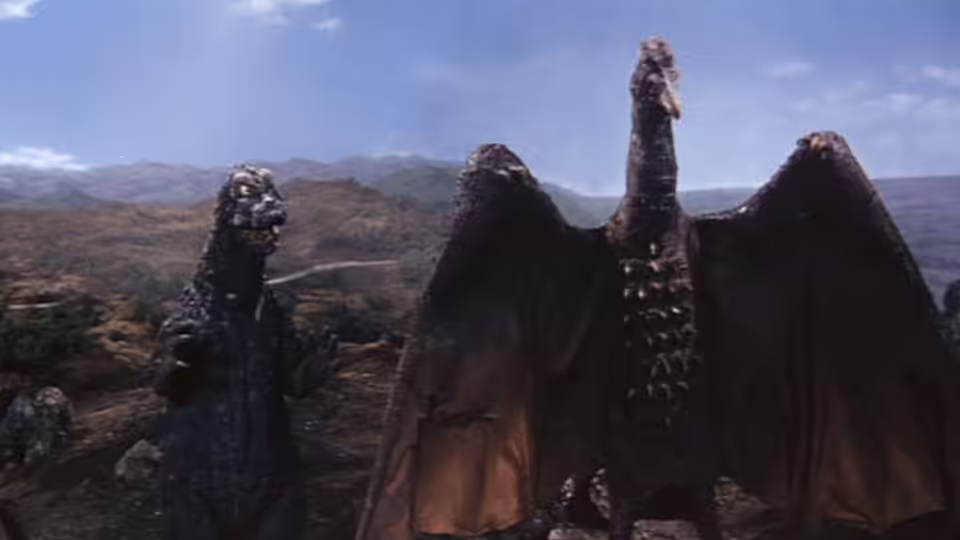
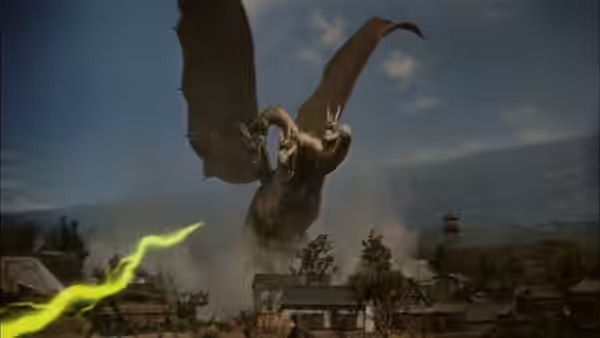
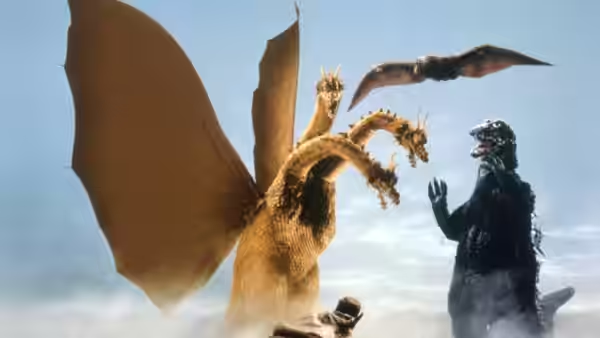
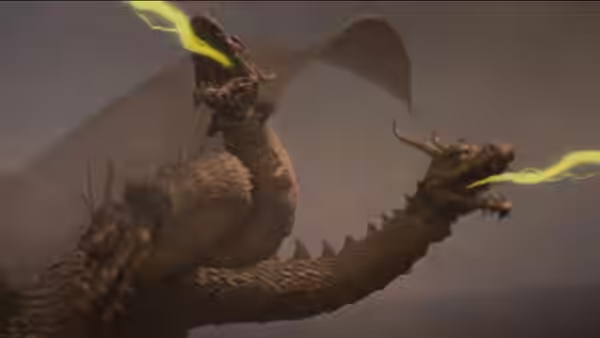
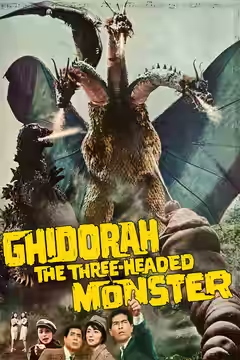
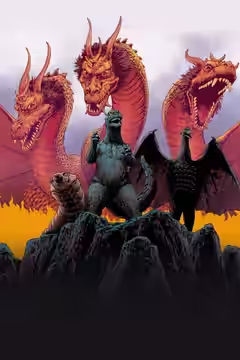
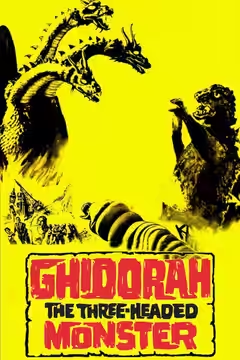
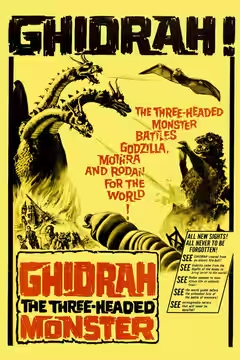
Then the meteorite cracks. A fireball rises out of the crater and a shape forms inside it: gold, two tails, wings, and three heads on long necks that move separately from one another, each looking a different way. The cry is an electronic cackle that sounds like a radio being tuned by someone with a grudge. We sat up. Ghidorah is the best thing anyone at Toho ever built, and the six names under costume design, Teizô Toshimitsu and Keizô Murase among them, deserve the credit. Hajime Koizumi shoots the miniatures from low down so the necks fill the top of the frame, and Akira Ifukube gives the creature a brass theme that stamps rather than soars.
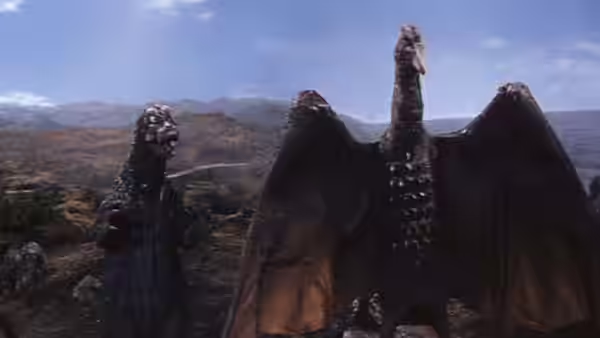
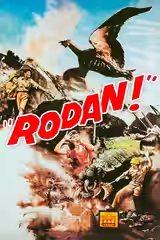
The famous scene comes when Godzilla and Rodan, who have been fighting each other with boulders for some time, are visited by a very small Mothra, still a caterpillar, who has been sent to ask for their help. The two Shobijin (Emi Ito and Yumi Ito) translate. Godzilla, we are told, does not see why he should help humans who have never been anything but rude to him. Rodan agrees. The caterpillar keeps trying. We laughed out loud at the two big monsters throwing rocks and then snickering at each other like schoolboys, and then, when the fairies passed on Godzilla’s complaint about how he has always been treated, we felt something closer to sympathy than we expected. It is silly and it is sincere at the same time, and Honda plays it entirely straight.
The trouble is that the two halves never touch. Ryôhei Fujii cuts from a hillside full of scientists with binoculars to the monsters and back again, and the humans do little more than describe what we have just seen. The princess plot is resolved on its own terms, in its own corner, and the monsters could be removed from it without much loss, which is an odd thing to say about a monster film. Sei Ikeno and Hiroshi Miyagawa supply a pop song for the Shobijin’s television appearance, and it stops the film dead for as long as it lasts. Takeo Kita’s sets for the government offices and the hospital are functional and grey, and the eye slides off them.
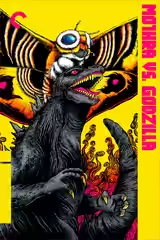
Honda’s first Godzilla was a grieving film about a country that had been bombed. Here the same creature is a sulky neighbour who has to be coaxed into doing the right thing, and it would be foolish to pretend nothing has been lost. But Mothra vs. Godzilla, earlier the same year, had already begun the softening, and this film at least knows what it is: a matinee, made with care, for children who will grow up remembering the gold dragon and not the detective.
If you have someone under twelve on the sofa, the monster scenes will hold them and the rest will be a chance to fetch drinks. Watch for the necks. Whoever operated them was paying attention when nobody else in the script was.