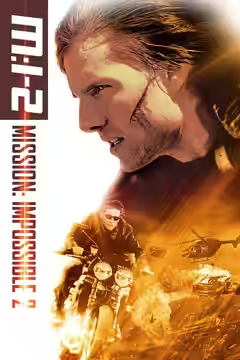
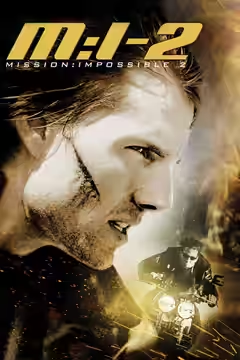
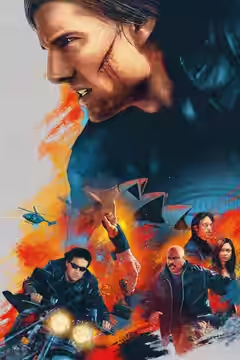
John Woo turns the series into a one-man romance with doves and slow motion, and for half an hour, in Utah and Seville, it works. Then the plot arrives, Dougray Scott sulks through it, and two fine set pieces are left to carry the rest.
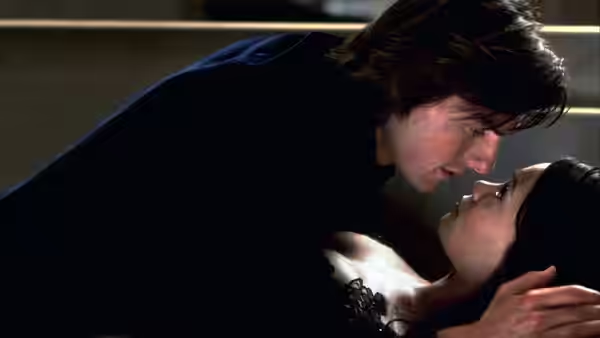
Brian De Palma’s Mission: Impossible in 1996 was a film about a team, and the first thing John Woo does with the sequel is get rid of the team. Ethan Hunt (Tom Cruise) spends the first half hour more or less alone: on a cliff, in a car, in a bed. Robert Towne’s script, from a story by Ronald D. Moore and Brannon Braga, takes its shape from the old spy pictures, in which one man is sent after one villain and a woman is passed between them, and takes nothing else. There are no gadgets to speak of, no briefing room, no committee. There is Cruise, his hair, and a great many doves.
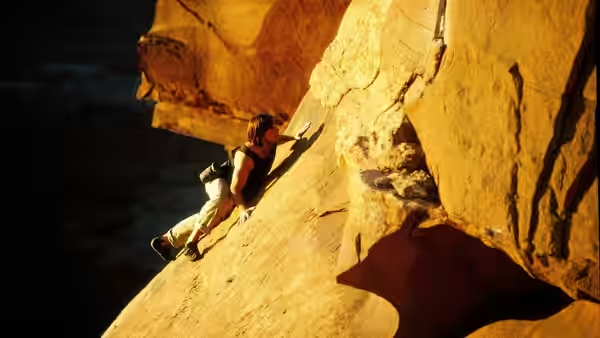
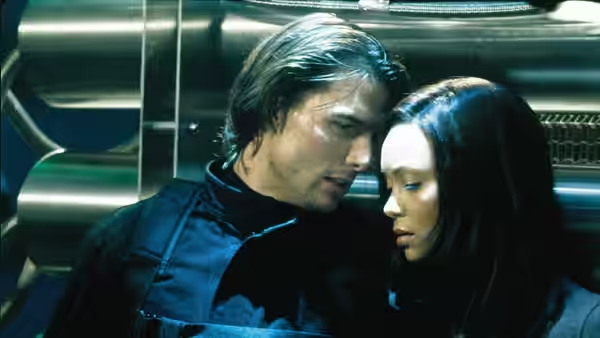
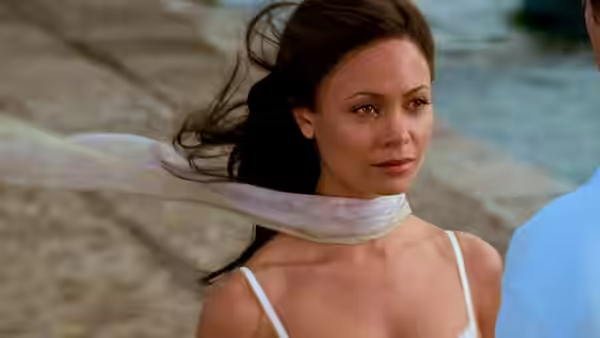
For a while this is a pleasure. Jeffrey L. Kimball shoots the opening climb in Utah against red rock and a blank sky, and Cruise hangs by his fingertips over a drop the camera keeps reminding us about; we felt it in our stomach, which is more than most openings manage. Seville is better still. Nyah Hall (Thandiwe Newton) is a thief, Hunt is sent to recruit her, and Woo stages the recruitment as a flirtation that runs from a locked safe through a flamenco crowd to two sports cars circling each other on a mountain road at night. Newton plays her as a woman amused to be chased, and she and Cruise have a real charge. Hans Zimmer scores it with Spanish guitar and holds Lalo Schifrin’s theme back until it can do some good.
Then the film tells Nyah what she is actually for, and the plot and our patience begin to part company. Sean Ambrose (Dougray Scott), a former agent, has stolen an engineered virus and its only cure, and Nyah used to be his lover, so she is to be sent back to him in Sydney as bait. Towne writes this as a moral problem and the film treats it as a delivery schedule. Newton is left to stand about Ambrose’s house looking worried while men explain things to her, and the only person on screen who seems to mind is Luther Stickell (Ving Rhames), who has two decent lines about it and is then put in a van.
Scott is the larger trouble. Ambrose is written as Hunt’s dark twin, the same training with the manners removed, and Woo underlines the idea with masks, mirrors and a good deal of face-peeling. But Scott plays him as a sulk. He glowers, he clips a colleague’s finger off with a cigar cutter, and he never once seems to be having the fun a villain in a film like this is owed. Richard Roxburgh, as the lieutenant Hugh Stamp, gets more done with a raised eyebrow, and Brendan Gleeson gives McCloy, the drug company chief, a sweaty pomposity the film could have used more of.
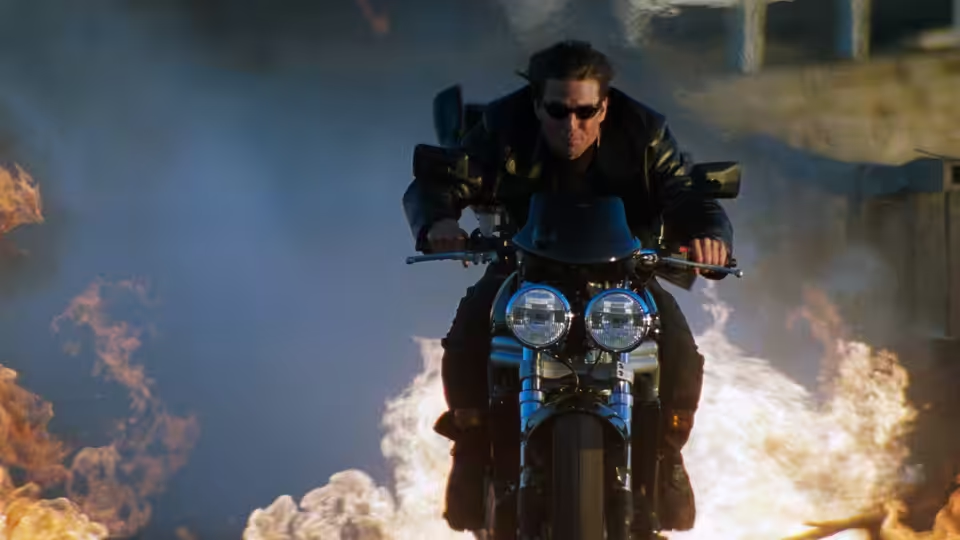
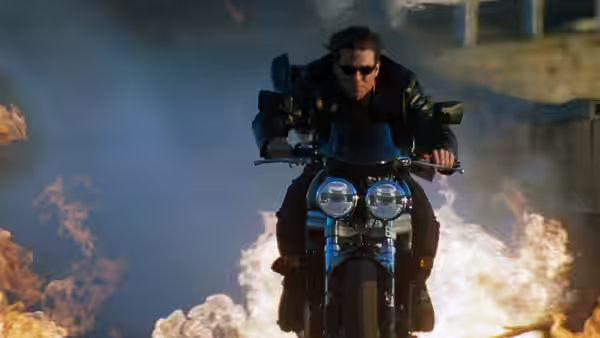
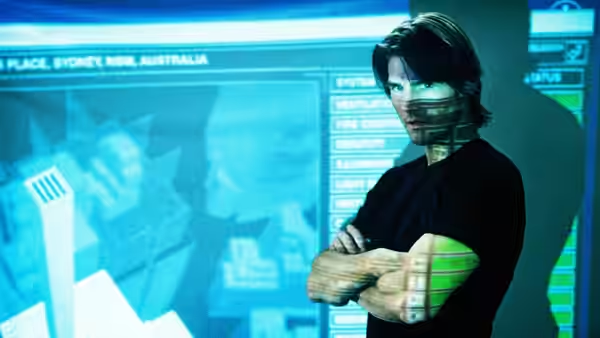
The set pieces are why the film is remembered and they are the best argument for it. The break-in at McCloy’s tower, Hunt lowered from the roof into a white laboratory while the clock runs, is cut by Steven Kemper and Christian Wagner as tightly as anything in the series, and it ends in a firefight staged the way Woo staged them in Hong Kong: two guns, a slide across the floor, glass going everywhere. The motorbike duel that follows on a coast road is silly and we did not mind. Then the two men leap off their bikes and collide in mid-air, and we laughed out loud, which the film had not planned for. That is the difficulty with Woo’s slow motion here. It is asked to make everything mythic, and about a third of the time it makes it ridiculous instead.
Thomas E. Sanders gives Woo clean, expensive rooms to break, and Timothy Everest and Lizzy Gardiner put Cruise in long coats and sunglasses that the wind always seems to find. It looks expensive and it is slow in the middle. At 123 minutes it has a stretch in which people watch other people on monitors, and the doves, when they arrive, arrive in a warehouse for no reason anyone explains. Woo made Hard Boiled and Face/Off, films in which the excess served a story; here it decorates one that would fit on a postcard.
Most critics landed around the middle and so have we. See it for Seville, for the tower and for Newton, who deserved the film the first half hour promised her. The rest can be watched with one eye, and there are stretches where the film seems to be doing the same.