Film review

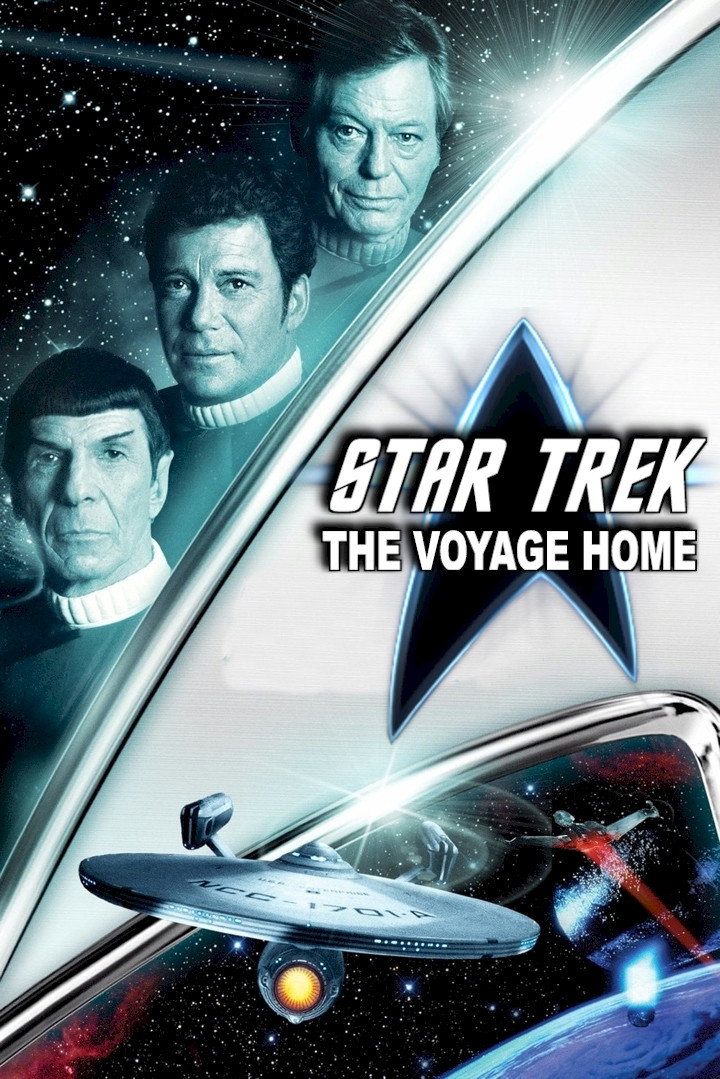
Star Trek IV: The Voyage Home

1986 · Directed by Leonard Nimoy · 1h 58m · MPA PG

In a sentenceStarfleet’s finest travel three centuries back in time and are immediately defeated by San Francisco public transport

Science FictionAdventure

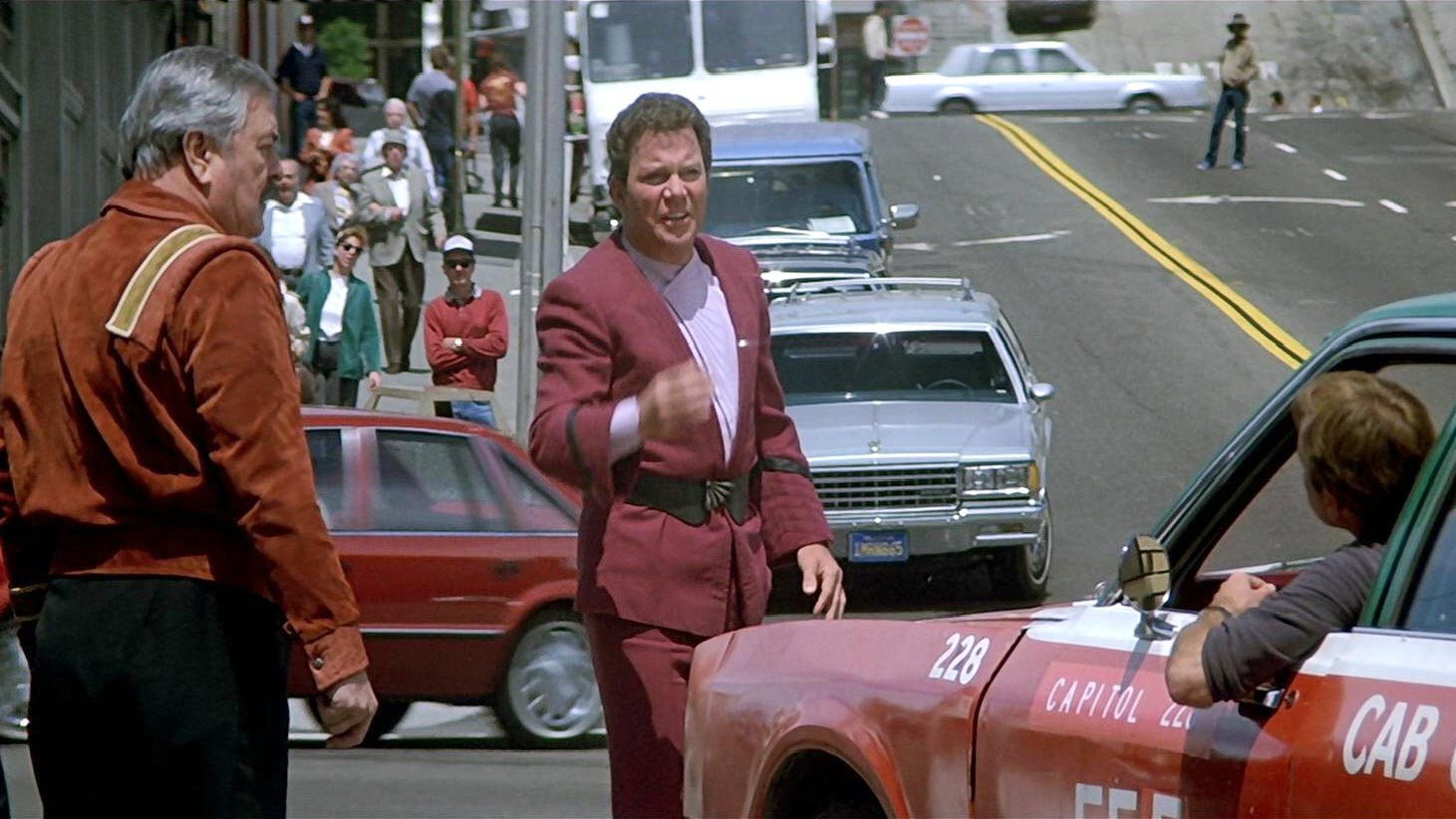
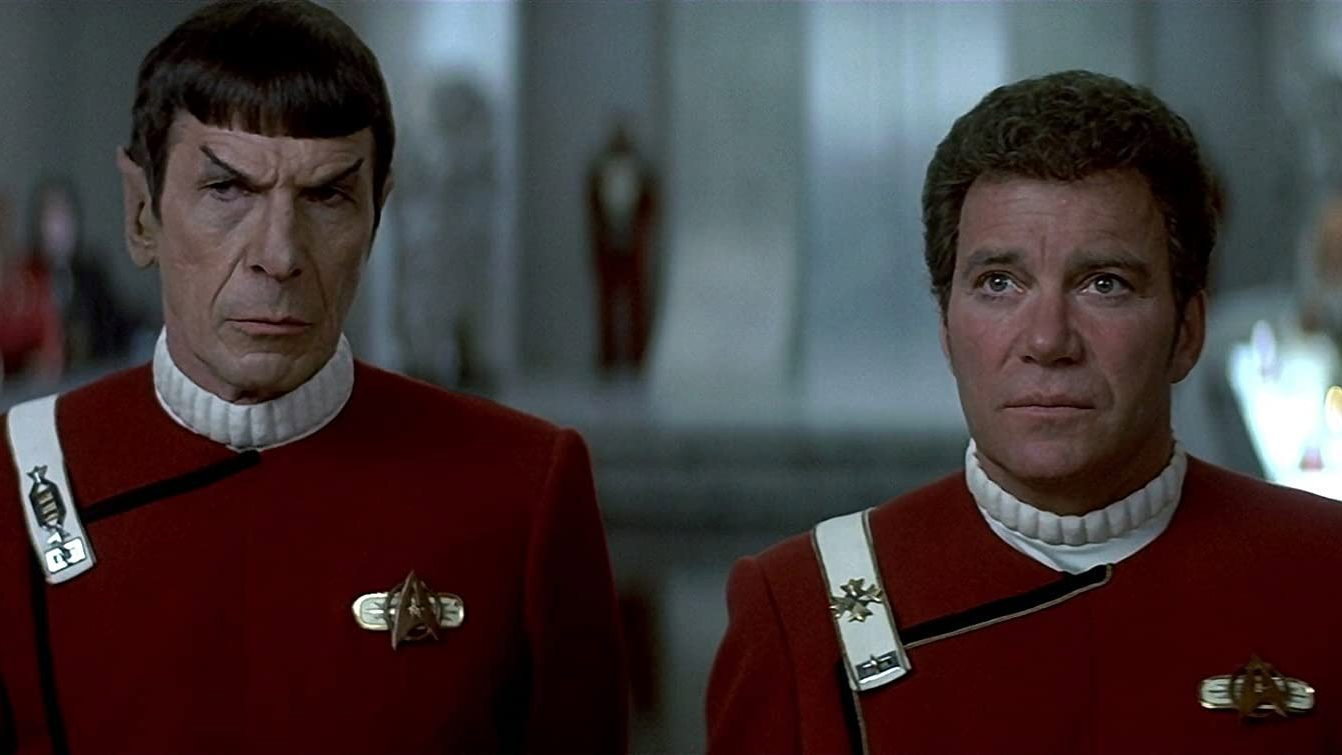
On Earth, the Klingon Ambassador (John Schuck) demands that the Federation Council hand over Admiral James T. Kirk (William Shatner) for the theft of a Klingon ship. Kirk and his crew are in exile on Vulcan, where Captain Spock (Leonard Nimoy) is relearning who he is under the eye of his mother, Amanda (Jane Wyatt). They set course for home to face court-martial. Before they arrive, a probe parks itself over Earth, boiling the seas and broadcasting a call nobody can answer. Spock identifies the sound as the song of the humpback whale, extinct for two centuries. With Dr Leonard ‘Bones’ McCoy (DeForest Kelley) and Scotty (James Doohan) aboard the stolen Klingon vessel, Kirk slingshots round the sun to San Francisco in 1986 to find some.

Fi1m review

Leonard Nimoy sends the Enterprise crew to 1986 to fetch two humpback whales, and it is the lightest and funniest film in the series. The plot around the jokes is thin and the effects wobble, but the company is good.

After two films about death and resurrection, Star Trek II: The Wrath of Khan and Star Trek III: The Search for Spock, Leonard Nimoy, directing for the second time, has made a comedy. The premise is that an alien probe is wrecking the Earth because nobody is left who can talk to it, and the only creatures who could are humpback whales, which have been extinct for two hundred years. So Kirk and his crew take a stolen Klingon ship back to 1986 to collect a pair. It is the most likeable film in the series and also the slightest, and we would recommend it to anyone, including people who have never sat through an episode.

The first half hour is the weak part. Kirk’s extradition hearing before the Federation Council, with Robert Ellenstein’s President looking pained and John Schuck’s Klingon Ambassador shouting, is stage-bound and slow. The probe itself is a long dark cylinder that hums, and Donald Peterman lights the council chamber and the Vulcan scenes with the flat brightness of a television studio. Leonard Rosenman’s score is brassy and bouncy and plays as if a parade were due at any moment; it is more cheerful than the film needs to be this early. Then the Klingon ship lands, invisible, in a San Francisco park, and everything wakes up.

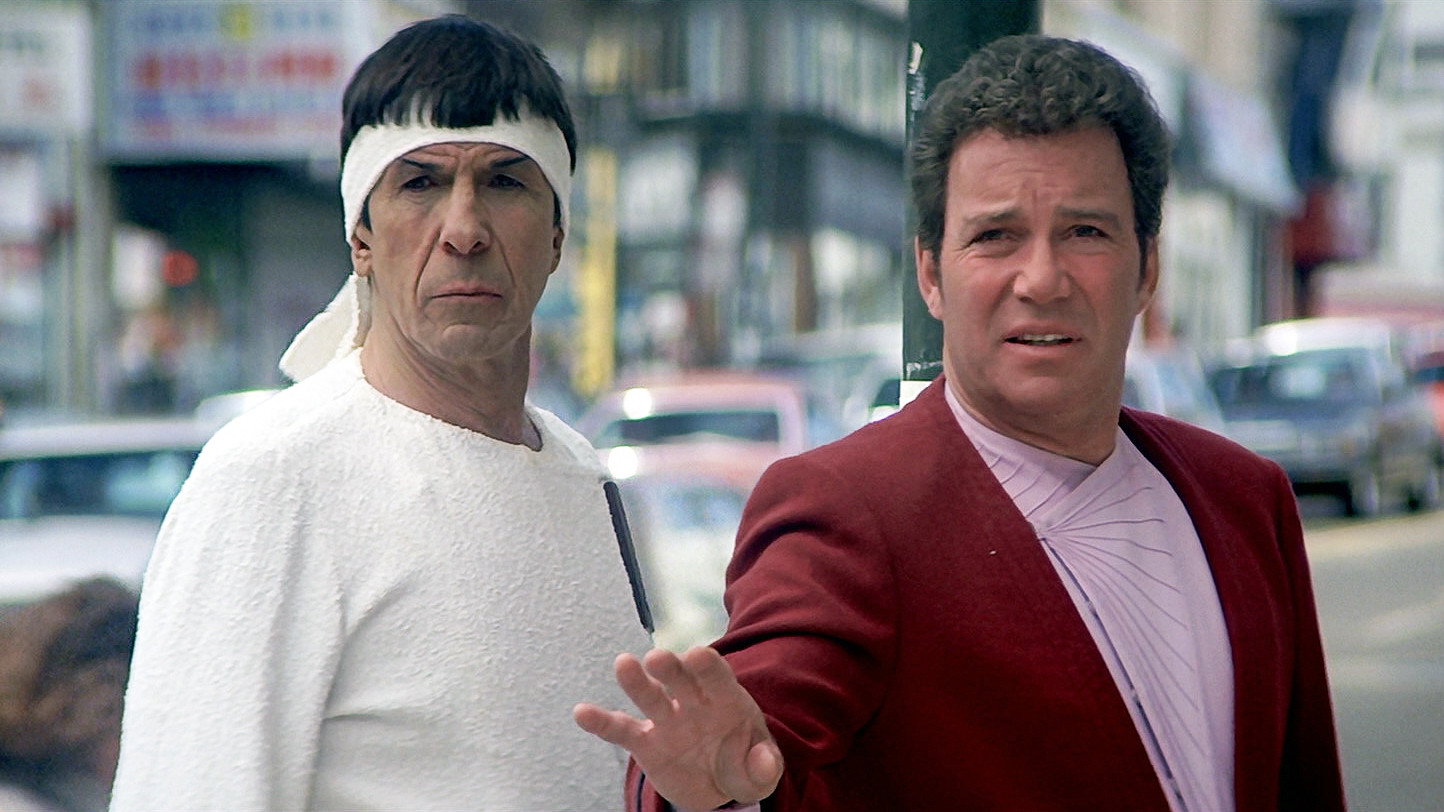
The script, credited to Peter Krikes, Steve Meerson, Harve Bennett and Nicholas Meyer, splits the crew into pairs and sends them out into the city with no money and no idea how anything works. Spock, in a white robe with a headband over his ears, tries to learn swearing from Kirk and gets it wrong every time. Chekov and Uhura ask a policeman for directions to the nuclear vessels, and Walter Koenig’s grave politeness made us laugh out loud; the joke is not the accent but that he cannot see why the man is staring. Scotty and McCoy talk their way into a plastics factory, and James Doohan addressing a computer as if it were a slow colleague is one of the best things he has done in the part.

The whales live in a tank at an aquarium across the bay, looked after by a biologist who is the only person in 1986 the film takes seriously. The scene that stayed with us is Spock climbing into the tank in his robe and headband and swimming down to lay a hand on one of them. Peterman shoots it from below, green and silent, and it is a sight gag to begin with. Then Spock surfaces and reports, in the same level voice he uses for warp calculations, what the whale has told him about how it feels to be kept there, and the laughing stopped. It moved us more than we expected a film with a talking probe to manage.

Not all of it holds. Peter Landsdown Smith and Jack T. Collis have given the Klingon ship a cramped, murky bridge that is hard to see into, and the time-travel sequence, with the crew’s faces drifting through a fog, has dated worse than anything else here. Robert Fletcher’s costumes serve the comedy well enough (the crew in their maroon uniforms look exactly like a club on a day out) but nothing about the design is memorable. Peter E. Berger has a lot of threads to cut between and the middle hour sometimes stands still while one pair catches up with another. The environmental point is made in speeches, and Kirk’s flirtation with the biologist over pizza is there because a Kirk film requires one.

Set against the series’ own standards, The Wrath of Khan is the better-made film and this is the more enjoyable one. What Nimoy proves, at 118 minutes, is that these seven actors are the reason people came back, not the ships. Nothing explodes for most of the running time, nobody fires a phaser in anger, and it does not matter.

Watch it with someone who has never seen an episode and see how long they last before asking whether the Vulcan one is all right in the head. The fate of the planet rests on a man in a headband remembering how to swear, and we would not change a frame of that part.

Critical consensus AI synthesised

81
Positive
10
Mixed
0
Negative
0

The reviews are unanimous in their approval: every critic who has written on Star Trek IV counts it a success, and several call it the most enjoyable entry in the series. The praise gathers around the comedy. Critics single out the fish-out-of-water scenes in 1980s San Francisco, the interplay between Shatner and Nimoy, and the decision to build the film around the crew’s relationships rather than action. Nimoy’s direction is credited with a lighter, more irreverent tone that critics say brings the films closer to the original television series.

Reservations are mild and scattered. The AV Club finds the film lacks the edge of earlier entries, and The New York Times notes technical shortcomings beneath the sincerity. The Guardian calls the environmentalism half-baked, though it enjoys the film regardless. The spread is narrow, from good to excellent, and nobody dissents from the view that this is the warmest and most accessible of the series.

Los Angeles Times
26 November 1986 · Michael Wilmington
90*

The film is a simple, humanistic allegory with humor and heart that lightens the series with fish-out-of-water comedy and crew camaraderie. The collision of 23rd-century values with 20th-century culture and the intimate focus on the characters are praised.

Read the full review →
RogerEbert.com
26 November 1986 · Roger Ebert
90*

The film is the best, funniest and most enjoyable Star Trek movie so far, despite its absurd plot about time-traveling to save humpback whales. The crew's familiar interactions and human-focused story in 1980s San Francisco are singled out for praise over action sequences.

Read the full review →
Slant Magazine
1 May 2009
90*

The piece calls the film the best in the series for its goofily endearing comedy and willingness to embrace silliness, contrasting it with more self-serious entries. It singles out the crew's interactions with 1980s culture and the environmental message as highlights.

Read the full review →
The AV Club
20 August 2009 · B+ · Zack Handlen
83

The critic finds the film a polished, well-balanced audience-pleaser and deeply ingratiating gateway entry that blends fish-out-of-water comedy with the franchise's characters. It praises the ensemble's enthusiasm and genial tone while noting its lack of edge compared to prior entries.

Read the full review →
The Guardian
3 September 2026
80*

The critic finds the film preposterously good fun as a silly, whale-jumping time-travel comedy with half-baked environmentalism. The fish-out-of-water scenes of the Enterprise crew in 1980s San Francisco and Spock's communion with the whales are singled out as highlights.

Read the full review →
Time Out
10 September 2012 · SGo
80*

Kirk and the crew travel back to 1980s San Francisco to save the whales in what the critic calls the most enjoyable film of the series so far. Nimoy's irreverent directorial tone and the crew's comic misadventures in contemporary California are singled out for making the time-travel morality tale especially digestible and fun.

Read the full review →

Cast

Awards

Academy Awards, 1987

Nominated
Best Cinematography
Nominated
Best Original Score
Nominated
Best Sound
Nominated
Best Sound Editing

If you liked this, try…

Time After Time poster

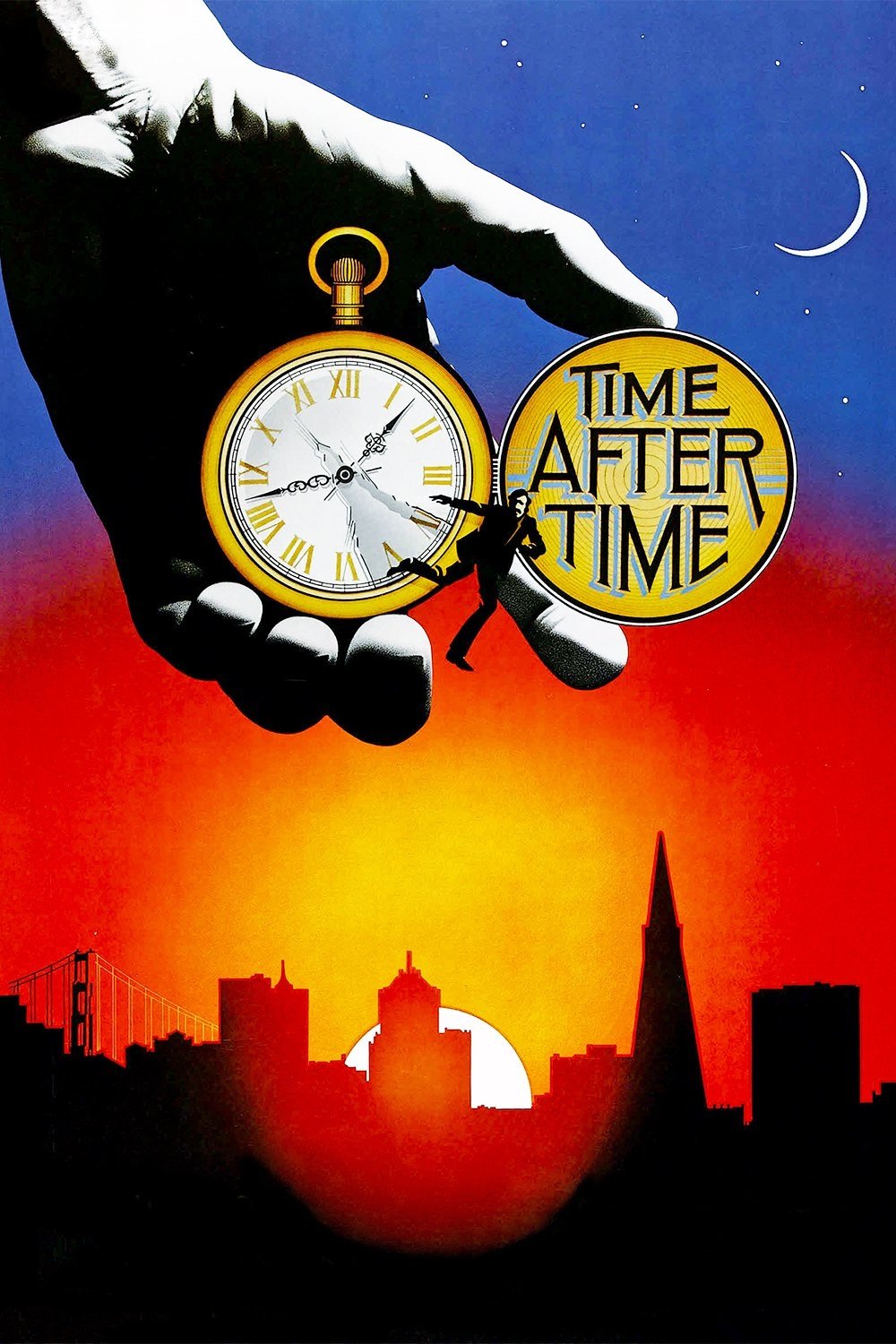
Time After Time

1979 · Nicholas Meyer strands H.G. Wells in modern San Francisco; the same joke, played for chills.

Star Trek II: The Wrath of Khan poster85

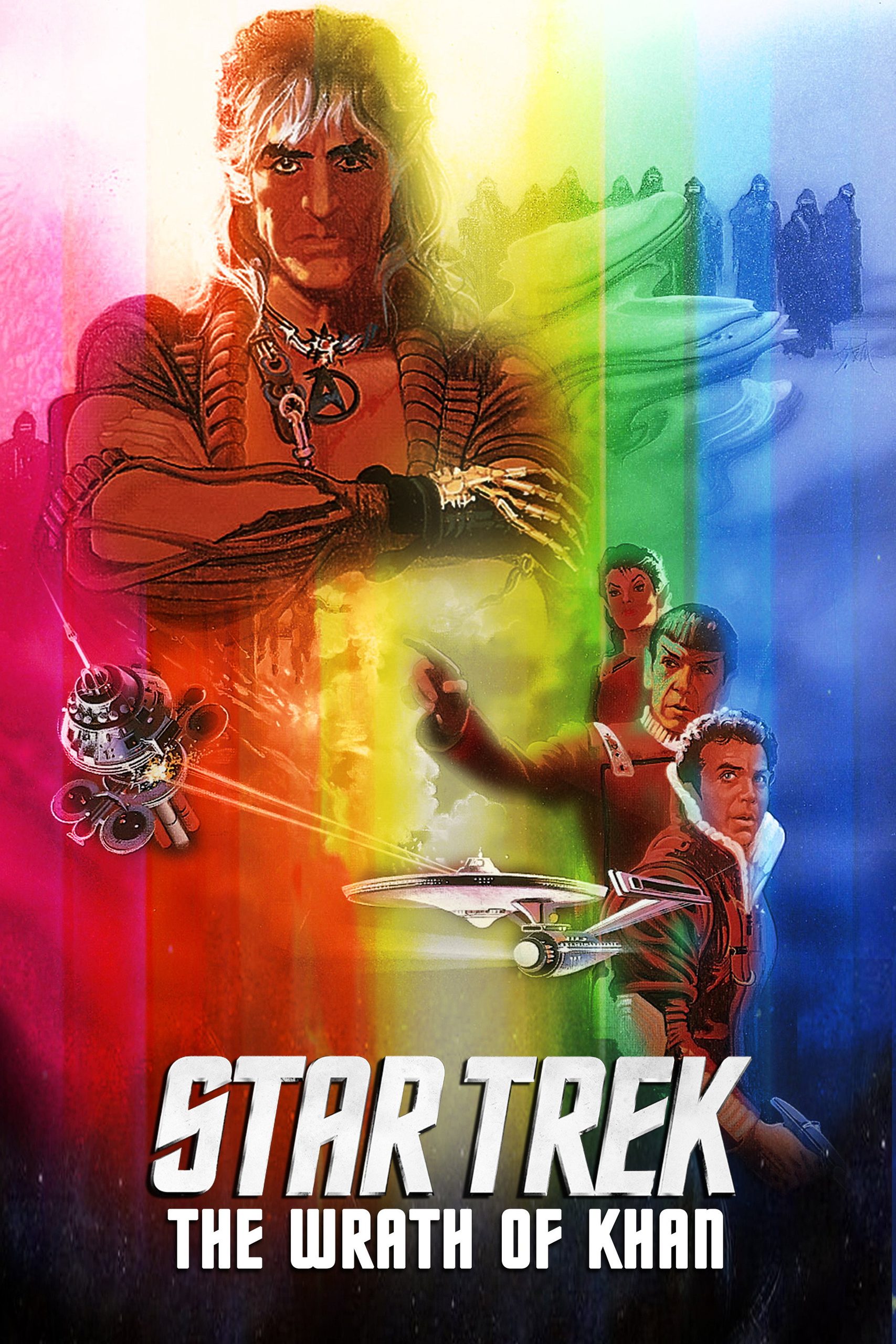
Star Trek II: The Wrath of Khan

1982 · The better-made film, the one this one is recovering from; see them together.

Galaxy Quest poster

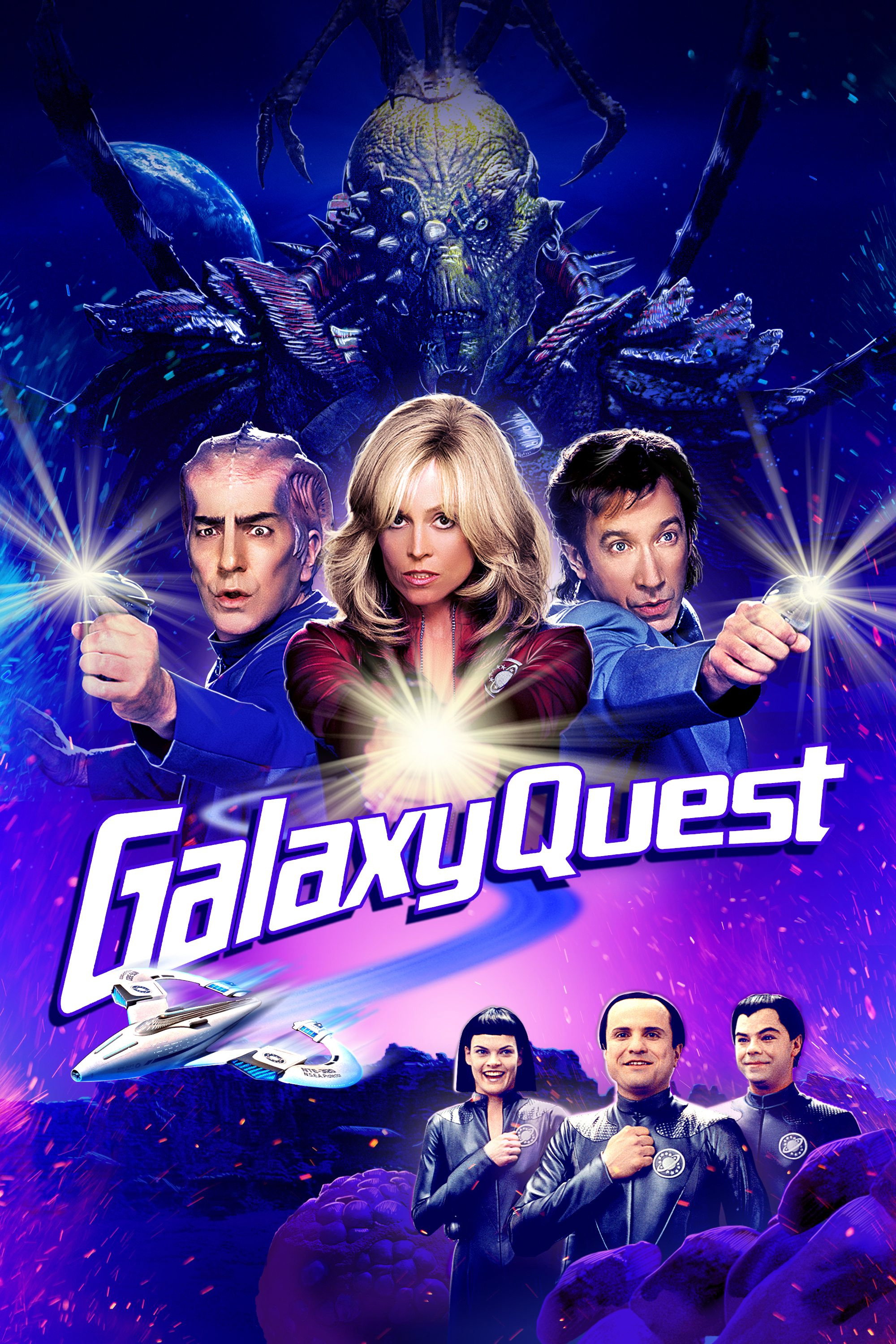
Galaxy Quest

1999 · A spoof so fond of its target that the target adopted it.

Kin-dza-dza! poster

Kin-dza-dza!

1986 · Soviet science-fiction comedy about two men lost on a desert planet; drier than anything Starfleet.

Back to the Future poster92

Back to the Future

1985 · The other great time-travel comedy of its decade, and the tidier of the two.