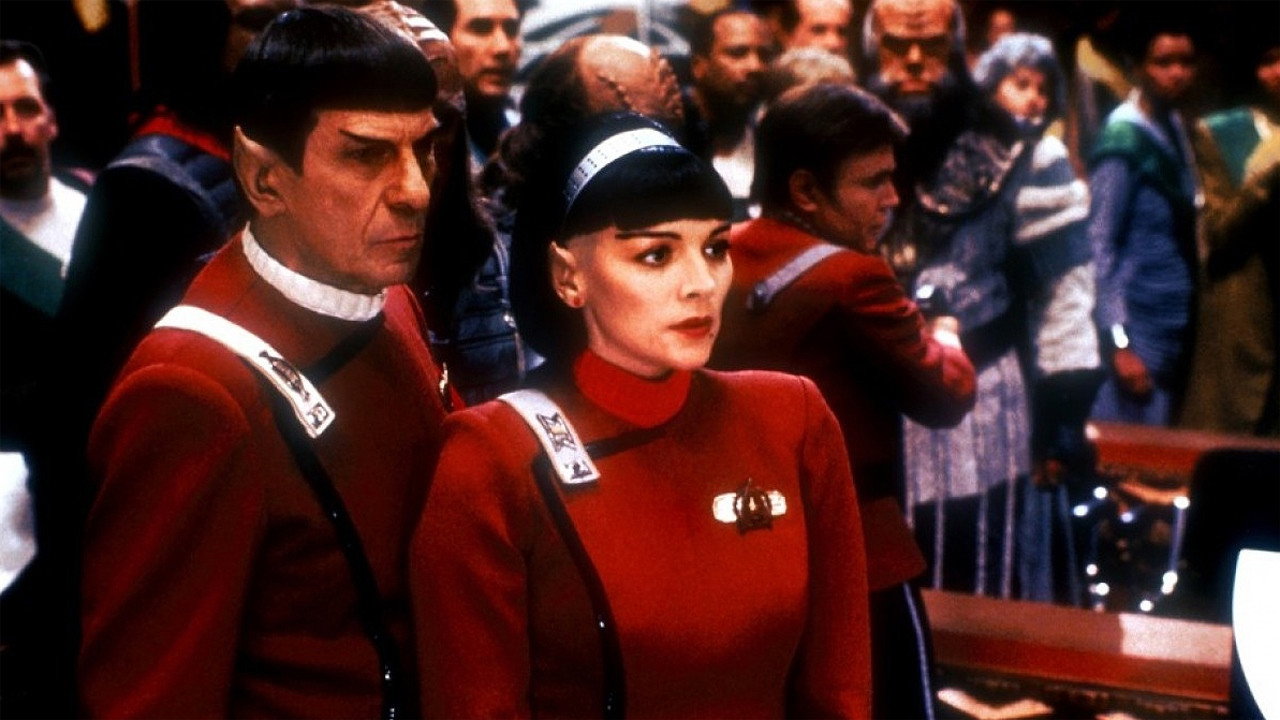
Film review

Star Trek VI: The Undiscovered Country

1991 · Directed by Nicholas Meyer · 1h 50m · MPA PG

In a sentenceChristopher Plummer has an eyepatch bolted to his skull and Shakespeare in his mouth, and he is having the time of his life

Science FictionActionAdventureThriller

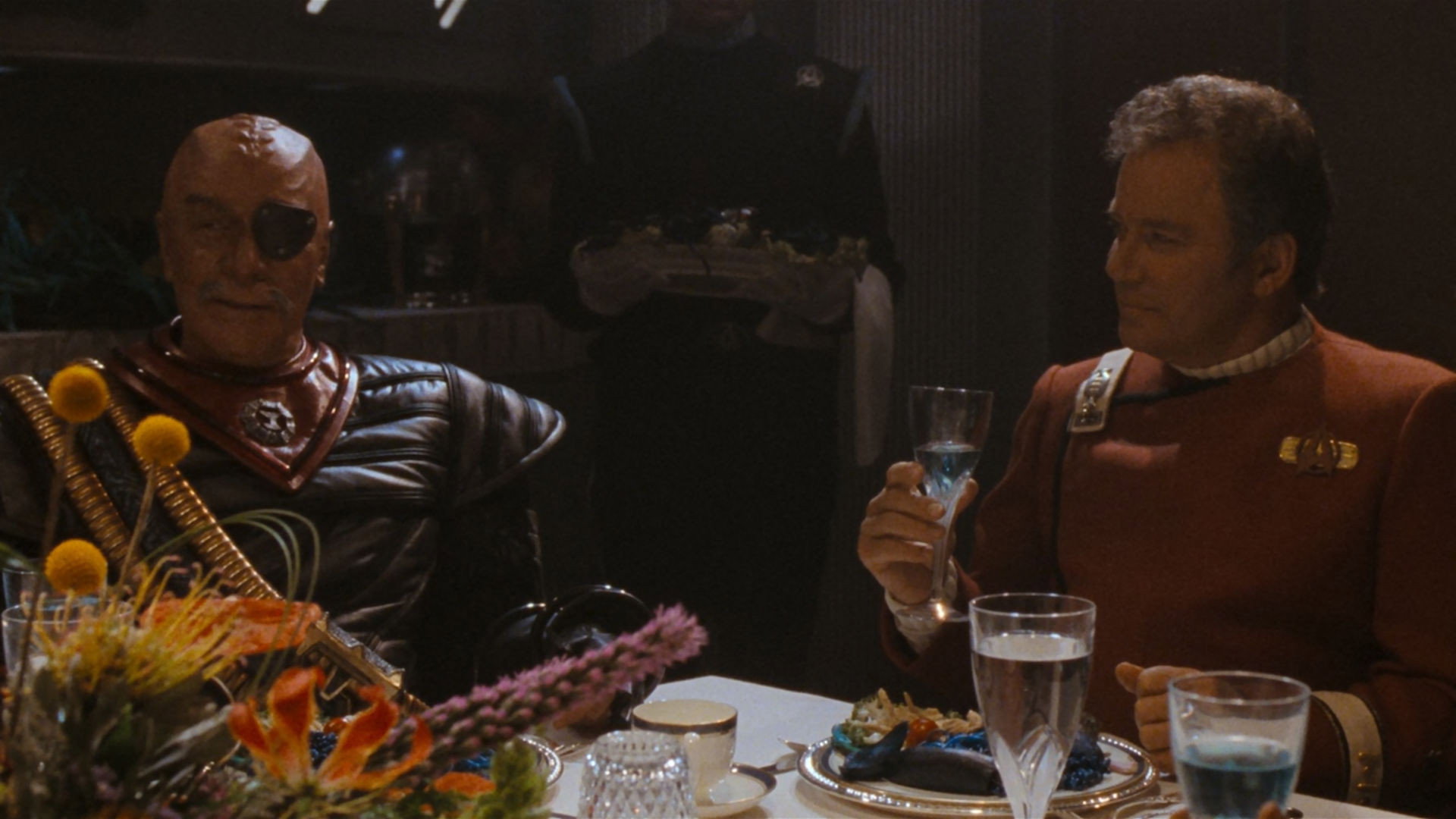
The Klingon moon Praxis explodes, poisoning the Empire’s home world and leaving it, by its own estimate, fifty years to live. Chancellor Gorkon (David Warner) offers the Federation peace, and Captain Spock (Leonard Nimoy) volunteers the Enterprise to escort him to the conference. Captain James T. Kirk (William Shatner) wants nothing to do with it; Dr. Leonard ‘Bones’ McCoy (DeForest Kelley) is hardly keener. Gorkon’s party, including his daughter Azetbur (Rosanna DeSoto) and Chang (Christopher Plummer), beams aboard the Enterprise for dinner; the Romulan ale flows, Chang quotes Shakespeare across the table, and the evening ends in embarrassment on both sides. Then, in the night, Gorkon’s ship is fired upon, two figures in Starfleet boots beam aboard, and Kirk and McCoy find themselves accused of murder.

Fi1m review

Nicholas Meyer gives the original crew a Cold War thriller to retire on, and for an hour it is the smartest the series ever was. The middle sags on an ice planet and the villain talks in quotations, but it is a decent goodbye.

The Klingon moon Praxis blows up in the first two minutes. The Empire has fifty years left, Chancellor Gorkon (David Warner) wants peace, and Spock has volunteered the Enterprise and a captain who wants no part of it to escort him. Nicholas Meyer, directing the series for the first time since The Wrath of Khan (1982), has made a Cold War thriller in space and given the original crew something to retire on. For an hour it is as sharp as the series ever got; then it goes to an ice planet and loses the thread.

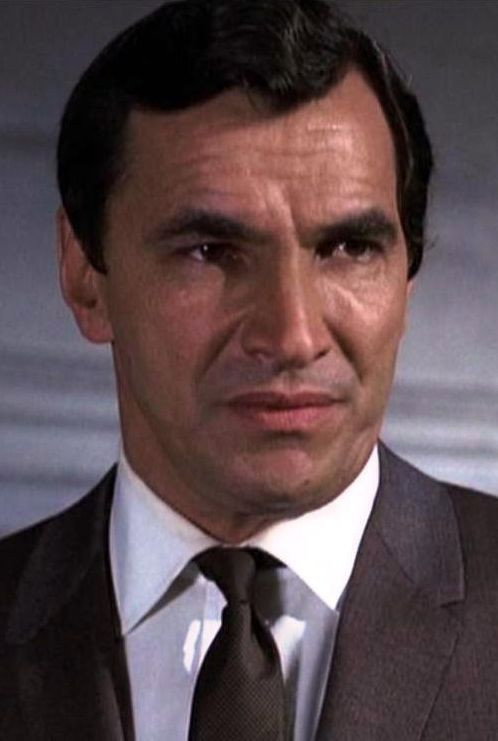
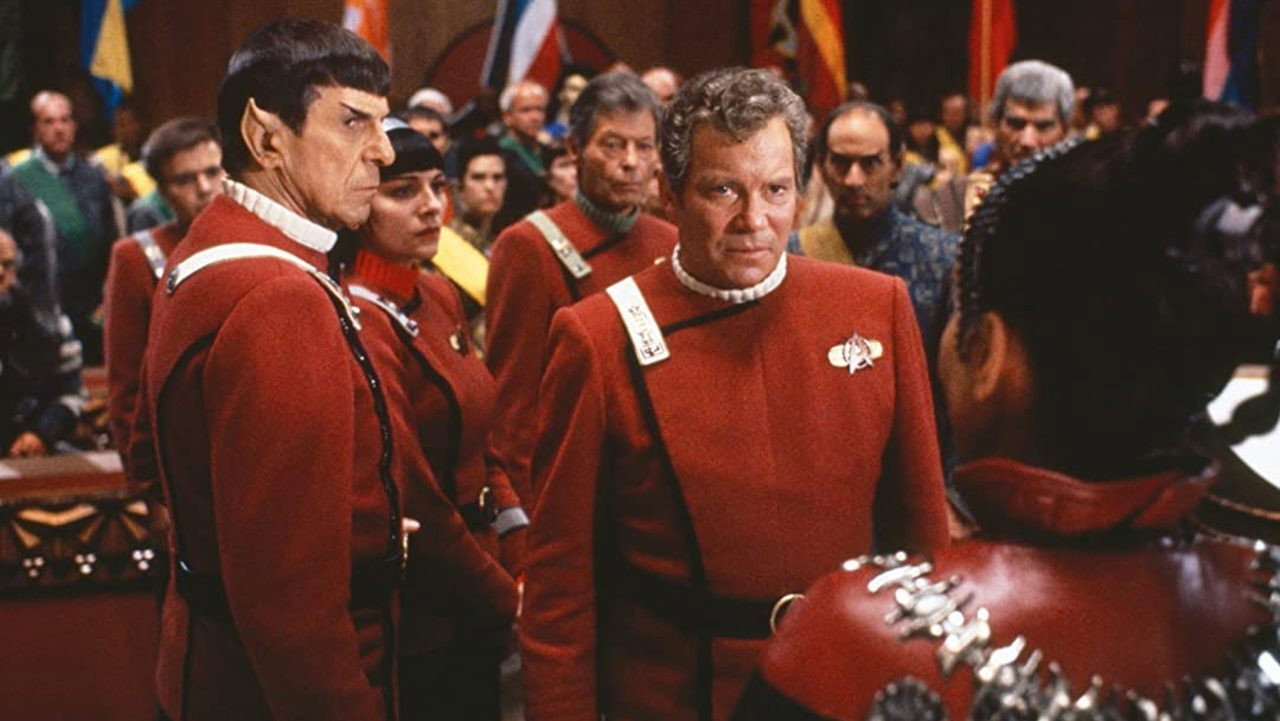
The dinner is the best scene. Gorkon and his party beam over, the Romulan ale comes out, and soon everyone we like has said something a diplomat would resign over. Chekov (Walter Koenig) mentions inalienable human rights and Gorkon’s daughter Azetbur (Rosanna DeSoto) asks him to listen to himself. Chang (Christopher Plummer) quotes Hamlet, and Gorkon says you have not experienced Shakespeare until you have read him in the original Klingon. We laughed, then felt slightly ashamed of ourselves, because the joke is on the crew and the film means it to be. The script by Meyer and Denny Martin Flinn has one idea and it is a good one: the heroes are the bigots at the table.

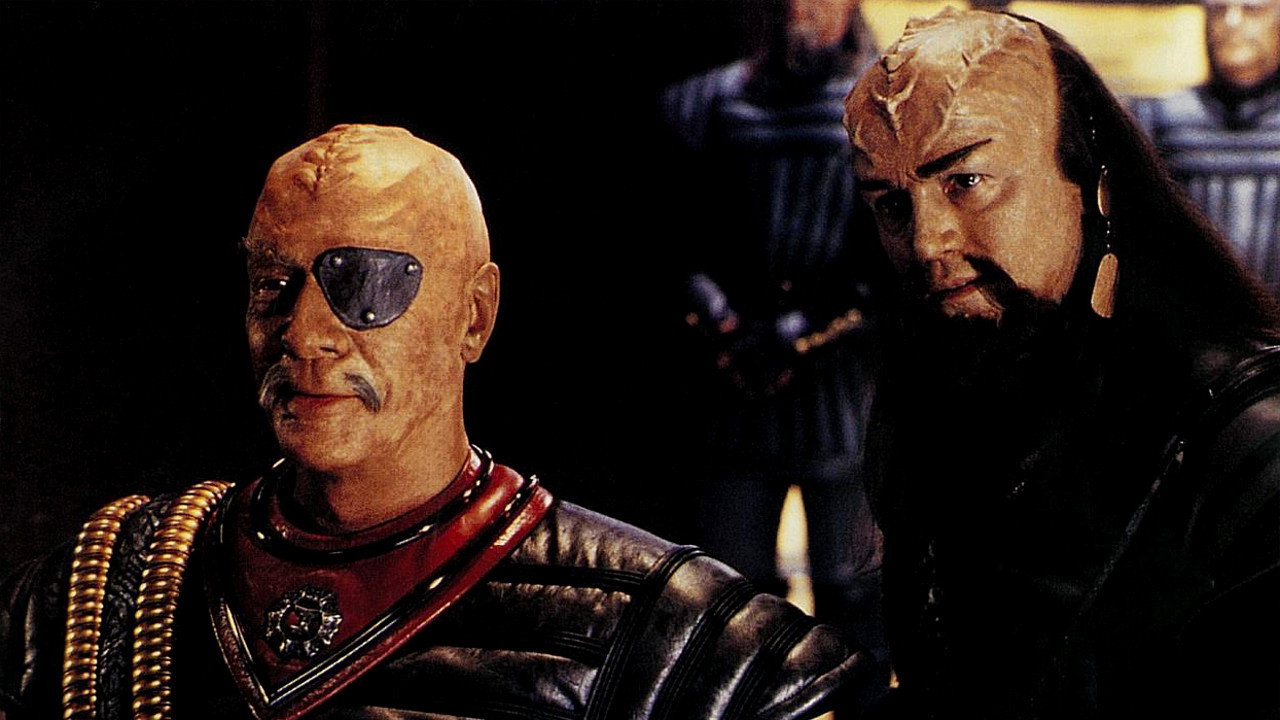
Shatner lets Kirk be ugly. ‘Let them die,’ he says to Spock, and he does not soften it. The film spends its length walking him back from that line. DeForest Kelley’s McCoy is old and cross and gentler than ever. Warner plays Gorkon as a tired man who knows he will be hated on both sides, and he is gone too soon. Plummer’s Chang wears an eyepatch riveted to his skull and has a quotation for every occasion, Henry V, Julius Caesar, Hamlet again, and by the last reel we were counting. He is fun. He is not frightening, and the film needs him to be.

Hiro Narita lights the Enterprise darker than in any earlier outing, corridors in half-shadow and the bridge lit from its own panels, so the ship looks like a place where someone could be killed. Herman F. Zimmerman builds the Klingon courtroom as a round black pit under one shaft of light. Cliff Eidelman’s score drops the fanfares for low brass and chanting male voices, so the titles sound like a funeral. William Hoy and Ronald Roose cut the assassination well: the gravity fails on Gorkon’s ship, the blood rises off the floor in pink globes, and two figures in Starfleet boots move through it without hurry. We were horrified, and it was the slowness that did it. A PG rarely gets that close.

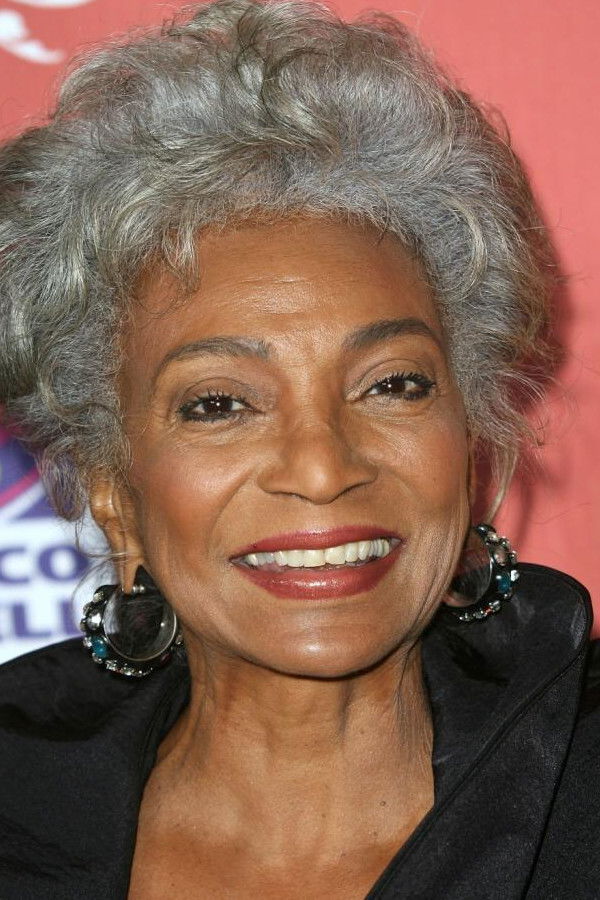
Then the film goes to the ice planet and stays too long. Back aboard, Spock runs the murder inquiry like a school prefect, the clues are a pair of boots and a torpedo inventory, and we never once wondered who did it. The Cold War allegory is not shy, and most critics have said so. Nichelle Nichols is handed a joke about not speaking Klingon that is beneath her, and George Takei, given a ship of his own, spends most of the film on another set.

After The Final Frontier (1989), anything competent would have looked like a triumph, and this is well past competent. But Khan had one enemy and one grief and trusted both; this has a treaty, a conspiracy and a trial, and the shape of a good episode padded to 110 minutes. What holds it together is that Meyer plainly likes these people and has noticed they are old, and lets the film notice too.

The last minutes are a goodbye to the original cast, and the film knows it. We were moved more than we expected, mostly by Kelley, who can make a line about retirement sound like a eulogy. Worth your evening if you know these people, and worth it for the dinner, the assassination and Warner even if you do not. It runs 110 minutes and carries a PG.

Critical consensus AI synthesised

72
Positive
9
Mixed
1
Negative
0

Most critics like it, and in the same way: as a relief after the previous film and a fitting farewell for the original cast. The praise clusters on the plot, a political thriller built on the Soviet break-up, and on Nicholas Meyer’s direction, credited with a darker look than the series usually manages. Christopher Plummer’s villain is singled out, and the Shakespearean flourishes count as fun rather than pretension.

The reservations are mild and consistent. Nobody puts it near the top of the series; even the warmest review, in The AV Club, thinks it lacks the weight of Wrath of Khan and plays like an excellent television two-parter. Others find the middle slack, the dialogue platitudinous and the allegory heavy-handed. Variety, the lone mixed voice, calls the mystery tepid but likes the finale. The spread is narrow; later writers, /Film among them, read it more generously as a study of an ageing hero facing his prejudices.

The AV Club
12 March 2010 · A- · Zack Handlen
90

The critic calls it entertaining, non-insulting, and respectful, a tightly constructed and polished political thriller and murder mystery that serves as a fitting send-off for the original cast, though lacking the operatic impact of Wrath of Khan and feeling more like an excellent TV two-parter.

Read the full review →
Empire
1 January 2000 · William Thomas
80*

The critic finds the film a joy and relief compared to the previous entry, praising it as an honourable, clever and enjoyable addition to the Star Trek canon with clever references to current affairs and strong performances, particularly Christopher Plummer's villain.

Read the full review →
Los Angeles Times
6 December 1991 · Michael Wilmington
70*

The critic praises how the film revives the series' mythos with topical allegory about the Soviet breakup and restores fullness to the characters after the previous misfire. While noting some weaknesses in the climax and hasty goodbye, the overall verdict is that it works well and feels like it could open new possibilities.

Read the full review →
RogerEbert.com
6 December 1991 · Roger Ebert
70*

The critic finds the film far more lively and interesting than the previous entry, with an entertaining mix of contemporary allegory, Shakespearean references, and familiar character dynamics among the Enterprise crew. The verdict is that it is reassuring and fun, questioning why Paramount would retire such a beloved cast.

Read the full review →
The Hollywood Reporter
6 December 1991 · Henry Sheehan
70*

The critic finds it not the best of the series but a suitable farewell, praising its conviction, pulp-adventure integrity, Nicholas Meyer's direction, and dark atmospheric sheen, while noting issues with pace and platitudinous exchanges.

Read the full review →
The New York Times
6 December 1991 · Janet Maslin
70*

The review describes the film as a lively tale that delivers what Trekkies want, with effective Shakespearean flourishes and fun performances despite its valedictory tone. The critic notes it succeeds as entertainment even if not entirely self-contained for new viewers.

Read the full review →

Cast

Awards

Saturn Awards, 1993

Won
Best Science Fiction Film

Academy Awards, 1992

Nominated
Best Makeup and Hairstyling
Nominated
Best Sound Editing

If you liked this, try…

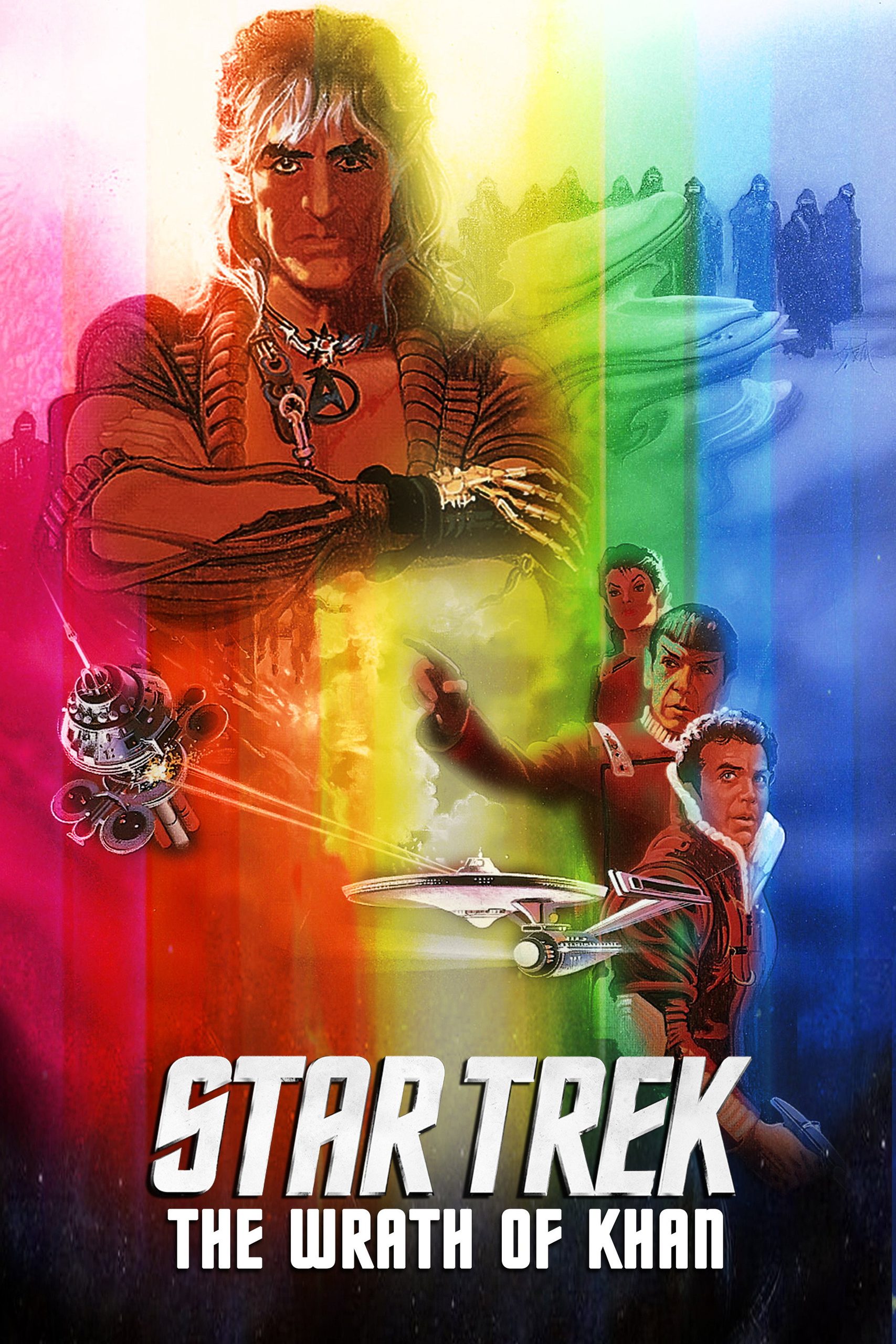
Star Trek II: The Wrath of Khan poster85

Star Trek II: The Wrath of Khan

1982 · Meyer’s first go at this crew: one enemy, one grief, no treaty.

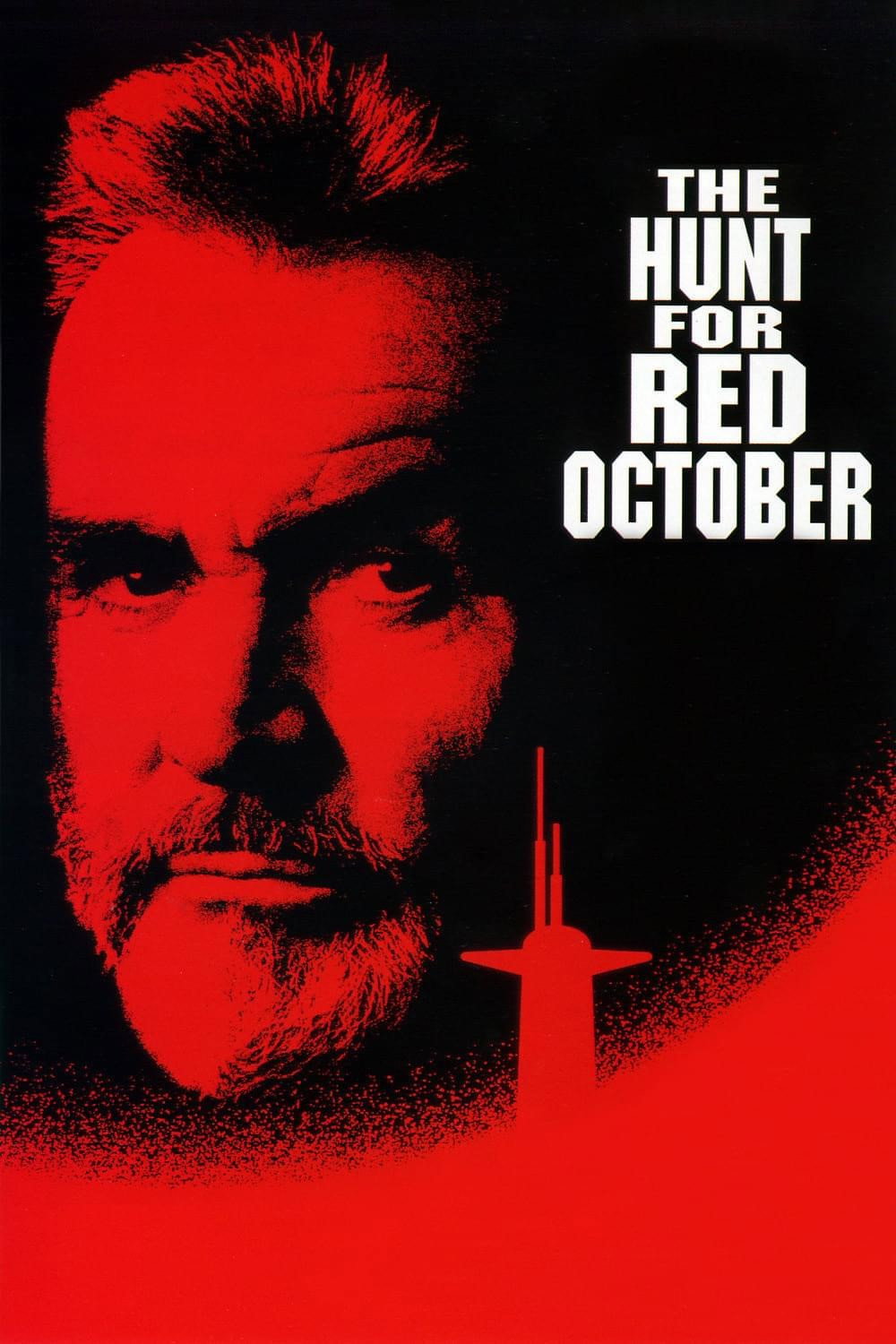
The Hunt for Red October poster82

The Hunt for Red October

1990 · The same Cold War ending, told in a submarine with better acoustics.

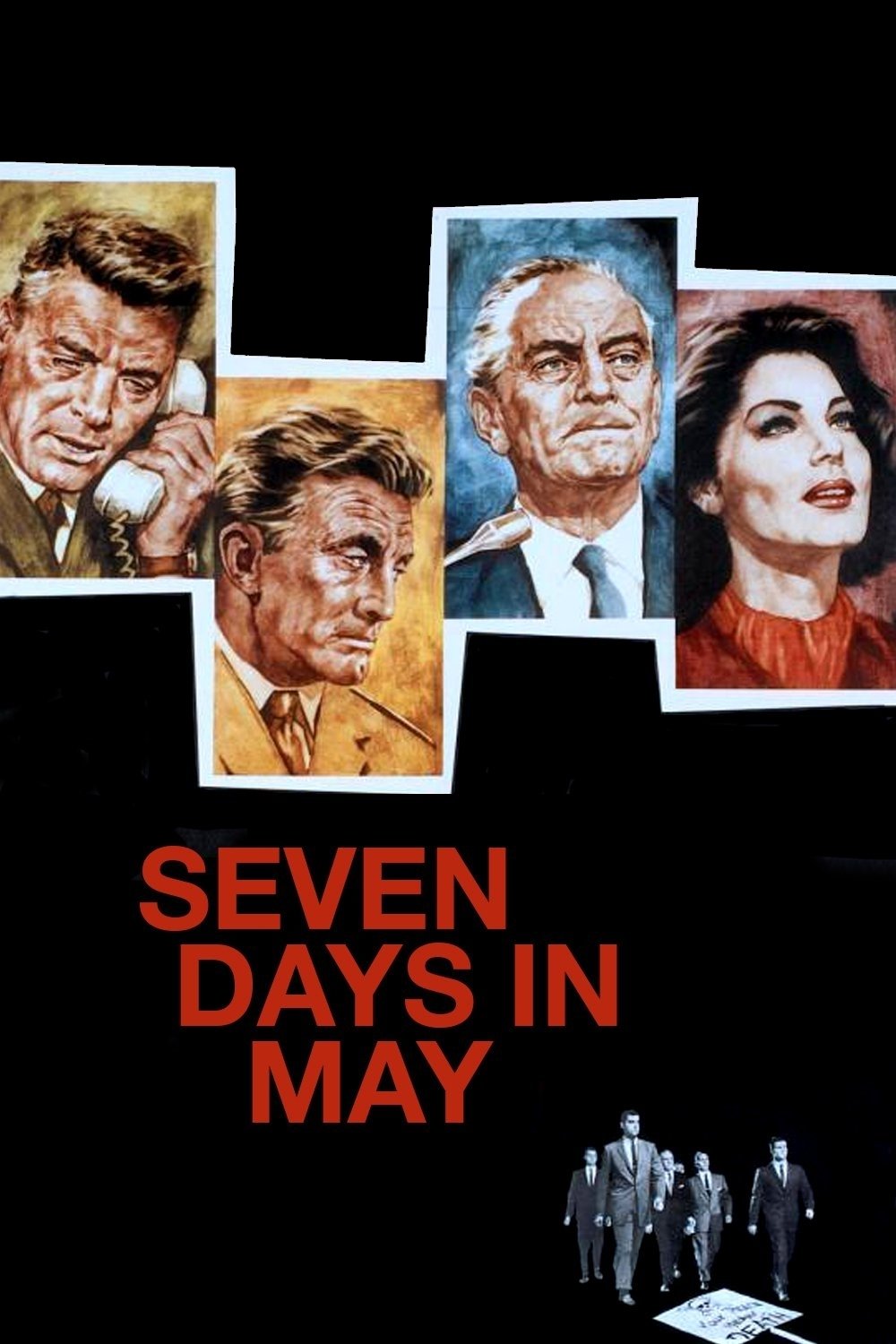
Seven Days in May poster

Seven Days in May

1964 · Generals plot against a president’s peace treaty; the conspiracy this film wanted to be.

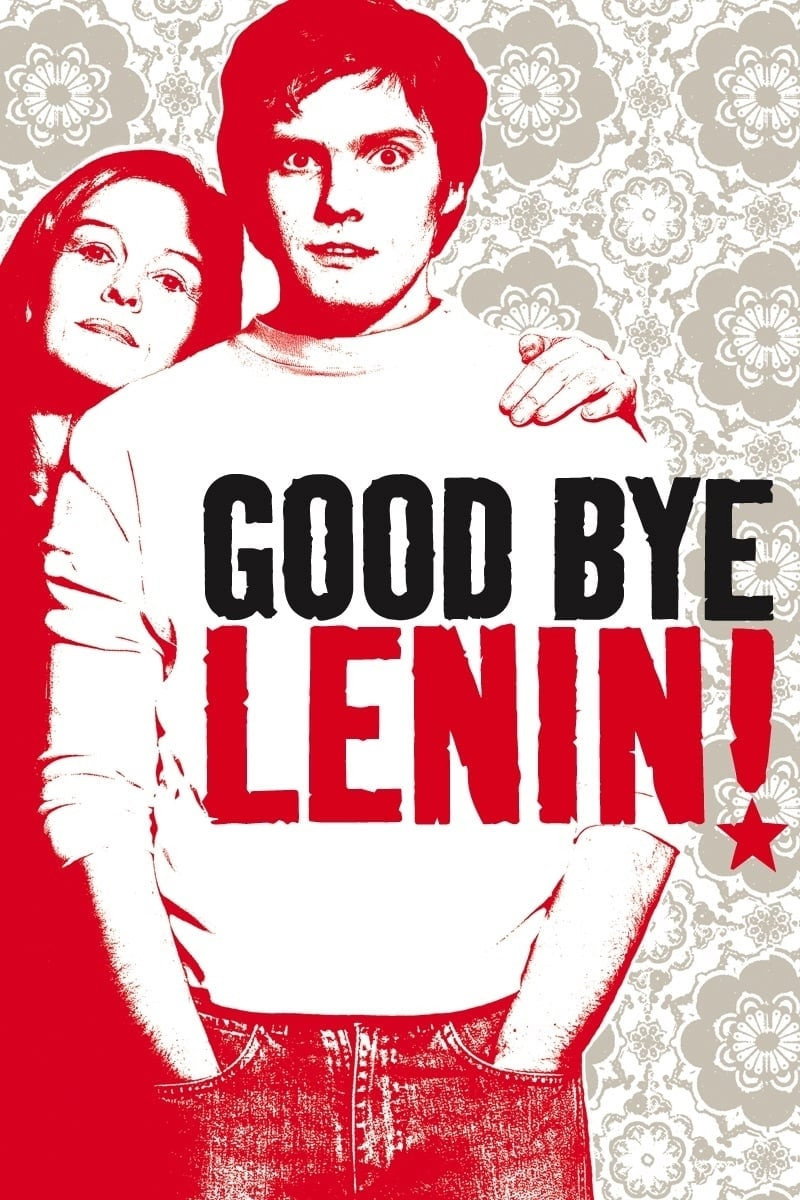
Good Bye Lenin! poster78

Good Bye Lenin!

2003 · The Wall comes down and one family declines to notice; funnier than it sounds.

Galaxy Quest poster

Galaxy Quest

1999 · A loving send-up of ageing space crews that understands why we forgive them.