James Cameron’s excellent action sequel makes the machines frightening and the people worth worrying about, with Linda Hamilton giving the violence its urgency. The middle drifts into sentiment, but the set-pieces remain precise, inventive and involving.
James Cameron asks Terminator 2: Judgment Day to make us enjoy the machinery of destruction while worrying about what it can do. That is an awkward job for a science-fiction action film, and he gets much further with it than we might expect. This is excellent entertainment, forceful and funny, with people worth following through the noise. At 137 minutes, it has a slack middle and a tendency to explain feelings that are already clear. For most of its length, Cameron earns the time.
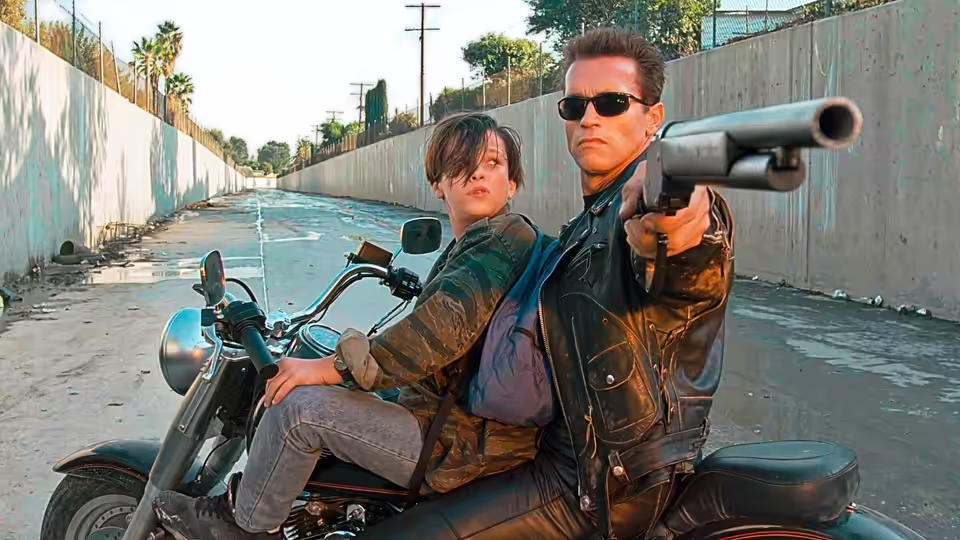
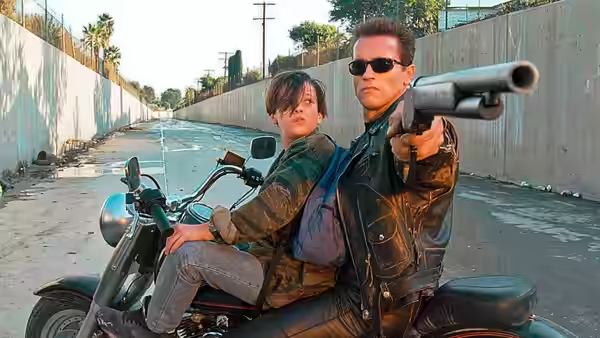
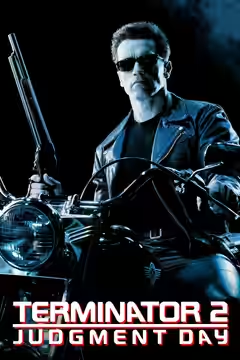
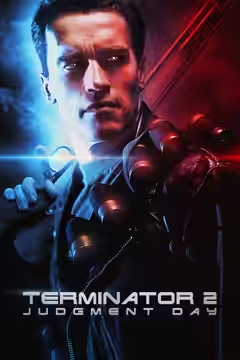
Robert Patrick’s T-1000 makes the liquid-metal effects frightening because the performance does not compete with them. Patrick gives the threat a plainness that makes its impossible body more disturbing. We felt a chill at the ease with which that metal changes form; there is no reassuring sense of a body reaching its limits. Arnold Schwarzenegger’s Terminator supplies a useful contrast, with a physical solidity and dry humour that make the human exchanges work. Cameron understands how much comedy that stillness can support.
Linda Hamilton gives Sarah Connor enough anger to stop the film becoming cosy. Her performance makes the danger feel personal even when the action threatens to overwhelm everybody in it. Edward Furlong’s John Connor brings a less controlled energy, and his rough edges are useful beside Schwarzenegger’s composure. We care about these people partly because they do not seem built to agree with one another. Hamilton’s severity also keeps the humour from making the threat feel harmless.
Adam Greenberg’s cinematography is crucial to the action’s clarity: the human figures remain readable amid effects that could easily swallow them. Editors Richard A. Harris, Conrad Buff IV and Mark Goldblatt give the confrontations a firm sense of progression. The cutting lets us register a threat and measure a response, rather than simply endure a succession of impacts. That makes the violence more involving, and sometimes more uncomfortable. The pace stays fast without making the people seem incidental.
Joseph C. Nemec III’s production design keeps the physical world convincing around an enemy whose body can change shape. The T-1000’s transformations would be less alarming without that sense of ordinary objects having weight. Brad Fiedel’s score adds pressure without making every confrontation feel celebratory. The music is a useful reminder of the dread beneath the excitement, especially in a film that wants its violence to carry an anti-nuclear warning.
The weakness is in Cameron and William Wisher’s screenplay, which occasionally stops to insist on the humanity we can already see. Schwarzenegger and Furlong are persuasive enough together without every softer moment being underlined. As the middle slows, the humour loses some of its bite and the sentiment becomes harder to accept. A firmer cut here would have protected both the warmth and the pace.
Action sequels often treat character as the business to get through before the next set-piece. Cameron’s advantage is that we want his people to remain on screen, even when nobody is fighting. That does not excuse the slower stretch, but it explains why the warmth belongs here. Give it the largest screen available and enough volume for Fiedel’s music to become slightly unreasonable.