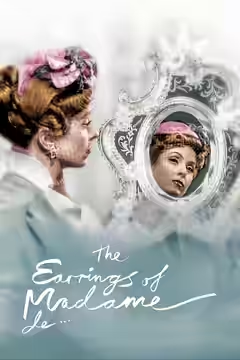
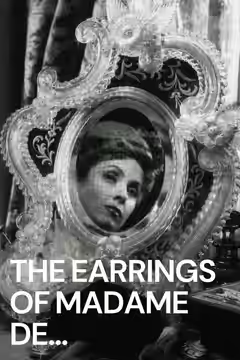
Max Ophüls’s romance is moving and beautifully acted, with Danielle Darrieux giving it much of its warmth. Allow for the earrings’ rather convenient travels and there is plenty here to care about.
Max Ophüls takes the pleasures of aristocratic life seriously enough to make a romance within it matter. The Earrings of Madame de… is moving and finely acted, though the earrings’ repeated reappearances can make the plotting feel too arranged. The passage from social comedy towards darker drama is more persuasive than the mechanics that carry it there. We recommend it for the attention it gives to feelings that its characters would prefer to keep under control.
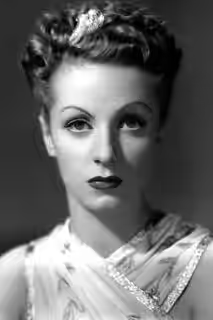
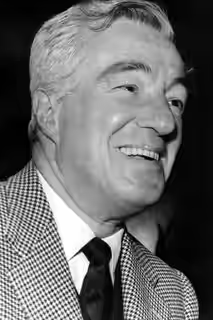
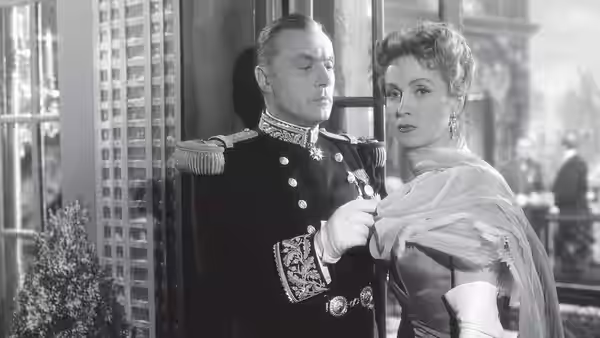
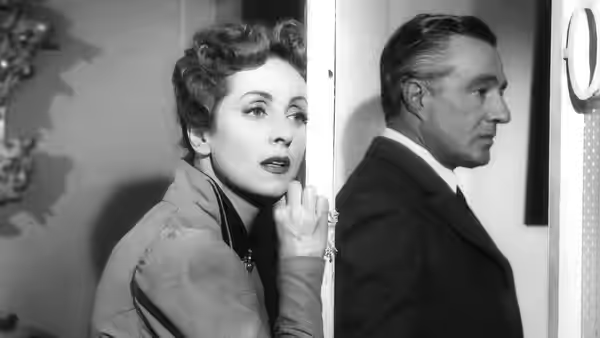
Danielle Darrieux, as Comtesse Louise de…, supplies the reason to care about this polished society. She makes a glance feel risky among people who appear practised at self-control. Vittorio De Sica, as Baron Fabrizio Donati, responds with an ease that keeps their attraction from becoming an exercise in correct period behaviour. We were moved by the ballroom sequence. Their attention to each other makes the dancing feel suddenly private, though the choreography keeps reminding us of the social occasion around them.
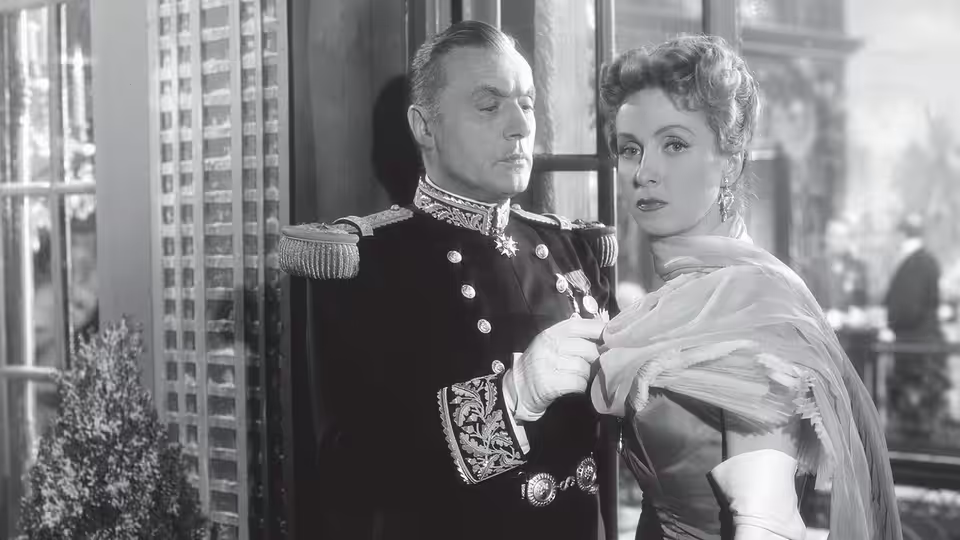
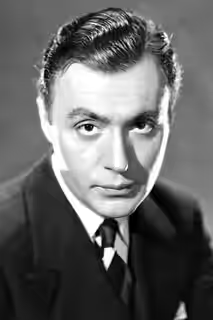
Charles Boyer plays Général André de… with restraint, and the choice pays off. His control makes us attend to small changes in the performance without waiting for a grand declaration of feeling. Alongside the warmth between his fellow leads, that reserve gives the social rules a force which an openly disapproving performance would lack. The three actors make vanity and vulnerability seem quite capable of existing in the same person. Their characters can behave foolishly without exhausting our interest in them.
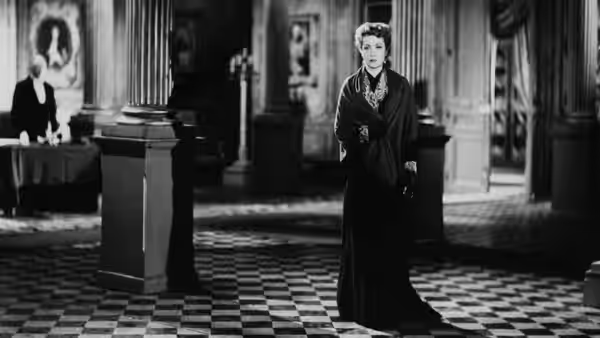
Christian Matras’s fluid tracking shots let us stay with the actors as the camera moves through their surroundings. In the ballroom, that movement allows the glances and the dancing to remain part of the same encounter. The camera gives us time to notice how much a look can change the meaning of a formal social exchange. Jean d’Eaubonne’s production design makes the aristocratic setting inviting enough for us to understand the attraction of belonging there.
Borys Lewin’s editing has a delicate job in a film that changes its tone so markedly. The lightness of the earlier passages lingers as the drama grows darker, which makes that change more affecting. We have had time to become interested in the people before the mood darkens. The music by Georges Van Parys and Oscar Straus sustains the pleasure of the social occasions without making the characters’ feelings seem weightless. The ballroom sequence benefits from that continuity between the music, the movement and the performers.
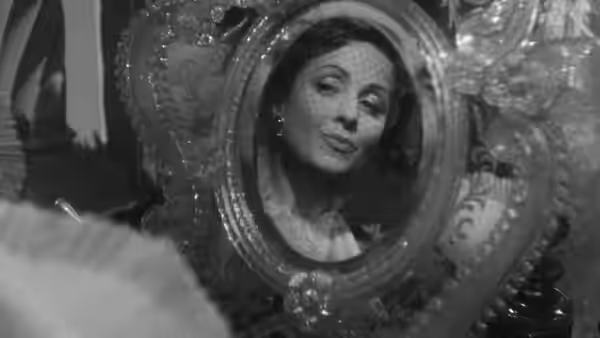
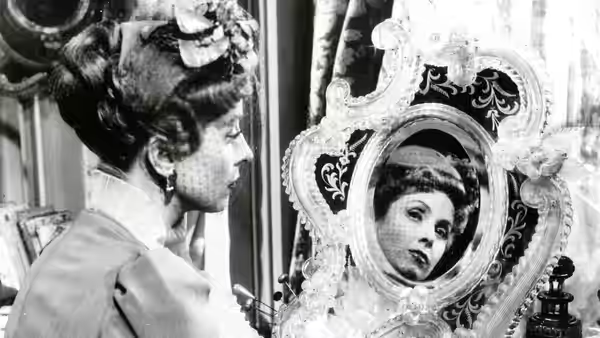
The earrings themselves are the difficulty. Their returns become predictable, and at times we notice the next piece of plotting before we have finished responding to the last encounter. That is a real limitation in a romance which otherwise makes such persuasive use of small, uncertain looks. There is something too tidy about an object repeatedly giving these feelings a convenient reason to surface. The performances do enough to keep those arrangements from dominating our interest.
Within romantic drama, the film stands out for its patience with people who initially seem too pleased with themselves to deserve much of it. Its interest in gender and social convention grows out of attraction and the effort to remain composed, so the characters do not feel like examples assembled for our instruction. The reserve takes some getting used to, especially if romance usually means a succession of declarations. Allow for the conspicuous plotting and give these actors your attention.