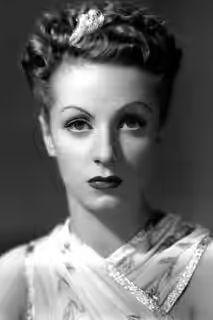
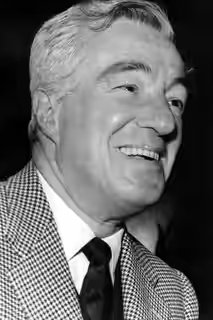
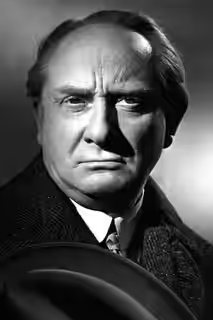
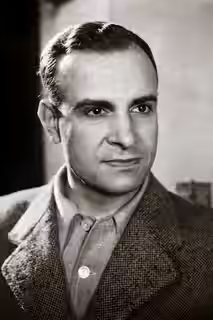
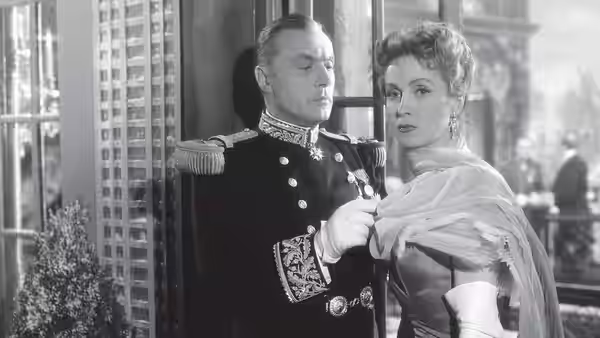
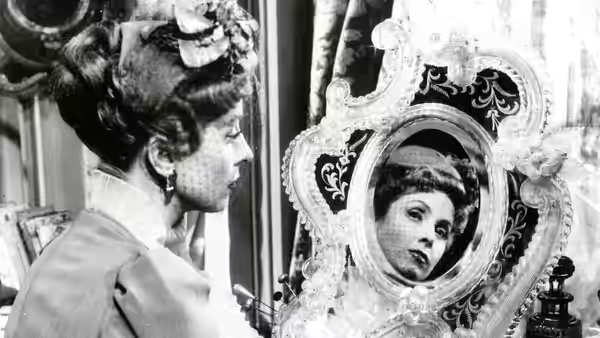
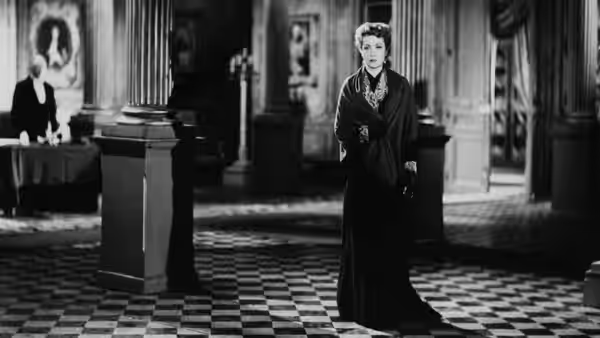
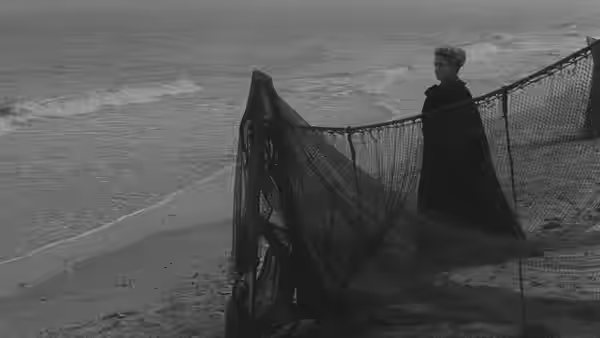
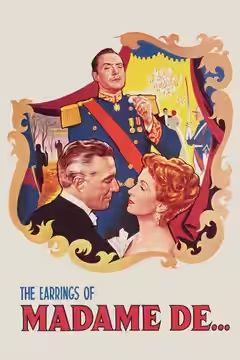
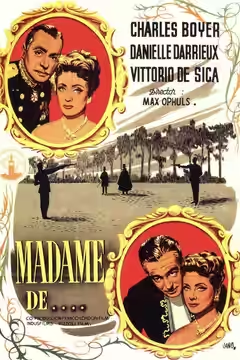
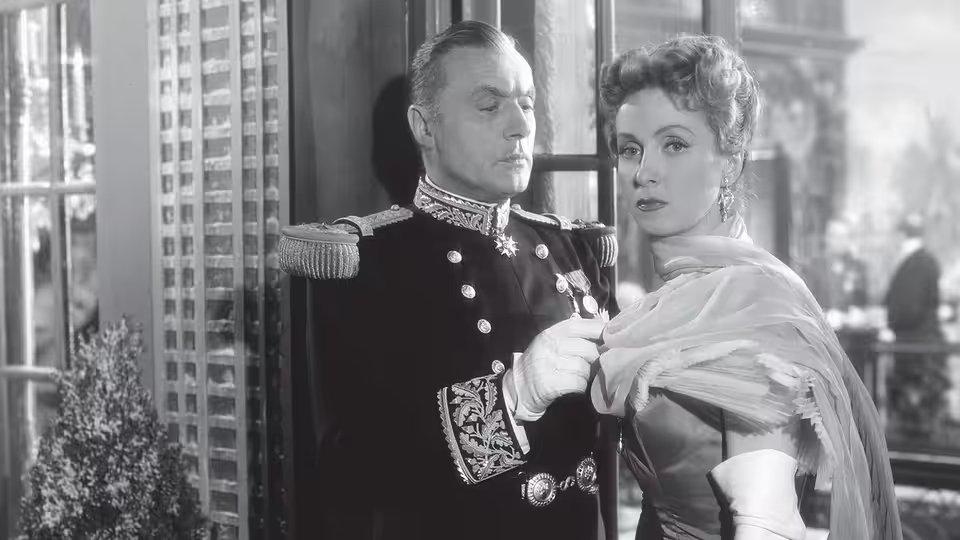
Général André de... (Charles Boyer) adjusts Comtesse Louise de... (Danielle Darrieux)'s shawl indoors
Film review

The Earrings of Madame de...

1953 · Directed by Max Ophüls · 1h 45m

In a sentenceWe came for the jewellery and ended up worrying about the people wearing it

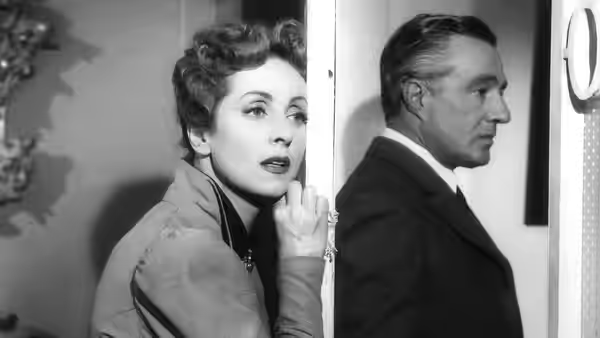
Comtesse Louise de… (Danielle Darrieux), Général André de… (Charles Boyer) and Baron Fabrizio Donati (Vittorio De Sica) inhabit an aristocratic society in which manners regulate public behaviour and appearances matter. A pair of earrings passes between owners, linking private desires to the conventions surrounding love. Louise’s vanity has a place in this society; feelings that cannot be kept politely under control are harder to accommodate. Jewellery, social encounters and the effort to remain composed draw the three into a romance shaped by the expectations of the people around them.

Plays from YouTube when you press play; nothing loads from them until then.

Fi1m review

Max Ophüls’s romance is moving and beautifully acted, with Danielle Darrieux giving it much of its warmth. Allow for the earrings’ rather convenient travels and there is plenty here to care about.

Max Ophüls takes the pleasures of aristocratic life seriously enough to make a romance within it matter. The Earrings of Madame de… is moving and finely acted, though the earrings’ repeated reappearances can make the plotting feel too arranged. The passage from social comedy towards darker drama is more persuasive than the mechanics that carry it there. We recommend it for the attention it gives to feelings that its characters would prefer to keep under control.

Danielle Darrieux, as Comtesse Louise de…, supplies the reason to care about this polished society. She makes a glance feel risky among people who appear practised at self-control. Vittorio De Sica, as Baron Fabrizio Donati, responds with an ease that keeps their attraction from becoming an exercise in correct period behaviour. We were moved by the ballroom sequence. Their attention to each other makes the dancing feel suddenly private, though the choreography keeps reminding us of the social occasion around them.

Charles Boyer plays Général André de… with restraint, and the choice pays off. His control makes us attend to small changes in the performance without waiting for a grand declaration of feeling. Alongside the warmth between his fellow leads, that reserve gives the social rules a force which an openly disapproving performance would lack. The three actors make vanity and vulnerability seem quite capable of existing in the same person. Their characters can behave foolishly without exhausting our interest in them.

Christian Matras’s fluid tracking shots let us stay with the actors as the camera moves through their surroundings. In the ballroom, that movement allows the glances and the dancing to remain part of the same encounter. The camera gives us time to notice how much a look can change the meaning of a formal social exchange. Jean d’Eaubonne’s production design makes the aristocratic setting inviting enough for us to understand the attraction of belonging there.

Borys Lewin’s editing has a delicate job in a film that changes its tone so markedly. The lightness of the earlier passages lingers as the drama grows darker, which makes that change more affecting. We have had time to become interested in the people before the mood darkens. The music by Georges Van Parys and Oscar Straus sustains the pleasure of the social occasions without making the characters’ feelings seem weightless. The ballroom sequence benefits from that continuity between the music, the movement and the performers.

The earrings themselves are the difficulty. Their returns become predictable, and at times we notice the next piece of plotting before we have finished responding to the last encounter. That is a real limitation in a romance which otherwise makes such persuasive use of small, uncertain looks. There is something too tidy about an object repeatedly giving these feelings a convenient reason to surface. The performances do enough to keep those arrangements from dominating our interest.

Within romantic drama, the film stands out for its patience with people who initially seem too pleased with themselves to deserve much of it. Its interest in gender and social convention grows out of attraction and the effort to remain composed, so the characters do not feel like examples assembled for our instruction. The reserve takes some getting used to, especially if romance usually means a succession of declarations. Allow for the conspicuous plotting and give these actors your attention.

Critical consensus AI synthesised

73
Positive
7
Mixed
0
Negative
2

Most critics respond warmly to The Earrings of Madame de…, with praise clustering around Ophüls’s fluid camerawork and his treatment of love under social constraint. The expressive tracking shots and choreographed ballroom sequence draw particular admiration, while several reviews find that the elegant surfaces allow a searching examination of gender and romantic conventions. Performances also attract praise, especially the expressive glances of Darrieux and De Sica, alongside the film’s handling of passion and circumstance.

The spread is wide, however, with two firmly negative assessments challenging the emotional substance that its admirers find. Variety praises the careful framing and restrained acting but considers the attitudes dated and the characters lifeless. Eye for Film likewise acknowledges the visual beauty, yet finds the drama superficial and unconvincing, with the earrings’ repeated returns becoming an irritatingly predictable device. The central disagreement is whether the elegance deepens the characters’ feelings or leaves them insufficiently explored.

The Guardian
14 February 2013 · Peter Bradshaw
95*

Bradshaw calls the film a great, praising its elegant, gripping storytelling and erotic mystery. He especially singles out its fluid camerawork and superb trio of performances.

Read the full review →
IndieWire
7 August 2013 · Matt Brennan
90*

Brennan offers a strongly positive appraisal, calling the film a masterpiece whose insights remain striking. He singles out Ophuls’ graceful, fluid visual style and the way it uses surface elegance to examine gender and romantic conventions.

Read the full review →
The New York Times
11 March 2007 · Dave Kehr
90*

Kehr’s review is strongly positive about Ophüls’s film. It singles out the director’s elegant, fluid visual style for praise.

Read the full review →
Time Out
12 February 2013 · ★★★★ · Tom Huddleston
80

Huddleston gives the film a positive four-star assessment. He singles out its distinctive structure, which shifts from sunny aristocratic comedy toward darker drama.

Read the full review →
Slant Magazine
4 August 2013 · ★★★½ · Chuck Bowen
70

Bowen finds the film’s view of love and social convention unusually nuanced, while judging the Criterion release not quite stellar. He praises the vibrant mono soundtrack and Ophüls’s expressive tracking shots, but criticizes the transfer’s lack of detail and overly scrubbed skin textures.

Read the full review →
The AV Club
15 October 2008 · Noel Murray
70*

Murray presents the film positively as the culmination of themes developed in Ophüls’ earlier work. He singles out its style, tone, and music for capturing characters who feel independent but are swept along by passion and circumstance.

Read the full review →

Straight answers AI written, from our review

Is The Earrings of Madame de... worth watching?
The Earrings of Madame de... is well worth watching for its finely acted, restrained romance, and we score it 87 out of 100. Danielle Darrieux gives its aristocratic society warmth and vulnerability, especially in the ballroom sequence. The earrings’ convenient reappearances make the plotting conspicuous, but we recommend it to anyone who enjoys feelings conveyed through small looks rather than declarations.
How long is The Earrings of Madame de..., and what is it rated?
The Earrings of Madame de... runs 1h 45m. It is a drama and romance film.
Where can I watch The Earrings of Madame de... in Croatia?
The Earrings of Madame de... is not on any streaming or rental service in Croatia at the moment. It is available in 6 other countries; change your country at the top of the page to see where. Availability is checked daily.
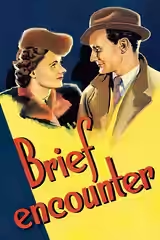
How does The Earrings of Madame de... compare to Brief Encounter?
The Earrings of Madame de... offers a more aristocratic setting for restrained romance than Brief Encounter, which earns our stronger recommendation for making falling in love feel ordinary and frightening. Both make small exchanges matter. Choose Ophüls’s film for the dancing, social ceremony and three finely judged performances; choose Brief Encounter for its painful attention to Laura’s anxiety.
Is The Earrings of Madame de... based on a true story or a book?
The Earrings of Madame de... is adapted from a novel by Louise de Vilmorin, rather than presented as a true story. We recommend it for the performances and its attention to love within a society governed by appearances; knowing the novel is not a prerequisite for appreciating those qualities.
What should I watch after The Earrings of Madame de...?
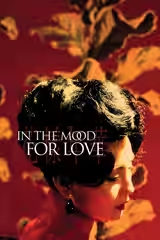
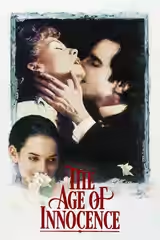
After The Earrings of Madame de..., try Brief Encounter (1945, Fi1m 90): Restrained performances make ordinary conversations carry the weight of an impossible romance. Then In the Mood for Love (2000, Fi1m 91): Formal courtesy and careful glances make attraction almost painfully difficult to acknowledge; and The Age of Innocence (1993, Fi1m 86): Another society knows exactly how to discourage feelings without appearing discourteous.

Cast

Awards

Academy Awards, 1955

Nominated
Best Costume Design, Black-and-White

If you liked this, try…

  1. Brief Encounter (1945, Fi1m 90)Restrained performances make ordinary conversations carry the weight of an impossible romance.

  2. In the Mood for Love (2000, Fi1m 91)Formal courtesy and careful glances make attraction almost painfully difficult to acknowledge.

  3. The Age of Innocence (1993, Fi1m 86)Another society knows exactly how to discourage feelings without appearing discourteous.

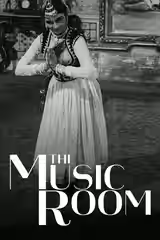
  4. The Music Room (1958, Fi1m 88)Music and ceremony sustain an aristocrat whose attachment to grandeur becomes painfully revealing.

  5. Letter from an Unknown Woman (1948, Fi1m 86)Max Ophüls gives romantic longing the same patient attention and troubling elegance.