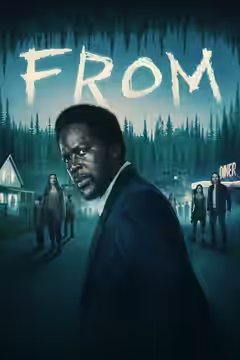
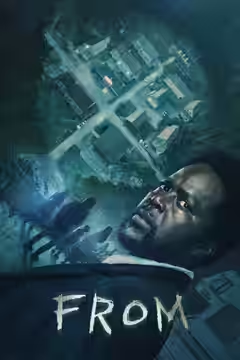
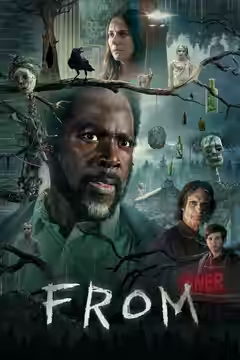
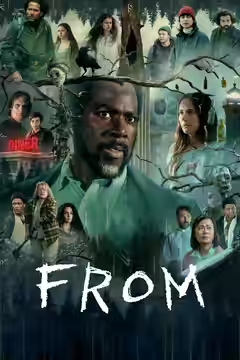
A family drives into a town no road leads out of, and after dark the neighbours come knocking. Harold Perrineau holds the whole thing together, the nights are properly frightening, and the days are spent having the same argument twice.
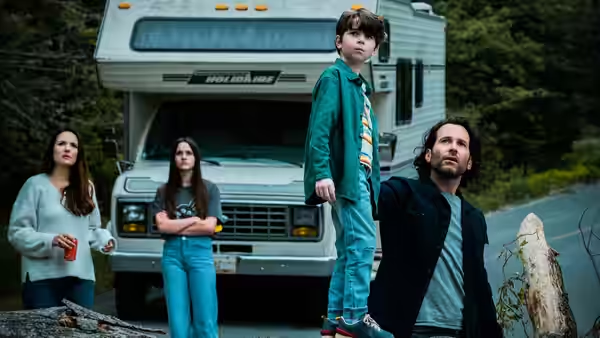
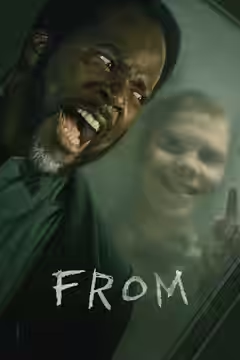
John Griffin’s series opens on a town that Stephen King might have furnished: a main street, a diner, a white church, a big clapboard house on the hill. The Matthews family, Jim (Eion Bailey), Tabitha (Catalina Sandino Moreno) and their children Julie (Hannah Cheramy) and Ethan (Simon Webster), drive in, drive out again, and find the same street waiting for them. Then the sun goes down and things that look like people come out of the trees. FROM is frightening for about a quarter of every hour and ordinary for the rest, and for anyone who likes being frightened the arithmetic works out in its favour.
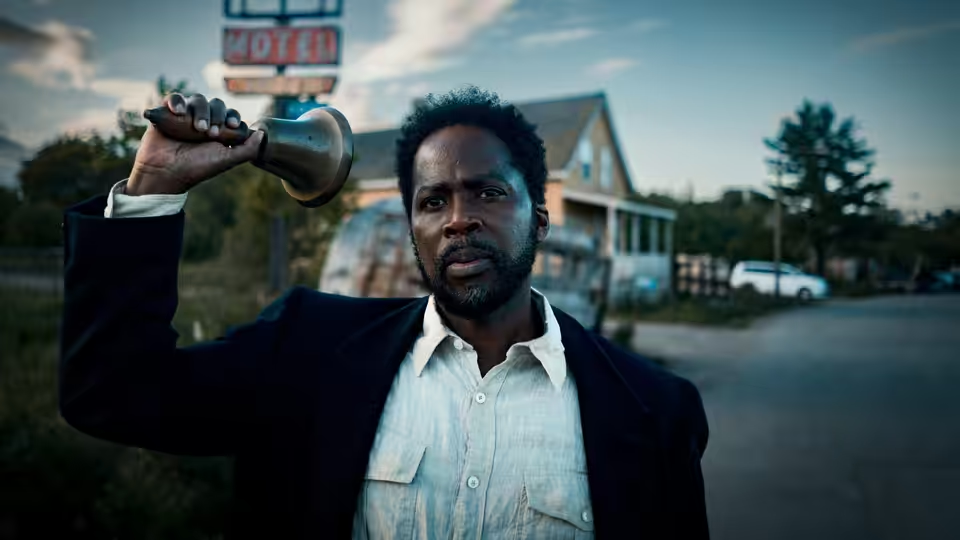
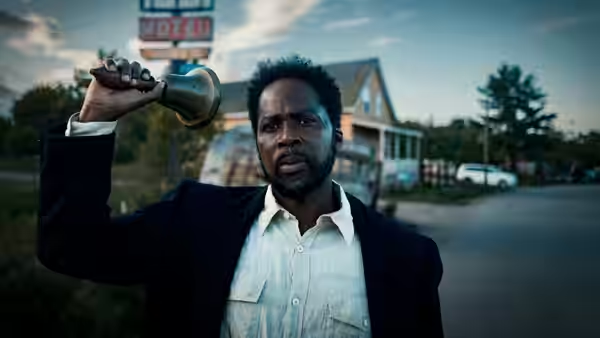
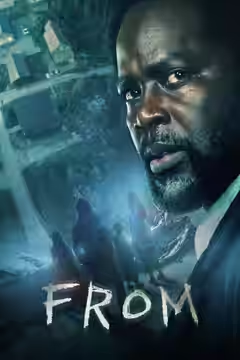
The rules are set out fast, mostly by Boyd Stevens (Harold Perrineau), the sheriff nobody elected. Stay indoors after dark. Hang the talisman by the door and the creatures cannot cross it. Do not open the door, whatever you hear. The town has split into two camps, and the two do not much like each other. That is the whole premise, and the pilot does not hide any of it.
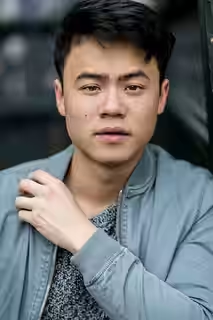
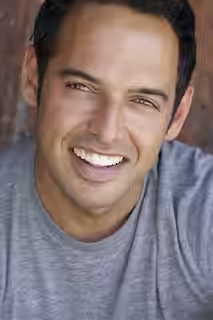
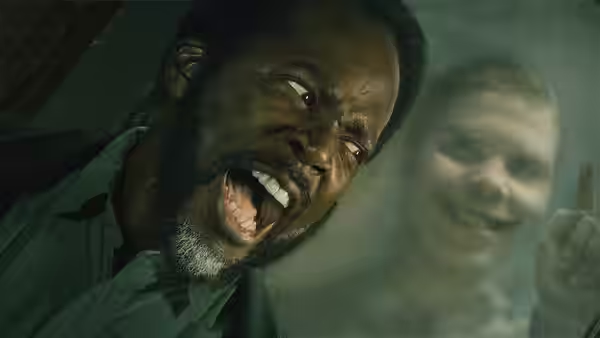
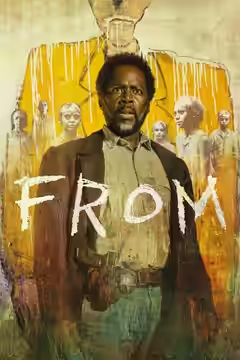
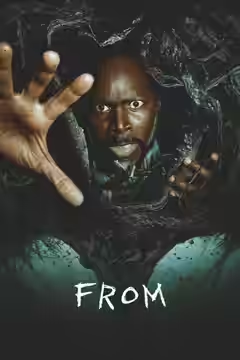
The reviews so far agree on Perrineau, and so do we. He plays Boyd as a man who has been carrying the town for so long that he no longer straightens up between crises, and he lets us see the temper under the patience. His scenes with Kenny (Ricky He) and with Father Khatri (Shaun Majumder), who has stopped expecting his prayers to be answered and keeps saying them anyway, are the best written in the programme. Chloe Van Landschoot’s Kristi, worn thin and still working, is the other performance that lasts.
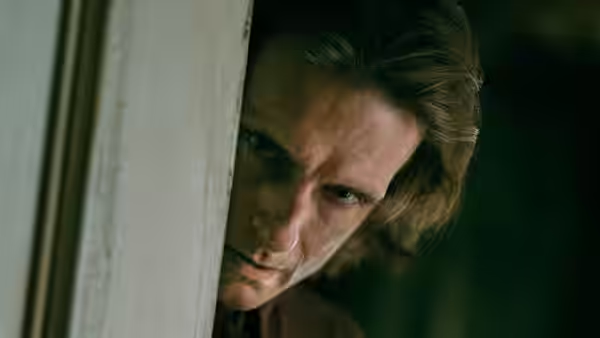
Jack Bender directs the opening episode, and the night scenes are where the care went. The cinematographers, Michael Wale and Christopher Ball among them, light the nights only from inside the houses, so the dark begins at the edge of the porch and the creatures step into the lamplight already smiling. Chris Tilton’s score is low strings and a plain piano figure, and yes, it sounds a good deal like Lost, which is not surprising given who is involved. The editors, Michele Conroy and Wendy Hallam Martin among them, hold on a window a beat longer than is comfortable and then hold again.
We watched the first night through our fingers, and we are not embarrassed to say so. What did it was the quiet: no sting on the soundtrack, no cut to the monster, just a woman’s voice outside a locked door asking, in the tone of a neighbour who has run out of milk, to be let in. The programme understands that a thing which waits is worse than a thing which lunges. It goes back to that well often, and the well has not run dry.
Daylight is another matter. The scripts, from a room that includes Jeff Pinkner and Javier Grillo-Marxuach, have people say what they feel in full sentences, and Jim and Tabitha have the same argument about leaving in most episodes without either of them saying anything new. Jade (David Alpay) is written to be disliked and succeeds. Lost, which this resembles in cast, crew and shape, gave every character a past worth cutting away to; here most of them have a job and a temper and not much else. The mysteries, meanwhile, arrive faster than they are explained, and across its first four seasons the ratio has not improved.
It carries an 18, earned in the first ten minutes with a mother, a child and an open door. Watch it at night with the lights off, and if the daytime stretches tempt you to look at your phone, resist for the last ten minutes of each episode, because that is where the programme lives.