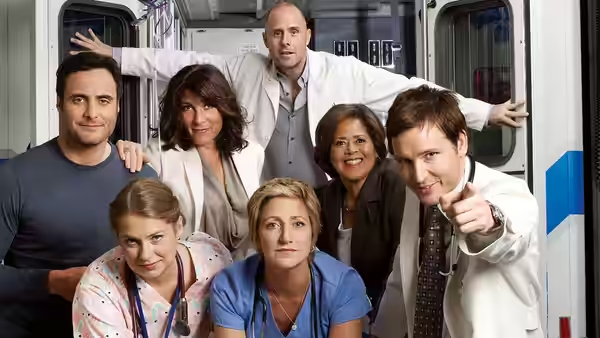
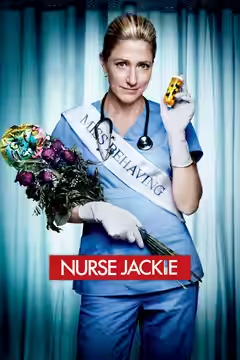
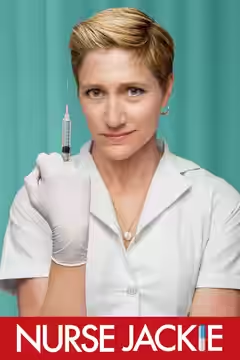
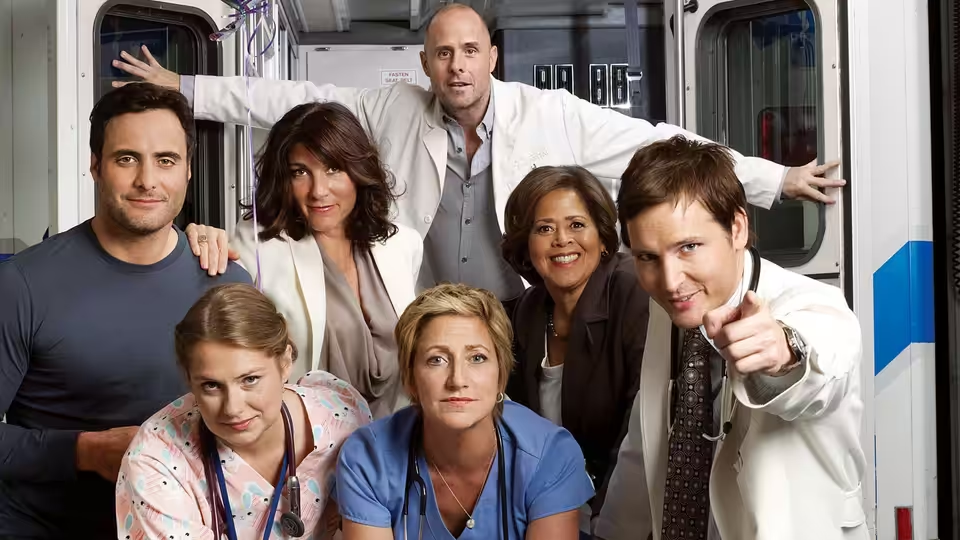
Hospital staff gather in a corridor as a doctor in a white coat points outward
Series review

Nurse Jackie

2009 · Created by Linda Wallem, Liz Brixius, Evan Dunsky · Series · 30m

In a sentenceThe best nurse in Manhattan, so long as nobody counts the pills

Jackie Peyton (Edie Falco) is an emergency room nurse better at her job than anyone around her and quietly snorting crushed painkillers to get through the shift. She takes her wedding ring off before work and gets her pills from Eddie Walzer (Paul Schulze), whom she is sleeping with. She goes home to her husband Kevin (Dominic Fumusa) and their daughters, including Grace (Ruby Jerins), none of whom know about Eddie or the pills. At work she is handed Zoey Barkow (Merritt Wever), a chattering first-year nursing student, and must dodge Dr Fitch Cooper (Peter Facinelli), a new doctor with a nervous habit, and the administrator Gloria Akalitus (Anna Deavere Smith). Her only confidante is Dr Eleanor O’Hara (Eve Best), who prefers lunch to patients.

Fi1m review

Edie Falco plays a brilliant emergency nurse with a pill habit and a second life, and she is reason enough to watch. The show around her is sharp for two seasons, then circles the same ground for several more before it remembers where it was going.

Nurse Jackie is a half-hour comedy about a drug addict who is extremely good at her job, and the joke and the point are the same thing. Created by Liz Brixius, Linda Wallem and Evan Dunsky, it ran seven seasons and 80 episodes from 8 June 2009, and for most of that length it is worth your evening, chiefly because of the woman at the centre of it. Edie Falco carries it. When the writing is good she makes it better, and when the writing goes round in circles, which it does for a couple of years in the middle, she keeps you in your seat anyway.

The first episode lays everything out without once asking us to approve. Jackie crushes a pill, snorts it, and goes to work. She has lunchtime sex with Eddie, who keeps her supplied, and then goes home to a husband and two daughters who think she is simply tired. We laughed at how briskly she gets through all of it, and then felt slightly ashamed of ourselves, which is the response the show is after and will keep after for seven years.

Falco plays Jackie with no appeal to the audience at all. She delivers a lie in the same flat, quick voice she uses to order a chest film, and she does not slow down for either. Her face does almost nothing when she takes the pills and almost nothing when she saves a life, so we are left to work out which of those is the real Jackie, and the show is honest enough never to tell us. It is a performance built from efficiency, and the cruelty of it is that efficiency is exactly what an addict needs most.

The hospital around her is well stocked. Merritt Wever’s Zoey, the student nurse who talks when she should listen and wears scrubs printed with cartoons, is the funniest person in the building and slowly becomes its conscience; Wever plays her as a puppy with a spine. Eve Best’s O’Hara is English, expensive and bored, drinks at lunch and treats Jackie as the only other adult in Manhattan, and the two of them have the show’s best scenes. Peter Facinelli’s Dr Cooper grabs a breast when he is nervous, which in the first episode is the whole character; the writers give him more later. Anna Deavere Smith’s Akalitus is introduced as a bureaucrat to be outwitted and is gradually allowed to be right. Haaz Sleiman’s Mo-Mo and Stephen Wallem’s Thor fill out a nursing station that feels like a place people have worked for years.

The directors, who over the run include Steve Buscemi, Paul Feig, Allen Coulter, Bob Balaban and John Cameron Mitchell, keep to one rule: stay on Falco. A scene ends on her face as the lie lands and the next begins with her already moving to the next bed, no pause, no music telling us how to feel. The half-hour form helps. Nothing is allowed to swell. A patient dies, Jackie takes a pill, Zoey says something ridiculous, and the episode is over before anyone has had time to make a speech.

The trouble is the middle. From roughly the third season the show settles into a loop: Jackie uses, Jackie lies, Jackie is nearly caught, Jackie is not. The supporting cast keep it watchable, and Ruby Jerins, as the daughter who has inherited her mother’s nerves without the pills to manage them, is quietly very good at it. But somewhere in the third year we noticed we wanted someone to catch her, and not out of concern for her health. We wanted the plot to move. The fourth season begins to make it move, in ways we will not describe, and the show is better for it.

Most critics land in the same place we do, warm about Falco and tired by the repetition, and we have no quarrel with them. Set against the cable dramas about charming men who do terrible things, this is the rare one that refuses to make its monster lovable, and it refuses for 80 episodes. Watch the first two seasons and you will know by the end of them whether you want the rest. It carries a 15, and it earns it in the first ten minutes.

Critical consensus AI synthesised

69
Positive
5
Mixed
1
Negative
1

Most critics like Nurse Jackie, and nearly all of them like it for the same reason: Edie Falco. The reviews return again and again to her performance as a nurse holding together prescription pills, lies and a family, and to the series’ refusal to soften her or to make the addiction romantic. Several also credit the hospital around her, the supporting cast and the comic troublemakers who fill out the ward once the show has found its footing.

The reservations arrive with the later seasons. The Guardian finds the third run watchable but stagnant, with Jackie harder to sympathise with as it goes on, and Variety, the one outright negative review, says a new showrunner does little to shift a familiar formula, its best moments dramatic rather than funny. The spread is wide, from warm early notices to a weary later one, which suggests a series critics admired more at the start than they did by the end.

The AV Club
7 July 2009 · A- · Amelie Gillette
90

Gillette says the series is now competently humming along after taking a few episodes to find its footing. She praises the episode’s funny, increasingly well-drawn hospital characters, especially Coop and Eddie’s comic troublemaking.

Read the full review →
The Hollywood Reporter
5 June 2009 · Randee Dawn
90*

Dawn finds the series and its conflicted lead character compelling and worth watching. She especially praises Edie Falco’s fierce performance and the show’s striking cinematography.

Read the full review →
IndieWire
10 April 2012 · Alison Willmore
75*

Willmore views the fourth-season opening as a welcome move toward lasting consequences for Jackie’s addiction. She praises the series’ nuanced portrayal of functional addiction and looks forward to Jackie’s struggles in rehab.

Read the full review →
Empire
24 February 2010 · Tony Horkins
70*

The review is positive about Edie Falco’s portrayal of Nurse Jackie. It singles out her depiction of a morally compromised nurse juggling prescription drugs, deception and family life.

Read the full review →
Vulture
29 June 2015 · Margaret Lyons
70*

Lyons finds the series imperfect but ultimately compelling in its refusal to make Jackie likable or romanticize her addiction. She especially praises the show’s unsoftened portrait of Jackie’s contradictory qualities.

Read the full review →
The Guardian
7 September 2011 · Kathy Sweeney
55*

The piece finds the third season watchable but increasingly stagnant, with Jackie becoming harder to sympathize with. It praises the supporting cast, especially Eve Best and Ruby Jerrins.

Read the full review →

Straight answers AI written, from our review

Is Nurse Jackie worth watching?
Nurse Jackie is worth watching for Edie Falco's performance as an emergency nurse hiding a pill habit, and we scored it 72. The first two seasons are sharp and funny; the middle years circle the same ground before the plot moves again. Watch the first two seasons and you will know whether you want the rest.
How long is Nurse Jackie, and what is it rated?
Nurse Jackie has episodes of about 30m. It is a drama and comedy series.
Where can I watch Nurse Jackie in New Zealand?
Nurse Jackie is not on any streaming or rental service in New Zealand at the moment. It is available in 26 other countries; change your country at the top of the page to see where. Availability is checked daily.
How violent or frightening is Nurse Jackie, and is it suitable for children?
Nurse Jackie carries a UK 15 certificate and is not suitable for children. It opens with its heroine crushing and snorting painkillers before a shift, and it includes lunchtime sex with her dealer, hospital deaths and sustained drug use played without judgement. There is little to frighten adults, but the subject matter is adult throughout.
How does Nurse Jackie compare to Weeds?
Nurse Jackie and Weeds are both half-hour comedies about mothers with a straight face and a secret, and both are strongest in their early seasons. Weeds is the sharper and more unkind of the two before it changes shape; Nurse Jackie is the steadier, carried further by Falco's refusal to make her addict lovable. Viewers who want the character study should start with Jackie.
What should I watch after Nurse Jackie?
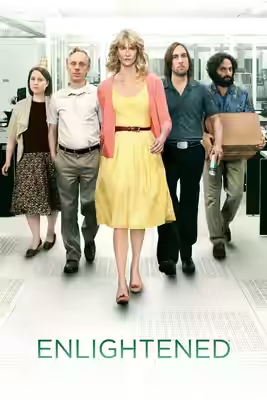
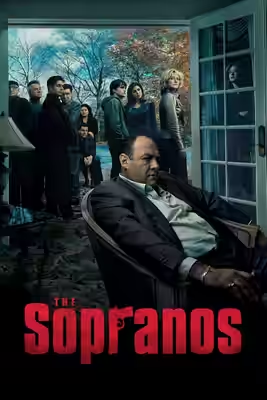
After Nurse Jackie, try Weeds (2005, Fi1m 76): Mary-Louise Parker as another suburban mother with a secret trade and a straight face. Then Enlightened (2011, Fi1m 84): Laura Dern as a woman who means well and wrecks everything; half an hour at a time; and The Sopranos (1999, Fi1m 94): Falco’s other great wife of a liar, and the model for cable’s bad protagonists.

Cast

If you liked this, try…

  1. Weeds (2005, Fi1m 76)Mary-Louise Parker as another suburban mother with a secret trade and a straight face.

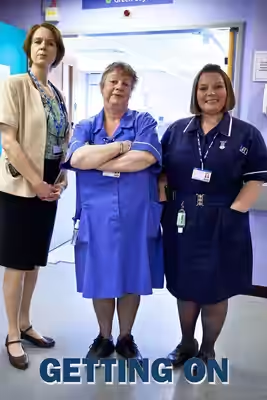
  2. Getting On (2009) · not reviewed yetA geriatric ward, no heroics, and Jo Brand making paperwork into tragedy.

  3. Enlightened (2011, Fi1m 84)Laura Dern as a woman who means well and wrecks everything; half an hour at a time.

  4. The Sopranos (1999, Fi1m 94)Falco’s other great wife of a liar, and the model for cable’s bad protagonists.

  5. This Is Going to Hurt (2022, Fi1m 84)Ben Whishaw’s junior doctor lies to patients, bosses and himself, and the jokes hurt.

Free account

Know what to watch tonight

Two lists that know where things are streaming, collections you can share, your own score beside ours, and Discover that remembers what you have seen.

  • Want to see, sorted by what is streaming now
  • Seen, with your score out of ten
  • No adverts, ever