Strong performances and enjoyable scheming make Spartacus worth considering for devotees of lurid historical drama. Repetitive violence and thin plotting mean the blood is often doing work the writing should have done.
Spartacus is decent, unruly television for viewers prepared to tolerate repetitive graphic violence for the sake of some strong performances. Created by Steven S. DeKnight, it takes the brutality of ancient Rome as permission to be noisy, lewd and determinedly unsubtle. We have no objection to that approach: a drama about people owning other people has good reason to be unpleasant. The problem is how often another bout of excess has to cover for a story that has barely advanced.
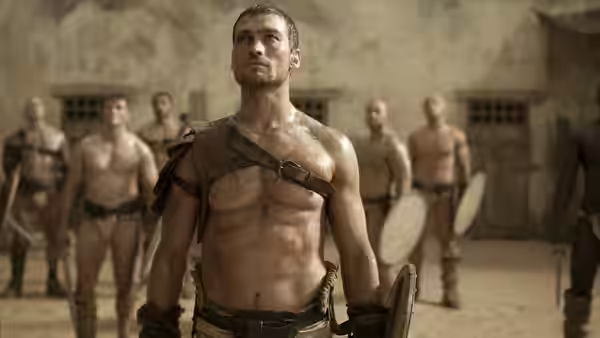
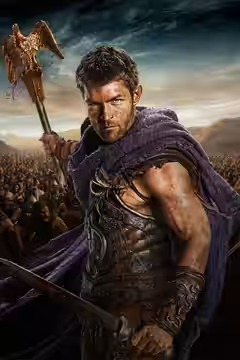
Andy Whitfield gives Spartacus enough conviction to keep the central struggle for freedom from disappearing beneath the blood. He has the presence this material needs, even when the dialogue gives him little help. John Hannah as Batiatus and Lucy Lawless as Lucretia are more entertaining, largely because scheming gives them something to play beyond determination. Their owners make the business of controlling other lives unpleasantly enjoyable to watch. We wanted more time with these two whenever the series returned to another demonstration of how graphically it could injure someone.
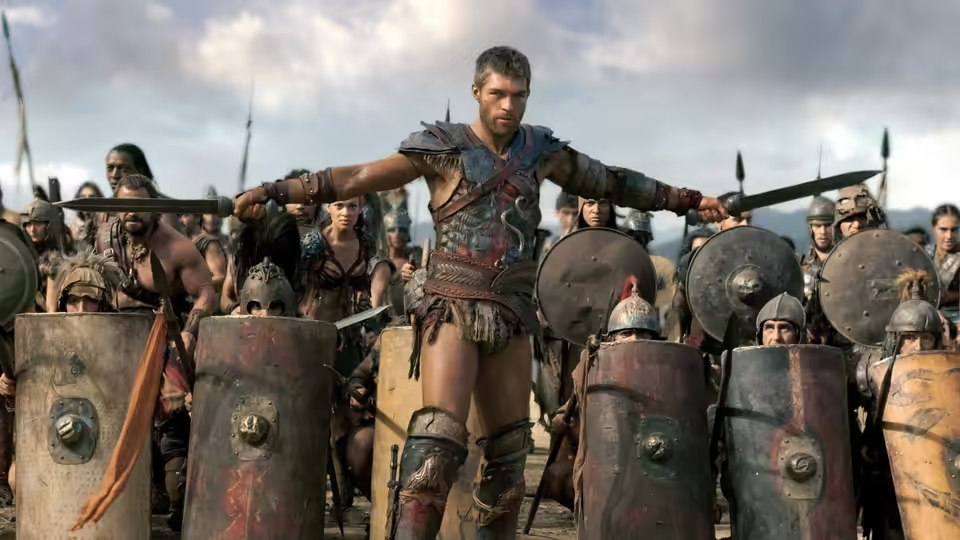
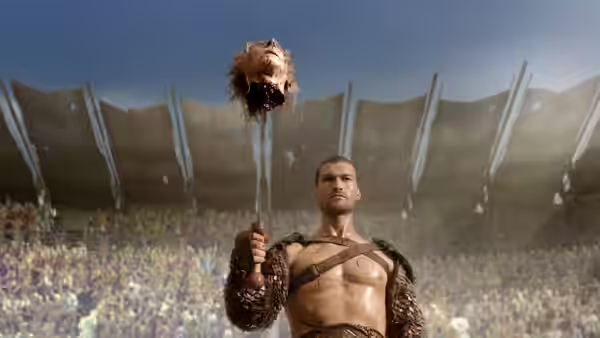
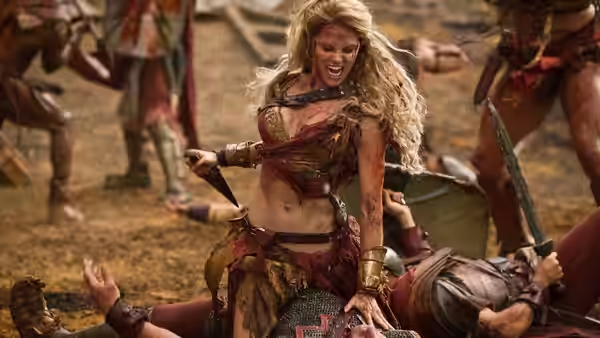
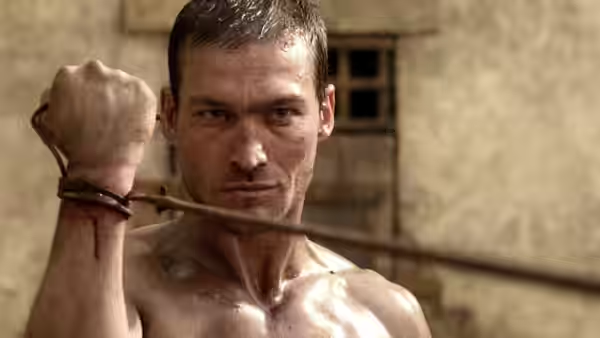
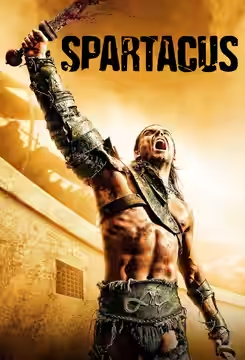
The fights have a peculiar problem: the more insistently the slow motion asks us to inspect the violence, the less convincing the wounds become. We laughed at the bloodshed because its cartoonish exaggeration makes the effort to shock so obvious. There is pleasure in that ridiculousness, and the programme sometimes seems quite willing to share it. As the fights accumulate, however, the emphasis on each impact becomes tiring, and the programme keeps using a device whose effects have already worn off.
The artificial-looking settings are less of a problem in themselves. A Roman drama need not convince us that somebody has rebuilt Rome, and the enclosed spaces can suit a story dominated by owners and their schemes. What weakens the effect is the combination of that conspicuous unreality with violence so keen to impress us with its physical detail. Joseph LoDuca provides the music, but the accompaniment cannot supply the restraint the staging lacks. Too much of the presentation insists on attention at once.
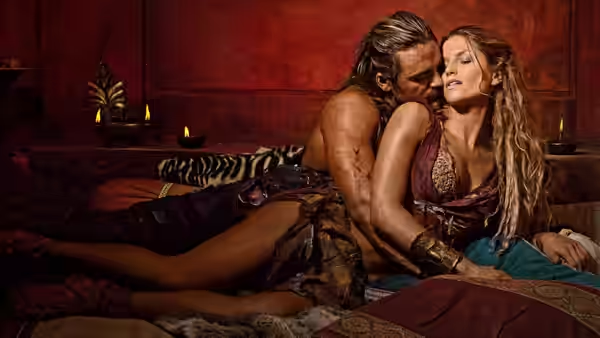
The writing is where patience becomes harder to justify. Thin individual stories are stretched around sex and injury, and too many characters remain simple enough to grasp before they have finished speaking. The series has a compelling subject in the fight for freedom, but it does not always find enough for its people to do between the displays of flesh. The sexual explicitness is not an objection in itself. It becomes one when another encounter delays rather than deepens our understanding of the people having it.
Against the demands of a sword-and-sandals drama, Spartacus delivers force, appetite and enough forward movement to make another episode tempting. It is less reliable at giving the violence consequences we can feel, which matters in a story built around human suffering. The performances keep it watchable, particularly when John Hannah and Lucy Lawless are allowed to scheme, but they cannot make every delay worthwhile. Try it for those two if lurid historical television is already a pleasure; a low tolerance for slow-motion blood will not improve with practice.