Stephen Butchard’s adaptation of Bernard Cornwell’s novels is muddy, brisk and better acted than it needed to be. David Dawson’s Alfred is the reason to watch; the hero’s habit of changing sides is the reason the plot goes round in circles.
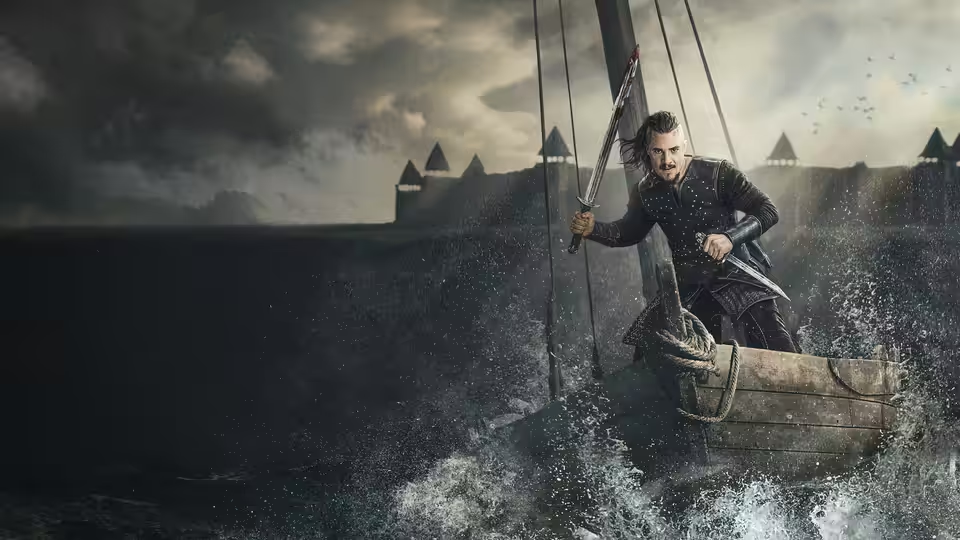
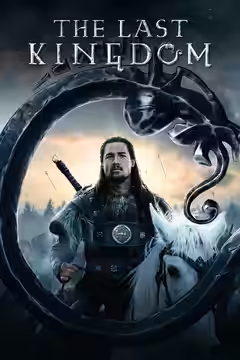
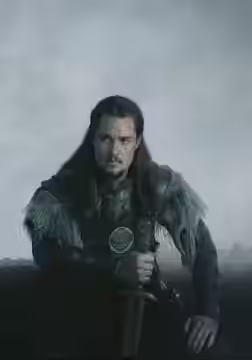
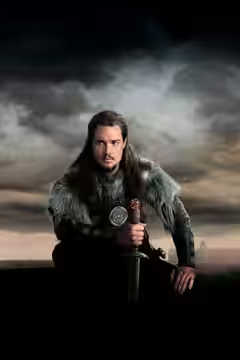
Stephen Butchard’s series turns Bernard Cornwell’s novels about the making of England into 46 hours of Saxons and Danes going at each other in the rain. This is the story of Alfred of Wessex trying to make one country out of several, told through a man who belongs to none of them. Uhtred (Alexander Dreymon) is a Saxon lord’s son raised by Danes, and across five series, from 10 October 2015 to 2022, he is pulled one way by blood and the other by upbringing. The Last Kingdom is good rather than great, and good in the way that has you starting another episode at eleven at night.
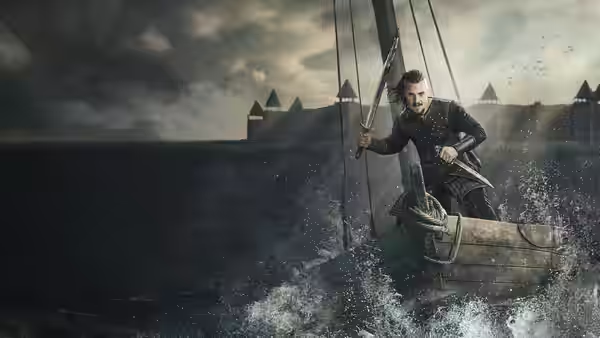
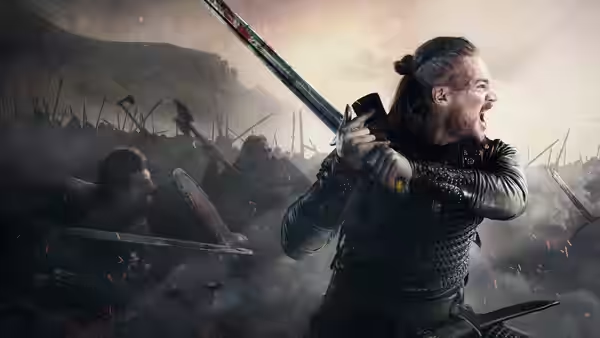
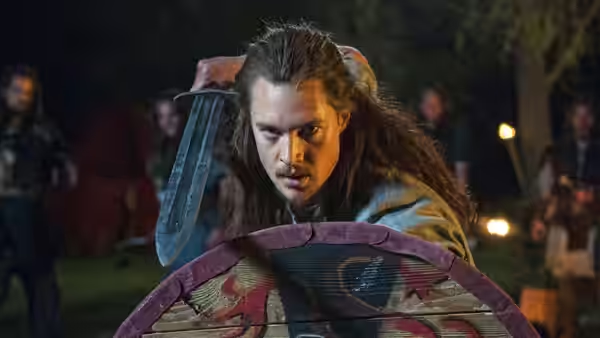
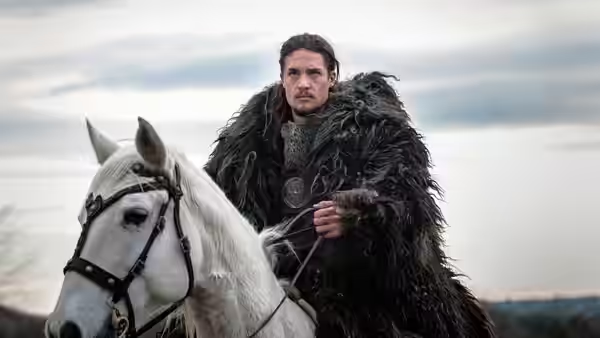
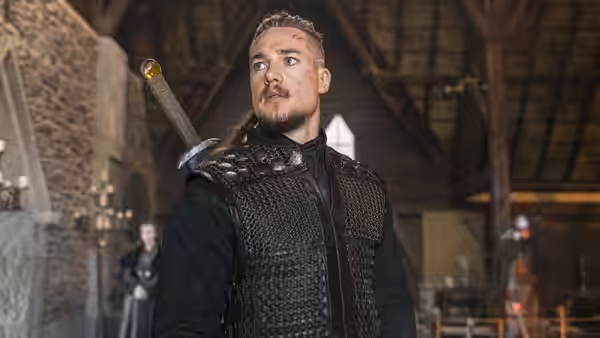
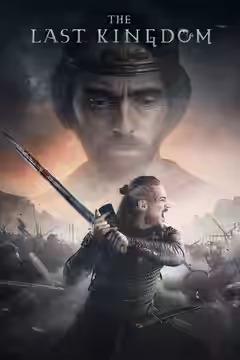
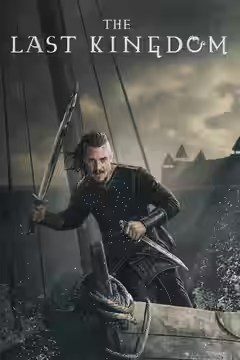
It looks like hard work, which is a compliment. Seven cinematographers share the run, Ashley Rowe among them, and settle on a look and mostly hold it: low grey skies, wet ground, firelight indoors. The shield walls are shot from inside, the camera wedged between shoulders, so a battle is a wall of painted wood a foot from your face and a spear coming through the gap. The first time the show did this to us we flinched, which television swordplay almost never manages. Martyn John builds Alfred’s Winchester out of timber, thatch and one stone church, and Ros Little puts the Danes in fur and braids and the Saxons in dun wool, so you can read a room’s loyalties before anyone speaks.
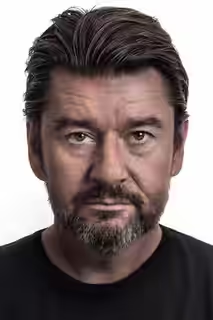
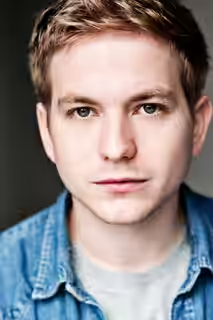
David Dawson’s Alfred is the reason to keep going. He plays the king thin, pale and bent double with stomach pain, a man who prays with his eyes open and is always the only one in the hall thinking about next year. He never raises his voice, and he wins every argument. Eliza Butterworth gives Aelswith the permanent expression of someone who has smelled something, and it gets funnier and sadder the longer it goes on. Harry McEntire’s Aethelwold, the drunk nephew who thinks the crown should be his, starts as comic relief and stops being funny at the right moment.
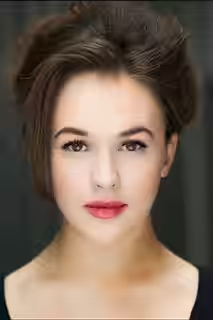
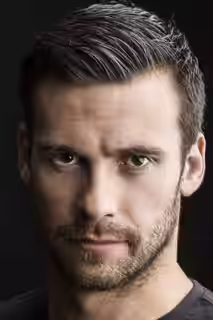
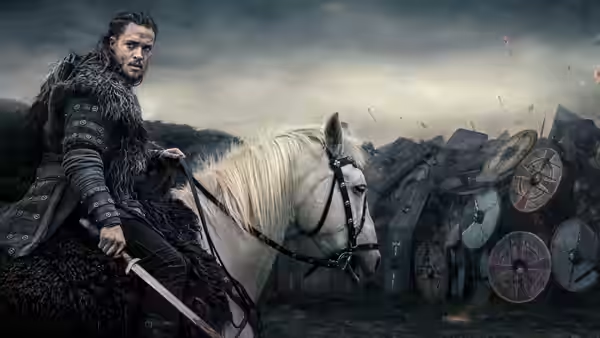
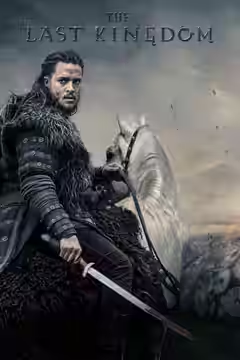
Dreymon has the harder job. Uhtred is handsome, quick with a sword and mostly required to be wronged, and for the first series he is a set of grievances with a haircut. He grows into it. By the later series, in which Dreymon also directs, he has found a weariness that suits the man. Emily Cox’s Brida is fierce, funny and unforgiving, and the one person in the cast who visibly changes as the years pass; their arguments about which side they are on are the best writing in the piece. Mark Rowley’s Finan, when he arrives, gives Uhtred someone to be at ease with. We were moved, more than we expected, by how the losses pile up on these people over five series and how the show lets them stay lost rather than tidying them away.
The trouble is the plot, which goes round. Uhtred swears an oath, breaks it, is banished, is needed, comes back, swears again. That is faithful to the books and also the same episode several times over. John Lunn’s score, strings over a slow drum, is stirring the first dozen times and after that is simply there. Four editors and fourteen directors share the run and you can feel the joins: some episodes are lit and cut like a film, others are murky and slack. Now and then a character says the word England as if underlining it.
Most critics landed close to where we do, and the complaint that it is a smaller, cheaper version of the big sword-and-throne shows is fair as far as it goes. It is smaller. It is also less silly, has no dragons and far fewer speeches, and it has a plot, which one or two reviews held against it. What it most resembles is a long political serial with axes in it.
Start with the first series: eight episodes, an hour each, a 15 certificate earned mainly with edged weapons. If Dawson’s Alfred has you by the third episode, there are 38 more waiting. Nobody in it keeps his word for more than two hours of screen time, and that turns out to be how you build a country.