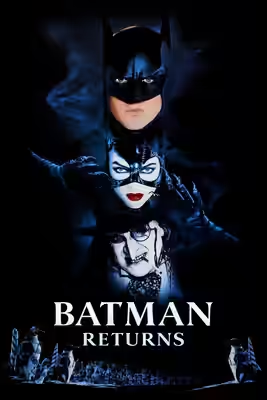
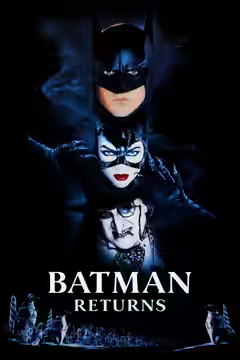
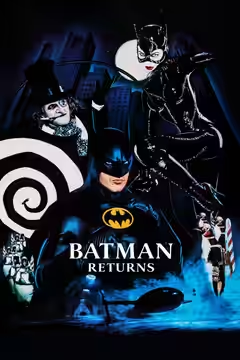
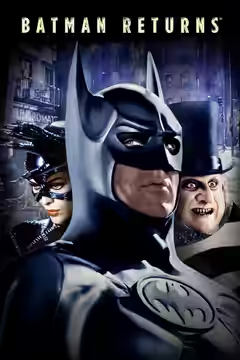
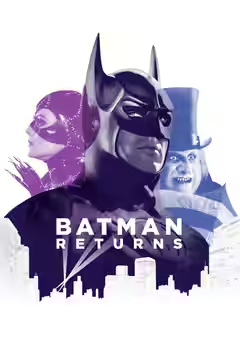
Tim Burton’s Batman Returns is darkly funny, extravagantly designed and well worth its untidy plotting. Michelle Pfeiffer and Danny DeVito give its villains enough personality to make Batman’s occasional retreat from centre stage seem sensible.
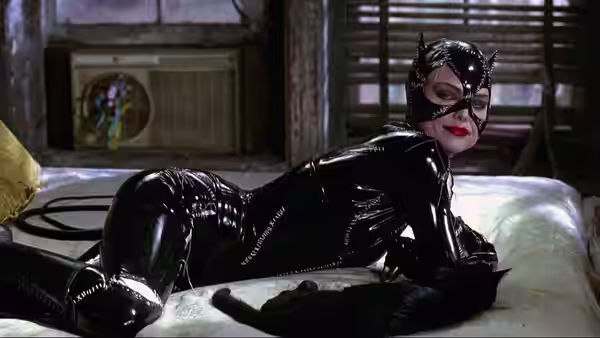
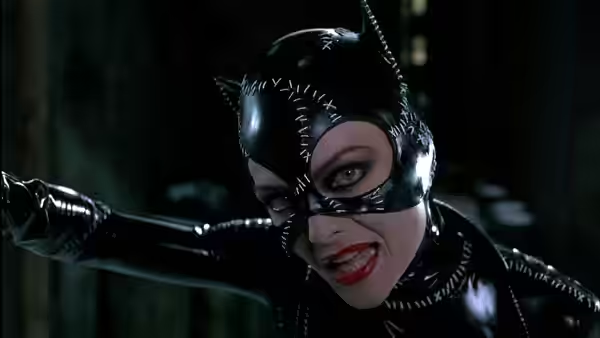
Tim Burton seems much more interested in the people Batman fights than in Batman, and Batman Returns is better for it. This is a richly peculiar fantasy with a muddled action plot, worth seeing for the attention it gives its damaged, ridiculous adversaries. The villains get enough time for their behaviour to matter beyond whatever trouble they cause. We would happily put up with a few detours to spend more time with Michelle Pfeiffer’s Catwoman.
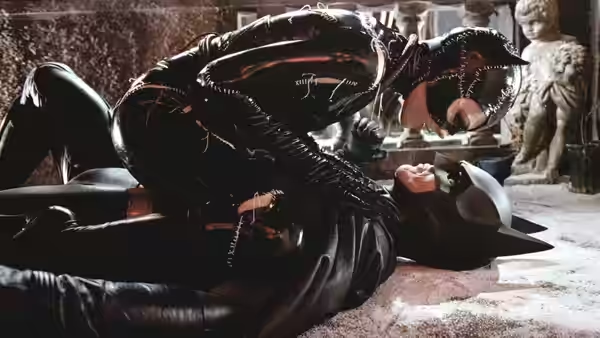
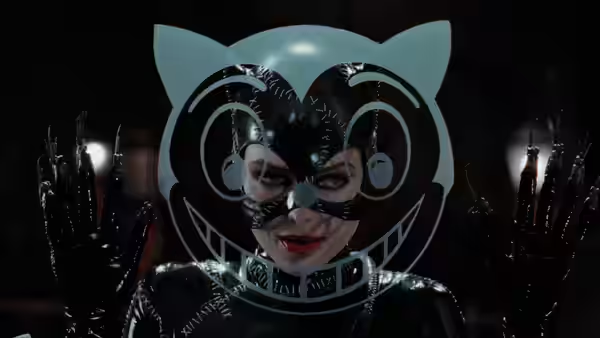
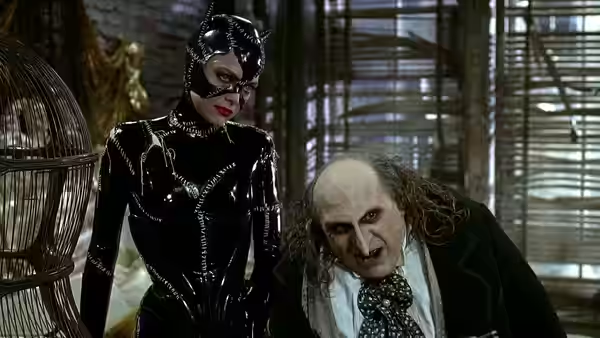
Pfeiffer plays Selina and Catwoman as though both deserve our full attention, rather than treating one as the necessary introduction to the other. Her aggression is funny because she gives it such relish, yet the performance never settles into a single seductive pose. We laughed at Catwoman’s ferocity, then felt protective of Selina; Pfeiffer makes that change of feeling seem entirely reasonable. She gives the film someone whose behaviour can surprise us, and Burton is wise enough to let her interrupt its heavy moods.
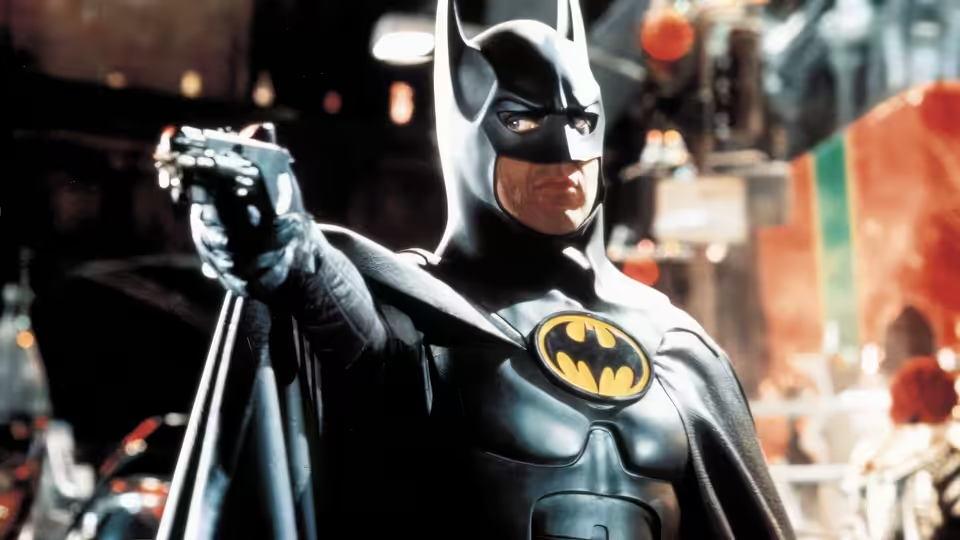
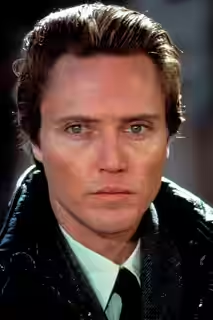
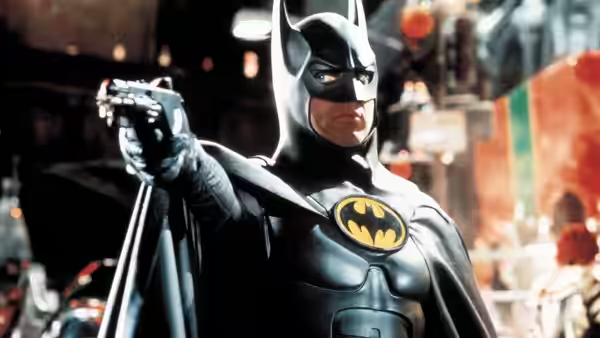
Danny DeVito’s Penguin is more abrasive company, and rightly so. DeVito makes the character’s unpleasantness entertaining without asking us to overlook it, and Burton’s interest in an outsider does not require us to find him agreeable. Michael Keaton’s Batman can seem underemployed beside these performances, although his reserve is useful when everyone else is playing so broadly. Christopher Walken’s Shreck adds another competing presence; the crowded cast helps explain why Bruce Wayne sometimes feels like a supporting character in his own story.
Production designer Bo Welch gives the film a city so elaborately conceived that it can compete with any of the actors. Stefan Czapsky’s cinematography makes those spaces feel enclosed, reinforcing the sense that these characters have nowhere comfortable to go. The visual excess works because the people belong in it: a plainer setting would make their extravagance harder to accept. Still, the oppressive scale can become tiring, particularly when Burton wants an action sequence to be exciting simply because there is so much to look at.
The cutting by Bob Badami and Chris Lebenzon cannot disguise how awkwardly the separate stories fit together. Individual confrontations hold our attention, but the reasons for moving between them are not always persuasive, and more activity does not reliably produce more urgency. Danny Elfman’s music suits the film’s theatrical temperament, though it sometimes makes an already heavy scene heavier. Daniel Waters’s screenplay is much better at giving the villains personality than at organising the business that brings them into conflict.
The consensus is considerably cooler than we are, with objections to the confused storytelling and the shortage of emotional involvement. We agree about the storytelling; we think the charge of emotional emptiness misses how much Pfeiffer and DeVito make us care about people who are difficult company. Burton allows their strangeness to remain strange, without making either performance a joke at the character’s expense. That matters in a superhero film, where an adversary can so easily become a costume awaiting a fight.
At 126 minutes, it has room for these performances and rather more commotion than they need. We would lose some of the action before cutting into the time spent with Selina or the Penguin. A superhero film can survive its hero being overshadowed when the competition is this interesting. Just do not choose it for an orderly evening of crime-fighting.