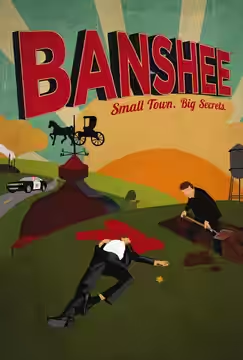
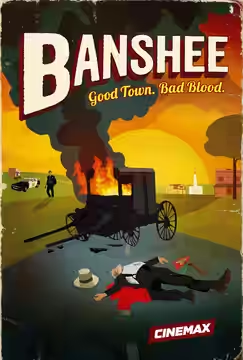
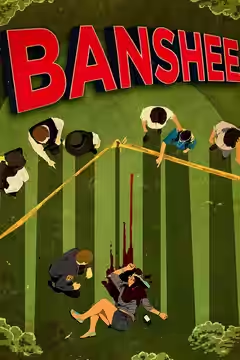
A pulp thriller with some of the best-staged fights on television and a script that keeps having to invent reasons for them. Antony Starr holds it together when the plotting does not. Good, if bloody pulp is your genre.
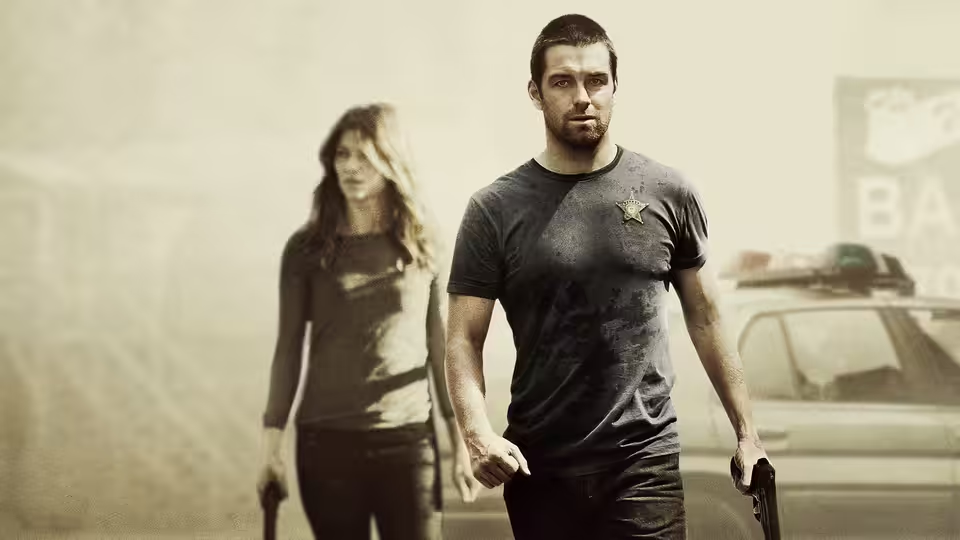
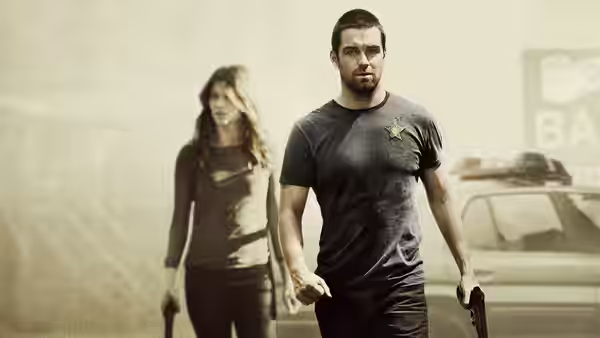
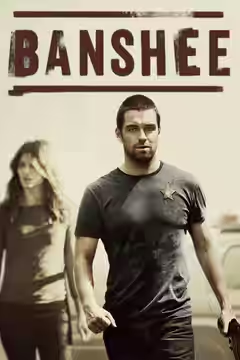
Banshee has the kind of premise that only survives if nobody on screen stops to think about it, and the show knows this. A thief just out of prison (Antony Starr) arrives in Banshee, Pennsylvania, a small town on the edge of Amish country, looking for the woman he went to prison for. In Sugar Bates’s bar on his first night the incoming sheriff, Lucas Hood, is shot dead before he has reported for duty, and by the morning the thief has taken the man’s name, badge and job. That is the pilot, directed by Greg Yaitanes, and it is clean, fast pulp that is not remotely embarrassed by itself. Created by Jonathan Tropper and David Schickler for the American channel Cinemax, the show runs 38 episodes over four seasons.
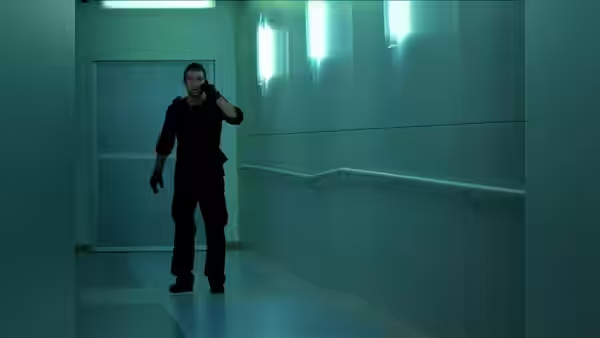
The thing it does best is fight. Christopher Faloona shoots the violence close and in long takes, so that when two men go at each other in a kitchen or a bar we see every blow land and watch the faces change as the fight wears on. There is no cutting away to spare us and no music telling us who to root for; Methodic Doubt’s score, a low electronic thrum for most of the running time, drops out for the worst of it and comes back afterwards. We flinched at a fight early in the first season that seemed to go on for minutes without a cut, and then we noticed we were enjoying it and felt a little ashamed. It is over quickly, and the next one is never far off.
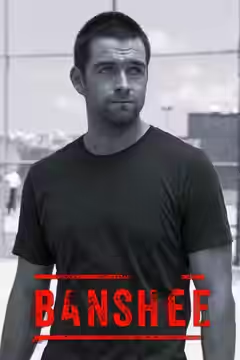
Starr is the reason the rest holds. He plays Hood as a man who has never had a plan longer than the next room, and he is good at the small hesitation when someone calls him Sheriff and he has to remember to answer. Ivana Miličević plays Anastasia, now Carrie Hopewell, a married mother with a daughter, Deva (Ryann Shane), and a life that depends on nobody from her past turning up; she does a lot with a flat stare across a supermarket aisle. Hoon Lee’s Job, the hacker who forges Hood’s paperwork, is the show’s best company, all silk and contempt, and Patia Prouty dresses him as if every scene were a party he was disappointed to be at. Frankie Faison’s Sugar, the ex-fighter behind the bar, is the one person who knows exactly what Hood is and pours him a drink anyway.
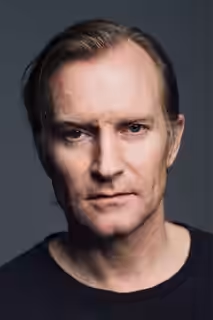
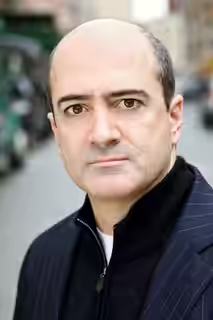
The villain is Ulrich Thomsen’s Kai Proctor, who left the Amish and now runs the town’s business, legal and otherwise, from behind well-cut suits and a soft voice. Thomsen is chilly and patient, and Matthew Rauch, as his bespectacled fixer Clay Burton, is quieter and more frightening still. The production designers, Hilda Stark, Jeremy Cassells, Jonathan Carlson and Natalie Weinmann, set Proctor’s polished glass and steel against a town of clapboard, black buggies and flat grey farmland, and the contrast does a good deal of the storytelling the script has no time for. Lili Simmons plays Rebecca Bowman, Proctor’s Amish niece, who is drawn to the wrong side of the family.
What does not work is the writing when nobody is hitting anyone. The deputies, Siobhan Kelly (Trieste Kelly Dunn), Brock Lotus (Matt Servitto) and Emmett Yawners (Demetrius Grosse), take a long while to become more than a suspicious face, a sceptical face and a decent one, though Dunn earns her place by the middle of the first season. The sex scenes are frequent, lit like adverts and rarely tell us anything the dialogue has not. The show never explains why nobody in town checks the new sheriff’s credentials, and after a couple of episodes we stopped finding that funny. Each season imports a fresh set of out-of-town villains to keep the body count up, and Anthony Ruivivar’s Alex Longshadow arrives with a rival claim on the town; by the third season we were watching the fights and waiting out the rest.
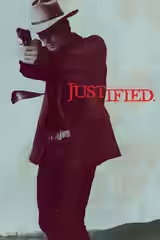
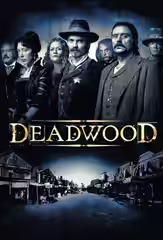
The comparison to Deadwood has been made, and the town-run-by-one-man shape is there, but that show had language and this one has bodies. The closer relatives are Justified and the long shelf of paperbacks about a stranger with a past who cleans up a town, and by those standards Banshee is well above average. It knows what it is, the directors (Miguel Sapochnik and SJ Clarkson among them) shoot it with more care than the material strictly requires, and the final season is shorter at eight episodes, which suggests someone noticed when to stop.