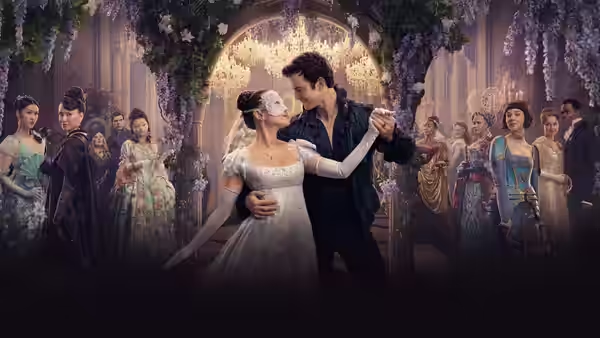
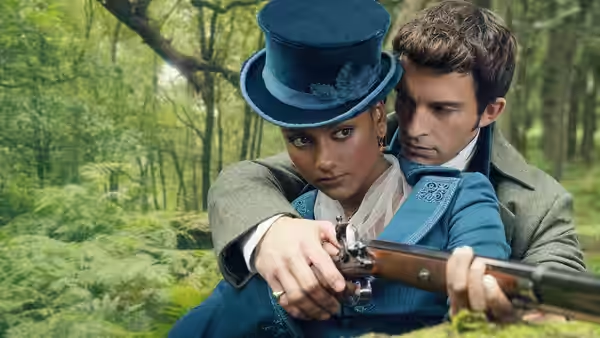
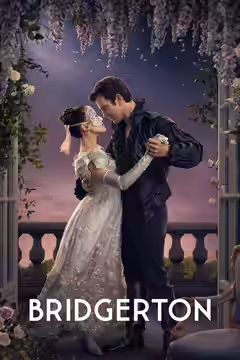
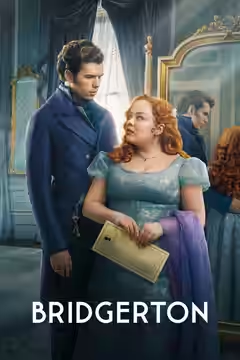
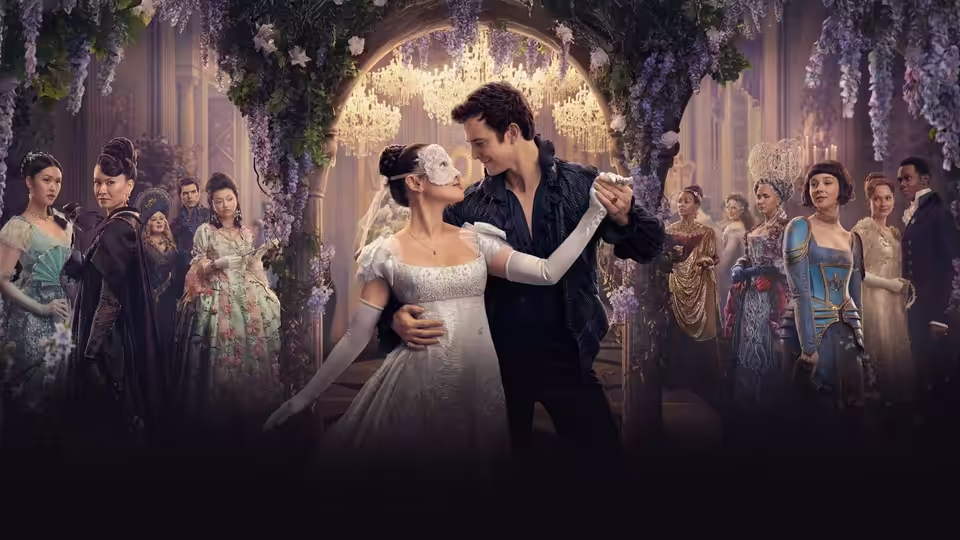
A masked woman in white dances closely with a man amid guests in a grand hall
Series review

Bridgerton

2020 · Created by Chris Van Dusen · Series

In a sentenceAn encouraging amount of sexual curiosity for people wearing so many clothes

In a fantasy Regency London, the search for a marriage partner brings family expectations into private affairs. Lady Violet Bridgerton (Ruth Gemmell), Lord Anthony Bridgerton (Jonathan Bailey) and Simon Basset (Regé-Jean Page) are among the figures navigating courtship and its rules. Around the Bridgerton family, romance involves unequal freedoms for men and women, as sexual curiosity encounters traditions that leave women with less say in their futures. Fine clothes and elaborate social conventions surround the search for love, while questions of pleasure and obligation complicate the business of finding a match.

Plays from YouTube when you press play; nothing loads from them until then.

Fi1m review

Chris Van Dusen’s Bridgerton makes an inviting romance from family pressure, sexual curiosity and conspicuously fine clothes. The dialogue sometimes labours to impress, but the series takes women’s desire seriously enough to earn its pleasures.

Bridgerton is satisfying romantic television with a weakness for dialogue that announces its own cleverness. Chris Van Dusen’s series wants to make courtship pleasurable to watch while taking seriously the restrictions placed on women who are expected to marry. Its fantasy Regency London is polished enough to discourage any search for dirt, and that seems a reasonable bargain for this kind of entertainment. We recommend it with one reservation: the characters are sometimes made to speak more elaborately than their feelings require.

The family gives those feelings somewhere to develop beyond the central romance. Ruth Gemmell’s Lady Violet Bridgerton and Jonathan Bailey’s Lord Anthony Bridgerton help make that appeal persuasive; the sense of belonging matters when so much depends on making a match. Regé-Jean Page’s Simon Basset supplies enough romantic assurance to make the familiar conventions enjoyable. These performances suit a programme that wants attraction to be legible, and subtlety need not be the only measure of success.

Jeffrey Jur’s cinematography gives the bright colours room to register, while Will Hughes-Jones’s production design provides suitably lavish surroundings for the courtship. The clothes and interiors hold our attention even when the dialogue repeats something already understood. There is a danger that all this finery will make the people seem decorative too. The romantic chemistry usually prevents that, keeping our attention on the people inside the clothes and their interest in one another.

We smiled at the pop music arriving among the period clothes. The anachronism makes the invitation clear: nobody needs a working knowledge of Regency manners to recognise these romantic feelings. Kris Bowers’s music fits comfortably into that approach, helping the emotion come across without making the period setting forbidding. The editing, credited to Gregory T. Evans among others, keeps the romantic complications moving without making them difficult to follow, which matters when the pleasures depend so much on anticipation.

The frankness about sex is more important than the musical joke. Female curiosity and pleasure receive attention, and the marriage plot considers what patriarchal traditions demand of the women living under them. That gives the romance something to deal with beyond the question of who finds whom attractive: unequal freedoms make the search for a partner consequential. The inclusive casting makes the fantasy more welcoming, and the series is comfortable letting pleasure matter without treating its pursuit as foolish.

The writing is less assured when it tries to underline what is already obvious. Some of the heightened dialogue sounds prepared for admiration, and familiar romantic obstacles occasionally become too easy to predict. Chris Van Dusen’s modern treatment of period romance does not always spare it the genre’s old habits, particularly the tendency to prolong a difficulty we have already understood. More restraint would help in those passages, though adding historical grime would do little to improve them.

If romantic melodrama usually irritates, the finery will not change that. We would recommend this to anyone willing to give a familiar courtship time to work, and to accept a little fuss along the way. Watch for the attraction, and forgive the occasional speech.

Critical consensus AI synthesised

81
Positive
12
Mixed
0
Negative
1

Most critics welcome Bridgerton as a pleasurable, knowingly modern Regency romance, with twelve of the thirteen reviews positive. Praise centres on the costumes, lavish settings and inclusive casting, alongside the frank treatment of sex and female desire. The reviews also find substance beneath the gloss: several praise the feminist attention to marriage and women’s choices, while others emphasise the romantic chemistry, emotional depth and brisk storytelling. Escapism is the clearest point of agreement.

Reservations concern how much polish and exaggeration the romance can sustain. The Guardian finds the dialogue excessive and the plotting crowded with clichés, yet still finds the series addictive. The Times is the lone negative voice, objecting to a Regency England scrubbed too clean and finding the result insufficiently sexy or grounded. The spread is therefore wide, but the disagreement is concentrated: most critics enjoy the glossy fantasy that the strongest dissenter finds unconvincing.

Radio Times
22 December 2020 · ★★★★★ · Eleanor Bley Griffiths
100

The critic calls the series an utter joy and a fun cross between Gossip Girl and Jane Austen set in a fantasy Regency London. She singles out the frank handling of sex and self-pleasure as well as the sumptuous visuals and costumes for praise.

Read the full review →
Variety
21 December 2020 · Caroline Framke
90*

The critic describes the show as a confectionary treat that mixes Regency romance tropes with Shondaland sensibilities for a swoony, modern take. She singles out the inclusive casting and the explicit, insightful exploration of sex and desire as standout elements.

Read the full review →
Vulture
21 December 2020
90*

The critic praises the series as a heady, inviting fantasy of pleasure and true love that expands the romance genre with inclusive casting while delivering sparkling momentum and escapism.

Read the full review →
IndieWire
22 December 2020 · Ann Donahue
85*

The critic calls the series a fizzy, ebullient period romance that's easy to love and arrives at just the right time after a difficult year.

Read the full review →
Evening Standard
22 December 2020
80*

The review calls it a glossy Downton Abbey replacement and pleasingly OTT exercise in escapism with a diverse cast and enlightened heroines. It singles out the lavish production and modern spin on Regency romance for praise.

Read the full review →
The Hollywood Reporter
21 December 2020 · Inkoo Kang
80*

The critic calls it a delectably smart confection that weaves feminist critique through the marriage plot. She singles out the observations on patriarchal traditions and their effects on female characters, along with the believable obstacles in the central romance.

Read the full review →

Straight answers AI written, from our review

Is Bridgerton worth watching?
Bridgerton is worth watching for its romantic chemistry, family pressures and serious interest in women’s desire; we score it 80 out of 100. We recommend it to viewers who enjoy courtship melodrama and lavish surroundings, with a reservation about dialogue that strains for cleverness and obstacles that sometimes linger too long.
Where can I watch Bridgerton in Colombia?
Bridgerton is streaming on Netflix in Colombia. Availability is checked daily; the links above go straight to each service.
How violent or frightening is Bridgerton, and is it suitable for children?
Bridgerton carries a UK 15 certificate and a US TV-MA rating, so it is not suitable for children. The clear caution is its frank treatment of sex, curiosity and pleasure; we would approach it as adult romantic drama, though those ratings alone do not establish how violent or frightening it is.
How does Bridgerton compare to The Age of Innocence?
Bridgerton offers a brighter, more openly sexual romance than The Age of Innocence, though both make elaborate clothes and restrictive social rules central to courtship. We would choose the film for the more painfully persuasive treatment of suppressed desire, and the series for inviting romantic melodrama; both sometimes explain more than they need to.
Is Bridgerton based on a true story or a book?
Bridgerton is based on fiction by Julia Quinn, not a true story, and sets its courtships in a fantasy Regency London. We find its romantic complications easy to follow without prior reading; the appeal rests on attraction, family expectations and unequal freedoms rather than knowledge of the source.
What should I watch after Bridgerton?
After Bridgerton, try The Age of Innocence (1993, Fi1m 86): For elaborate clothes and social rules that make private happiness difficult. Then The Handmaiden (2016, Fi1m 85): For a darker, more sexually explicit struggle against respectable society’s rules.

Cast

Awards

American Film Institute Awards, 2021

Won
American Film Institute Awards

Make-Up Artists and Hair Stylists Guild Awards, 2021

Won
Make-Up Artists and Hair Stylists Guild Awards

MTV Movie Award for Best Breakthrough Performance, 2021

Won
MTV Movie Award for Best Breakthrough Performance

NAACP Image Award for Outstanding Actor in a Drama Series, 2021

Won
NAACP Image Award for Outstanding Actor in a Drama Series

Primetime Emmy Awards, 2021

Won
Outstanding Period and/or Character Hairstyling

If you liked this, try…

  1. Pride and Prejudice (1995) · not on Fi1m yetFor courtship conducted through conversation, with family interference doing much of the damage.

  2. Belle (2013) · not on Fi1m yetFor romance shaped by social standing, with sharper attention to race and inheritance.

  3. The Age of Innocence (1993, Fi1m 86)For elaborate clothes and social rules that make private happiness difficult.

  4. The Leopard (1963) · not on Fi1m yetFor courtship and magnificent clothes in a society anxious about losing its privileges.

  5. The Handmaiden (2016, Fi1m 85)For a darker, more sexually explicit struggle against respectable society’s rules.