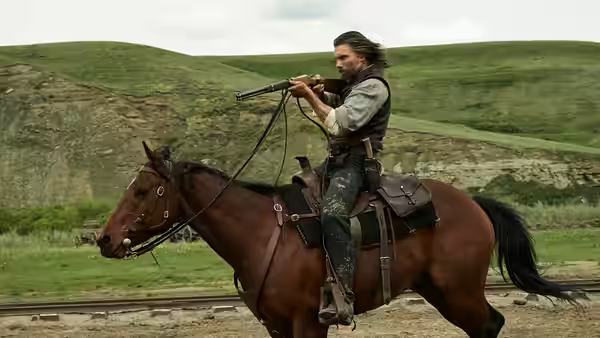
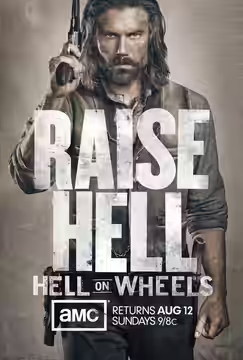
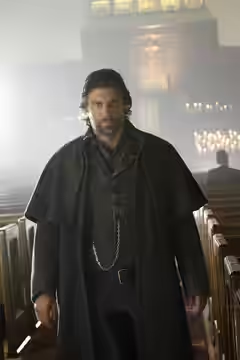
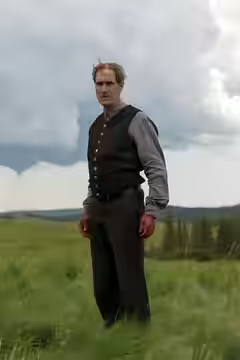
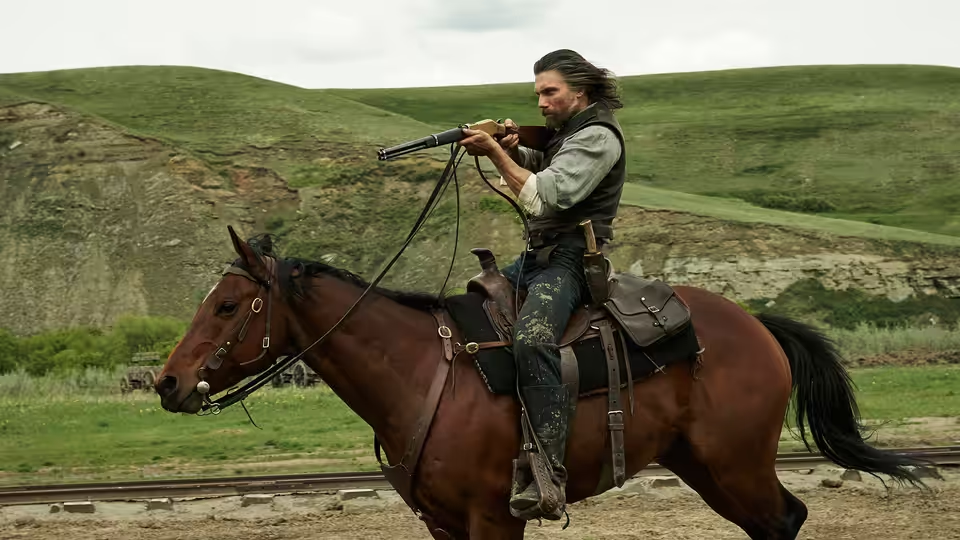
Cullen Bohannan (Anson Mount) rides a horse across open grassland, holding a rifle
Series review

Hell on Wheels

2011 · Created by Tony Gayton, Joe Gayton · Series

In a sentenceAll that railway construction, and still so much time to explain why everyone is miserable

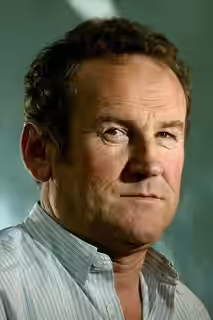
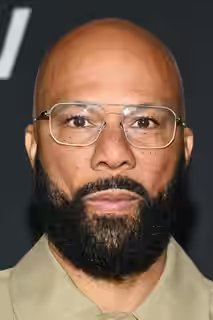
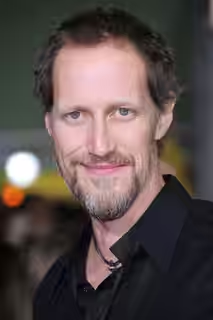
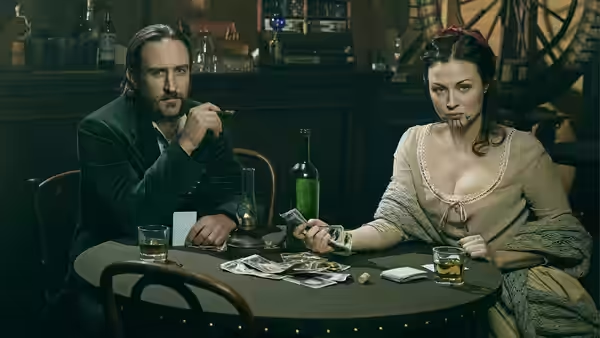
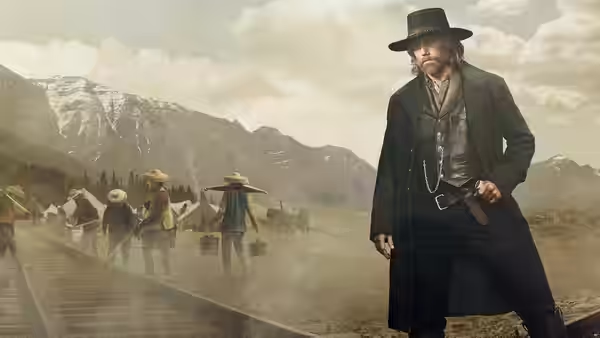
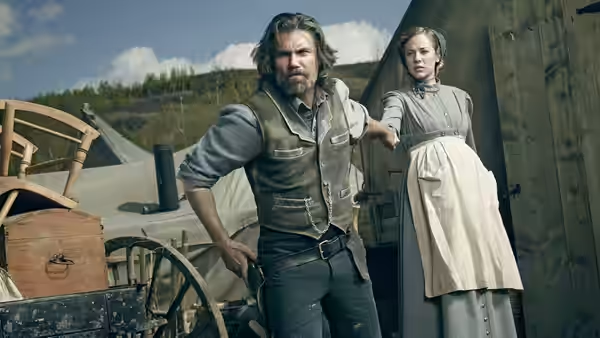
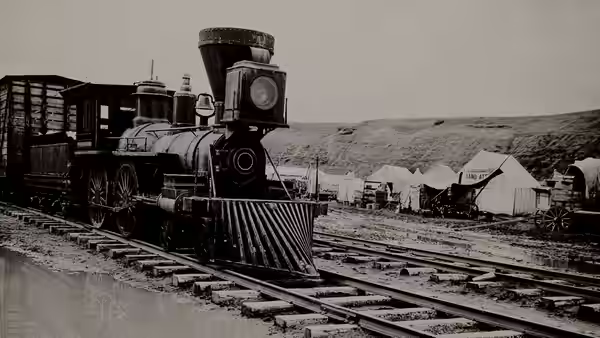
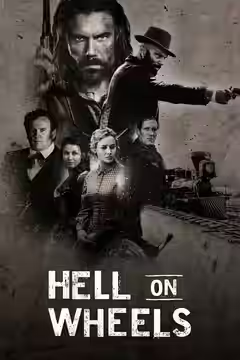
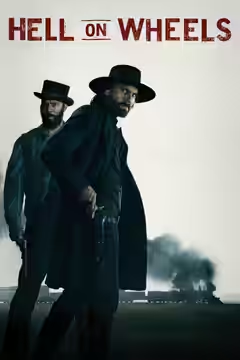
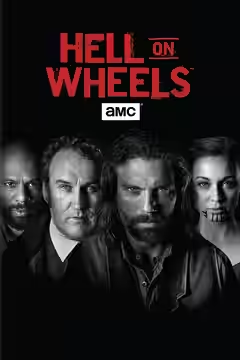
A revenge-driven Western unfolds around the building of a railway, with Cullen Bohannan (Anson Mount) at the centre of its ensemble. Thomas ‘Doc’ Durant (Colm Meaney), Elam Ferguson (Common) and Lily Bell (Dominique McElligott) are among the figures introduced around him, alongside The Swede (Christopher Heyerdahl). The opening establishes the characters and their grievances, setting a personal pursuit of revenge against the work of railway construction. Bohannan’s story forms part of a wider drama about the people caught up in that undertaking, with the railway providing a shared focus for their separate troubles.

Fi1m review

A well-chosen setting and a lively supporting cast keep Hell on Wheels interesting in patches. The solemn dialogue and uneven pace make it harder work than a railway Western ought to be.

Hell on Wheels has enough acting talent and physical detail to make its sluggish storytelling frustrating. Created by Tony Gayton and Joe Gayton, it sets a revenge-driven Western against the building of a railway, then spends too much time establishing how troubled everybody is. The railway gives the series a useful shared enterprise, with something to be done beyond settling grievances. Yet the opening introduces its conflicts without making us particularly impatient to see what happens next.

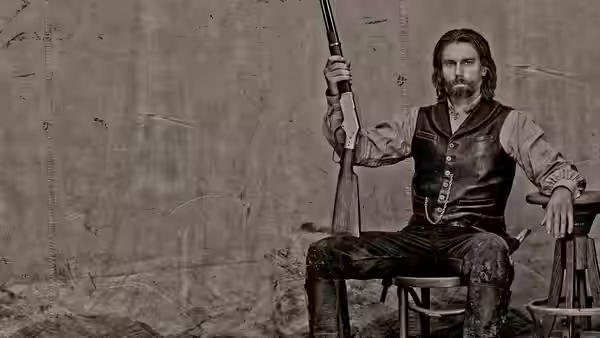
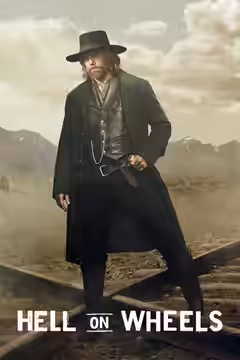
Anson Mount plays Cullen Bohannan with a severity that suits the genre but makes him rather uninviting company. A grim central character needs something beyond grimness to sustain our curiosity, and the writing takes too long to provide it. The supporting characters have more immediate life, particularly Thomas ‘Doc’ Durant, played by Colm Meaney, and Christopher Heyerdahl’s The Swede. Their individuality gives us something to watch besides another demonstration of how hard these lives are.

We were bored by the opening’s blunt character introductions, because the writing keeps spelling out what it wants us to think of each person. The dialogue offers too little room for uncertainty, and the backstory can sound as though it has been prepared for our benefit. Tony Gayton and Joe Gayton have chosen a setting capable of accommodating several kinds of story, but the early drama relies heavily on stock Western figures. Once someone has been so thoroughly explained, another confrontation does not necessarily make them more interesting.

The locations and production design are substantial virtues, giving the railway enterprise a scale that the conversations sometimes lack. The surroundings make the work of construction persuasive enough to hold our attention independently of the revenge story. That helps the ensemble feel connected even when individual scenes do not lead convincingly into one another. The care taken over the setting also makes the flatness of some of those exchanges harder to excuse.

Skip Macdonald’s editing cannot disguise how often the story stalls. The difficulty is repetition: scenes return to attitudes we have already understood, without adding enough to justify the time spent on them. The music credited to Laurelyn Dossett fits the sombre mood, but offers little relief from the programme’s insistence on its own seriousness. Some humour would help these people feel less predictable, and would give their anger more force when it comes.

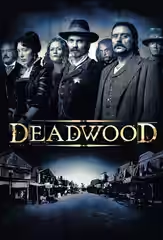
The comparison with Deadwood is understandable, chiefly because this series has so little humour. Westerns do not need jokes, but they benefit from people whose interests extend beyond suffering, vengeance and solemn declarations. Here the supporting cast suggest a livelier programme than the leads are allowed to inhabit. The action does not consistently supply the force missing from the dialogue, either, leaving too many scenes dependent on an atmosphere of impending trouble.

The second series becomes more assured, though the improvement requires patience from anyone unconvinced by the opening. There is enough character and atmosphere here to retain a committed Western viewer, especially when Christopher Heyerdahl is on screen. We would still stop short of a wider recommendation, given how often the supporting players have to rescue our interest. Try it for the railway and the eccentrics; if the early episodes leave you cold, there is no need to make a duty of it.

Critical consensus AI synthesised

47
Positive
2
Mixed
2
Negative
4

The reviews lean towards disappointment, finding Hell on Wheels more promising in its setting and supporting cast than in its central drama. Praise clusters around the vivid secondary characters, with Christopher Heyerdahl’s Swede singled out as particularly well realised. The locations and production design also earn approval, giving the Western a persuasive physical setting. Even some sceptical notices see potential in the revenge-driven premise, though comparisons with Deadwood repeatedly work against the series.

The reservations centre on blunt character introductions, heavy-handed dialogue and a grimness that leaves little space for humour. Several critics find the storytelling flat or prone to losing momentum. The spread is wide, but the reviews cover different stages: IndieWire welcomes a more distinctive voice in the second season, while Den of Geek finds the finale satisfying and bittersweet. Those warmer assessments suggest development beyond the uncertain opening, rather than agreement about the series throughout.

IndieWire
10 August 2012 · Alison Willmore
70*

Willmore finds the series improved in its second season and recommends getting on board, while acknowledging it still falls short of Deadwood. She praises its growing distinctive voice and a haunting montage that captures the characters’ impending trouble.

Read the full review →
The AV Club
19 December 2011 · D · Phil Dyess-Nugent
37

The critic treats the episode as an accidental self-parody, with its heavy-handed writing and clumsy action outweighing its merits. He gives some credit to Durant’s satisfying revenge on a blackmailer, but singles out the episode’s unsubtle dialogue and backstory as major flaws.

Read the full review →
The Hollywood Reporter
3 November 2011 · Tim Goodman
30*

Goodman finds the series unfocused and its pilot flat, though he sees potential in its setting and stories. He singles out Christopher Heyerdahl’s Swede as the most fully realized character.

Read the full review →
Variety
3 November 2011 · Brian Lowry
30*

Lowry finds the series only fitfully compelling and says its early episodes lose narrative momentum. He praises the vivid supporting characters but faults the grim leads and familiar Western archetypes.

Read the full review →
Vulture
25 July 2018 · Willa Paskin
30*

The critic finds the series too earnest and says it suffers beside Deadwood. They single out its lack of humor as the clearest weakness.

Read the full review →
Den of Geek
24 July 2016 · 4 out of 5 · Kendall Williams
78*

Williams finds the finale satisfying and bittersweet. The reviewer praises its resolution of the characters’ stories alongside completion of the railroad.

Read the full review →

Straight answers AI written, from our review

Is Hell on Wheels worth watching?
Hell on Wheels is worth considering for committed Western viewers, but we score it 52 and stop short of a wider recommendation. The railway setting and lively supporting cast provide interest, while solemn dialogue and repetitive scenes slow the drama; the second series becomes more assured, but getting there requires patience.
Where can I watch Hell on Wheels in Bulgaria?
Hell on Wheels is not on any streaming or rental service in Bulgaria at the moment. It is available in 11 other countries; change your country at the top of the page to see where. Availability is checked daily.
How violent or frightening is Hell on Wheels, and is it suitable for children?
Hell on Wheels carries a UK 15 certificate, making it unsuitable for children under 15 and better reserved for older teenagers and adults. The revenge-driven Western includes action and a sombre atmosphere of impending trouble, but we cannot offer a more precise warning about graphic violence or frightening material from those features alone.
How does Hell on Wheels compare to Deadwood?
Hell on Wheels is the weaker choice beside Deadwood, which we recommend for its humour and absorbing portrayal of people struggling to live together. Both concern frontier commerce and cruelty, but the railway drama relies more heavily on solemn grievances; Deadwood gives its characters more life, even when its elaborate speeches run on.
What should I watch after Hell on Wheels?
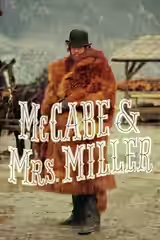
After Hell on Wheels, try Deadwood (2004, Fi1m 91): Frontier commerce and cruelty, with the humour this railway sorely needs. Then McCabe & Mrs. Miller (1971, Fi1m 90): For frontier business, uncertain loyalties and people worth spending time with.

Cast

If you liked this, try…

  1. Deadwood (2004, Fi1m 91)Frontier commerce and cruelty, with the humour this railway sorely needs.

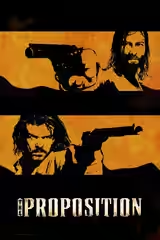
  2. The Proposition (2005) · not on Fi1m yetAn Australian Western whose harshness comes with difficult choices and consequences.

  3. McCabe & Mrs. Miller (1971, Fi1m 90)For frontier business, uncertain loyalties and people worth spending time with.

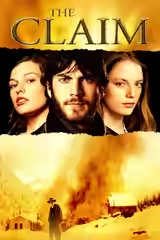
  4. The Claim (2000) · not on Fi1m yetRailway expansion and private regret give this wintry Western its weight.

  5. The Great Silence (1968) · not on Fi1m yetA snowbound Italian Western that earns its bleakness through sustained tension.