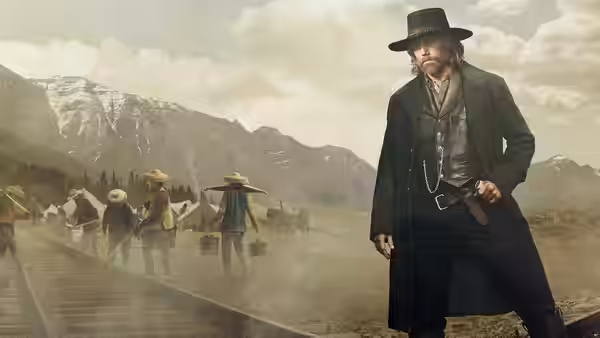
A well-chosen setting and a lively supporting cast keep Hell on Wheels interesting in patches. The solemn dialogue and uneven pace make it harder work than a railway Western ought to be.
Hell on Wheels has enough acting talent and physical detail to make its sluggish storytelling frustrating. Created by Tony Gayton and Joe Gayton, it sets a revenge-driven Western against the building of a railway, then spends too much time establishing how troubled everybody is. The railway gives the series a useful shared enterprise, with something to be done beyond settling grievances. Yet the opening introduces its conflicts without making us particularly impatient to see what happens next.
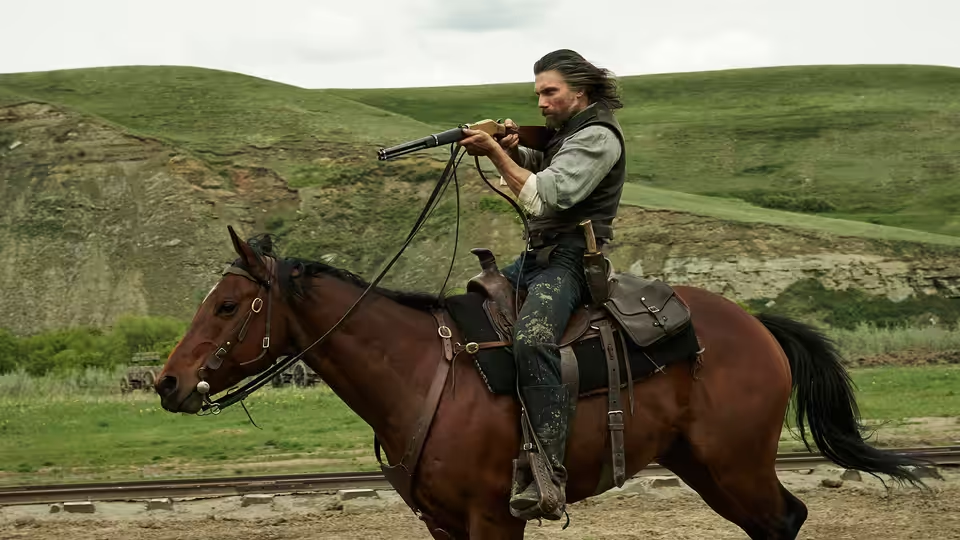
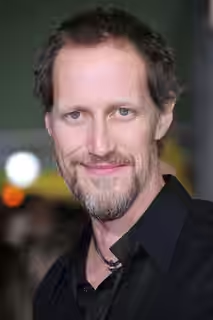
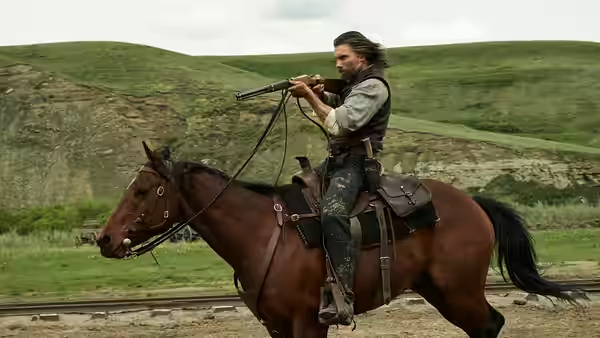
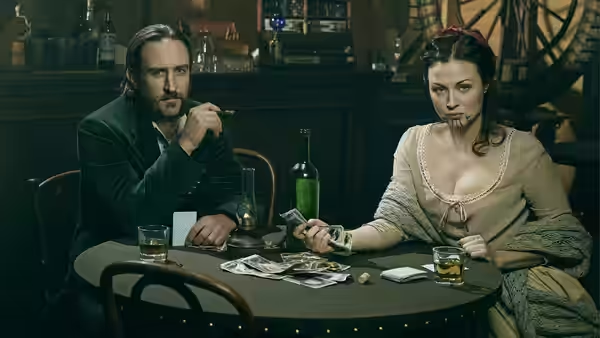
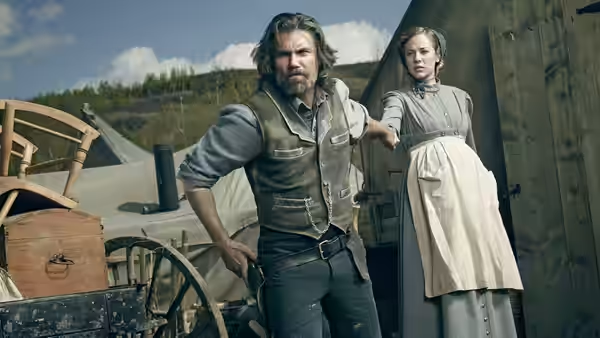
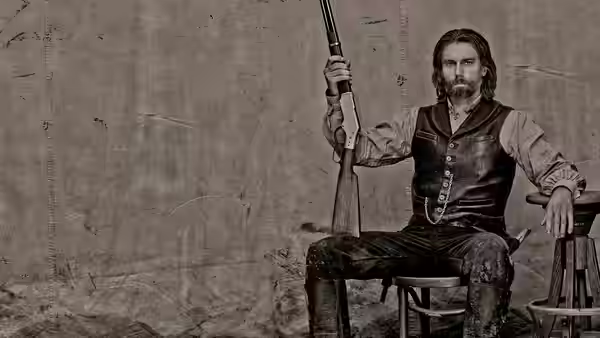
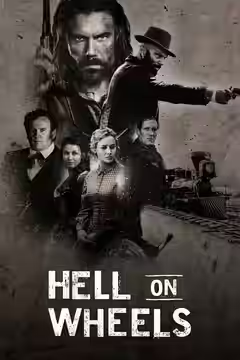
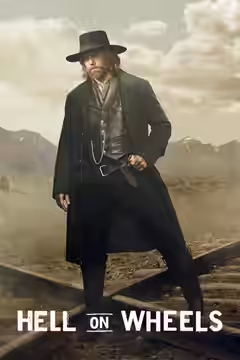
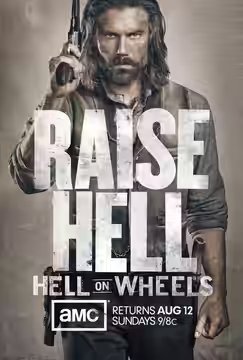
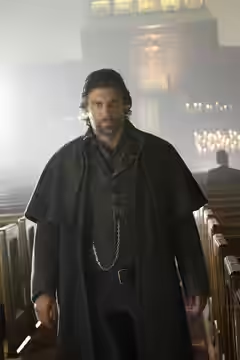
Anson Mount plays Cullen Bohannan with a severity that suits the genre but makes him rather uninviting company. A grim central character needs something beyond grimness to sustain our curiosity, and the writing takes too long to provide it. The supporting characters have more immediate life, particularly Thomas ‘Doc’ Durant, played by Colm Meaney, and Christopher Heyerdahl’s The Swede. Their individuality gives us something to watch besides another demonstration of how hard these lives are.
We were bored by the opening’s blunt character introductions, because the writing keeps spelling out what it wants us to think of each person. The dialogue offers too little room for uncertainty, and the backstory can sound as though it has been prepared for our benefit. Tony Gayton and Joe Gayton have chosen a setting capable of accommodating several kinds of story, but the early drama relies heavily on stock Western figures. Once someone has been so thoroughly explained, another confrontation does not necessarily make them more interesting.
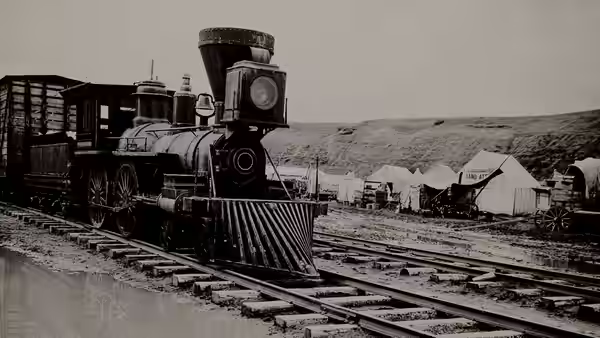
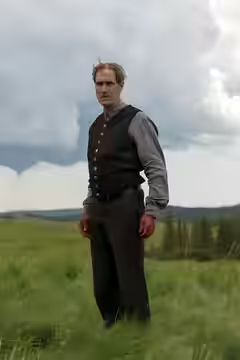
The locations and production design are substantial virtues, giving the railway enterprise a scale that the conversations sometimes lack. The surroundings make the work of construction persuasive enough to hold our attention independently of the revenge story. That helps the ensemble feel connected even when individual scenes do not lead convincingly into one another. The care taken over the setting also makes the flatness of some of those exchanges harder to excuse.
Skip Macdonald’s editing cannot disguise how often the story stalls. The difficulty is repetition: scenes return to attitudes we have already understood, without adding enough to justify the time spent on them. The music credited to Laurelyn Dossett fits the sombre mood, but offers little relief from the programme’s insistence on its own seriousness. Some humour would help these people feel less predictable, and would give their anger more force when it comes.
The comparison with Deadwood is understandable, chiefly because this series has so little humour. Westerns do not need jokes, but they benefit from people whose interests extend beyond suffering, vengeance and solemn declarations. Here the supporting cast suggest a livelier programme than the leads are allowed to inhabit. The action does not consistently supply the force missing from the dialogue, either, leaving too many scenes dependent on an atmosphere of impending trouble.
The second series becomes more assured, though the improvement requires patience from anyone unconvinced by the opening. There is enough character and atmosphere here to retain a committed Western viewer, especially when Christopher Heyerdahl is on screen. We would still stop short of a wider recommendation, given how often the supporting players have to rescue our interest. Try it for the railway and the eccentrics; if the early episodes leave you cold, there is no need to make a duty of it.