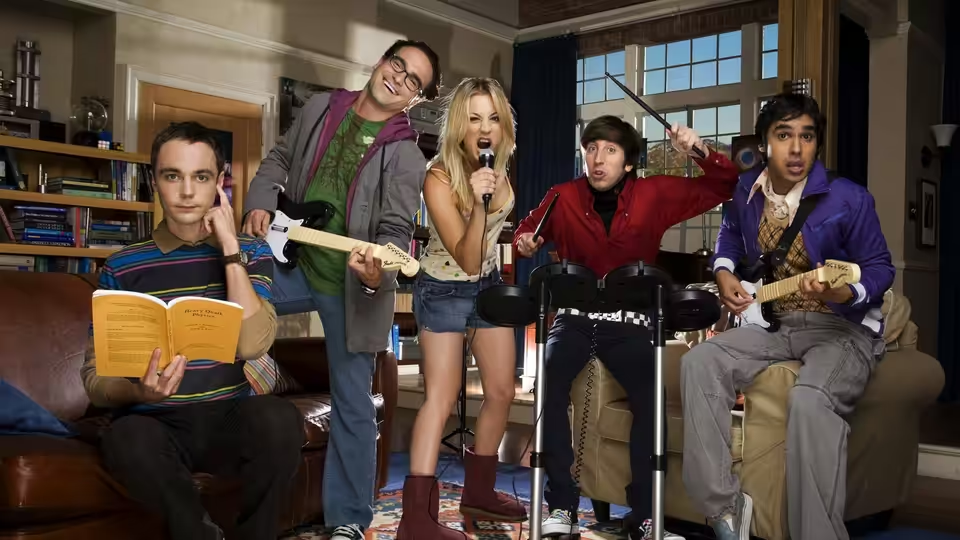
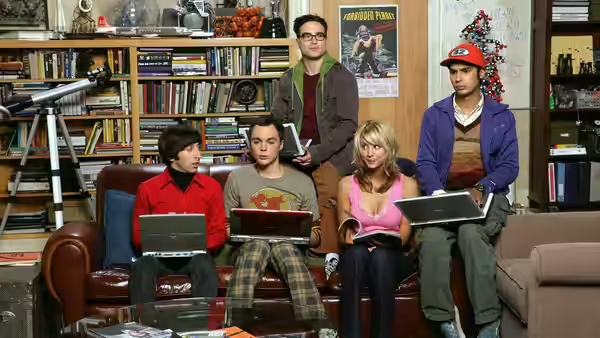
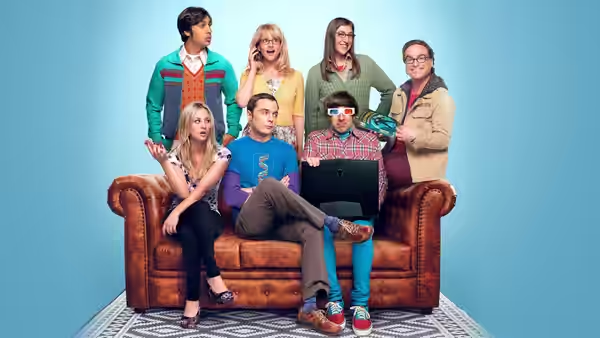
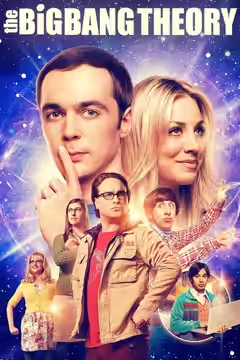
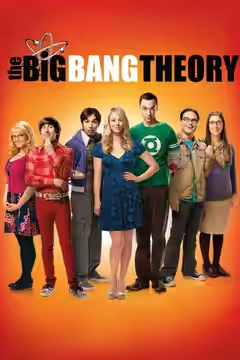
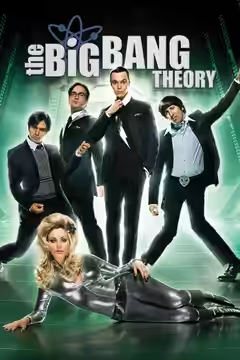
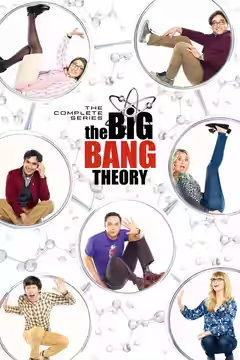
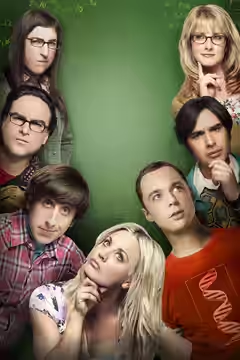
The Big Bang Theory is an amiable sitcom with sharp performers and some stubbornly blunt jokes. Johnny Galecki and Jim Parsons make it easy company, provided repeated jokes about social awkwardness do not wear out your patience.
The Big Bang Theory finds a dependable sitcom problem in people who can explain difficult things but struggle to deal with one another. Creators Bill Prady and Chuck Lorre get plenty of mileage from it, though they sometimes seem satisfied simply to point out the discrepancy again. This is decent comfort comedy, with enough affection to make its company pleasant and enough lazy characterisation to become irritating. The performances are the reason to stay.
Johnny Galecki gives Leonard Hofstadter an appealing hesitancy; the effort involved in making contact feels recognisably human. Jim Parsons makes Sheldon Cooper’s certainty much less accommodating, and much funnier. We laughed at the unflinching seriousness he brings to socially disastrous conversation: the lack of tact comes with such complete confidence. The precision of his delivery is doing a considerable amount of the writing’s work. Even when the joke is apparent early, there is pleasure in hearing exactly where he places the emphasis.
The difficulty is how often the scripts treat social awkwardness as a complete comic personality. The broader jokes can make the men seem interchangeable despite the actors’ efforts to distinguish them, and Penny is too easily reduced to the person against whom their cleverness is measured. Kaley Cuoco brings briskness to that thin arrangement, but it remains thin. Bill Prady and Chuck Lorre’s premise works better when the characters can seek companionship without their embarrassment automatically becoming the punchline.
The visual work serves those performances without much distraction. Steven V. Silver’s cinematography keeps attention on the actors’ reactions, while John Shaffner’s production design rarely demands any for itself. That restraint helps when a scene depends on one person failing to recognise another person’s discomfort, though it also limits the pleasure of simply looking. The programme seldom finds anything funny for the camera to do.
Peter Chakos’s editing is alert to the pause between a confident statement and the response it deserves. There is room for the actors to make their timing count, although the regularity can leave us waiting for a joke we have already anticipated. Joe Fischer’s music makes little impression beside all that talk. The 22-minute episodes are efficiently shaped, but that neatness cannot disguise a weak exchange when the dialogue has so much of the work to do.
Across twelve seasons, familiarity does become part of the pleasure. The developing relationships let the characters do more than demonstrate their inability to cope, and the affection between them makes some of the early shorthand less wearing. There is satisfaction in spending time with people who gradually learn how to get along. By the standards of an ensemble sitcom, that is useful, steady work, even if it does not excuse every lazy joke used to get there.
For anyone who enjoys a settled group of comic personalities, there is enough here to justify an evening, particularly in small doses. We would be slower to recommend it to someone hoping for much curiosity about the lives beneath the social mishaps. Try an episode before committing to a long run; its recurring jokes will need to amuse you more than once.