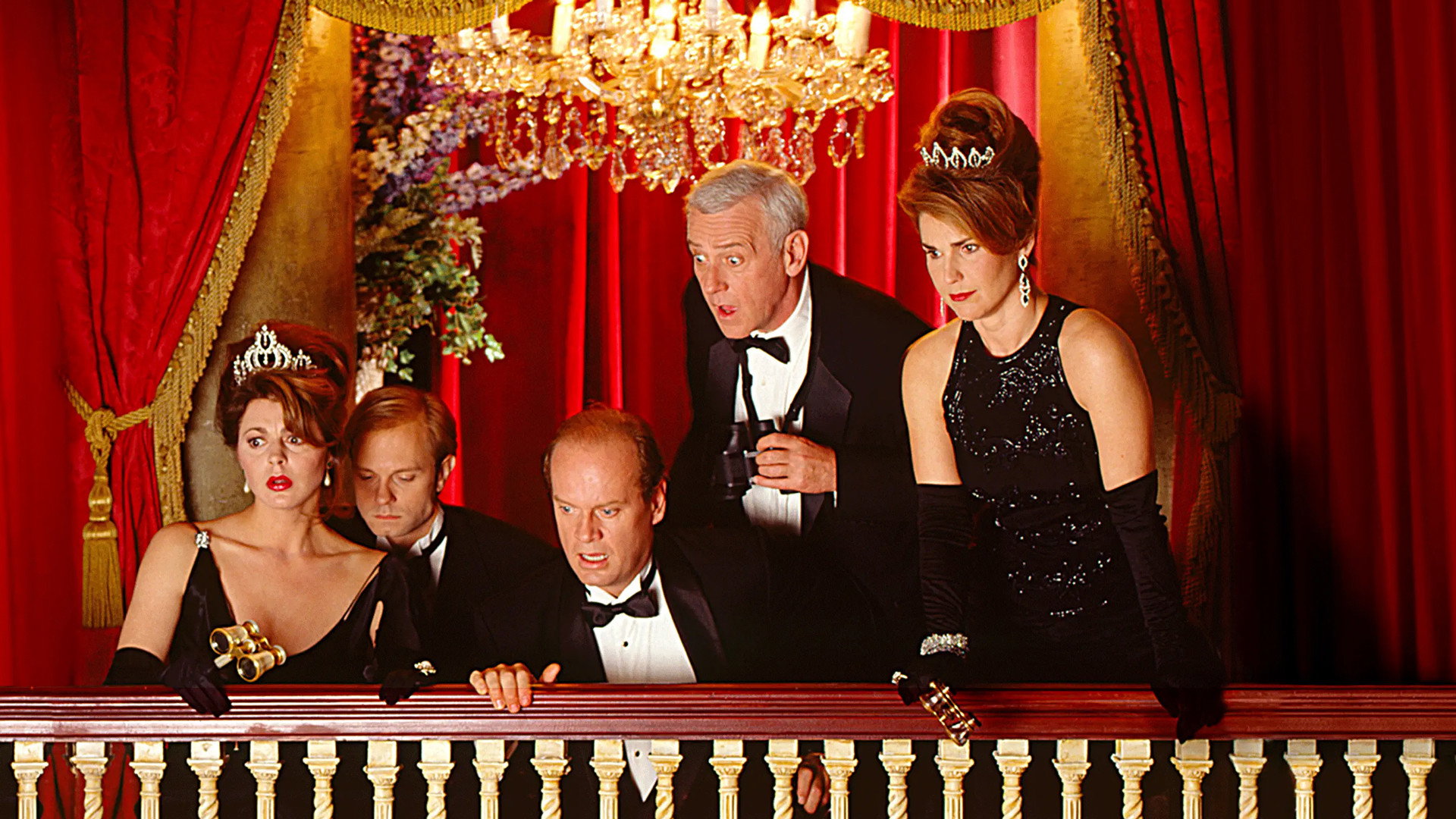
Frasier is a fine family comedy, carried by precise writing and actors who know how long to wait. Kelsey Grammer and David Hyde Pierce are its chief pleasures, though some misunderstandings drag on past the last good joke.
We recommend Frasier for the writing and the actors’ willingness to let their characters look ridiculous. Its chief weakness is a fondness for misunderstandings that sometimes continue after the joke has run out. Moving Frasier Crane to Seattle and bringing his family into the comedy gives Kelsey Grammer people who will question every qualification he adds to a sentence. He remains hopeful that another explanation will help.
Writers including Joe Keenan, Christopher Lloyd and David Lloyd understand how an argument can keep changing while neither participant gives way. A correction prompts an objection, which demands another correction, until a minor disagreement has become everyone’s business. The elaborate language is funny because the desire behind it is ordinary: Frasier wants to be right and wants to be liked while being right. The scripts are especially good at letting those wishes make him behave badly without making him unpleasant company.
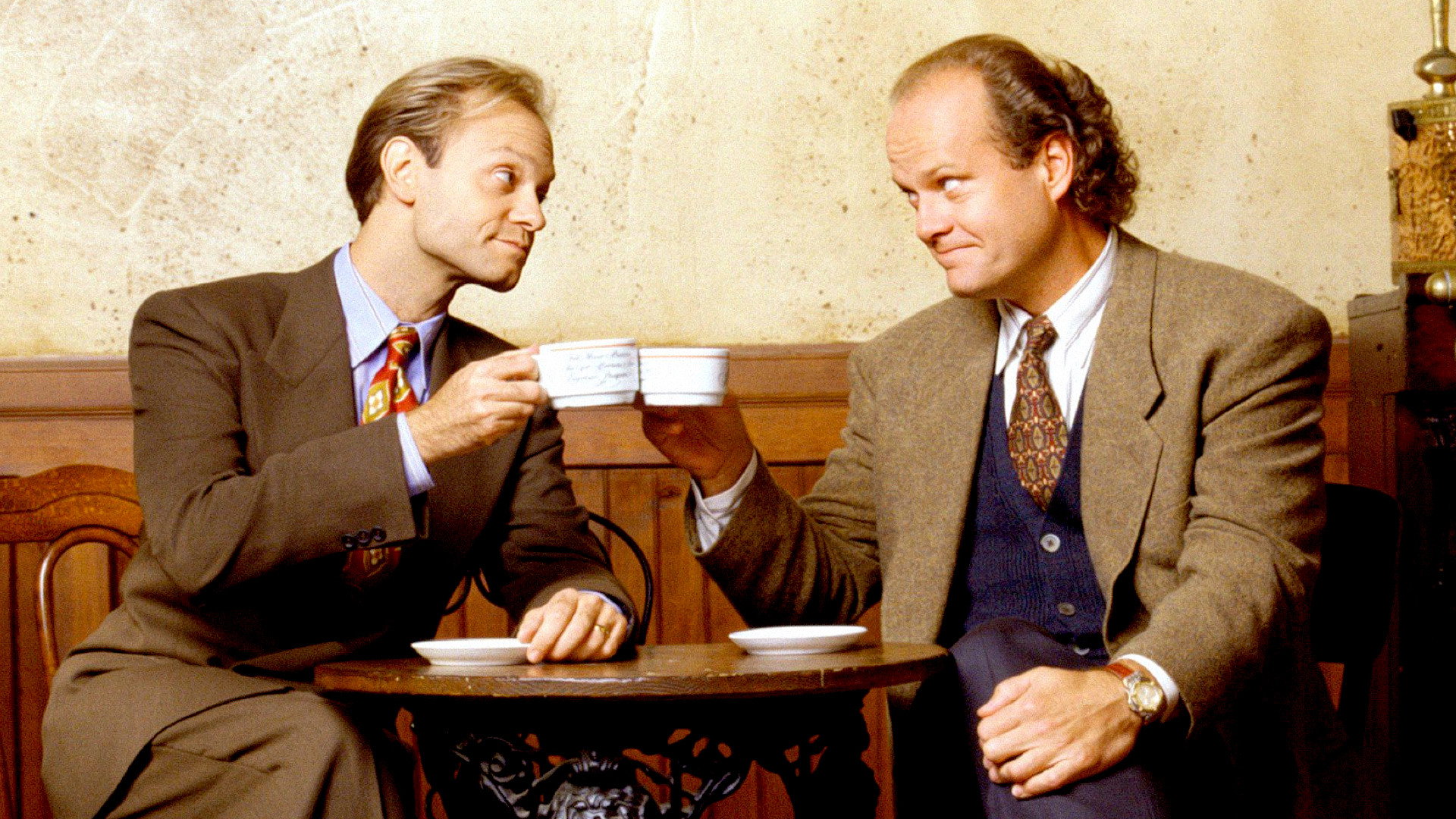
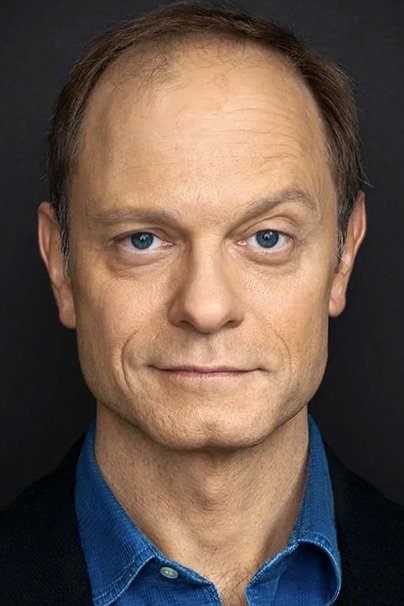
Grammer gives Frasier’s self-importance enough force to fill a scene, but leaves the embarrassment visible beneath it. David Hyde Pierce, as Niles Crane, works with smaller adjustments: a pause, a tightened mouth, a response delayed just long enough. We laughed before Pierce spoke because that little wait made Niles’s disapproval clear while Frasier was still enjoying his own words. The timing also gives Grammer room to make things worse. Neither actor needs the other to disappear for his own joke to work.
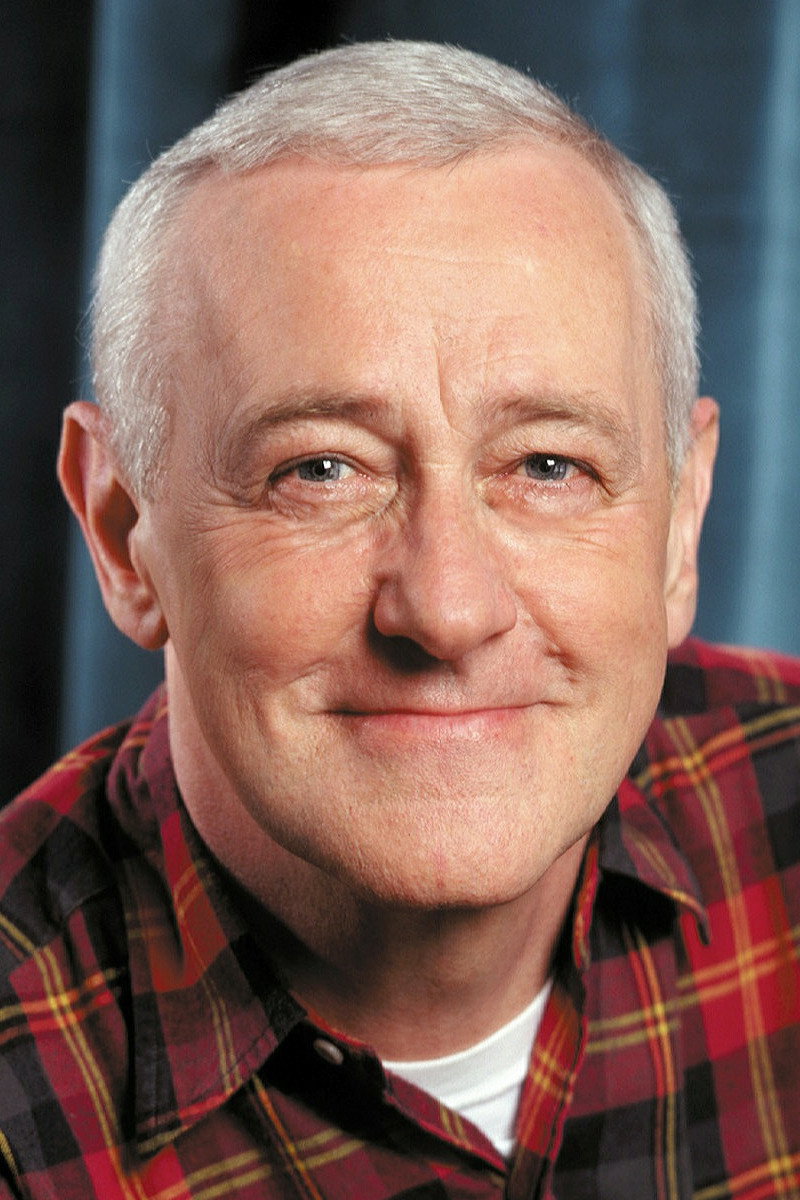
John Mahoney’s Martin Crane is essential to keeping that display of cleverness bearable. Mahoney can make a plain response feel fully considered, so Martin never seems merely to be waiting for his allotted joke. Jane Leeves brings Daphne Moon a welcome directness, and Peri Gilpin gives Roz Doyle enough confidence to prevent the comedy becoming entirely deferential to Frasier. Their performances keep the exchanges lively when Grammer is listening.
The photography, credited to Jerry Workman and Ken Lamkin, is usefully clear about where the laugh is happening. Faces remain readable without losing the posture and small movements that make Pierce funny. Editors Ron Volk and Janet Ashikaga, among others, allow reactions to register rather than rushing towards the next line. That patience matters in exchanges where the person listening is providing half the joke.
Roy Christopher’s production design makes Frasier’s furniture look chosen by someone expecting to be asked about it. The fussiness suits Grammer’s performance and gives the domestic disagreements a convincing setting. Bruce Miller’s lightly swinging music is a useful relief from all that effort to impress. The programme feels more welcoming for allowing a little ease around such fussy behaviour.
The reservation is about how often a complication needs people to miss an opportunity to speak plainly. Frasier’s reluctance to do that is usually convincing; when too many others cooperate, the script starts to show. Some exchanges go through another round of objections when the actors have already extracted everything funny. It is a noticeable weakness in a programme whose usual control of a conversation is so good.
As family sitcoms go, this allows an unusually generous amount of time for both verbal fuss and quiet reaction. It trusts an actor standing still almost as much as one delivering an elaborate speech, and that makes the company easier to enjoy. Episodes run 24 minutes, so the initial commitment is modest. We would leave time for a second.