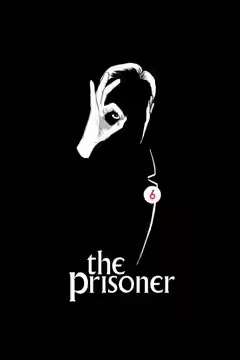
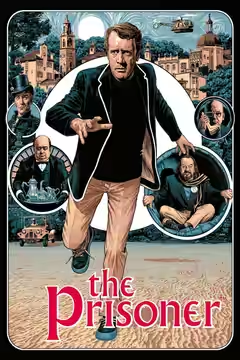
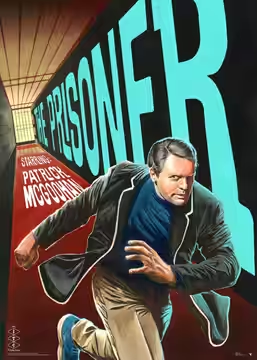
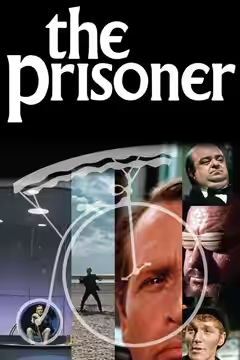
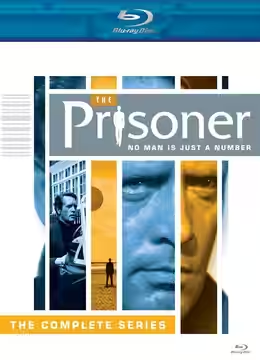
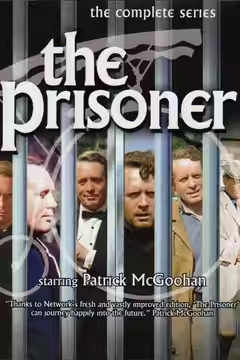
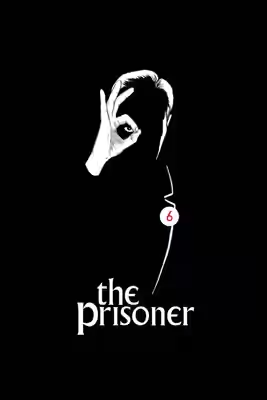
Patrick McGoohan gives The Prisoner the stubborn centre it needs, while the Village makes familiar surroundings feel unsafe. We recommend this gripping, uneasy mystery, with a warning that its solemnity can become wearing.
The Prisoner is an unnerving science-fiction mystery, and we recommend it despite a solemn streak that occasionally becomes hard work. Its central worry is easy to understand: the authorities want to preserve their system, and the person in front of them is an inconvenience. The Village gives that struggle a nostalgic setting, with technology enforcing the rules. The series takes personal freedom seriously enough to make resistance difficult, awkward and sometimes exhausting, including for us.
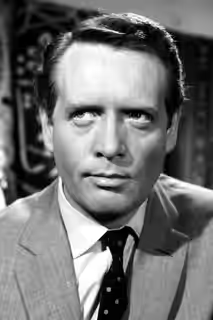
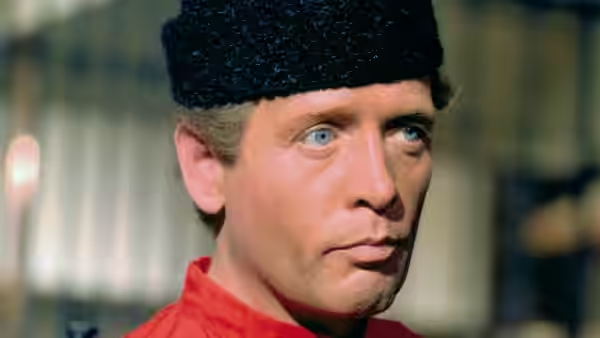
Patrick McGoohan plays Number Six with the determination the material needs, though warmth is in short supply. We need to believe that this man will remain difficult even when agreement would make everybody’s life easier, and McGoohan makes that stubbornness convincing. His performance can feel forbidding, but making him more companionable would soften the quality the authorities want to overcome. McGoohan also writes, directs and produces, and the severity of his performance feels entirely at home in the programme around him.
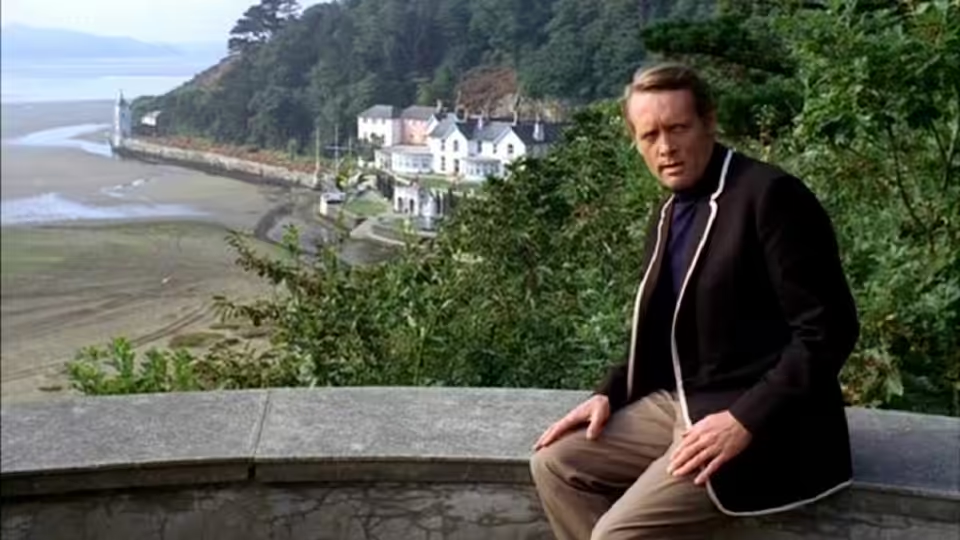
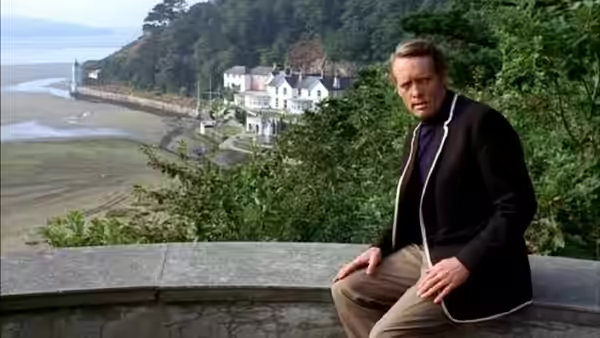
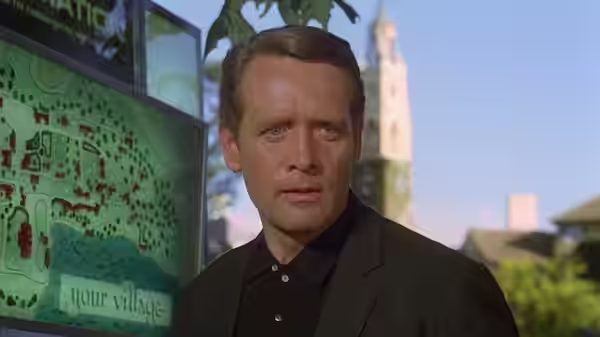
The Village is the reason those clashes matter beyond the immediate mystery. Its mixture of nostalgia and technologically enforced control makes familiar surroundings seem unsafe without requiring them to lose their appeal. We were unnerved by that combination: the reassuring appearance of the place does nothing to protect the people inside it. Brendan J. Stafford’s cinematography makes the nostalgic setting persuasive, allowing us to understand its attraction even while distrusting the way it is run.
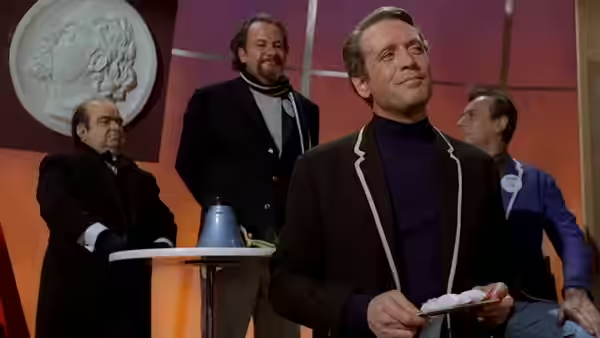
The people administering that control matter too, and Colin Gordon’s Number Two has the useful quality of seeming to regard authority as entirely reasonable. Peter Swanwick’s Supervisor adds to the sense that keeping people under control is ordinary employment here. Fenella Fielding’s Loudspeaker Announcer is particularly effective: an announcement can enter everybody’s day without inviting a reply. These performances give the authorities enough human presence to stop every confrontation becoming a dispute with a faceless organisation.
Among the editors are Eric Boyd-Perkins and Noreen Ackland, and the cutting works best when it preserves the pressure of a confrontation. The series needs time for stubbornness to become uncomfortable; hurry past it and Number Six would be too easy to cheer. The music, with contributions from Wilfred Josephs and Albert Elms, keeps the Village’s nostalgic appeal from becoming cosy. We remain most alert to the human exchanges, where a disagreement about control can become unpleasant without needing much movement.
The difficulty is that so much determination can grow tiring. McGoohan’s severity sometimes leaves too little room for uncertainty, and the defence of individual freedom begins to feel over-insistent. We do not need the people running the Village to become sympathetic, but the drama loses force whenever their opposition seems to exist merely to prove Number Six right. Some of the writing would benefit from trusting the setting and the performances to make its case.
For a mystery series, The Prisoner puts considerable trust in our willingness to stay with an awkward man. The suspense keeps that gamble working, even when we have had enough of his certainty. With seventeen episodes, there is room for the struggle to develop, though the sternness is reason enough to leave a little space between them. Start it when you are prepared to find the person you support difficult company.