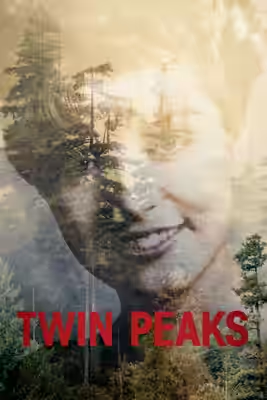
Twin Peaks makes soap-opera jealousy funny, frightening and unexpectedly sad. Kyle MacLachlan gives its strangeness a steady centre, and we warmly recommend it, with a warning that its patience sometimes becomes drift.
Twin Peaks is a richly involving series with stretches we would willingly shorten. David Lynch and Mark Frost build a rural soap around people who have plenty to hide. Their desires are familiar enough, but the peculiar behaviour that accompanies them keeps us from settling into the comfortable business of judging everybody. The programme takes their feelings seriously, even when their behaviour is funny, and that gives us a reason to care beyond wanting the mysteries explained.
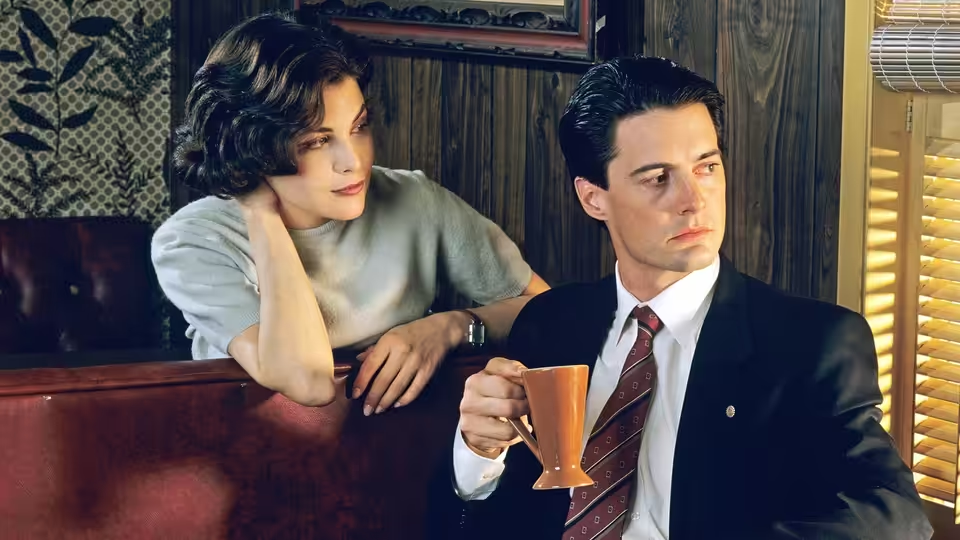
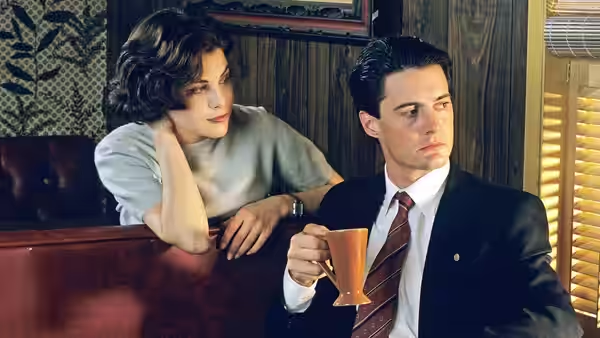
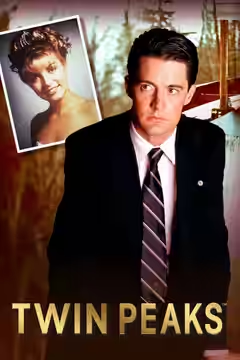
Kyle MacLachlan’s Dale Cooper gives us someone to watch without constantly telling us how peculiar everything is. MacLachlan listens and speaks with a seriousness that makes the surrounding oddness more persuasive, and Michael Ontkean brings useful steadiness to Harry S. Truman. We laughed at MacLachlan’s solemn delivery, then found that same composure unsettling when it offered no reassurance. Sherilyn Fenn’s Audrey Horne brings a welcome alertness to the ensemble, while Lara Flynn Boyle’s Donna Hayward helps keep the emotion believable through the stranger passages.
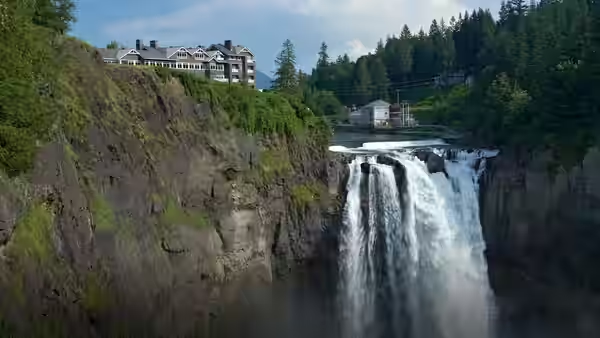
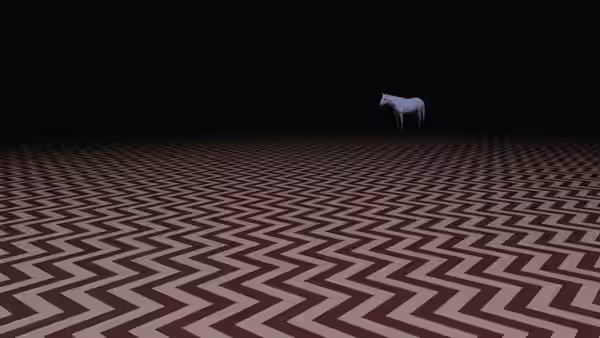
Frank Byers’s cinematography makes the town appealing enough that we want to spend time there, despite the reasons to be wary. The attention given to faces and their surroundings means we keep looking even when the story is not moving quickly. Richard Hoover’s production design helps the everyday settings feel settled, which makes the peculiar behaviour within them harder to dismiss. The photography and the settings work particularly well together: neither needs to announce that something is wrong before the actors have begun.
Duwayne Dunham’s editing is at its most effective when a pause starts to feel slightly too long. We have time to notice the awkwardness, and then to wonder why it has become uncomfortable. Angelo Badalamenti’s music gives the melodrama warmth and weight, allowing feelings that might look excessive on paper to be taken seriously. There is tenderness in the score that the stranger passages need, especially when the humour threatens to make the people seem ridiculous.
The weakness is the amount of time some of this takes. The first series has eight episodes and the second has 22, and the longer stretch too often mistakes another complication for a reason to keep watching. Some supporting stories are much less absorbing than the people performing them. The jokes are welcome, but they cannot always conceal how little has changed from one scene to the next. The actors remain committed, but their conviction cannot make every detour necessary; there are passages we would rather have spent back with the stronger characters.
The third series, The Return, begins in 2017 and runs to 18 episodes, and it deserves to be included in the recommendation. Its slower stretches demand more patience, but the performances remain absorbing enough to make the commitment worthwhile. Against the tidy progress we might expect from a mystery programme, Twin Peaks asks us to attend to the way people speak and react even when they tell us little. Give it an uninterrupted evening to establish its pace; constant glances at another screen will do it no favours.