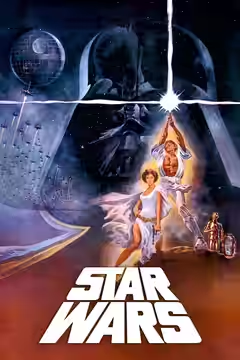
Abrams brings Star Wars back with real film grain, a cast worth caring about and a plot that is the 1977 film’s plot with new names on it. Worth your evening; the new people are the reason, not the old story.
J.J. Abrams was given the job of making people like Star Wars again, and he has done it the careful way. He has made the first one again. A desert planet, a droid with a secret, a masked man in black, a weapon the size of a world. Abrams, Lawrence Kasdan and Michael Arndt have written a film in which nearly every beat has a precedent, and we minded less than we expected to.
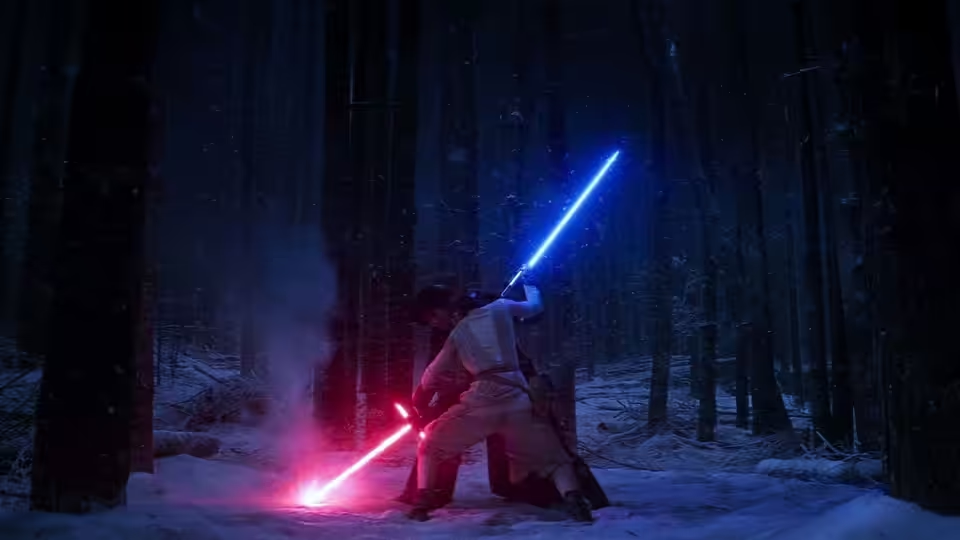
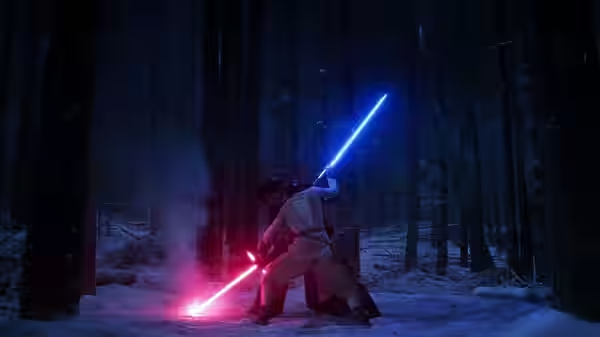
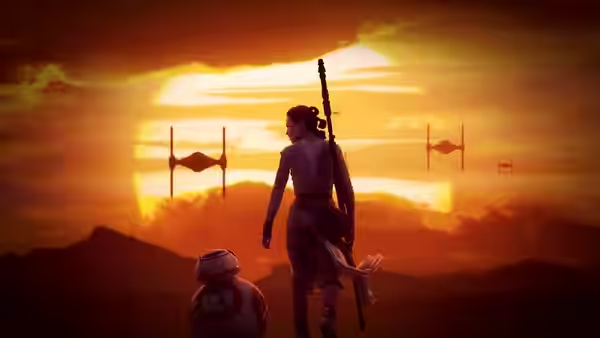
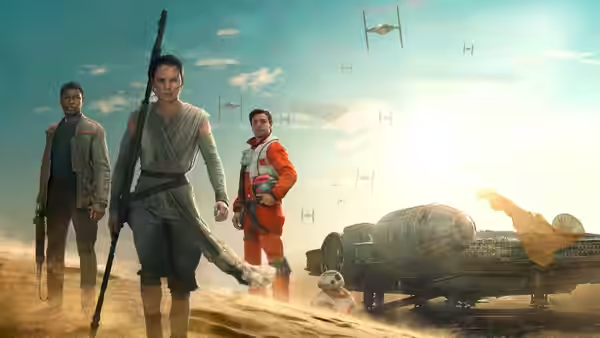
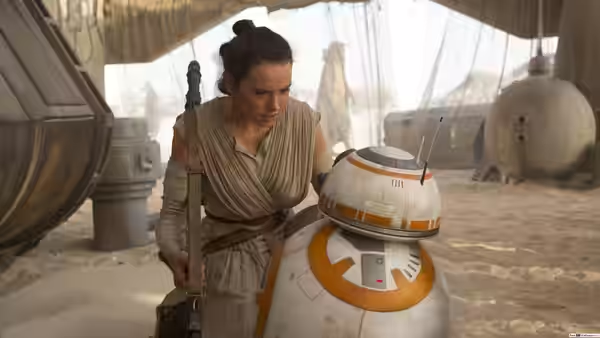
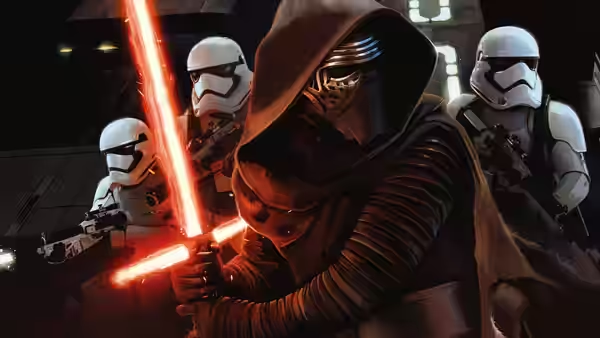
Daisy Ridley is the main reason. Rey’s first quarter-hour is almost wordless: she hauls parts out of a warship dead in the sand, trades them for bread and eats it alone. Ridley plays her as capable and lonely and never asks for pity. John Boyega’s Finn is the nervy one, a deserter passing himself off as Resistance, and the pair make a proper double act. Adam Driver gives the villain a temper. Told the droid has got away, Kylo Ren takes his lightsaber to a control panel, and two stormtroopers coming round the corner turn back.
Dan Mindel shot it on film and it looks like it. The Jakku daylight has grain and glare, and the interiors are lit by lamps you can see. Rick Carter and Darren Gilford have built things you could kick: the Star Destroyer on its side in the desert, the freighter’s corridors with their scuffed padding, Maz Kanata’s stone castle hung with faded flags. Michael Kaplan wraps Rey in grey and cream and gives Kylo Ren a ragged cowl over armour.
Harrison Ford has not looked this interested in years. He plays Han Solo as a man who has stopped bothering to be surprised. When he and Chewbacca walk back aboard their old ship and the lights come up, we felt a lift we were slightly embarrassed by; John Williams slides the old theme in underneath, and we knew we were being worked and did not care. His new material is modest and good, a rising figure for Rey and a low two-note bruise for Kylo. Carrie Fisher’s Leia is used sparingly and well.
The plot moves by coincidence. The freighter happens to be parked on Jakku; Han happens to find it within the hour. Oscar Isaac’s Poe Dameron is set up as a lead and then vanishes for most of an hour. Andy Serkis’s Supreme Leader Snoke is a giant hologram telling his officers things they already know, and Domhnall Gleeson’s General Hux shouts one speech at a parade ground like a young actor doing a newsreel.
Then the last forty minutes turn a story about these people into a set of tasks. There is a weapon the size of a planet and minutes in which to stop it. Maryann Brandon and Mary Jo Markey cut cleanly between a ground team, a squadron and a confrontation elsewhere, and the pace never drops. Nor did our pulse rise. The earlier chase, the freighter tearing through the hull of the dead warship, has more invention in ninety seconds than the whole assault. We were bored, and being bored by a film this well made annoyed us.
Abrams did the same with Star Trek in 2009: he honoured the old thing so hard he traced its outline. What this film does that the prequels never did is trust its actors. People stand in rooms and look at each other, and that turns out to be most of what anybody wanted.
It runs 136 minutes and carries a 12A; the opening village massacre and one late scene are stronger than that suggests, and we would think twice about a child under eight. Take an older one and watch them when the freighter’s lights come on.