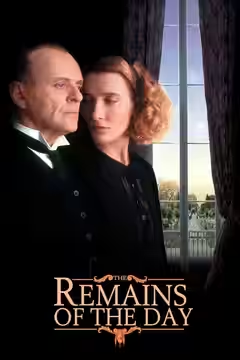
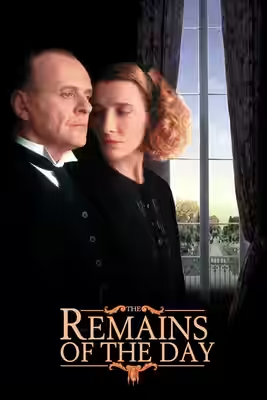
Anthony Hopkins and Emma Thompson make James Ivory’s restrained romance painfully affecting. The music sometimes insists on feelings the performances have already made clear, but their polite conversations are reason enough to give it an evening.
James Ivory’s The Remains of the Day is a deeply affecting drama about a butler who has become dangerously good at his job. We recommend it warmly, with a reservation about music that keeps explaining what the actors have already made clear. Adapted by Ruth Prawer Jhabvala from Kazuo Ishiguro’s novel, it treats professional devotion as something capable of doing lasting damage. Stevens can discuss his duties without difficulty, but speaking about what he wants seems almost beyond him.
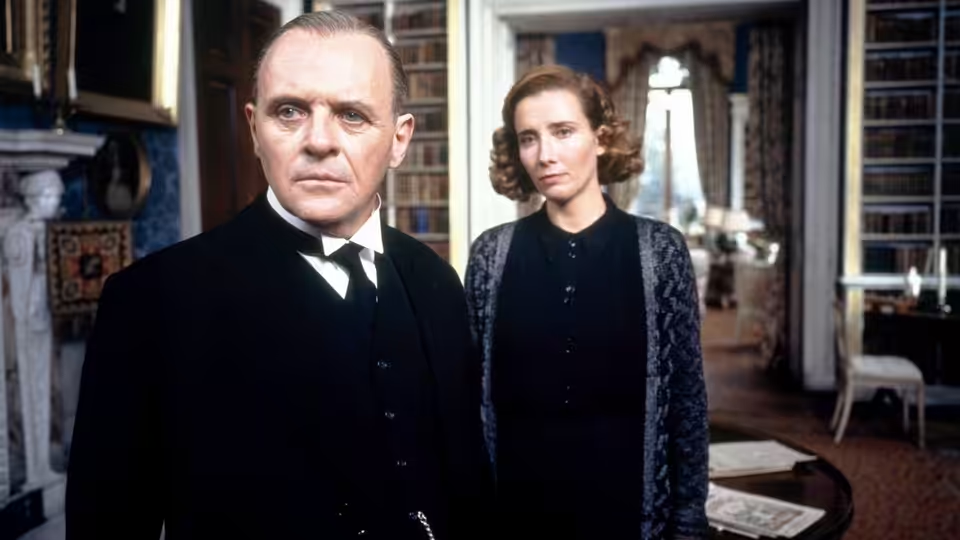
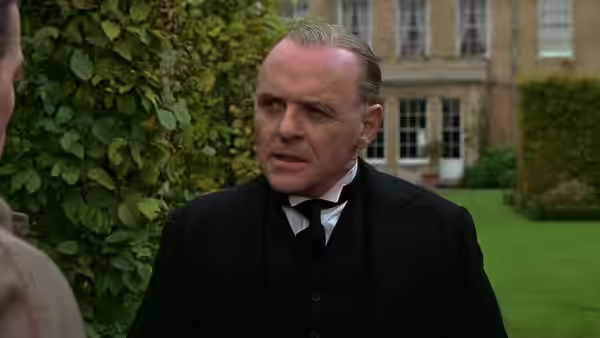
Anthony Hopkins plays James Stevens with a control that can look almost comic until we notice how much effort it costs. His polite replies suggest less manageable answers being suppressed, and Hopkins makes that suppression absorbing to watch. He lets us understand Stevens without making him suddenly confessional for our benefit. Being so relentlessly correct must be exhausting to live beside, and the performance allows us to feel that irritation without losing sympathy for the man.
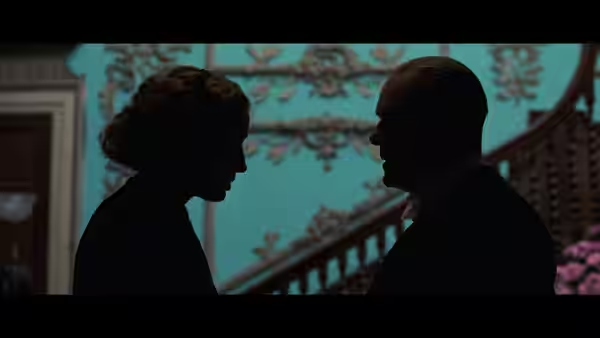
Emma Thompson’s Miss Kenton makes that exhaustion felt without asking us to applaud her patience. Their polite exchanges are the film’s strongest scenes, because she gives ordinary conversation a warmth he cannot comfortably return. We were moved more than we expected by her attempts to reach him through this professional courtesy. Thompson makes the wish for an answer so clear that Stevens’s careful replies begin to hurt, although neither performer needs to make a display of the hurt.
The politics matter here, too: Stevens’s devotion to duty extends beyond the damage it does to his personal life. Ivory asks us to consider what happens when someone takes pride in serving but leaves the thinking to somebody else. James Fox’s Lord Darlington belongs to the same ordered society, and the film gives that order enough appeal for obedience to seem understandable. Jhabvala’s screenplay is particularly good at making us question the rules these people accept, without stopping every conversation to explain why we should.
Tony Pierce-Roberts’s cinematography keeps us conscious of the order surrounding Stevens. Luciana Arrighi’s production design makes the carefully arranged period settings feel like places where a lapse would be noticed, which helps explain the vigilance of the people working in them. The rooms can be admired without making the life inside them look enviable. Andrew Marcus’s editing gives the conversations space, allowing us to attend to the performances instead of hurrying towards the next piece of information. Hopkins and Thompson earn that patience.
The score is harder to defend. Richard Robbins’s music can press the sadness on us when the actors have already done the work, and we found ourselves wishing for less of it. In those passages, Ivory’s careful direction begins to feel over-careful, with too little left for us to discover unaided. This is a real limitation in a film whose actors are so good at suggesting feelings their characters cannot name.
A drama about servants and employers could settle for admiring manners, clothes and rooms, and this one occasionally comes close. What keeps it from becoming a comfortable visit is its attention to how people use good behaviour to avoid being honest. We do not need Stevens to become more forthcoming, because Hopkins has given us enough to understand why he finds it so difficult. Watch it for the conversations with Thompson, and allow for music that sometimes fails to notice how quietly they are speaking.