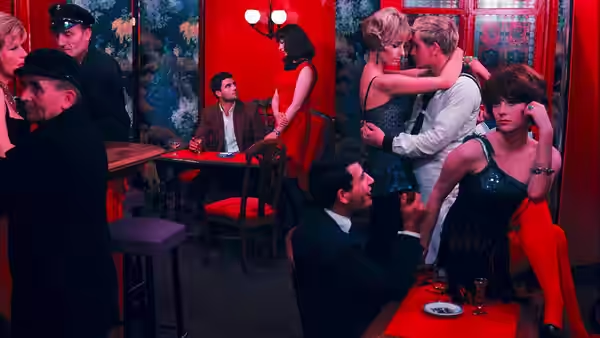
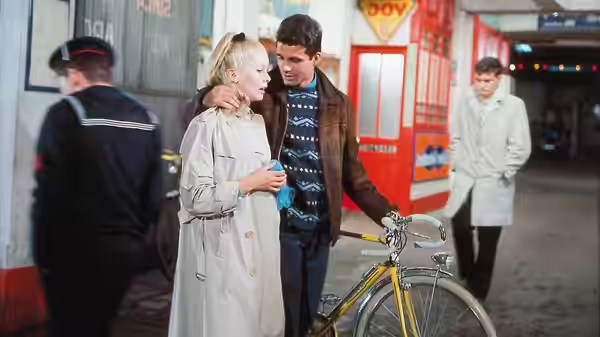
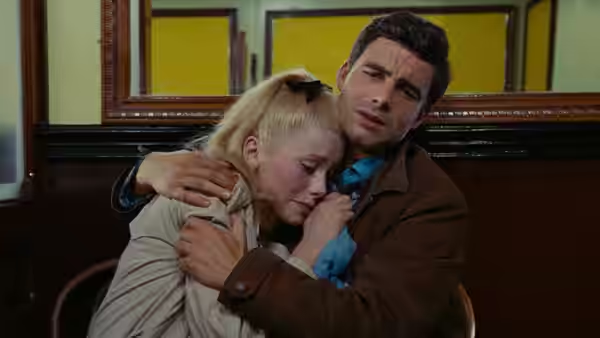
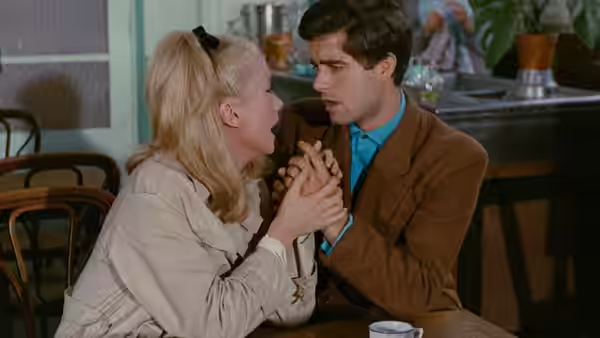
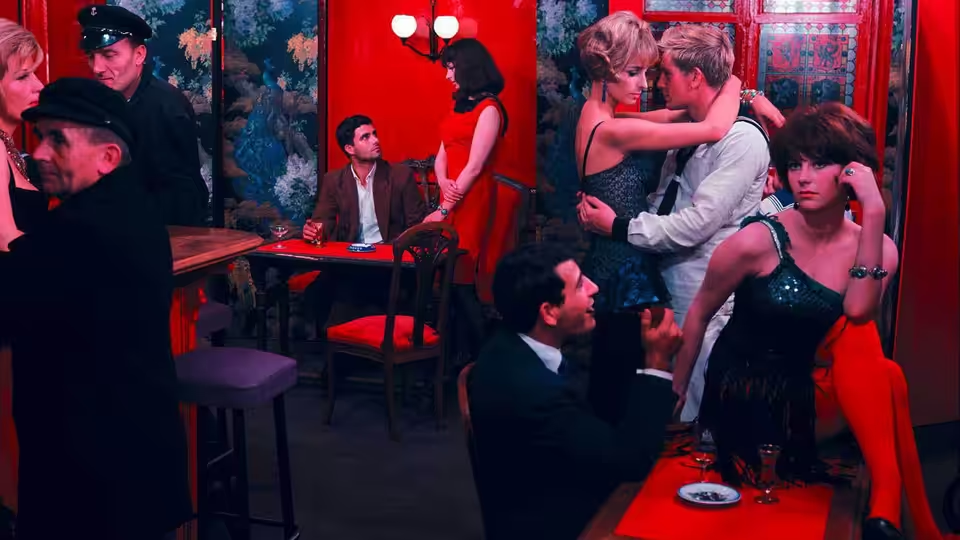
Geneviève and Guy embrace in a restaurant as diners sit at nearby tables
Film review

The Umbrellas of Cherbourg

1964 · Directed by Jacques Demy · 1h 33m

In a sentenceEvery line is sung, including the one about hating opera, and the walls have been painted to agree with the coats

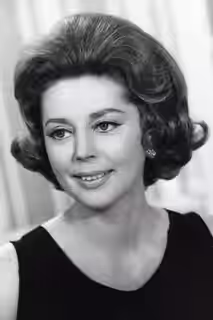
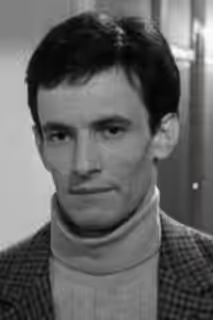
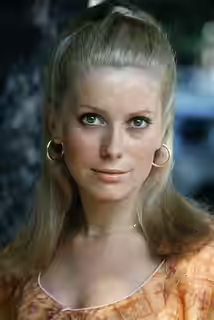
Cherbourg. Geneviève Emery (Catherine Deneuve) works in the umbrella shop her widowed mother, Madame Emery (Anne Vernon), keeps. Guy Foucher (Nino Castelnuovo) is a mechanic at a garage across town and lives with his ailing aunt Élise (Mireille Perrey) and Madeleine (Ellen Farner), the young woman who nurses her. Geneviève and Guy want to marry. Her mother thinks she is too young and he has no money. The shop is behind on its bills, and Madame Emery goes to sell a necklace, which is how she meets a diamond dealer, Roland Cassard (Marc Michel), who starts calling at the shop for reasons that are not entirely about umbrellas. Then Guy’s call-up papers arrive, and he must leave within days. Every line of it is sung.

Plays from YouTube when you press play; nothing loads from them until then.

Fi1m review

Jacques Demy’s sung-through romance about a Cherbourg mechanic and the girl from the umbrella shop is as lovely as its reputation says and sadder than its colours let on. Michel Legrand’s score circles a few tunes for 93 minutes; we did not mind.

Jacques Demy set himself a task in 1964 that sounds like a dare. Every line of The Umbrellas of Cherbourg, from a declaration of love to a request to fill the tank, is sung. There are no dance numbers and no chorus. The story is a shopgirl and a mechanic in a Channel port, and it runs 93 minutes. It is one of the loveliest films France made in that decade, and we would recommend it to people who say they dislike musicals, with one caveat about the music that we will come to.

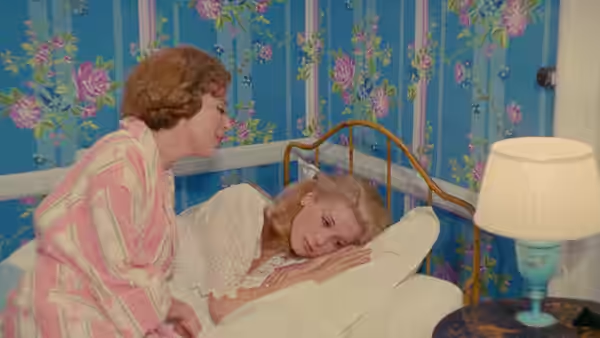
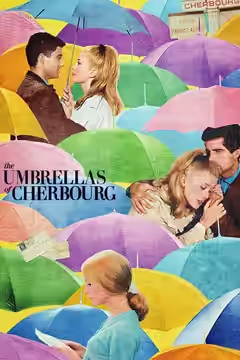
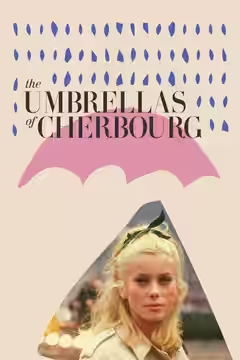
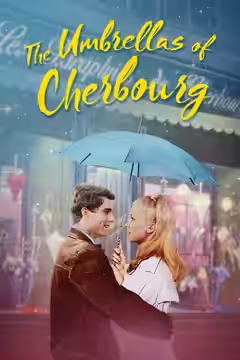
The first thing you see is the town from above: wet cobbles, and umbrellas crossing the square in reds and yellows and blues, arranged for the camera. Jean Rabier then comes down to street level and stays beside the characters, gliding along the pavement as they walk and talk, and he hardly ever cuts away. Bernard Evein has painted the umbrella shop pink and lime, and the wallpaper in Geneviève’s bedroom matches the coat Jacqueline Moreau has put her in, so closely that we could not tell which had been chosen first. It should look like a toy. It does not, because the people in the rooms have bills to pay and say so.

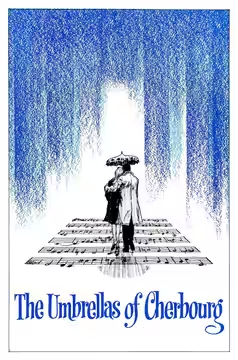
Michel Legrand’s score is where the film divides people. He writes perhaps half a dozen themes and passes them around: a brassy jazz tune for the mechanics knocking off at the garage, a slow waltz for Roland Cassard, the jeweller, and for the lovers a rising theme that the film returns to whenever they are alone. Everything in between is sung recitative over the same harmonies, and some critics have found it thin. We were on the other side. When Guy sang that he hated opera and preferred the cinema we laughed out loud, and about ten minutes later the same manner had us near tears, and we had not noticed the switch. The faces do the work.

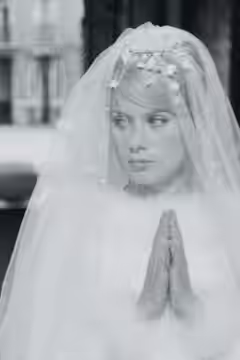
Catherine Deneuve plays Geneviève as a girl who has not yet been told that anything can go wrong, and the film is about her finding out. Nino Castelnuovo’s Guy is open, decent and not much more than that, which is right; he has not had time to be anything else. Anne Vernon has the best-written adult part as Madame Emery, a widow keeping up a shop she cannot afford, who wants her daughter married to money and is not a villain for it. Mireille Perrey, as Guy’s aunt Élise, and Ellen Farner, as Madeleine, the quiet girl who nurses her, sit in a small flat across town and wait, and Farner gets a great deal from almost nothing.

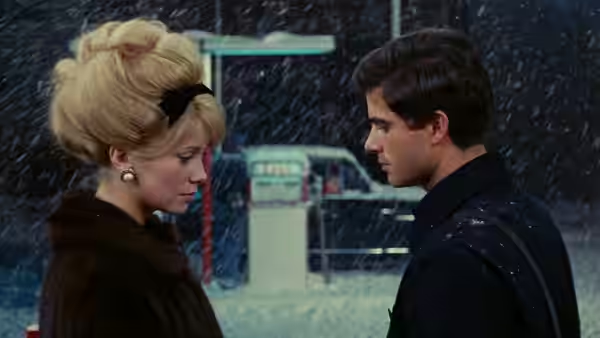
What got us was the departure. Guy has his call-up papers, and on his last night the two of them walk home through streets that have been painted like a sweet shop, singing the one theme, with Rabier’s camera moving alongside them. Then the platform, the train, and the camera pulling back and up as Geneviève is left standing in a wide grey space. It moved us more than a man getting on a train has any right to, and the reason is the design: something ordinary and bad is happening in rooms built for a fairy tale, and nobody on screen remarks on the difference.

The second half moves quicker than the first. Monique Teisseire and Anne-Marie Cotret cut across whole months in a single dissolve, and once or twice we wanted a scene Demy had decided not to write. We will not say what happens after Guy leaves. We will say that the army stays off screen, mentioned in the same breath as the bills, which some will call evasion and we think is how a town talks.

It is 93 minutes and not one of them is spent on a dance number. Watch it with the subtitles on, and do not skip the first five minutes for the umbrellas. They are the point.
Critical consensus AI synthesised

82
Positive
7
Mixed
3
Negative
0
Radio Times
★★★★★ · Alan Jones
100

The review calls the film an enchanting, haunting love story that reaches dizzy romantic heights. It praises the vivid candy-coloured design and Catherine Deneuve’s ethereal performance.

Read the full review →
Empire
1 January 2000 · Kim Newman
90*

Newman regards the film as pure cinematic magic, blending wistful romance with resigned cynicism. He praises the ravishing visual world and Michel Legrand’s memorable orchestration.

Read the full review →
Sight and Sound
1 February 1965 · Elizabeth Sussex
90*

Sussex finds the musical spellbinding, praising its blend of sweetness and emotional sting. She especially singles out Michel Legrand’s haunting score and its interplay with the film’s vivid colour design.

Read the full review →
Slant Magazine
4 May 2025 · ★★★★½ · Bill Weber
90

Weber praises the UHD release as one of Criterion’s finest 4K presentations. He singles out its gorgeous transfer, especially the radiant pastel colors and natural detail.

Read the full review →
The New Yorker
8 April 1996 · Terrence Rafferty
90*

Rafferty warmly praises the film as a beautiful, emotionally honest romance that has been unfairly dismissed as sentimental. He singles out its vivid colors, graceful camera movements, and Catherine Deneuve’s sensitive performance.

Read the full review →
Los Angeles Times
13 March 2014 · Kenneth Turan
85*

Turan finds the restored film as charming and delightful as ever, with a bittersweet emotional core. He praises its delicately restored visuals and the daring choice to sing every line of dialogue.

Read the full review →

Straight answers AI written, from our review

Is The Umbrellas of Cherbourg worth watching?
The Umbrellas of Cherbourg is worth watching, and we scored it 88; it is one of the loveliest films France made in that decade, and we would recommend it even to people who say they dislike musicals. The one caveat is Michel Legrand's score, which circles half a dozen tunes for 93 minutes with no dance numbers. Some find it thin; we did not.
How long is The Umbrellas of Cherbourg, and what is it rated?
The Umbrellas of Cherbourg runs 1h 33m. It is a drama and romance film.
Where can I watch The Umbrellas of Cherbourg in Argentina?
The Umbrellas of Cherbourg is not on any streaming or rental service in Argentina at the moment. It is available in 32 other countries; change your country at the top of the page to see where. Availability is checked daily.
How does The Umbrellas of Cherbourg compare to Brief Encounter?
The Umbrellas of Cherbourg and Brief Encounter both put a decent person on a railway platform to leave, but Demy's film is sung throughout and painted pink and lime, while Lean's is spoken, English and in black and white. Brief Encounter is the sharper of the two and the one we would urge on a stranger; Cherbourg is the lovelier, and suits anyone who can take 93 minutes of sung recitative.
What should I watch after The Umbrellas of Cherbourg?
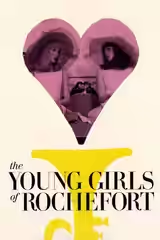
After The Umbrellas of Cherbourg, try The Young Girls of Rochefort (1967, Fi1m 84): Demy and Legrand again, another painted port, this time with dancing and a happier temper. Then Brief Encounter (1945, Fi1m 90): Another railway platform, another decent person leaving; England in black and white instead of pink; and Meet Me in St. Louis (1944, Fi1m 87): Minnelli’s family musical, where colour and song carry a year of ordinary loss.

Cast

Awards

Academy Awards, 1966

Nominated
Best Original Score
Nominated
Best Score, Adaptation or Treatment
Nominated
Best Writing, Original Screenplay

Academy Awards, 1965

Nominated
Best International Feature Film

International Submission to the Academy Awards, 1965

Nominated
International Submission to the Academy Awards

Cannes Film Festival, 1964

Won
Palme d'Or

Louis Delluc Prize, 1963

Won
Louis Delluc Prize

If you liked this, try…

  1. The Young Girls of Rochefort (1967, Fi1m 84)Demy and Legrand again, another painted port, this time with dancing and a happier temper.

  2. Brief Encounter (1945, Fi1m 90)Another railway platform, another decent person leaving; England in black and white instead of pink.

  3. Meet Me in St. Louis (1944, Fi1m 87)Minnelli’s family musical, where colour and song carry a year of ordinary loss.

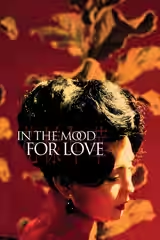
  4. In the Mood for Love (2000, Fi1m 91)Wong Kar-wai’s corridors and dresses do what Demy’s wallpaper does, with almost no singing.

  5. La La Land (2016, Fi1m 81)Chazelle borrows the colours and the ending’s mood wholesale; see where he got them.