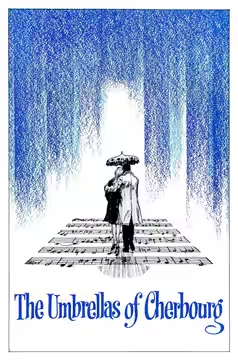
Jacques Demy’s sung-through romance about a Cherbourg mechanic and the girl from the umbrella shop is as lovely as its reputation says and sadder than its colours let on. Michel Legrand’s score circles a few tunes for 93 minutes; we did not mind.
Jacques Demy set himself a task in 1964 that sounds like a dare. Every line of The Umbrellas of Cherbourg, from a declaration of love to a request to fill the tank, is sung. There are no dance numbers and no chorus. The story is a shopgirl and a mechanic in a Channel port, and it runs 93 minutes. It is one of the loveliest films France made in that decade, and we would recommend it to people who say they dislike musicals, with one caveat about the music that we will come to.
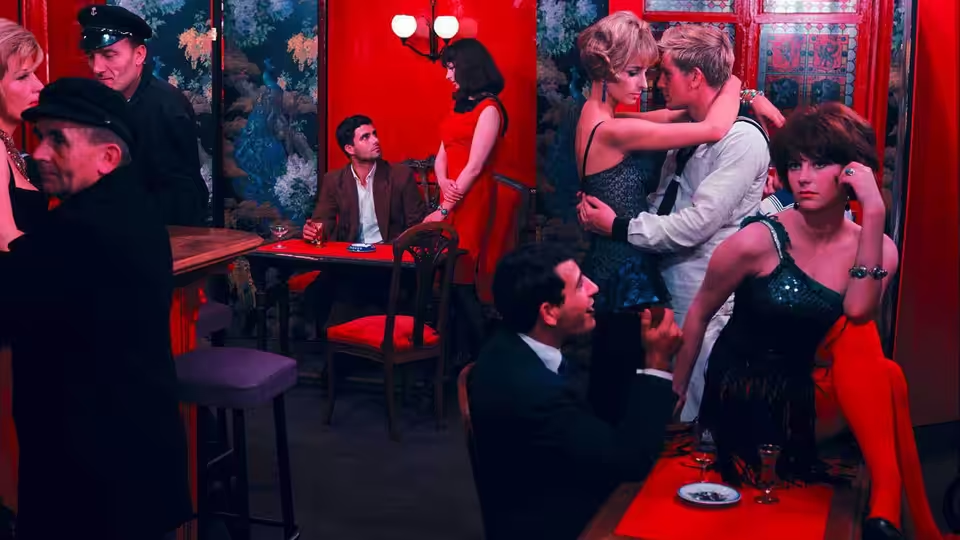
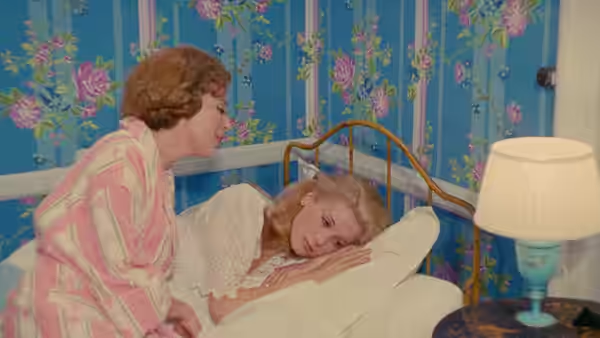
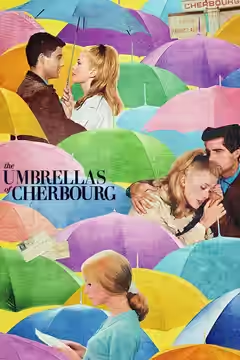
The first thing you see is the town from above: wet cobbles, and umbrellas crossing the square in reds and yellows and blues, arranged for the camera. Jean Rabier then comes down to street level and stays beside the characters, gliding along the pavement as they walk and talk, and he hardly ever cuts away. Bernard Evein has painted the umbrella shop pink and lime, and the wallpaper in Geneviève’s bedroom matches the coat Jacqueline Moreau has put her in, so closely that we could not tell which had been chosen first. It should look like a toy. It does not, because the people in the rooms have bills to pay and say so.
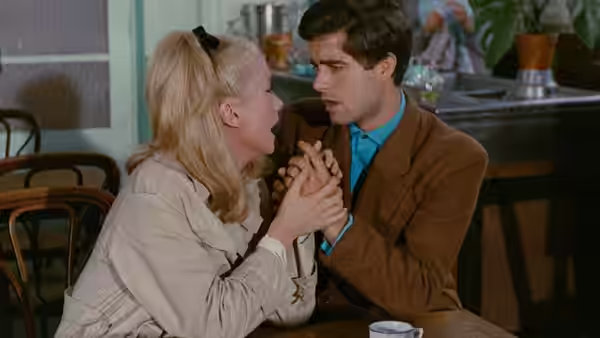
Michel Legrand’s score is where the film divides people. He writes perhaps half a dozen themes and passes them around: a brassy jazz tune for the mechanics knocking off at the garage, a slow waltz for Roland Cassard, the jeweller, and for the lovers a rising theme that the film returns to whenever they are alone. Everything in between is sung recitative over the same harmonies, and some critics have found it thin. We were on the other side. When Guy sang that he hated opera and preferred the cinema we laughed out loud, and about ten minutes later the same manner had us near tears, and we had not noticed the switch. The faces do the work.
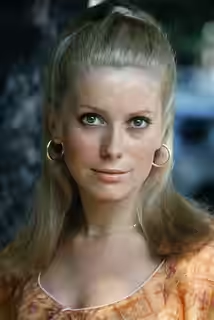
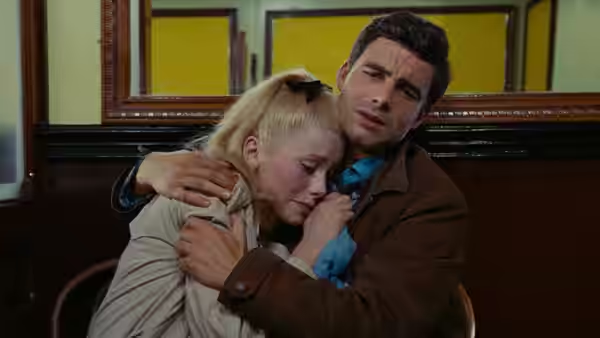
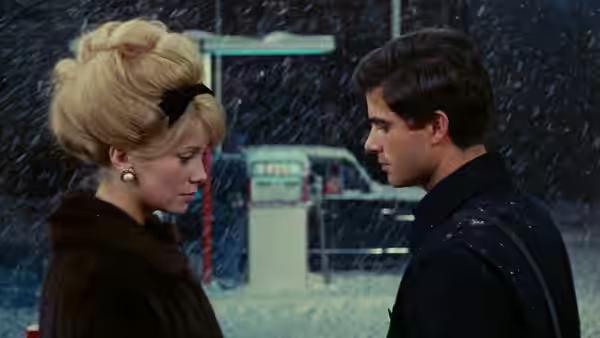
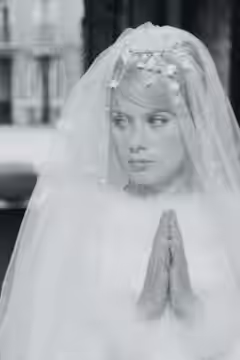
Catherine Deneuve plays Geneviève as a girl who has not yet been told that anything can go wrong, and the film is about her finding out. Nino Castelnuovo’s Guy is open, decent and not much more than that, which is right; he has not had time to be anything else. Anne Vernon has the best-written adult part as Madame Emery, a widow keeping up a shop she cannot afford, who wants her daughter married to money and is not a villain for it. Mireille Perrey, as Guy’s aunt Élise, and Ellen Farner, as Madeleine, the quiet girl who nurses her, sit in a small flat across town and wait, and Farner gets a great deal from almost nothing.
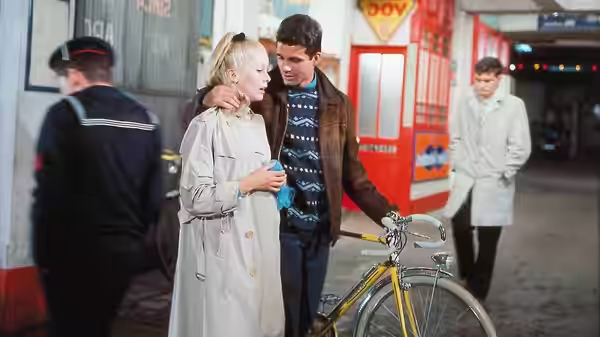
What got us was the departure. Guy has his call-up papers, and on his last night the two of them walk home through streets that have been painted like a sweet shop, singing the one theme, with Rabier’s camera moving alongside them. Then the platform, the train, and the camera pulling back and up as Geneviève is left standing in a wide grey space. It moved us more than a man getting on a train has any right to, and the reason is the design: something ordinary and bad is happening in rooms built for a fairy tale, and nobody on screen remarks on the difference.
The second half moves quicker than the first. Monique Teisseire and Anne-Marie Cotret cut across whole months in a single dissolve, and once or twice we wanted a scene Demy had decided not to write. We will not say what happens after Guy leaves. We will say that the army stays off screen, mentioned in the same breath as the bills, which some will call evasion and we think is how a town talks.
It is 93 minutes and not one of them is spent on a dance number. Watch it with the subtitles on, and do not skip the first five minutes for the umbrellas. They are the point.