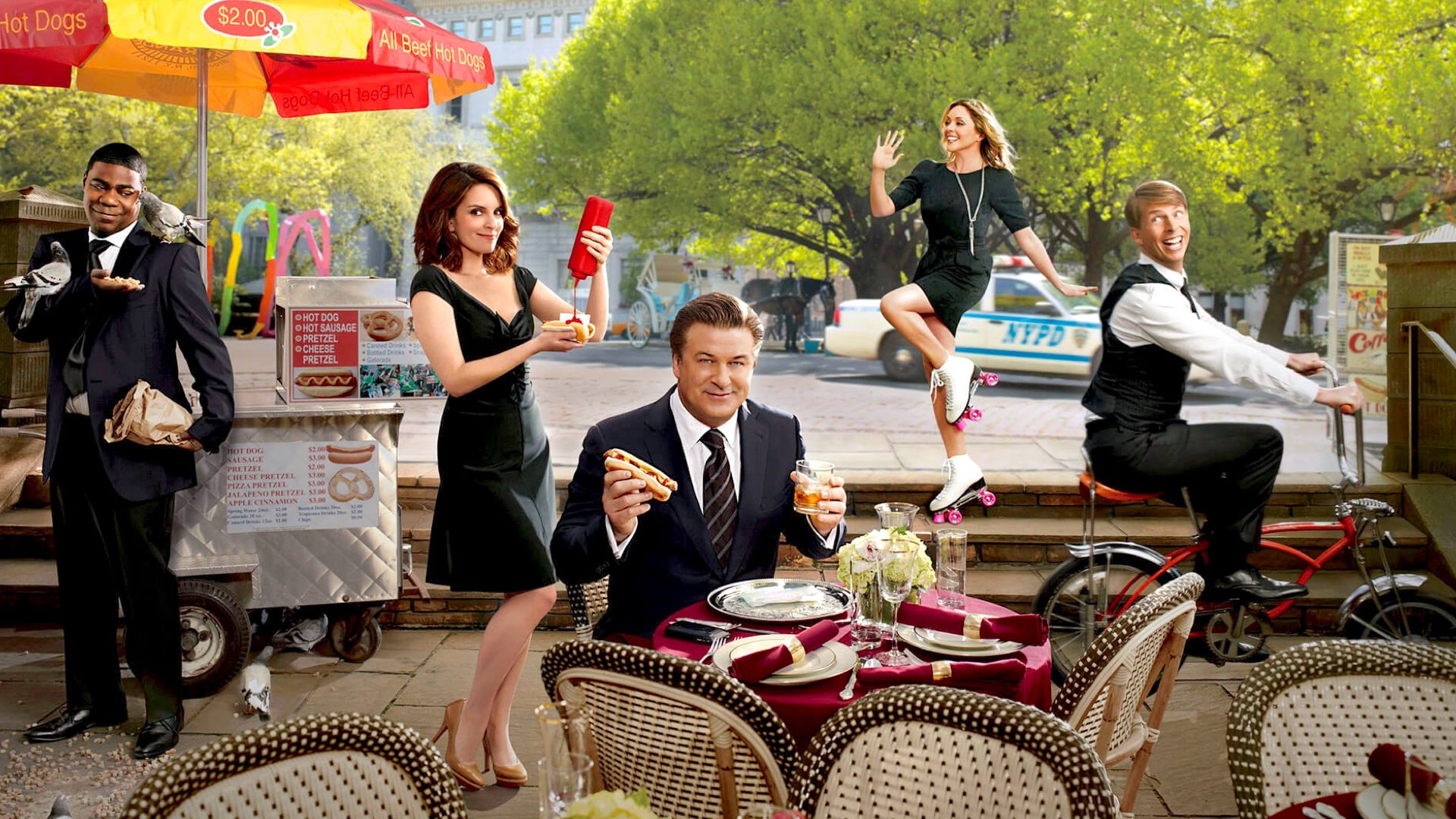
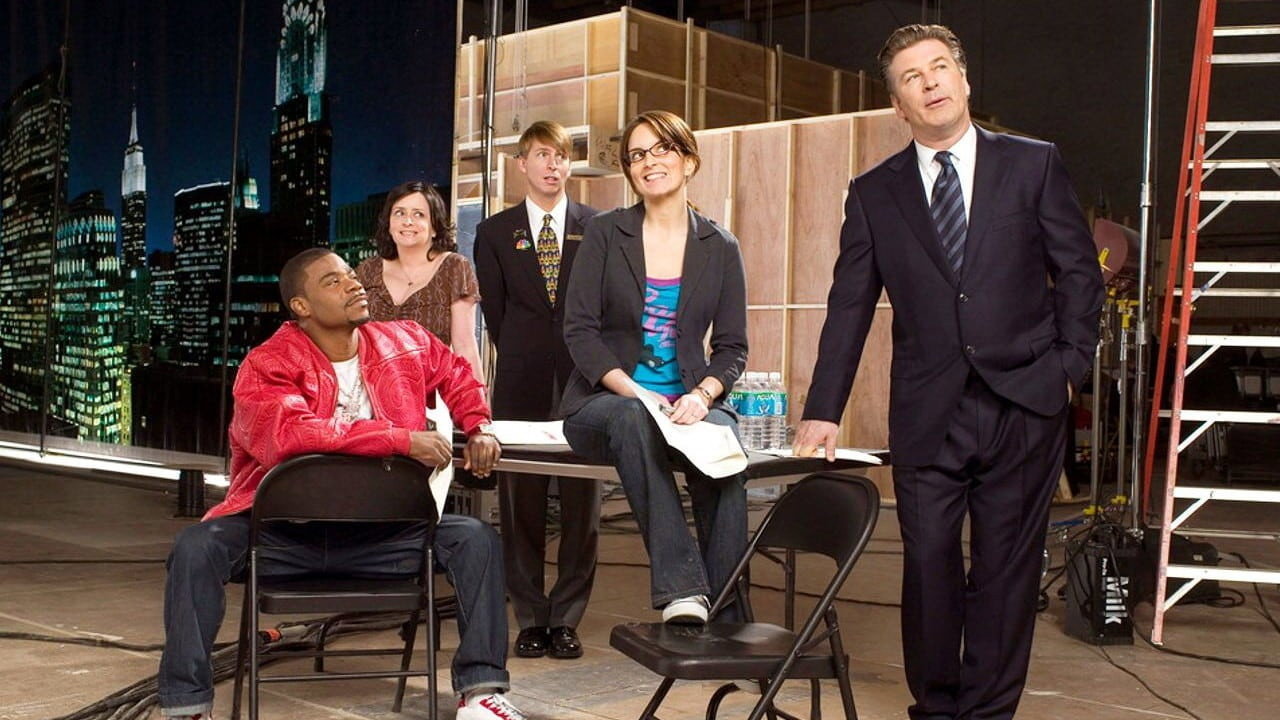
30 Rock takes a little time to sort out its ensemble, then rewards the patience with sharp writing and expertly judged foolishness. Tina Fey and Alec Baldwin make the workplace friction worth staying for.
30 Rock is a sharp, generous workplace comedy whose uneven beginning is worth forgiving. Created by Tina Fey, it uses the business of making a television programme to put incompatible people in close quarters. It is interested in their vanity, their need to be liked and their ability to make a small problem everybody else’s problem. The ambition is to keep the jokes coming without making everyone sound like the same person.
Fey makes Liz Lemon’s exasperation feel earned, though the opening asks her to carry more than her restrained delivery can manage. Alec Baldwin, as Jack Donaghy, is immediately surer. His measured phrasing makes absurdity sound reasonable, and his refusal to hurry gives the other actors something firm to play against. We laughed hardest at his composure: Jack can make an outrageous remark sound like a useful contribution to a meeting. Fey’s irritation is funnier when there is someone this pleased with himself standing opposite her.
Tracy Morgan’s Tracy Jordan supplies a different kind of disruption, with a delivery that leaves us unsure where a sentence will end. Jane Krakowski, playing Jenna Maroney, makes the need for attention both funny and faintly alarming. Jack McBrayer gives Kenneth Parcell a brightness that avoids simply copying either performance. These are broad characters, but the differences between the actors’ approaches mean the exchanges rarely feel like a competition to shout the loudest.
Fey’s fellow writers include Robert Carlock, Kay Cannon and Donald Glover, and the scripts are generous with small jokes as well as the ones that drive a scene. A line can be funny on arrival and funnier once the next line exposes the speaker. The speed helps, although it occasionally leaves a promising exchange behind too quickly. The jazzy music suits that restless pace, keeping the comedy buoyant without insisting that we find everyone charming. There is little waiting around for laughter.
Directors including Don Scardino and Beth McCarthy-Miller make room for sharply different comic instincts without letting the scenes fall apart. The series is at its most assured when we can enjoy a listener’s expression as much as the person speaking. Workplace comedies often depend on making colleagues into a substitute family. Here, the affection is more persuasive when nobody is making a point of it.
In the pilot, the programme these people are supposed to be making is not particularly convincing. That matters because we need some sense of why working on it deserves all this fuss, and the opening is also slow to establish which relationships will supply the comedy. Fey is left doing too much of that work before the others have found their places around her. The improvement is considerable, but it does not make the pilot funnier in retrospect.
The quieter disappointments beneath the jokes give us a reason to care who is speaking next, even when we would hesitate to sit beside them at work. Allow the ensemble time to settle, and resist treating it as background television. Choose an evening when nobody intends to check their phone.