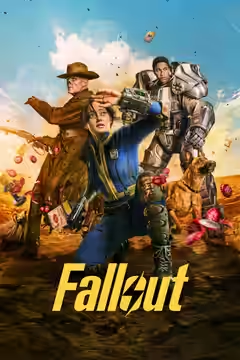
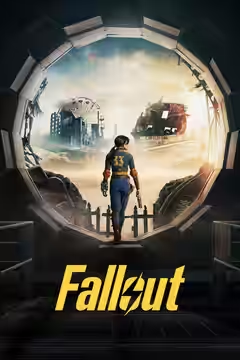
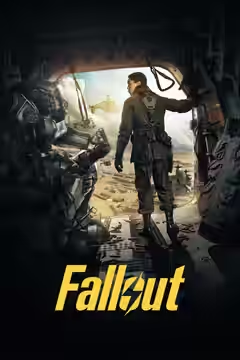
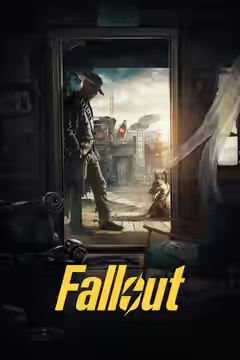
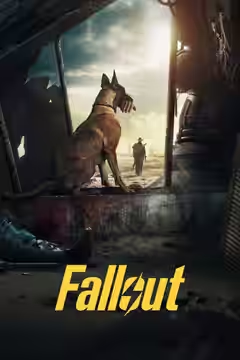
Ella Purnell and Walton Goggins give Fallout people worth following through its grotesque wasteland. It is funny, carefully made television, with a wandering plot that sometimes tests the goodwill its cast has earned.
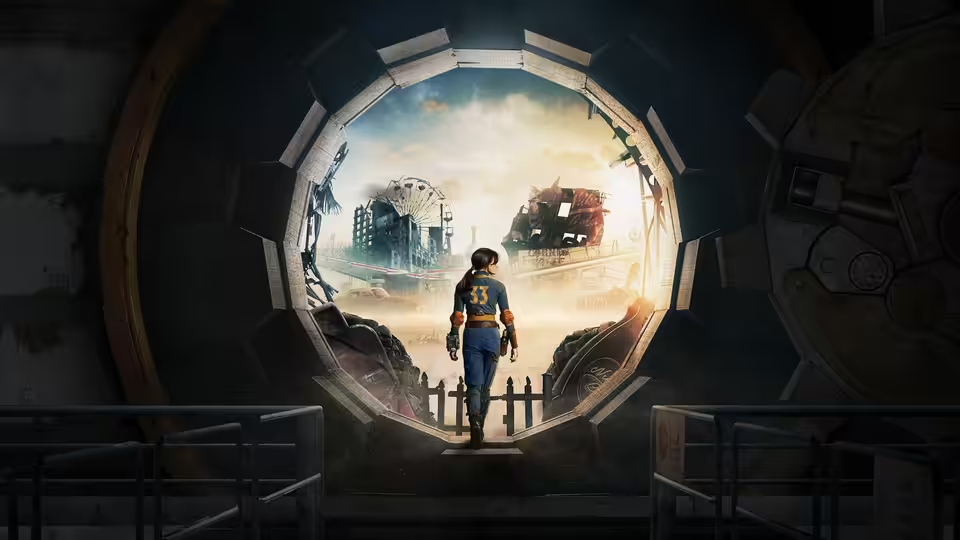
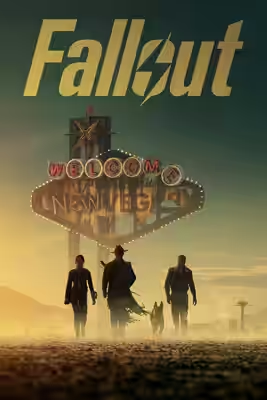
Fallout is a rewarding piece of post-apocalyptic television, provided we can forgive some dawdling between its better encounters. It builds a new story inside the games’ universe, a sensible choice that lets the series establish its own people without having to reproduce an existing plot. Nuclear destruction has left a wasteland, and the survivors are still dealing with corporate greed and human foolishness. The ambition is to make that prospect entertaining without making the people caught in it entirely disposable.
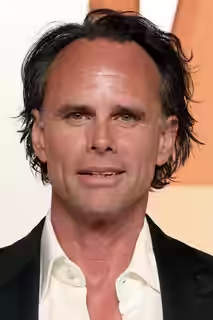
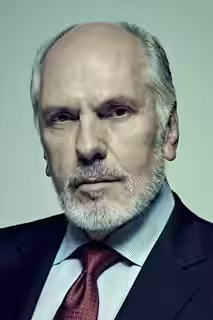
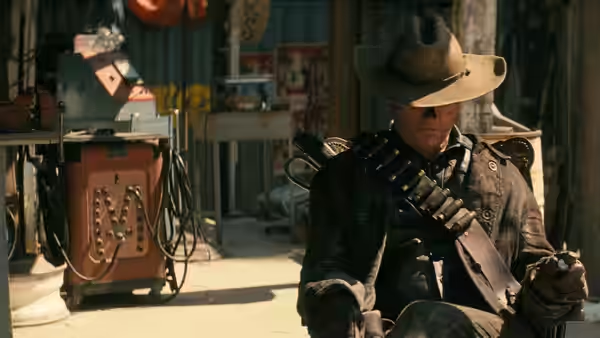
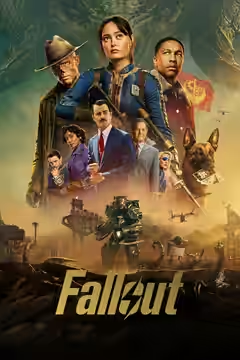
Ella Purnell, as Lucy MacLean, makes that possible. Lucy’s likeability could easily become a way of keeping the ugliness at a comfortable distance; Purnell makes her someone whose reactions matter, so the violence retains a cost even when it is being played for laughs. Walton Goggins, playing the Ghoul, gives the nastier comedy its confidence, and the series benefits whenever his presence makes an encounter less predictable. Aaron Moten’s Maximus completes the central trio, though the balance of interest across their three strands is uneven.
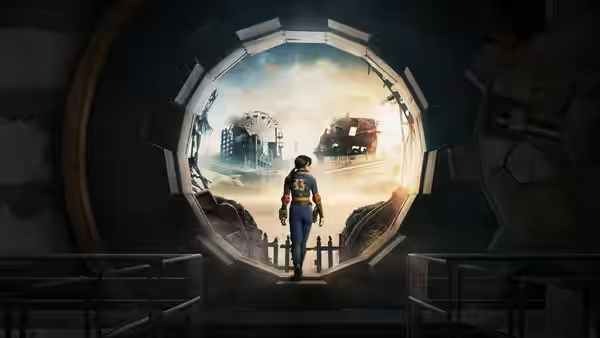
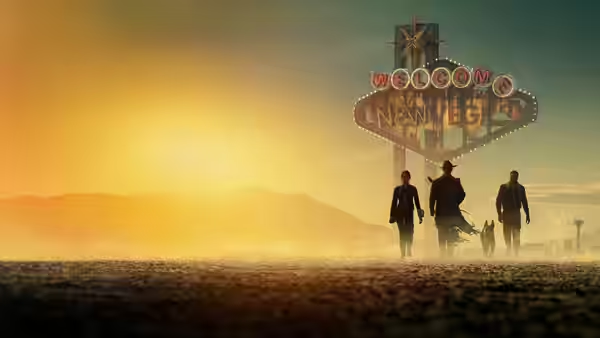
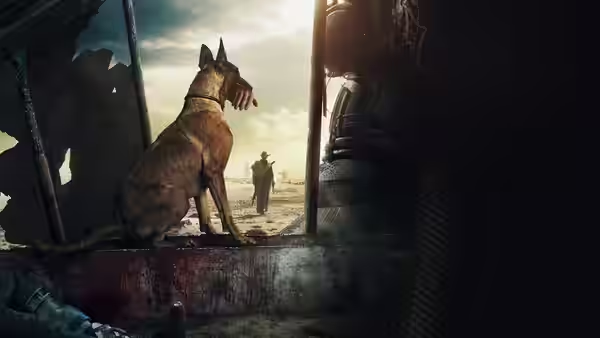
Howard Cummings’s production design is the main reason the wandering remains enjoyable. The retrofuturist styling makes this a recognisable society with peculiar tastes, so there is something to examine even when nobody is getting anywhere. Dan Stoloff and Stuart Dryburgh are among the credited cinematographers; the images keep the setting legible even when the violence gets busy. That attention to how this society looks also gives the corporate satire somewhere convincing to happen.
We laughed at the gore, then felt slightly ashamed of ourselves. The bodily damage is presented with such comic relish that the laugh arrives before we have considered what we are laughing at. Ramin Djawadi’s music helps hold together the shifts between danger and absurdity, and contributes to the pleasure of spending time in such an unpleasant place. Sometimes the humour gets juvenile, and the insistence on making another ugly joke can weaken a scene that has already made its point.
The larger reservation is the pace. The three-strand structure repeatedly asks us to transfer our interest, and the people are not developed evenly enough to make that effortless. Ali Comperchio and Yoni Reiss are among the credited editors; the cutting keeps the different strands intelligible, but it cannot make every detour feel necessary. The writing team, which includes Geneva Robertson-Dworet and Graham Wagner, gives us mysteries to follow without always giving the immediate business enough urgency.
Within post-apocalyptic drama, the pleasure here is how much room remains for bad taste and foolishness. The series takes human failings seriously enough to make corporate greed part of the trouble, without requiring every encounter to become a lecture. That gives the jokes something to do beyond interrupting the violence, and keeps the ruined setting from becoming a succession of threats. Familiarity with the games may add recognition, but the people and the place are interesting enough without it.
The uneven momentum matters because Purnell and Goggins have made us care enough to want the next scene to count. Still, their performances and the care taken over this peculiar society make the slower passages worth tolerating. Give it a go if the mixture of gore and comedy appeals, and allow for the occasional stretch when the scenery is doing most of the work.