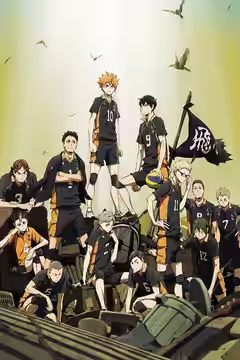
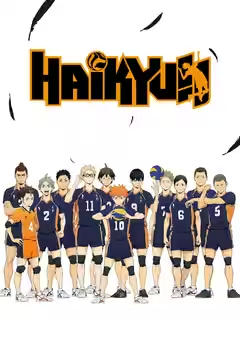
Four seasons about a school volleyball team should not be this gripping, and for its first few episodes it is not. Stay past them and this becomes one of the best-made sports dramas we know, animated or not, provided you can stand the shouting.
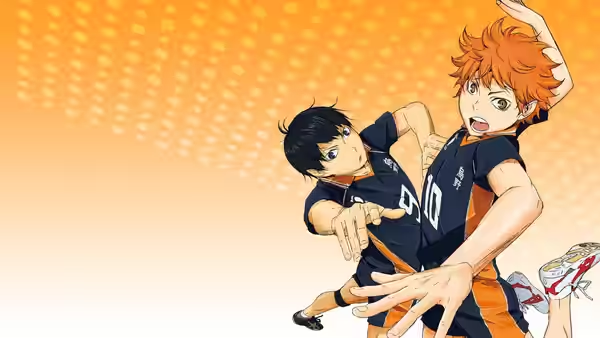
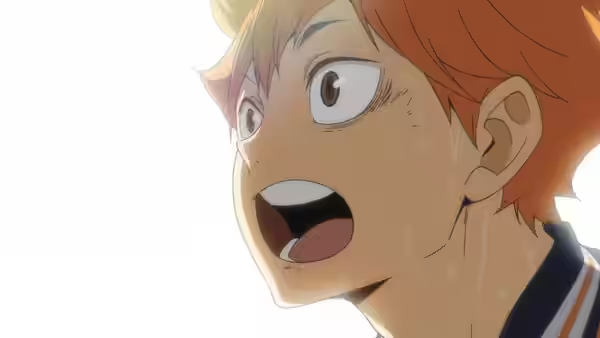
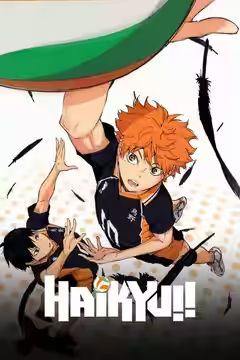
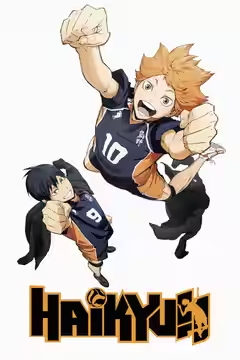
Shoyo Hinata (Ayumu Murase) is short, loud and can jump higher than anyone expects. Tobio Kageyama (Kaito Ishikawa) is a setter so precise and so rude that his last team stopped chasing his tosses. They meet across a net in junior high, Hinata loses badly, and both then turn up at Karasuno High School, a team that used to be good and no longer is. That is the whole engine of the series, and Susumu Mitsunaka, who directs and writes, runs it for 85 episodes without once changing the fuel.
The first four or five episodes are the weakest, and we say so because it would be a pity to stop there. The gags are broad, everyone shouts, and Daichi Sawamura (Satoshi Hino) gives speeches about trust that could have come from any sports story ever made. The reviews so far are cool on the series, and it is mostly these episodes they are describing. What they miss is how quickly the show stops explaining itself and starts showing.
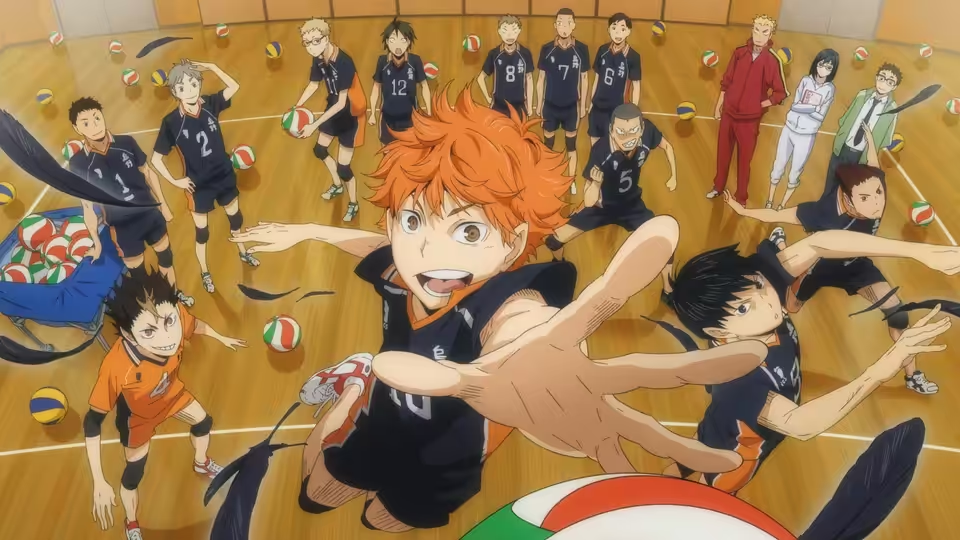
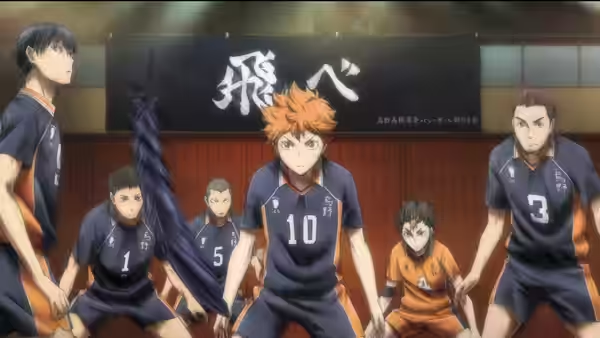
What it shows is volleyball, in a detail nobody asked for and everybody ends up wanting. A rally is broken into its parts: the receive, the set, the run-up, the jump, the block. Yumiko Nakata, credited with cinematography, puts the camera where a player’s eyes would be, so the ball comes at us over the net and the block rises in front of the frame like a wall. Then she puts it high above the court, and we see the gap in the defence the spiker saw half a second before us. Junichi Uematsu’s cutting is the show’s best joke and its best weapon: a jump is held at its top for far longer than gravity allows, and when the ball comes down the sound of it on the boards is the only sound left.
Yuki Hayashi and Asami Tachibana’s score is guitar and drums for the rallies, piano for the bench, and it knows when to stop. The best cues are the silences. When Hinata closes his eyes and jumps, trusting that the ball will be where his hand is, the music drops out, and we found ourselves holding our breath in our own living room, on a Tuesday, over a fictional school match. It moved us more than we thought possible, and the reason is on the screen: two boys who dislike each other have agreed to do one thing perfectly, and the show has spent an hour making us understand how hard that one thing is.
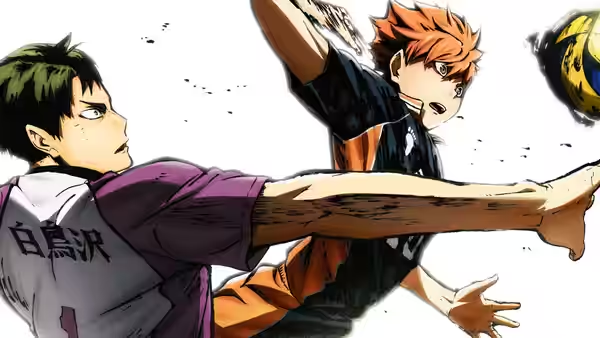
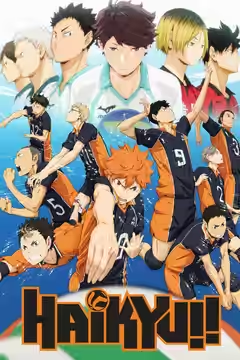
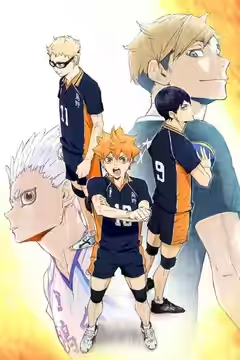
The cast around them is large and the writers, Taku Kishimoto among them, give each one a job. Kei Tsukishima (Koki Uchiyama) is tall, bored and refuses to care, and his slow admission that he might is the series’ most patient thread. Yu Nishinoya (Nobuhiko Okamoto) is a small boy who throws himself at the floor after every ball, and he does it like a man storming a beach. Koshi Sugawara (Miyu Irino) is the one who has to decide what he is for when he is not on court. Wakatoshi Ushijima (Ryōta Takeuchi), on the other side of the net, is a boulder with a serve, and the show has the sense not to make him a villain.
The flaws are real. The comedy leans on pulled faces and slapped heads, and by the fourth season we were tired of it. Nobody has a life outside the gym; parents appear in the stands and vanish; Hitoka Yachi (Sumire Morohoshi) is introduced and then mostly asked to be frightened of tall boys. And the third season spends its ten episodes on a single match against Shiratorizawa Academy, which is either the bravest thing a sports series has done or a test of patience, depending on the evening.
Set against the genre, it does the thing sports stories rarely manage: the losing matters, and the show lets it hurt. We will not say who wins what. We will say we shouted at the screen, more than once, and were not embarrassed. Episodes run 24 minutes and there are 85 of them across four seasons, from 6 April 2014 to a fourth season that began on 11 January 2020. Watch them in Japanese with subtitles, and do not judge it before episode six.