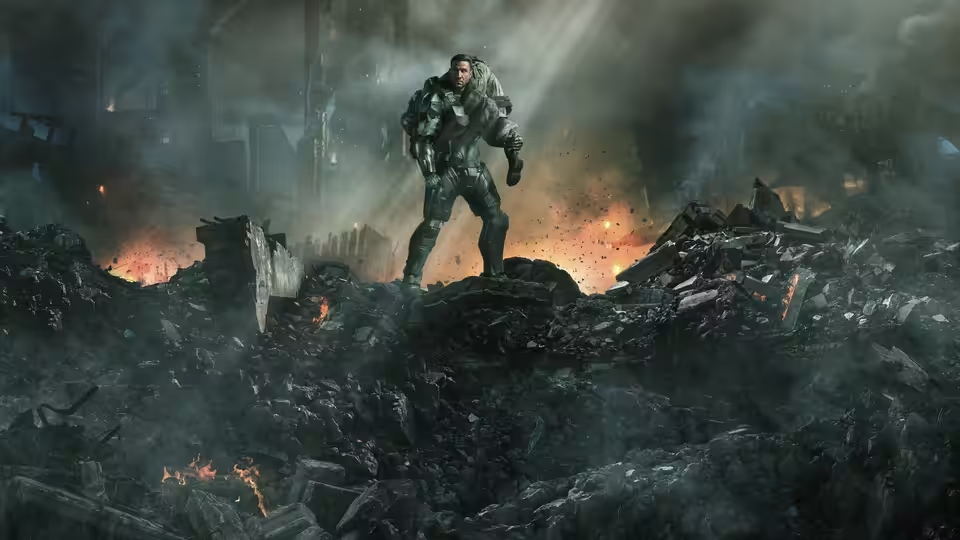
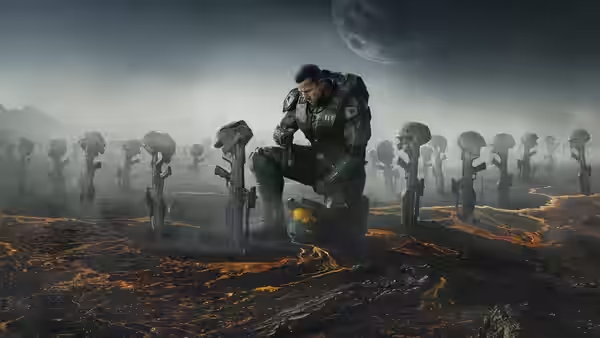
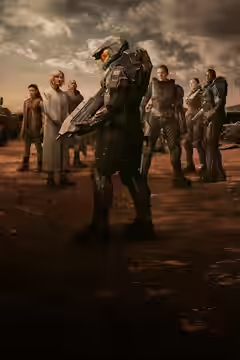
Pablo Schreiber and Yerin Ha give Halo enough human interest to make its sluggishness frustrating. The military science fiction has promise, but weak action and overexplained plotting make this a difficult series to recommend.
Created by Steven Kane and Kyle Killen, Halo is most promising when it lets its central soldier question the people giving him orders. Pablo Schreiber gives Master Chief enough uncertainty to make that question worth following. The series around him is harder to commit to: familiar science fiction, slowed by explanation and only intermittently rescued by its actors. There is enough here to make the wasted opportunities frustrating, but not enough to recommend the whole programme.
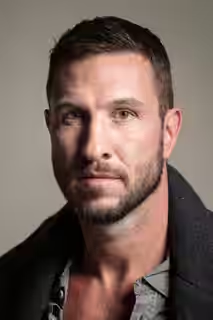
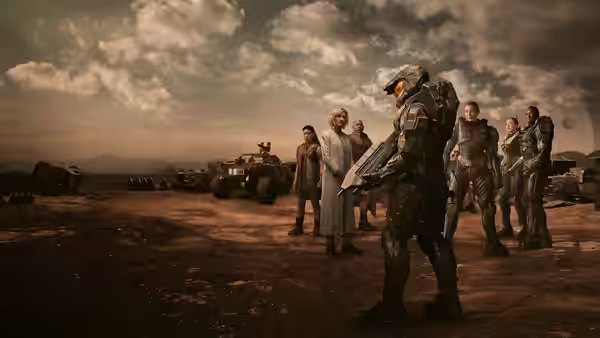
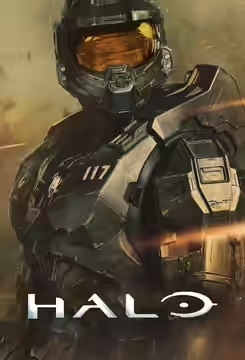
Schreiber’s voice does useful work, suggesting thought behind a character who could easily be reduced to a suit of armour. He gives Chief an intensity that does not depend on the action convincing us, which is fortunate. Yerin Ha’s Kwan Ha provides an expressive partner, and their developing relationship gives the programme something to attend to beyond its own terminology. The chemistry works because both performers make their encounters feel important before the script has finished telling us why they matter.
Natascha McElhone’s Dr. Catherine Halsey brings a more troubling relationship into view. The closeness between her and Chief makes the question of who controls him more interesting, because it cannot be kept at the level of military procedure. We were uneasy watching that closeness, because it complicates the question of how freely he can act. These scenes give the questions about Chief’s humanity a personal urgency that the military plotting often lacks.
Visually, the programme is not without care. Karl Walter Lindenlaub and Carl Sundberg are among the cinematographers, and the sense of scale helps these worlds feel substantial, even when their science-fiction imagery seems familiar. The production design, credited to James Foster and Sophie Becher, gives the settings different degrees of wear and habitation; they do not all appear to have been built that morning. Those distinctions help us understand the places without needing another briefing.
The action is much less persuasive. The Spartans have a convincing look and sound, but the alien effects often seem insubstantial, leaving fights without the physical force they need. Sean Callery’s score cannot give those digital opponents the weight they lack, and the music is left with too much responsibility for making the conflict feel urgent. For a programme that offers armed confrontation as a major attraction, this is a serious weakness rather than a defect we can politely overlook.
The longer problem is the pacing. Nicholas Wong and Maxime Lahaie are among the editors, but there is only so much cutting can do when the writing keeps interrupting its strongest relationships with detours and information. We were bored by the exposition, particularly when it displaced the developing rapport between Schreiber and Ha. The programme repeatedly asks us to absorb information before giving us a reason to care about it, and the actors cannot keep supplying that reason unaided.
Military science fiction can make the consequences of obedience immediate and personal. Halo has the cast and the uneasy relationships to do that, which makes its reliance on familiar plotting more disappointing. Fidelity to a game does little to help an episode that cannot sustain interest between confrontations. Anyone coming principally for convincing combat should look elsewhere.