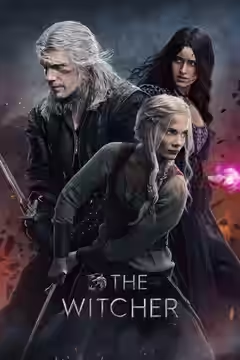
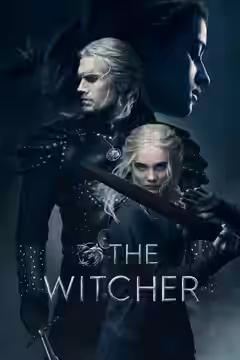
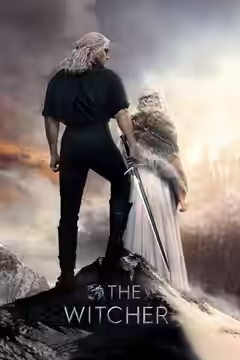
Lauren Schmidt Hissrich’s adaptation of Andrzej Sapkowski’s books has a first-rate Geralt in Henry Cavill, a bard worth the trip and a first season that hides its own structure. The seasons after it grow the map and lose the man.
Lauren Schmidt Hissrich’s series takes Andrzej Sapkowski’s stories about Geralt of Rivia, a monster hunter made by potions into something not quite human, and builds a Continent of warring kingdoms around him. Across four seasons of eight episodes it is decent and no more. The first season is good, muddled fun; the seasons after it add kingdoms and sorcerers and slowly mislay the thing that worked.
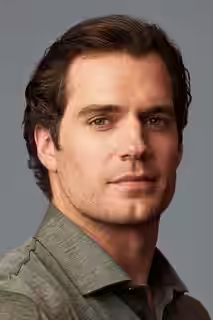
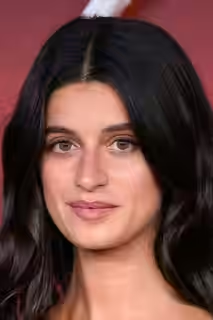
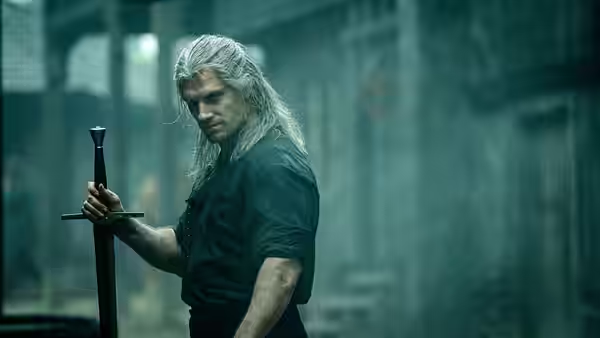
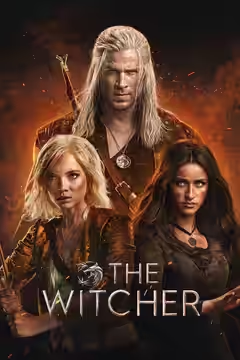
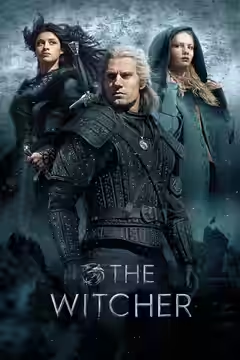
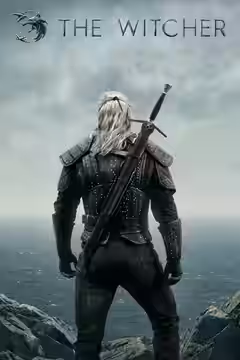
The thing that worked is Henry Cavill. He plays Geralt in a white wig and yellow contact lenses, with a voice like a bag of gravel and a working vocabulary of about forty words, a good few of them “Hmm”, and he is funny, which almost nobody expected. Joey Batey’s Jaskier, a bard who attaches himself to the witcher uninvited, is the other reason to stay: he talks enough for both of them, and Sonya Belousova and Giona Ostinelli’s “Toss a Coin to Your Witcher” is a tavern song built to be hummed for a week. We hummed it. Anya Chalotra gives Yennefer of Vengerberg, a girl sold to a school of sorceresses for less than a pig, the only wanting in the series with real hunger in it.
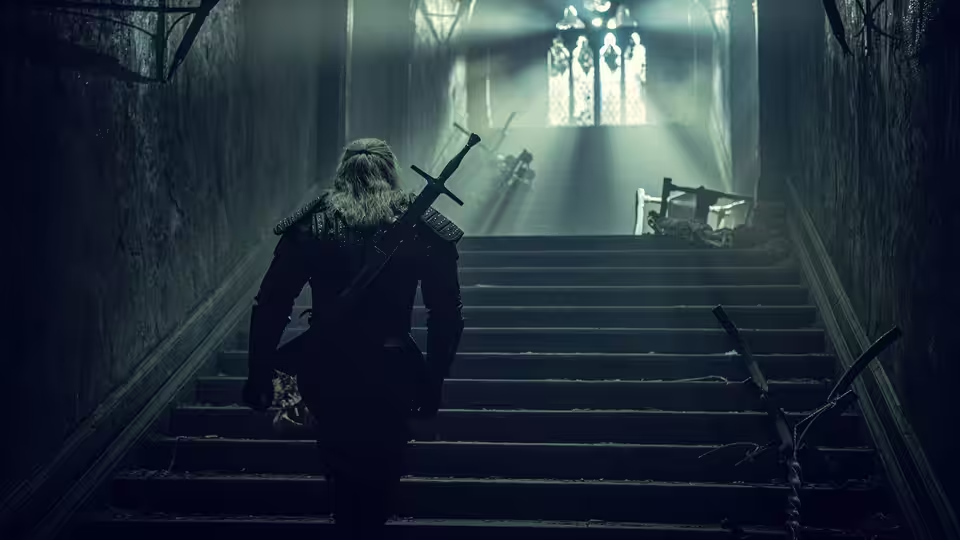
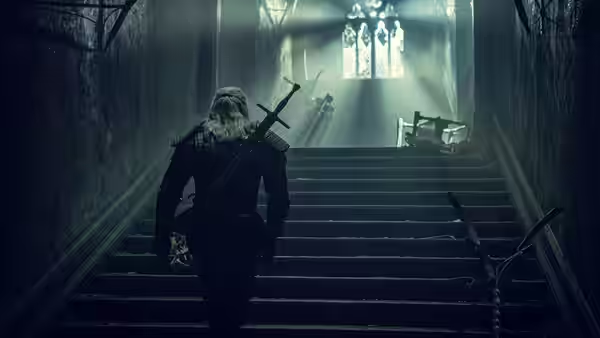
The craft is better than the writing. The market fight at Blaviken in the first episode is one long, ugly, well-staged brawl, Geralt cutting through a gang in a muddy square while townsfolk watch from the stalls, and we were properly gripped. Gavin Struthers and Jean-Philippe Gossart light the night scenes by fire, so faces come out of the dark in orange and everything else stays black; the swamps are grey-green and wet. Andrew Laws gives Aretuza white stone and sea light and gives Cintra a throne room like the inside of a coal scuttle. Tim Scotti-Henson and Lucinda Wright dress the Nilfgaardian army in black armour creased like a walnut.
The structure is where the first season loses people. It runs three stories in three different decades and declines to tell you so. Jean-Daniel Fernandez-Qundez, Nick Arthurs and Liana Del Giudice cut from one to another, and the viewer is left to work out from a wig or a stray remark that the kingdom standing an hour ago fell years before. We admired the nerve and we resented the confusion. Around it the dialogue swings between blunt good jokes and speeches that explain three kingdoms, a treaty and a prophecy in one breath.
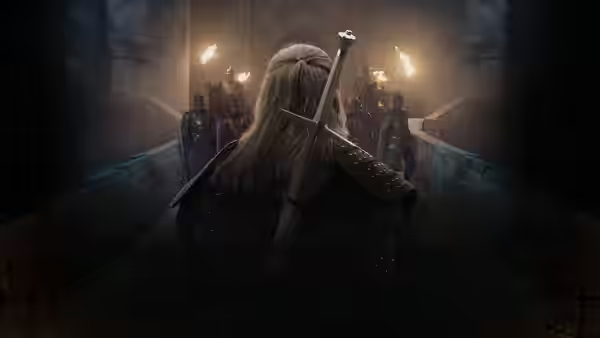
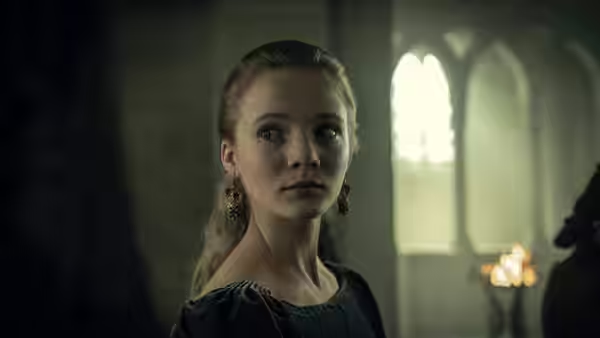
Later the map grows. Fringilla Vigo (Mimî M. Khayisa), Vilgefortz of Roggeveen (Mahesh Jadu), Triss Merigold (Anna Shaffer) and Philippa Eilhart (Cassie Clare) fill the screen with plotting mages, Eamon Farren’s Cahir keeps hunting Freya Allan’s Ciri, and the monster hunting that gave the series its shape thins to a scene or two an episode. Somewhere in the third season we noticed we were checking how many episodes were left, and then we were cross with the show for making us count. It is a big, expensive, busy thing by then, and it had stopped being about a man and his horse.
Every fantasy series after Game of Thrones had to decide whether to be Game of Thrones. The Witcher wants the gore and the sex and the grey morals and does not want the politics, so what it has instead is people in cloaks saying the names of places to one another. It is a better programme when it is small. A witcher, a contract, a thing in the dark and a village that lies about why it is there: that is a form the series understands, and every episode built on it is worth an evening.
Watch the first season with someone who has read Sapkowski and will explain the wigs. Do not expect the seasons after it to feel like the same show; they are bigger, cleaner and less fun. It carries a 15 certificate and earns it. The horse is called Roach and is the only character who never lets anyone down.