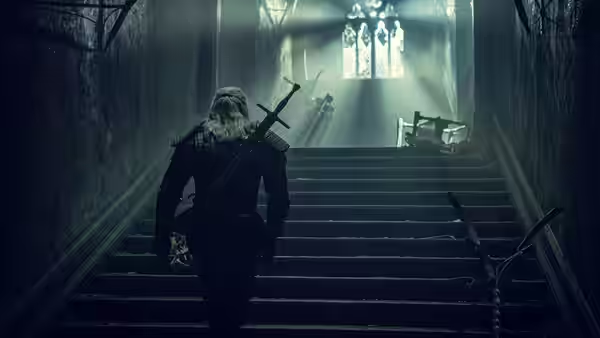
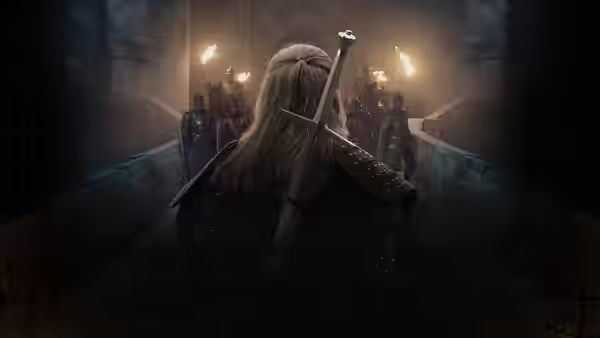
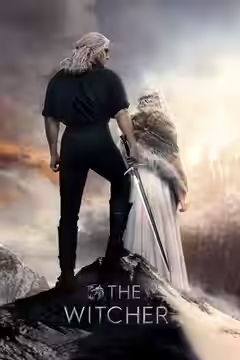
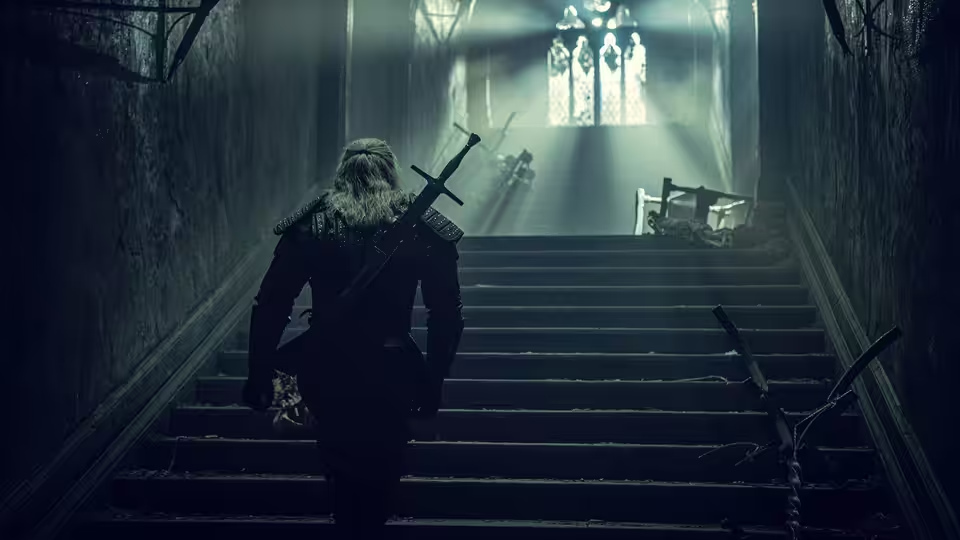
Geralt (Henry Cavill) ascending stone stairs in a dark corridor
Series review

The Witcher

2019 · Created by Lauren Schmidt Hissrich · Series · Derzhkino 16+

In a sentenceHenry Cavill says hmm, kills something, has a bath; the plot is happening in another decade

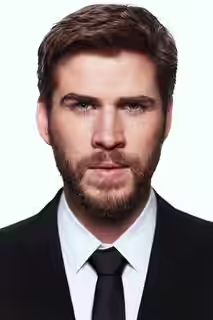
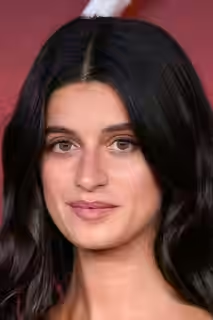
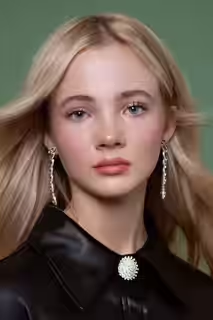
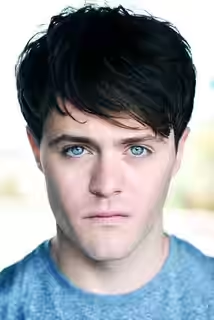
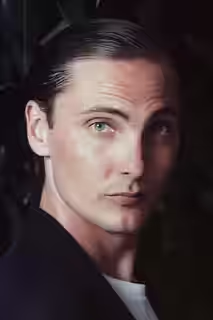
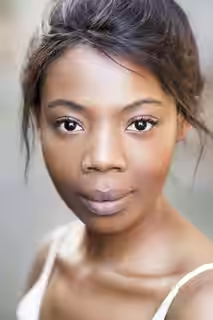
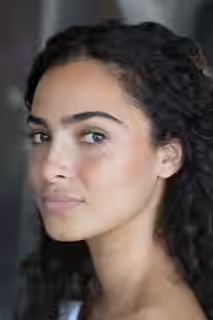
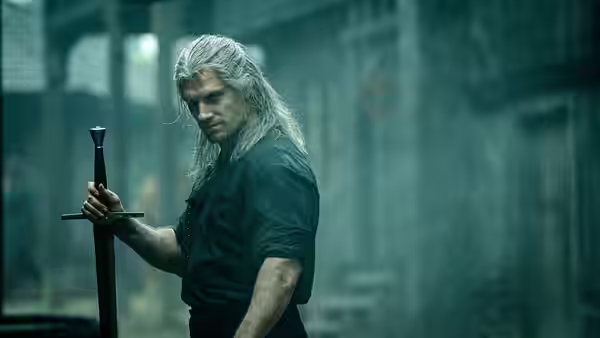
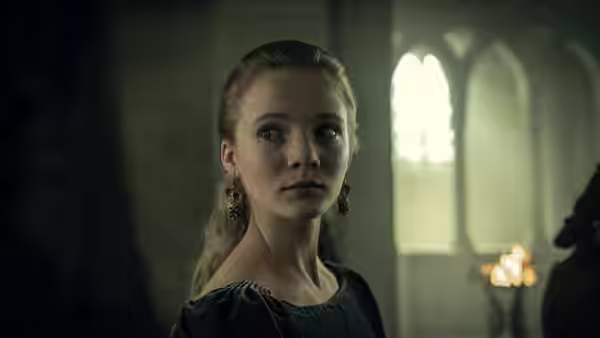
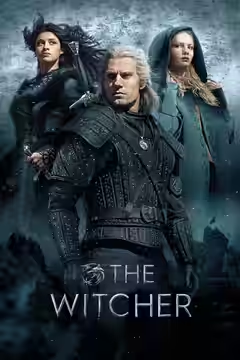
On the Continent, a land of small kingdoms and old monsters, Geralt of Rivia (Henry Cavill) is a witcher: a hunter altered by potions, white-haired and yellow-eyed, who kills beasts for coin and is trusted by nobody. He rides into the town of Blaviken with a dead kikimora slung over his horse and finds a sorcerer and an outlaw who each want the other dead. In Cintra, the child princess Cirilla (Freya Allan) watches from the walls as the black-armoured army of Nilfgaard breaks the city, and a knight named Cahir (Eamon Farren) is sent to bring her in. Elsewhere, a hunchbacked farm girl, Yennefer of Vengerberg (Anya Chalotra), is sold to a school of sorceresses on the cliffs of Aretuza. A bard, Jaskier (Joey Batey), decides Geralt needs a ballad.

Plays from YouTube when you press play; nothing loads from them until then.

Fi1m review

Lauren Schmidt Hissrich’s adaptation of Andrzej Sapkowski’s books has a first-rate Geralt in Henry Cavill, a bard worth the trip and a first season that hides its own structure. The seasons after it grow the map and lose the man.

Lauren Schmidt Hissrich’s series takes Andrzej Sapkowski’s stories about Geralt of Rivia, a monster hunter made by potions into something not quite human, and builds a Continent of warring kingdoms around him. Across four seasons of eight episodes it is decent and no more. The first season is good, muddled fun; the seasons after it add kingdoms and sorcerers and slowly mislay the thing that worked.

The thing that worked is Henry Cavill. He plays Geralt in a white wig and yellow contact lenses, with a voice like a bag of gravel and a working vocabulary of about forty words, a good few of them “Hmm”, and he is funny, which almost nobody expected. Joey Batey’s Jaskier, a bard who attaches himself to the witcher uninvited, is the other reason to stay: he talks enough for both of them, and Sonya Belousova and Giona Ostinelli’s “Toss a Coin to Your Witcher” is a tavern song built to be hummed for a week. We hummed it. Anya Chalotra gives Yennefer of Vengerberg, a girl sold to a school of sorceresses for less than a pig, the only wanting in the series with real hunger in it.

The craft is better than the writing. The market fight at Blaviken in the first episode is one long, ugly, well-staged brawl, Geralt cutting through a gang in a muddy square while townsfolk watch from the stalls, and we were properly gripped. Gavin Struthers and Jean-Philippe Gossart light the night scenes by fire, so faces come out of the dark in orange and everything else stays black; the swamps are grey-green and wet. Andrew Laws gives Aretuza white stone and sea light and gives Cintra a throne room like the inside of a coal scuttle. Tim Scotti-Henson and Lucinda Wright dress the Nilfgaardian army in black armour creased like a walnut.

The structure is where the first season loses people. It runs three stories in three different decades and declines to tell you so. Jean-Daniel Fernandez-Qundez, Nick Arthurs and Liana Del Giudice cut from one to another, and the viewer is left to work out from a wig or a stray remark that the kingdom standing an hour ago fell years before. We admired the nerve and we resented the confusion. Around it the dialogue swings between blunt good jokes and speeches that explain three kingdoms, a treaty and a prophecy in one breath.

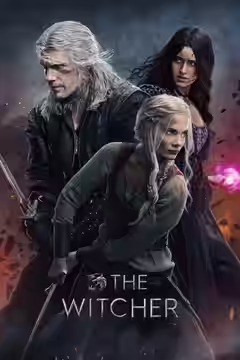
Later the map grows. Fringilla Vigo (Mimî M. Khayisa), Vilgefortz of Roggeveen (Mahesh Jadu), Triss Merigold (Anna Shaffer) and Philippa Eilhart (Cassie Clare) fill the screen with plotting mages, Eamon Farren’s Cahir keeps hunting Freya Allan’s Ciri, and the monster hunting that gave the series its shape thins to a scene or two an episode. Somewhere in the third season we noticed we were checking how many episodes were left, and then we were cross with the show for making us count. It is a big, expensive, busy thing by then, and it had stopped being about a man and his horse.

Every fantasy series after Game of Thrones had to decide whether to be Game of Thrones. The Witcher wants the gore and the sex and the grey morals and does not want the politics, so what it has instead is people in cloaks saying the names of places to one another. It is a better programme when it is small. A witcher, a contract, a thing in the dark and a village that lies about why it is there: that is a form the series understands, and every episode built on it is worth an evening.

Watch the first season with someone who has read Sapkowski and will explain the wigs. Do not expect the seasons after it to feel like the same show; they are bigger, cleaner and less fun. It carries a 15 certificate and earns it. The horse is called Roach and is the only character who never lets anyone down.
Critical consensus AI synthesised

59
Positive
5
Mixed
7
Negative
4

The reviews split down the middle, and most critics land somewhere between grudging enjoyment and mild exasperation. What they agree on is Henry Cavill: gruff, committed and taciturn as Geralt, he is named again and again as the best thing on screen, and the swordplay around him is praised almost as often. Several notices also single out the scale of the production and the comedy, particularly Joey Batey’s exuberant bard, as the reasons the series works when it works.

The complaints cluster on the storytelling. Critics find the timelines convoluted, the backstory dense, the exposition either absent or endless, and the tone unsteady, with humour landing where drama is meant to. Comparisons with Game of Thrones cut both ways, from a worthy successor to a cheaper imitation. The spread is wide: Collider and Paste call it well-built adult fantasy, while Den of Geek says it aims low and still misses, and The Times finds it ripe for mockery.

The AV Club
20 December 2019 · B+ · William Hughes
83

The review finds the series improves after an overly grim opening episode that apes Game of Thrones, becoming more engaging when its protagonists interact and it leans into fairy-tale elements rather than grimdark posturing. The critic praises the chemistry between leads and the show's embrace of its fantastical tropes once the structure settles.

Read the full review →
Empire
20 December 2019 · James Dyer
80*

A rewarding, if convoluted, fantasy romp with a memorable hero and a vivid, grimdark world. Cavill is delightfully gruff in the lead, and the bleak, morally bankrupt world is unflinching with gore and rich in challenging themes.

Read the full review →
The Guardian
20 December 2019
64*

The critic suggests the show is for those who like this sort of thing, describing it as a Tolkienesque effects-heavy fantasy epic about monster-hunter Geralt of Rivia played by Henry Cavill. They highlight the toxic masculinity theme and note the convoluted names and wigs but acknowledge the appeal for fans of the genre.

Read the full review →
Radio Times
20 December 2019 · ★★★ · Huw Fullerton
60

The series is flawed but ultimately lovable, with plenty of issues around dense backstory and focus, yet the critic completely and unironically enjoyed watching the whole thing. Cavill is a gift in the gruff, taciturn role of Geralt, with standout combat scenes.

Read the full review →
The i Paper
20 December 2019 · ★★★ · Jeff Robson
60

The opening episode is a little confusing but handsomely mounted, with Henry Cavill's Geralt looking every inch the sword and sorcery hero. Battle scenes, special effects, and locations are impressive, though the dialogue can veer into the silly.

Read the full review →
The Telegraph
20 December 2019 · ★★★ · Ed Power
60

The review calls the Netflix adaptation a missed opportunity that lacks Game of Thrones' grandeur and politicking, feeling muddled and more like a mindless fantasy rollercoaster. It praises Henry Cavill as the best thing about it and notes strong action sequences amid convoluted subplots and YA-tinged secondary stories.

Read the full review →

Straight answers AI written, from our review

Is The Witcher worth watching?
The Witcher is worth watching for its first season, chiefly for Henry Cavill's dry, gravel-voiced Geralt and Joey Batey's bard, and we scored it 61. The later seasons add sorcerers and kingdoms and thin out the monster hunting that gave the series its shape, so viewers who want a tight fantasy adventure should stop when the map starts growing.
How long is The Witcher, and what is it rated?
The Witcher is rated 16+ by the Derzhkino in Ukraine. It is a sci-fi & fantasy and drama series.
Where can I watch The Witcher in Ukraine?
The Witcher is streaming on Netflix in Ukraine. Availability is checked daily; the links above go straight to each service.
How violent or frightening is The Witcher, and is it suitable for children?
The Witcher carries a UK 15 certificate and earns it, with hard sword fights, gore, sex and a bleak view of most people. The market brawl at Blaviken in the first episode sets the level: long, muddy and ugly. It is not for children; older teenagers who can take the violence will be fine, but the squeamish should look elsewhere.
How does The Witcher compare to Excalibur?
The Witcher is bigger, busier and less sincere than Excalibur, which treats magic and Arthurian legend with a solemn, unembarrassed seriousness the series never attempts. The series is funnier and better acted at its centre, thanks to Cavill; Boorman's film is the more coherent single piece, though its people can get lost in the telling. Choose the film for an evening's spectacle and the series for company over weeks.
What should I watch after The Witcher?
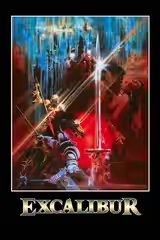
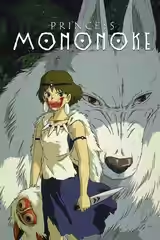
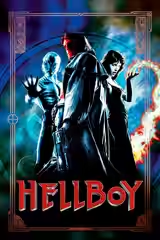
After The Witcher, try Excalibur (1981, Fi1m 79): Boorman’s Arthur in green light and clanking plate; sincere, strange and unembarrassed by magic. Then Princess Mononoke (1997, Fi1m 88): Monsters with grievances and a hero caught between them, drawn rather than rendered; and Hellboy (2004, Fi1m 71): Another gruff, mutated monster hunter with a soft centre and a fondness for cats.

Cast

If you liked this, try…

  1. Excalibur (1981, Fi1m 79)Boorman’s Arthur in green light and clanking plate; sincere, strange and unembarrassed by magic.

  2. Princess Mononoke (1997, Fi1m 88)Monsters with grievances and a hero caught between them, drawn rather than rendered.

  3. Hellboy (2004, Fi1m 71)Another gruff, mutated monster hunter with a soft centre and a fondness for cats.

  4. The Last Kingdom (2015) · not on Fi1m yetMud, swords and shifting kingdoms, with a lead who knows when to stop talking.

  5. Berserk (1997) · not on Fi1m yetA mercenary with a huge sword and a worse destiny; bleak, bloody and committed.