Series review

Boardwalk Empire

2010 · Created by Terence Winter · Series · MPA TV-MA

In a sentenceBuscemi runs a whole city in a red carnation and nobody on screen ever asks how

CrimeDrama

Atlantic City, January 1920, the night before Prohibition becomes law. Enoch ‘Nucky’ Thompson (Steve Buscemi), the county treasurer, lectures the Women’s Temperance League on the evils of drink, then goes to a party to celebrate the fortune the ban is about to make him. His brother Eli (Shea Whigham) is the sheriff. Margaret Schroeder (Kelly Macdonald), pregnant and married to a drunk, comes to his office asking for a job for her husband. Nucky sells a first shipment of whisky to Arnold Rothstein (Michael Stuhlbarg) in New York, and the trucks are hijacked on a dark road; a Chicago driver called Al Capone (Stephen Graham) is there when the guns come out. Nelson Van Alden (Michael Shannon), a federal agent, arrives to find out who benefited.

Fi1m review

Terence Winter’s Prohibition drama is handsomely made and better acted than its reputation for handsomeness suggests. Its lead watches more than he acts and the first season asks for patience, but stay with it.

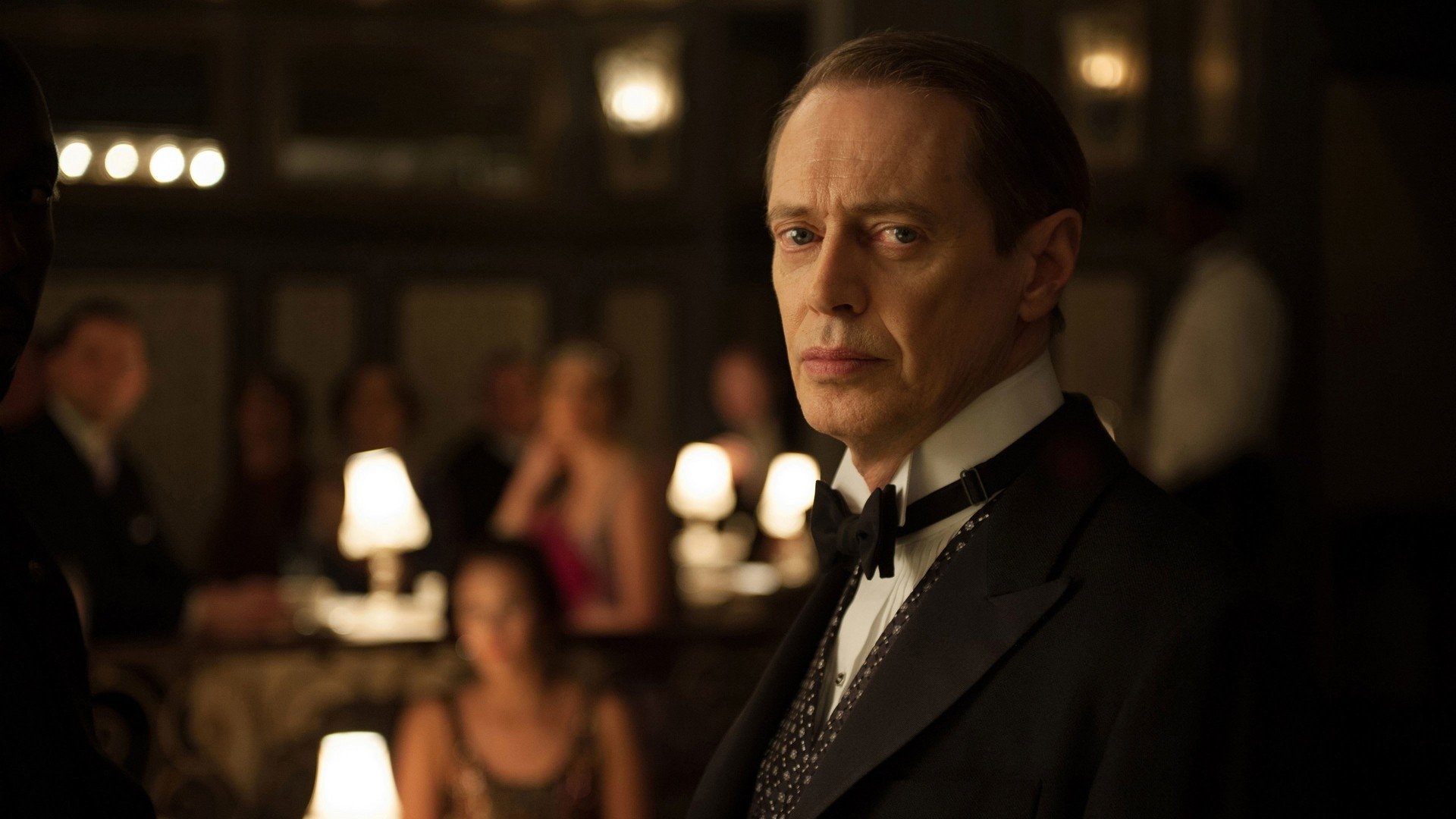
Terence Winter spent years in the writers’ room of The Sopranos, and Boardwalk Empire is what he made when given a city of his own. The city is Atlantic City in 1920, the week Prohibition arrives, and the man who runs it is Nucky Thompson (Steve Buscemi), the county treasurer, who intends to make more from the ban on drink than anyone ever made from drink. Martin Scorsese directed the first episode. Fifty-five more followed across five seasons, and we recommend most of them, with the caveat that the first season asks for more patience than a crime drama usually dares to.

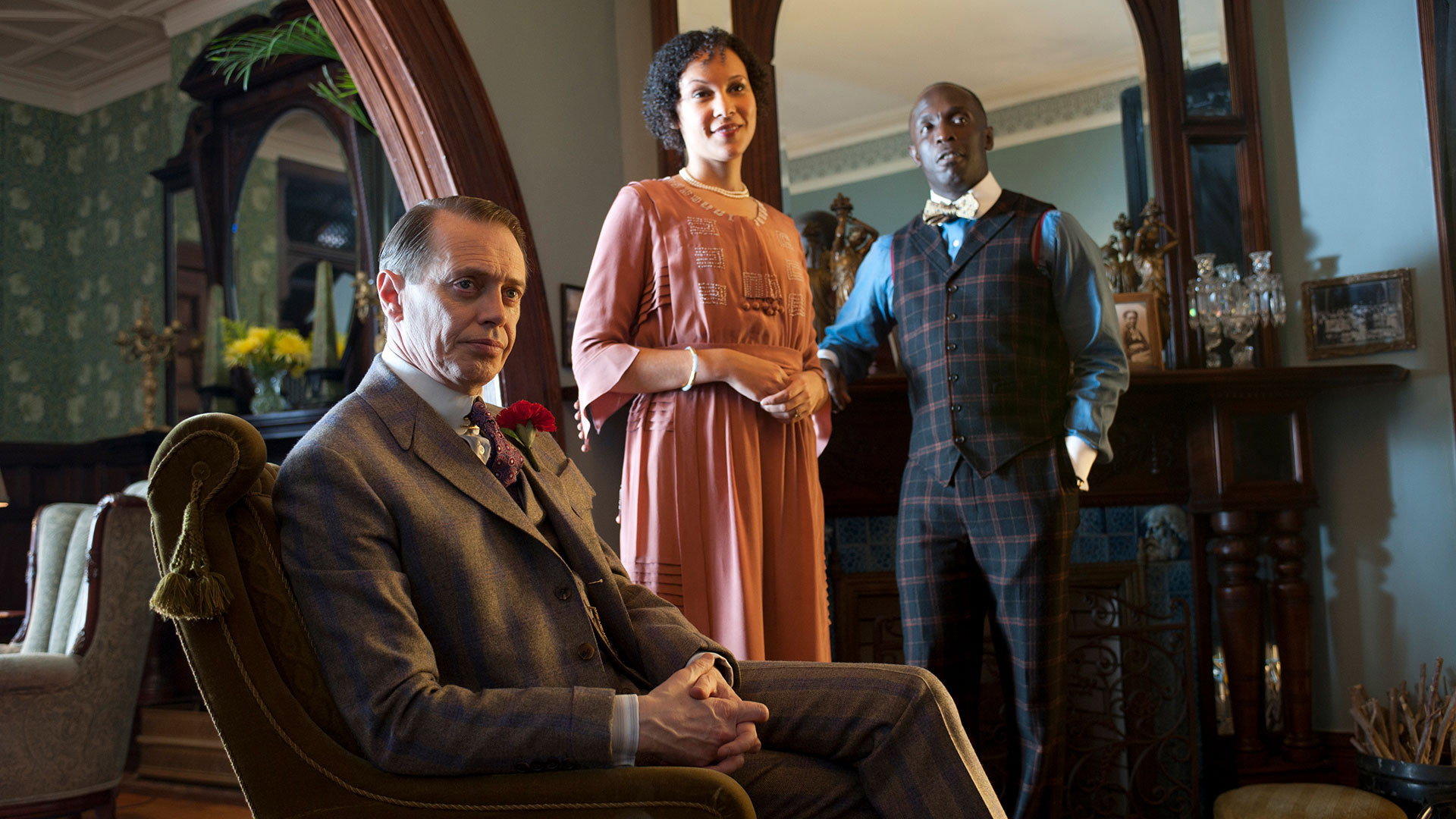
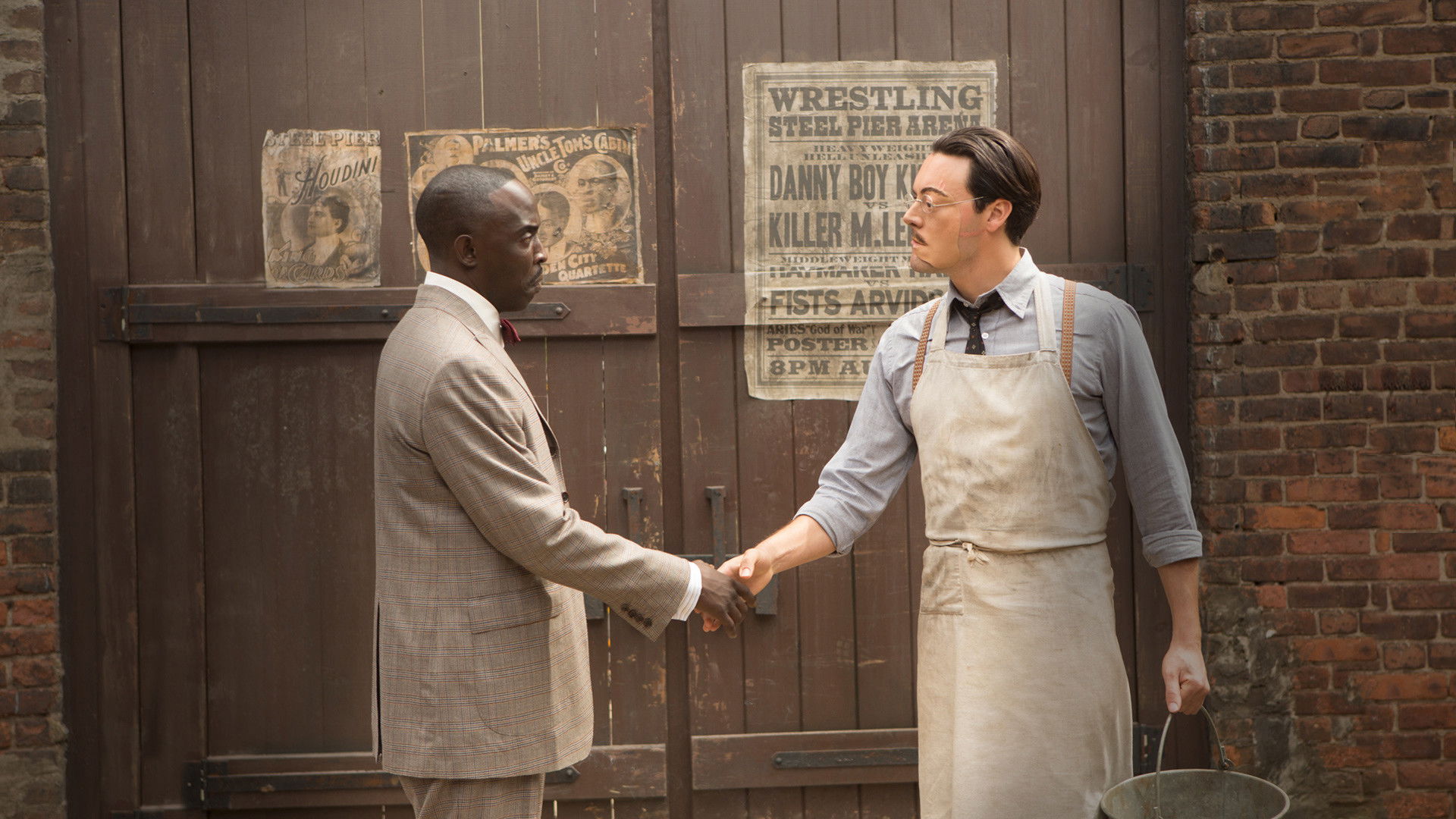
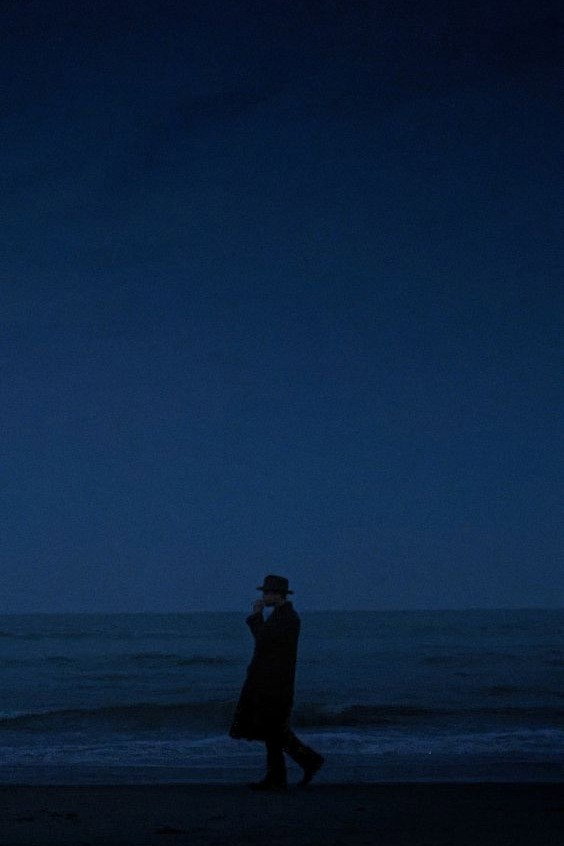
The first thing you notice is the money on screen. The boardwalk was built rather than borrowed, and the camera walks along it at a stroll, past a fortune teller, a photographer’s booth, a shop exhibiting premature babies in incubators, and the grey sea beyond the rail. Nucky’s hotel suite is dark wood and lamplight, and the men wear suits cut so close you can tell who has been eating well. Scratchy dance-band records play under scenes of men agreeing to kill each other. We sat up at the first tracking shot along the boards, and the set kept doing it to us, which sets rarely manage twice.

Buscemi is an odd choice for a lead and the series knows it. Nucky does not hit anyone. He talks, he pays, he arranges, and he watches, and Buscemi plays the watching as a kind of hunger. It took us three or four episodes to stop waiting for someone louder to shove him aside, and once we stopped, the performance came into focus: a gangster played entirely as a politician, which is what most of them were.

The louder people are around him, and they are a pleasure. Michael Shannon’s Nelson Van Alden is a federal agent who prays over his supper and looks at Atlantic City as if it had insulted his mother. Shannon plays him without a flicker of comedy, which is why he is so funny, and then, changing nothing, he becomes frightening. Michael Stuhlbarg’s Arnold Rothstein drinks milk and speaks in whole paragraphs. Stephen Graham’s Al Capone is a Chicago driver with a big laugh and no patience, and Graham shows you the man he will become without pointing at him. Michael Kenneth Williams gives Chalky White, who runs the Black side of town, more dignity than the first season’s scripts know what to do with. Shea Whigham, as Nucky’s brother Eli, the sheriff, plays resentment as a slow leak.

Kelly Macdonald is the one who got at us. Margaret Schroeder is an Irish immigrant with a drunk for a husband and a baby on the way, and in the pilot she comes to Nucky’s office to ask a favour with a face that has been hit. Macdonald plays the scene with her hands folded and her voice level, and the levelness is the awful part. We were moved more than we expected by a woman asking a criminal for help, and it was her thread that kept us watching when the plot did not.

The plot is the trouble early on. Winter’s writers, who include the novelist Dennis Lehane and the playwright Howard Korder, have New York, Chicago, the federal agents and the ward bosses to keep in the air, and the first season moves between them at the pace of a man showing you round a large house. Some gangster scenes arrive second-hand: the hijacking on a dark road, the table of men who pause before they laugh. The women who are not Margaret are thin. Paz de la Huerta’s Lucy Danziger is Nucky’s mistress and is filmed as one, and Aleksa Palladino’s Angela Darmody is given a life the first season is not curious about.

Most critics placed the first season a little below The Sopranos and The Wire while admiring how it looked, and we would not argue. Where we differ is on what comes after. The series gets quicker and harder as it goes, and the later seasons, which we will not describe, pay for the violence the first only promises. The eight-episode final run is the leanest thing in it.

Watch two a night and do not judge it before the sixth. It is an 18 certificate and earns it, usually in the back half of a season, when the talking stops.

Critical consensus AI synthesised

81
Positive
7
Mixed
0
Negative
0

The reviews are uniformly favourable, and the praise gathers around the look of the series and the man at its centre. Most critics single out the recreation of 1920s Atlantic City, down to the period detail in every room, and credit Martin Scorsese’s direction of the pilot with setting the tone. Steve Buscemi’s Nucky Thompson is widely taken as a proper leading-man performance, and several reviews reserve a line for Michael Shannon and Michael Stuhlbarg in support.

The reservations are about company rather than craft. Almost every review reaches for The Sopranos, The Wire or Mad Men, and the cooler notices decide it does not yet belong beside the first two. The Telegraph finds the first episode a little disappointing beneath the style, and Den of Geek spots some familiar gangster beats it is willing to forgive. The spread is narrow, and the two mildest verdicts come from British papers writing months after the American ones.

Variety
13 September 2010 · Brian Lowry
90*

The critic praises the series as television at its finest, highlighting its rich atmosphere, impeccable period detail, sprawling Prohibition-era story in Atlantic City, and an outstanding ensemble cast led by Steve Buscemi. Scorsese's pilot direction and the organic mix of violence, sex, and historical figures are singled out for praise.

Read the full review →
The Hollywood Reporter
14 October 2010
85*

The review calls the pilot a new benchmark for television due to its stunning production design and spectacle recreating 1920s Atlantic City, with Scorsese's direction and a strong cast including standout turns by Michael Shannon and Michael Stuhlbarg. It notes the series builds on story after the visual grandeur while comparing it favorably to Mad Men in historical recreation.

Read the full review →
The Guardian
20 September 2010
80*

The critic finds the HBO series exceptional in aspects large and small, praising Martin Scorsese's direction of the pilot and its quality as a rival to Mad Men, while noting it falls short of being the greatest television ever made.

Read the full review →
The Times
2 February 2011 · Andrew Billen
75*

The critic praises the classy, beautiful pilot for its atmosphere, Buscemi's leading-man performance, and production values that surpass The Sopranos, while noting it is not quite in that league.

Read the full review →
The Telegraph
1 February 2011 · Andrew Pettie
70*

The critic calls the lavish first episode a Michelin-starred tasting menu for its style and production values but finds it slightly disappointing and not quite as brilliant as The Wire or The Sopranos.

Read the full review →
Collider
19 September 2010 · Ethan Anderton
90*

The critic praises Boardwalk Empire as one of the greatest television dramas, highlighting its gritty depiction of 1920s Atlantic City organized crime, Prohibition, and an exceptional ensemble cast led by Steve Buscemi's Nucky Thompson. They single out the strong writing, performances (especially supporting turns like Michael Shannon and Stephen Graham), and substance across the first six episodes while noting the pilot's Scorsese direction sets a high bar.

Read the full review →

Cast

Awards

Primetime Emmy Awards, 2011

Won
Outstanding Cinematography for a Single-Camera Series
Won
Outstanding Directing for a Drama Series

Writers Guild of America Award for Television: New Series, 2011

Won
Writers Guild of America Award for Television: New Series

If you liked this, try…

The Sopranos poster94

The Sopranos

1999 · Where Winter learned the trade; a crime family that talks more than it shoots

Miller's Crossing poster82

Miller's Crossing

1990 · Prohibition politics done in two hours, with hats that matter as much as guns

Babylon Berlin poster

Babylon Berlin

2017 · Another rebuilt city in the twenties, German this time, and just as fond of dance bands

Gomorrah poster

Gomorrah

2014 · Naples gangsters without the lamplight; the same slow burn, none of the comfort

The Roaring Twenties poster

The Roaring Twenties

1939 · Cagney and Bogart on the bootlegging years while they were still a memory