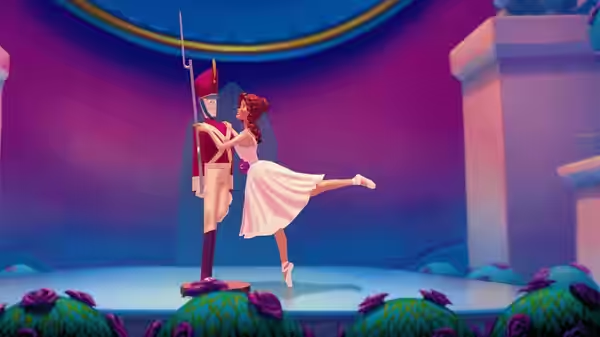
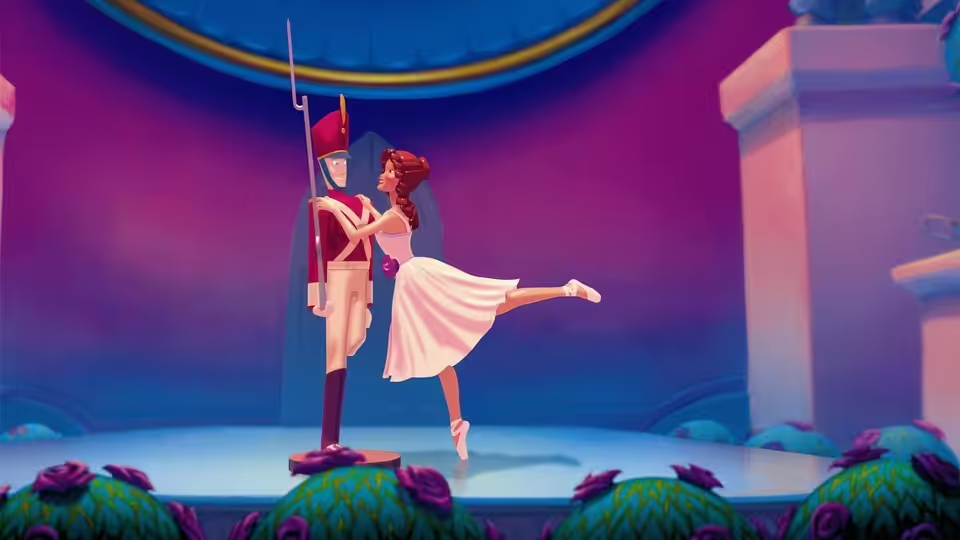
A ballerina dances beside a tall toy soldier beneath a circus tent
Film review

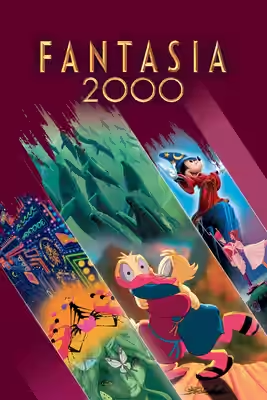
Fantasia 2000

2000 · Directed by James Algar, Gaëtan Brizzi, Pixote Hunt, Eric Goldberg, Paul Brizzi, Hendel Butoy, Don Hahn, Francis Glebas · 1h 14m · RO AP

In a sentenceWhales fly into the aurora, a flamingo gets a yo-yo, and the grown-ups keep interrupting

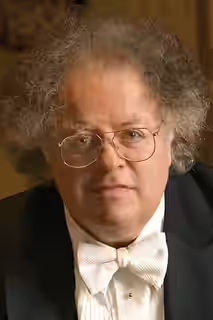
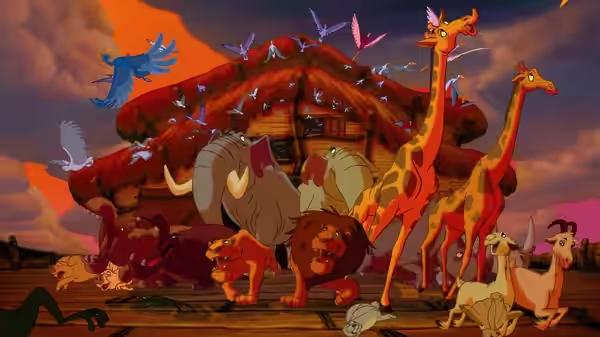
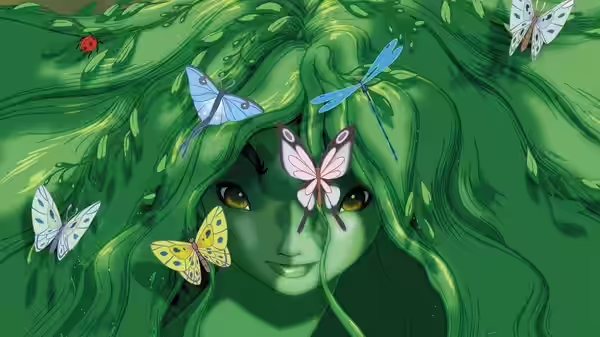
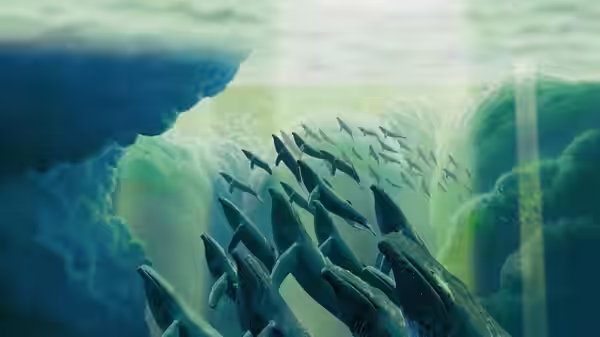
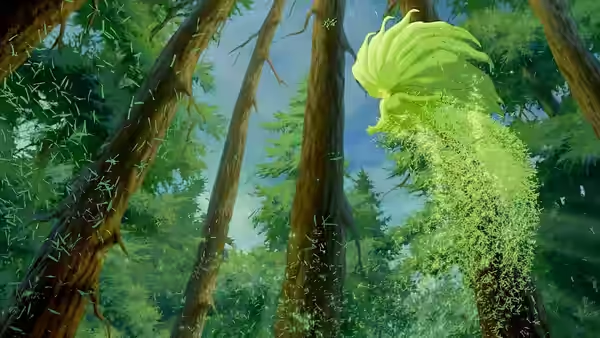
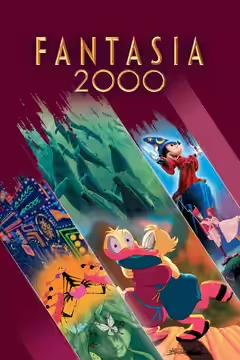
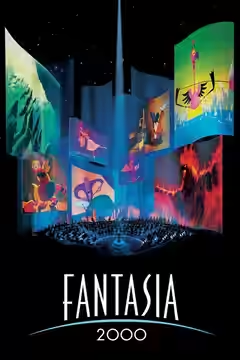
Disney’s concert film returns with a new programme. James Levine conducts eight pieces and the animators answer each one: Beethoven’s Fifth as abstract shapes; Respighi’s Pines of Rome as humpback whales leaving the sea for the sky; Gershwin’s Rhapsody in Blue as a day in Depression-era Manhattan drawn in Al Hirschfeld’s line; Shostakovich as The Steadfast Tin Soldier; Saint-Saëns as a flamingo with a yo-yo; Dukas’s The Sorcerer’s Apprentice, with Mickey Mouse (Wayne Allwine) and the brooms, reprised from 1940; Elgar’s Pomp and Circumstance with Donald Duck (Tony Anselmo) and Daisy Duck (Russi Taylor) loading Noah’s ark; and Stravinsky’s Firebird Suite as a spring sprite who wakes a volcano. Between pieces, Steve Martin, Bette Midler and Angela Lansbury step to a podium to introduce what comes next.

Fi1m review

Sixty years on, Disney’s concert film returns with eight pieces, three of them lovely and none of them dull, in under 75 minutes. The cartoons are the point; the celebrity hosts between them are the price, and it is steep.

Sixty years after Fantasia, Disney has done what the first film always promised and nobody got round to: a new concert programme, seven fresh pieces and one old one, with an orchestra under James Levine and a famous person in evening dress between each item. It runs 74 minutes, which is short, and most of those minutes are well spent. Eight directors are credited, and the film is best thought of as a portfolio rather than a picture. Some of it is lovely, a little of it is thin, and the bits in between are a trial.

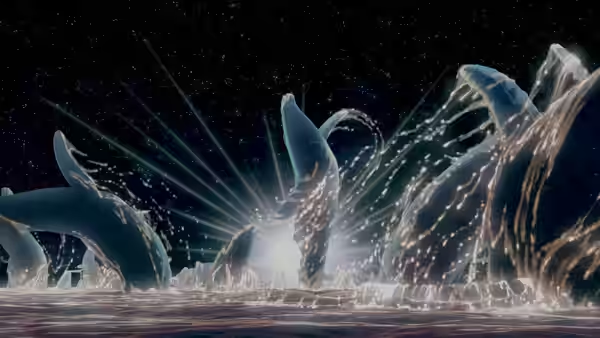
Start with what is good. Hendel Butoy sets Respighi’s Pines of Rome to a pod of humpback whales who leave the sea and swim up into the sky, and the moment the calf breaks through the cloud into the aurora is the film’s best image, held with a patience most studio animation has lost. Eric Goldberg takes Gershwin’s Rhapsody in Blue and draws Depression-era New York in the single looping line of Al Hirschfeld: four unhappy people crossing one day in Manhattan, a construction worker who wants to be a drummer, a girl marched between lessons by her nanny. We laughed out loud at a line of commuters folding into a subway car like a strip of paper. Gaëtan and Paul Brizzi close the programme with Stravinsky’s Firebird Suite, a spring sprite, an elk and a volcano, and its second half, which we will not describe, moved us more than we expected a cartoon about a mountain to manage.

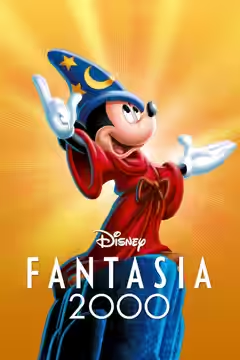
The middle of the programme is decent. Butoy again does Shostakovich’s Second Piano Concerto as Andersen’s The Steadfast Tin Soldier, with a jack-in-the-box villain who is properly nasty and computer-made toys that sit a little stiffly beside the drawn ballerina. Goldberg’s Carnival of the Animals is one joke, a flamingo with a yo-yo among flamingos who disapprove, told in under three minutes and then over, which is the right length for it. Francis Glebas puts Donald Duck (Tony Anselmo) and Daisy (Russi Taylor) aboard Noah’s ark to Elgar’s Pomp and Circumstance, and it is cheerful, slightly sticky, and the one piece where the music seems to have been chosen for the brand rather than the pictures. The Sorcerer’s Apprentice, James Algar’s 1940 original with Mickey (Wayne Allwine) and the brooms, is reprised whole, and it still outclasses everything around it because it has a story with a beginning, a middle and a punishment.

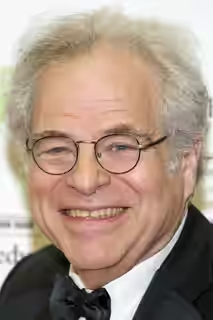
Then there are the hosts. Steve Martin opens the film with a bit about how long the sequel took, and it is the last joke that lands. Itzhak Perlman, Quincy Jones, Bette Midler, James Earl Jones, Penn Jillette and Teller, and Angela Lansbury each walk to a podium, say something about the piece to come, and are wafted away. Don Hahn directs these and Tim Suhrstedt shoots them, flat and bright against the orchestra, and they have the air of a charity gala nobody could get out of. We winced through nearly all of them. The links, written by Irene Mecchi, David Reynolds and Hahn, cannot decide whether they are explaining the music to children or apologising to adults for the interruption, so they do both.

The opener is the other weak spot. Pixote Hunt’s Beethoven’s Fifth is abstract triangles, some light and some dark, chasing one another across black, and it looks like what it is, a nervous go at what the 1940 film did with Bach. Five editors are credited and the joins show: each piece ends, the lights come up on a podium, and the film has to get going again from a standing start, eight times.

Against the 1940 film this is lighter, faster and far less pompous, and we mean that as praise; the original ran past two hours and felt it. It also has nothing as grand as the original’s dinosaurs or as frightening as its devil on the mountain. That is the trade, and we think it a fair one, though three first-rate pieces out of eight is not a ratio to be proud of.

See it for the whales, the city, the firebird and the brooms. At home you can step over the hosts, which a cinema will not let you do, and what remains is about an hour, and an honest hour. Bring children; they will not notice the gaps, and the music is better for having nobody talk over it.

Critical consensus AI synthesised

60
Positive
4
Mixed
5
Negative
2

Most critics take Fantasia 2000 as a respectable follow-up to the original: lighter, shorter and more polished, if less ambitious. The praise clusters on the animation itself. Reviews single out the graceful blend of computer imagery with hand-drawn work, the flying whales in “Pines of Rome”, the gleefully silly flamingos, and above all the Steadfast Tin Soldier segment, which even the film’s detractors admire. Several find it entertaining for children and adults alike.

The reservations gather around weight and framing. Several critics find the anthology too lightweight to deliver the impact of the original, and the celebrity introductions are a recurring complaint, described as distracting or self-congratulating. The spread is wide, running from strongly positive to dismissive. Empire calls it more successful than the original but not worth the long wait. The Guardian finds the cartoons dull and poorly matched to the music, while Eye for Film finds the sentimentality overbearing yet still credits the artistry of the shorts.

Slant Magazine
5 December 2010 · ★★★★ · Eric Henderson
80

The critic considers Fantasia 2000 a worthy successor, trading the original’s weight for wit, polish, and variety. The flying-whale sequence in “Pines of Rome” earns praise for its direction and synchronization with the music.

Read the full review →
The AV Club
16 June 2000 · Joshua Klein
70*

Klein finds Fantasia 2000 a successful return to the original’s pleasures, entertaining for children and adults alike. He praises the graceful integration of computer imagery with traditional animation, while faulting one sequence and the distracting celebrity introductions.

Read the full review →
RogerEbert.com
64*

The page content is blocked, so the critic’s verdict cannot be verified. No praise or complaint can be reliably identified from the available text.

Read the full review →
The New York Times
31 December 1999
64*

The page content is inaccessible, so the critic’s verdict cannot be established. No specific praise or complaint is available to report.

Read the full review →
Time Out
· TCh
63*

The review describes the film as a belated sequel. Its description singles out Mickey Mouse’s segment from the original as a standout.

Read the full review →
Variety
22 December 1999 · Todd McCarthy
60*

McCarthy finds the anthology enjoyable but too lightweight to deliver the satisfying impact of the original. He especially praises the Steadfast Tin Soldier segment for its brilliant direction, animation, and vivid characters.

Read the full review →

Straight answers AI written, from our review

Is Fantasia 2000 worth watching?
Fantasia 2000 is worth watching for the three pieces that are lovely, the flying whales, the Gershwin city and the firebird, plus the reprised brooms, and we scored it 65. The celebrity hosts between the cartoons are a trial, and the Beethoven opener is thin. Bring children; they will not notice the gaps.
How long is Fantasia 2000, and what is it rated?
Fantasia 2000 runs 1h 14m and is rated AP by the RO in Romania. It is an animation and family film.
Where can I watch Fantasia 2000 in Romania?
Fantasia 2000 is streaming on Disney+ in Romania. Availability is checked daily; the links above go straight to each service.
How does Fantasia 2000 compare to Fantasia?
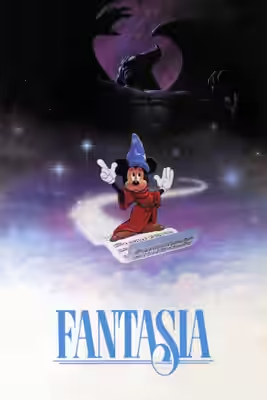
Fantasia 2000 is lighter, faster and far less pompous than Fantasia, and at 74 minutes it never drags the way the original does. The 1940 film is the grander of the two, with dinosaurs and a devil on the mountain that nothing here matches, and its best pieces are the better ones. Choose the sequel for a quick evening with children, the original for scale.
What should I watch after Fantasia 2000?
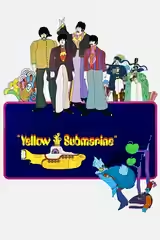
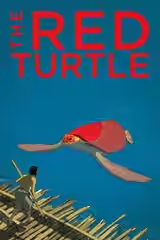
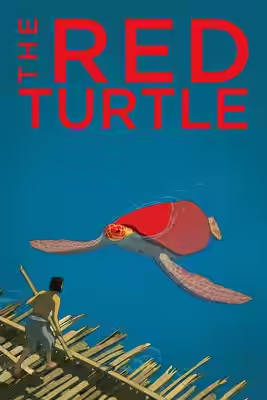
After Fantasia 2000, try Fantasia (1940, Fi1m 80): The original: longer, grander, more pompous, and with the dinosaurs this one lacks. Then Yellow Submarine (1968, Fi1m 74): Pop music drawn as if by committee of lunatics, and all the better for it; and The Red Turtle (2016, Fi1m 84): Wordless, patient animation about a man, an island and the weather.

Cast

Awards

Annie Award for Best Animated Feature, 2000

Nominated
Annie Award for Best Animated Feature

If you liked this, try…

  1. Fantasia (1940, Fi1m 80)The original: longer, grander, more pompous, and with the dinosaurs this one lacks.

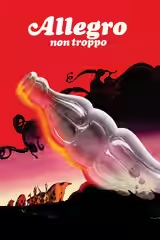
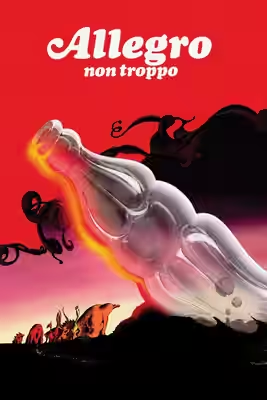
  2. Allegro Non Troppo (1976) · not reviewed yetBruno Bozzetto’s Italian answer to Fantasia, ruder, sadder and funnier than its model.

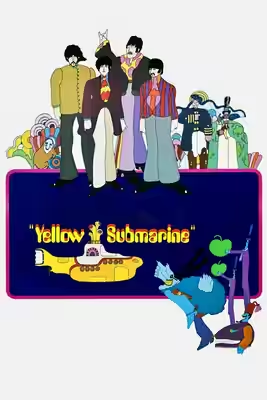
  3. Yellow Submarine (1968, Fi1m 74)Pop music drawn as if by committee of lunatics, and all the better for it.

  4. The Red Turtle (2016, Fi1m 84)Wordless, patient animation about a man, an island and the weather.

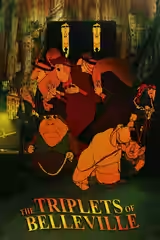
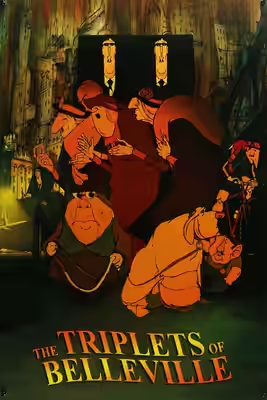
  5. The Triplets of Belleville (2003, Fi1m 84)A near-silent French cartoon where the music does most of the talking.

Free account

Know what to watch tonight

Two lists that know where things are streaming, collections you can share, your own score beside ours, and Discover that remembers what you have seen.

  • Want to see, sorted by what is streaming now
  • Seen, with your score out of ten
  • No adverts, ever