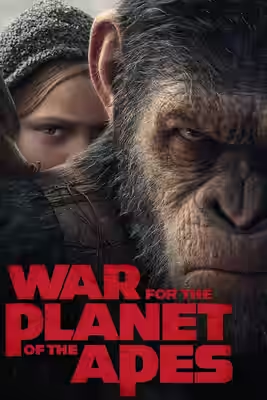
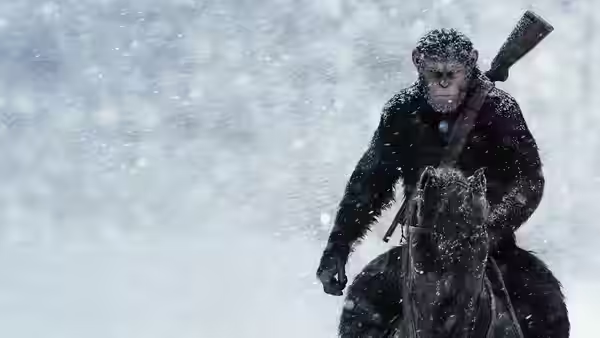
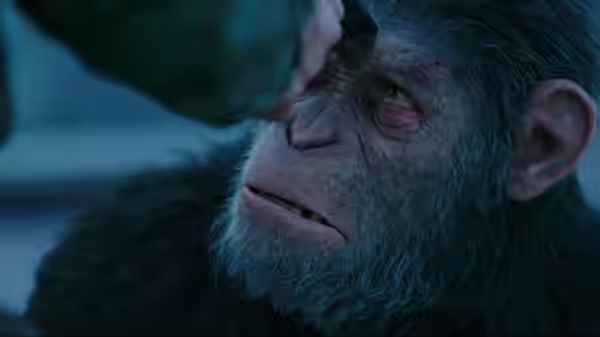
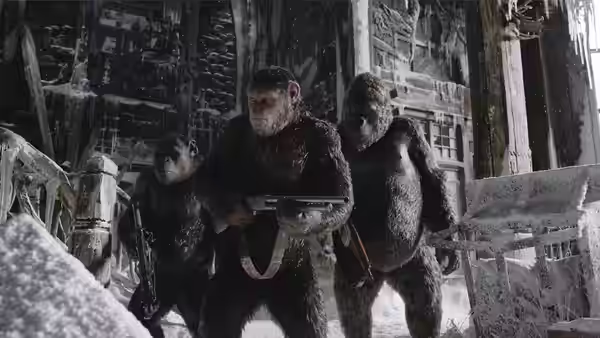
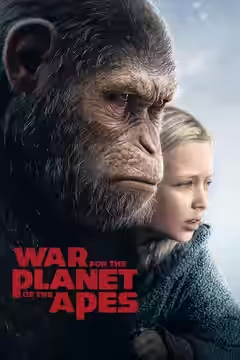
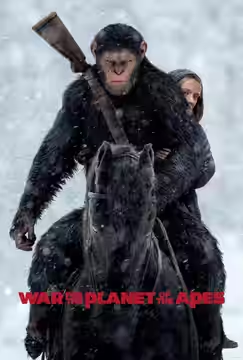
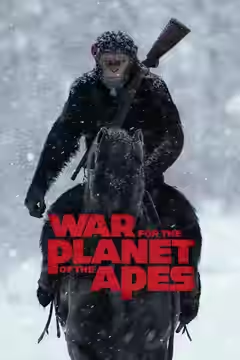
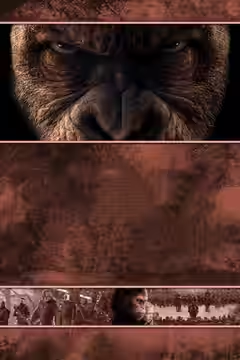
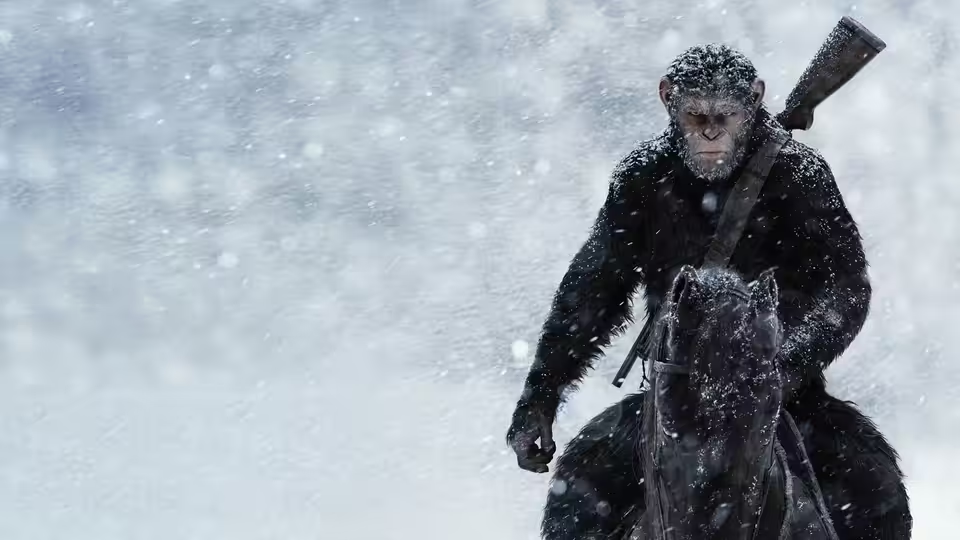
Caesar (Andy Serkis) riding a horse through falling snow with rifle on back
Film review

War for the Planet of the Apes

2017 · Directed by Matt Reeves · 2h 20m

In a sentenceA war film in which the side with fur has the better manners and the better close-ups

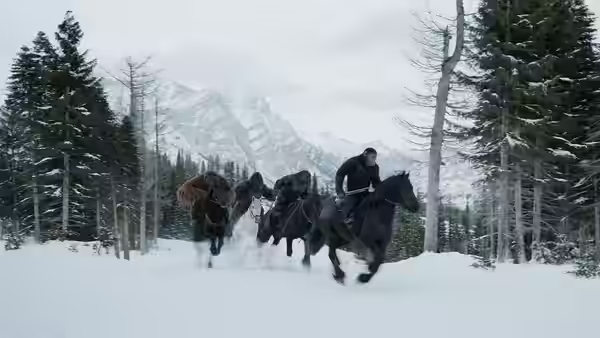
Years after a virus has thinned humanity and left apes able to speak, Caesar (Andy Serkis) leads his colony in the forests of northern California, hoping only to be left alone. He is not. A unit of human soldiers under a man known as the Colonel (Woody Harrelson) hunts the apes with the help of gorilla turncoats, among them Red Donkey (Ty Olsson). When the Colonel comes to the apes’ hideout at night and kills Caesar’s wife Cornelia (Judy Greer), Caesar sends his people towards a desert refuge and rides after the Colonel with the orangutan Maurice (Karin Konoval), the chimpanzee Rocket (Terry Notary) and the gorilla Luca (Michael Adamthwaite). On the road they pick up a mute human girl, Nova (Amiah Miller), and a nervous zoo escapee who calls himself Bad Ape (Steve Zahn).

Plays from YouTube when you press play; nothing loads from them until then.

Fi1m review

Matt Reeves closes the trilogy with a slow, snowbound revenge story and the best-acted ape ever put on screen. It is handsome, serious and half an hour too long, and its humans are far less carefully drawn than its chimpanzees.

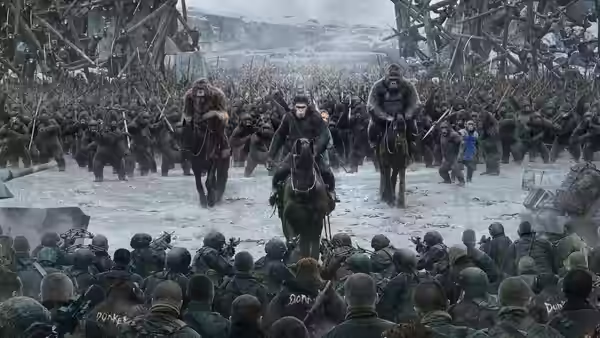
Matt Reeves’s third and last film about Caesar begins with a battle in the woods and then spends most of its 140 minutes refusing to give us another one. Soldiers with slogans painted on their helmets creep through ferns towards an ape position; arrows and gunfire follow; and when it is over Caesar (Andy Serkis) sends the survivors home alive with a message for their commander. That is the whole film in one scene: the apes have learned mercy and the humans have forgotten it. Reeves and his co-writer Mark Bomback then build a revenge western on top of a war film, with a prison-camp story waiting in the second half, and they mostly hold it together.

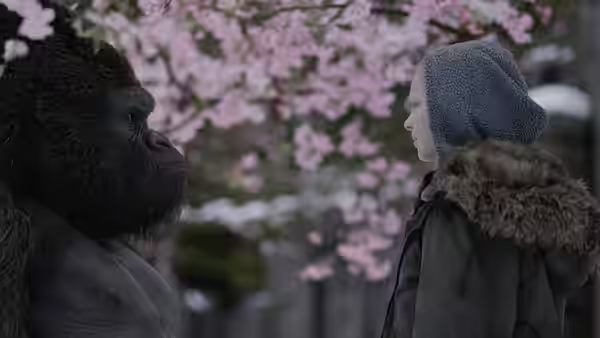
Serkis is the reason it works as often as it does. Caesar is older, greyer and angrier than before, and the effects have reached a point where we stopped thinking about the technique within minutes and simply watched an actor. His face does most of the talking. The apes sign more than they speak, and the film has the patience to let a subtitle sit under a stare. Karin Konoval’s Maurice, the orangutan who has been Caesar’s conscience since Rise, gets the quietest scenes, most of them with Amiah Miller’s silent girl, and Toby Kebbell’s Koba, Caesar’s enemy from Dawn, turns up in a way the film does not explain and does not need to.

Michael Seresin shoots the first hour in wet green and the second in snow, and the switch does what the story needs: the world empties out around Caesar as he rides north. The night raid on the apes’ hideout is lit by hand torches and little else, and we were more shaken by it than we expected to be, because Reeves keeps the camera on Caesar’s face rather than on what he has found. James Chinlund’s production design gives the Colonel a camp in the mountains built into an old army depot, and it is the most convincing place in the film. Michael Giacchino’s score leans on drums and low woodwind and there is a great deal of it; when the film goes quiet, which is often, we wished it went quieter. William Hoy and Stan Salfas cut the opening assault so that we always know which side of the ridge we are on, and cut the long middle at a pace some will call patient and we, around the ninety-minute mark, called slow.

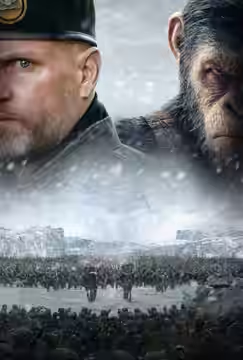
Woody Harrelson’s Colonel is the problem, or rather the writing around him is. He shaves his head, wears aviator sunglasses and has decided that the end of humanity justifies anything. Melissa Bruning’s costumes put him in a scarf and a leather jacket that owe an obvious debt to Apocalypse Now, and the film knows it, which does not make the debt smaller. He gets one long speech across a table explaining himself, and Harrelson delivers it well, but it is a speech, and the apes have spent an hour making the same points with their eyebrows. The other humans are given rifles and little else. Gabriel Chavarria’s Preacher, a young soldier Caesar spares early on, is set up to matter more than the film lets him.

Steve Zahn’s Bad Ape, a zoo chimpanzee who has survived alone in a ski lodge and speaks in nervous half-sentences, is the one concession to lightness. We laughed at him, and then wondered whether a film this grim should be reaching for a laugh quite so often. He is also the one performance where we could see the actor behind the ape, which after Serkis is a step down.

Set beside Rise (2011) and Reeves’s own Dawn (2014), this is the best-looking of the three. It is also the slowest. Dawn had a villain who wanted something we understood; the Colonel wants a wall. At 140 minutes the film is around half an hour longer than its story, though the last twenty minutes justify more of the wait than we expected.

It carries a 12A certificate, and it is a hard one: apes are whipped, shot and starved, and a child who loved the earlier films could reasonably come out having enjoyed none of this. Grown-ups who liked the first two will find plenty to admire and a fair amount to sit through. Take the biggest screen available and do not expect the war the title promises.

Critical consensus AI synthesised

76
Positive
20
Mixed
3
Negative
4
The i Paper
13 July 2017 · ★★★★★ · Matthew Turner
100

The review praises the film as a thoroughly enjoyable conclusion to the trilogy that makes viewers root for the apes' cause through technical wizardry, emotional close-ups, and a subversive script. It singles out the remarkable motion-capture performances and the way sympathy is built for the ape characters despite the story's apocalyptic implications for humanity.

Read the full review →
Evening Standard
16 November 2017 · Matthew Norman
90*

The critic calls the film an instant classic and masterly piece of work, a riveting blockbuster filled with heart and soul that idealises apes while demonising humanity. They single out the superlative cinematography, riveting plot, and emotional depth of the ape characters, especially Caesar's internal battle.

Read the full review →
IndieWire
26 June 2017 · Eric Kohn
90*

The critic calls it a masterful conclusion to the best sci-fi trilogy since the original Star Wars, noting that as big effects-driven spectacles go, you can't do much better. It highlights the film's success as a Hollywood blockbuster.

Read the full review →
Los Angeles Times
12 July 2017 · Justin Chang
90*

The critic hails it as a work of stunning blockbuster artistry with breathtaking formal beauty and tonal control, praising the visual storytelling, expressive ape performances, and moral nuance in rooting for the apes.
Read the full review →
Screen Daily
26 June 2017
90*

Reeves delivers a clever, well-acted summer blockbuster that serves as a smart and noble conclusion to the trilogy. It blends Western revenge and war movie elements effectively with strong performances.
Read the full review →
Sight and Sound
13 July 2017 · Kim Newman
90*

The film is a rich and satisfying entry that completes the recent Apes trilogy with epic scope. It stands out for its leaps in motion-capture technology and strong performances, especially Andy Serkis as Caesar.
Read the full review →

Straight answers AI written, from our review

Is War for the Planet of the Apes worth watching?
War for the Planet of the Apes is worth watching for grown-ups who liked the first two films, and we scored it 74. Andy Serkis gives the best-acted ape ever put on screen, Michael Seresin's forest-and-snow photography is handsome, and the film is serious throughout. It is also about half an hour too long, and its humans are far less carefully drawn than its chimpanzees.
How long is War for the Planet of the Apes, and what is it rated?
War for the Planet of the Apes runs 2h 20m. It is a drama and science fiction film.
Where can I watch War for the Planet of the Apes in Malaysia?
War for the Planet of the Apes is not on any streaming or rental service in Malaysia at the moment. It is available in 48 other countries; change your country at the top of the page to see where. Availability is checked daily.
How violent or frightening is War for the Planet of the Apes, and is it suitable for children?
War for the Planet of the Apes carries a 12A certificate and it is a hard one: apes are whipped, shot and starved, and a night raid on their hideout shook us more than we expected. It is a grim, slow revenge story rather than an adventure, so a child who loved the earlier films could reasonably come out having enjoyed none of it. Teenagers and adults will manage.
How does War for the Planet of the Apes compare to Dawn of the Planet of the Apes?
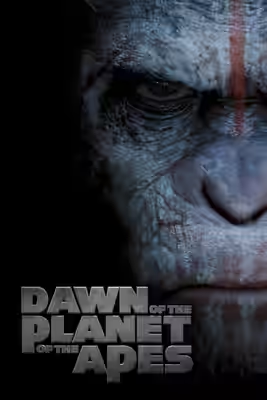
War for the Planet of the Apes is the better-looking of the two and Dawn of the Planet of the Apes is the better film. War's snow and forest photography is the finest in the series, but it is the slowest, and Woody Harrelson's Colonel wants a wall where Dawn's villain wanted something we understood. Pick Dawn for the story, War for Serkis and the scenery.
Do you need to have seen the other Planet of the Apes films before War for the Planet of the Apes?
War for the Planet of the Apes closes Matt Reeves's trilogy about Caesar and is not a good place to start. The revenge story can be followed on its own, but Caesar's grief, the orangutan Maurice's role as his conscience and the reappearance of his old enemy Koba all lean on the two earlier films. Watch those first.
What should I watch after War for the Planet of the Apes?
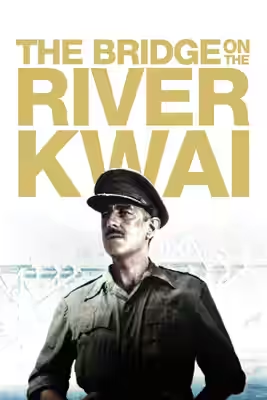
After War for the Planet of the Apes, try Planet of the Apes (1968, Fi1m 84): Where the whole thing started; slower, stranger, and Heston is not the hero he thinks. Then Dawn of the Planet of the Apes (2014, Fi1m 78): Reeves’s previous entry, with a villain who wants something you can understand; and The Bridge on the River Kwai (1957, Fi1m 88): The prison-camp film this one keeps glancing at; Guinness builds the bridge properly.
What order should I watch the Planet of the Apes films in?
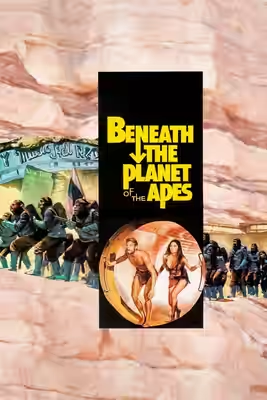
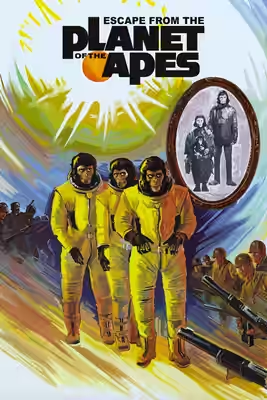
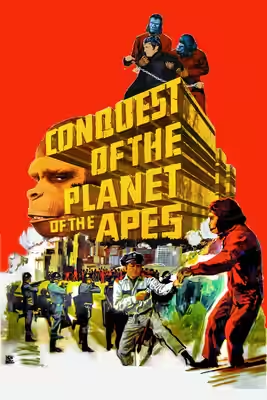
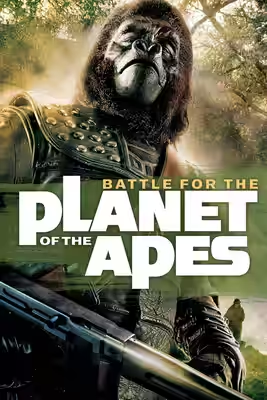
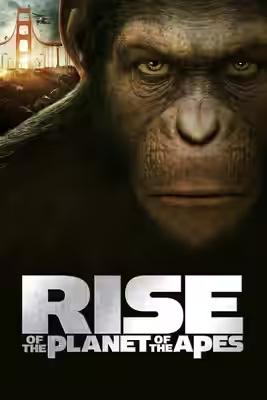
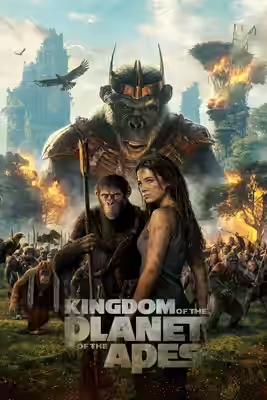
Release order is the safe choice for Planet of the Apes, and it is the order our collection page lists them in. War for the Planet of the Apes is number 8 of the 9 Planet of the Apes titles on Fi1m; before it comes Dawn of the Planet of the Apes and after it Kingdom of the Planet of the Apes. The full order.

Part of · 8 of 9

Planet of the Apes

9 films on Fi1m · 1968–2024 · average 68 · best Planet of the Apes 84

All 9 in order

Cast

Awards

Academy Awards, 2018

Nominated
Best Visual Effects

If you liked this, try…

  1. Planet of the Apes (1968, Fi1m 84)Where the whole thing started; slower, stranger, and Heston is not the hero he thinks.

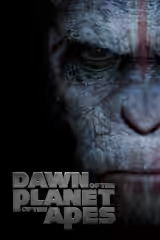
  2. Dawn of the Planet of the Apes (2014, Fi1m 78)Reeves’s previous entry, with a villain who wants something you can understand.

  3. The Bridge on the River Kwai (1957, Fi1m 88)The prison-camp film this one keeps glancing at; Guinness builds the bridge properly.

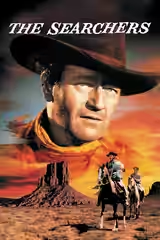
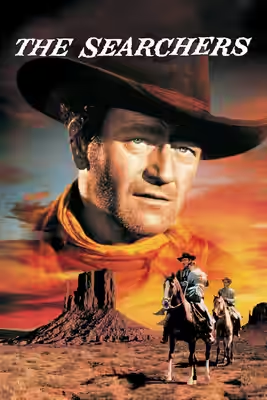
  4. The Searchers (1956) · not reviewed yetA revenge ride across hard country by a hero who may not deserve to come home.

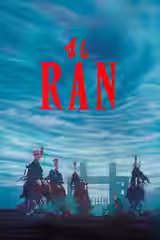
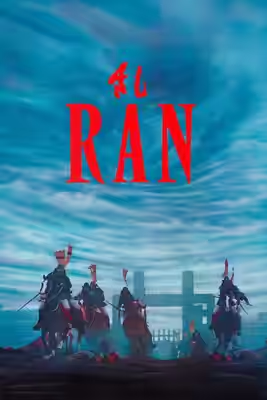
  5. Ran (1985, Fi1m 92)An old king, a divided house, and battles staged with the same gravity.

Free account

Know what to watch tonight

Two lists that know where things are streaming, collections you can share, your own score beside ours, and Discover that remembers what you have seen.

  • Want to see, sorted by what is streaming now
  • Seen, with your score out of ten
  • No adverts, ever