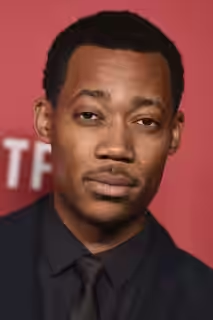
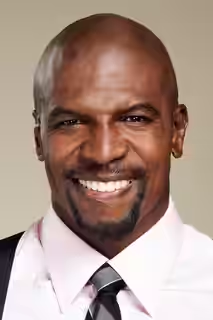
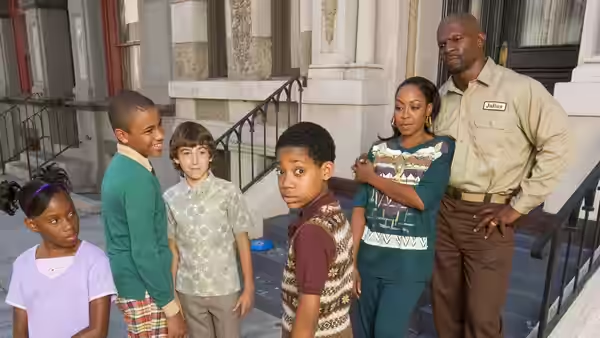
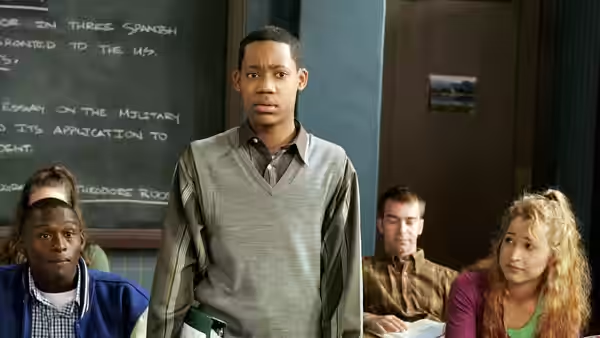
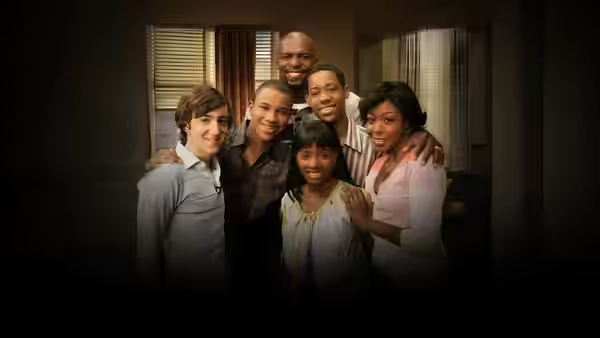
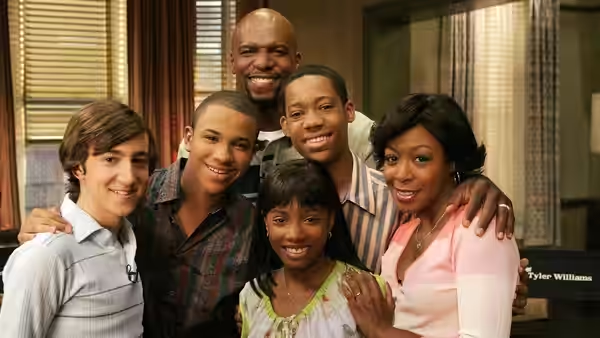
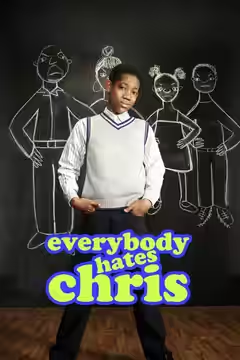
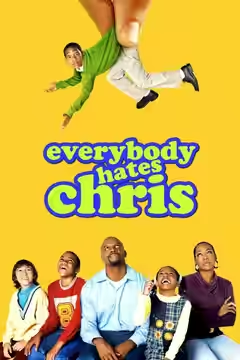
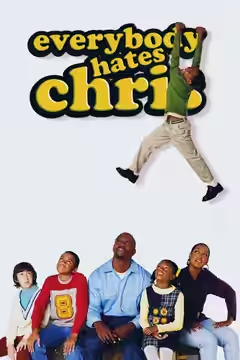
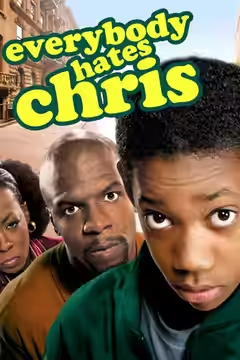
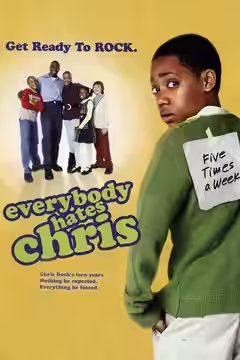
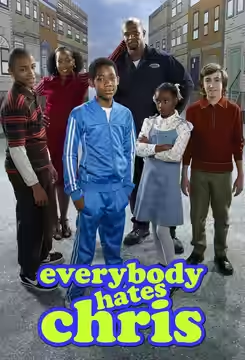
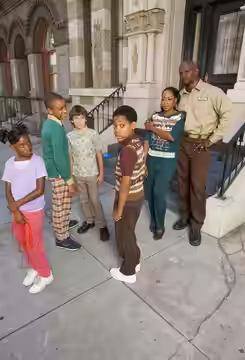
Tyler James Williams gives Everybody Hates Chris a likeable centre, with Tichina Arnold and Terry Crews supplying much of the laughter. The narration can crowd the performances, but this is a sharp, warmly acted comedy.
Everybody Hates Chris is a funny, warmly acted comedy, with a voiceover that sometimes needs to stop talking. Creators Chris Rock and Ali LeRoi give their central character a narrator as well as an on-screen performance, and the combination is often effective. It also puts an extra demand on Tyler James Williams, who has to hold our attention while another voice tells us how to take him. He manages that without making the effort look like the point.
Tyler James Williams gives Chris enough feeling to make the jokes matter without making every comic setback an appeal for sympathy. We want to stay with him, which matters in a programme whose title announces his difficulties before it has properly begun. He makes being the centre of attention look uncomfortable, and that suits the part. His performance has sufficient restraint to keep the comedy from becoming a succession of people demanding that we find them funny.
Tichina Arnold and Terry Crews give Rochelle and Julius the force that the comedy needs around him. We laughed at the parents’ performances because their emphatic delivery makes Chris’s discomfort so easy to recognise. Both actors commit fully to making their presence felt, without seeming anxious about being liked at every moment. Such forceful acting can make everyone else look incidental, but here it gives the central performance something substantial to respond to, and the contrast works.
Chris Rock’s narration works best when it offers a judgement that the on-screen performance could not supply by itself. His delivery is confident enough to make an observation funny before we have had much time to consider it. The trouble comes when the face has already told us enough and the commentary keeps going. That is where the series feels overexplained, and it is a recurring irritation in a comedy with performers capable of earning the laugh unaided.
The direction is brisk, with Ted Wass and Jerry Levine among its directors. That pace suits the emphatic acting, although we sometimes want longer to register Chris’s response before the next joke arrives. Marcus Miller supplies the music, and it feels comfortably proportioned to the comedy. There is no sense that the musical accompaniment needs to compete with the performers, which gives the dialogue some welcome space.
Family sitcoms can become exhausting when each character competes to be the loudest person present. This one has enough confidence in its central performance to keep the balance, even with the narrator making additional demands on our attention. Its pleasures are straightforward: actors who make us want to spend more time with their characters, and comic direction that generally knows when to move on. Try it for the performances, with some tolerance for a commentary that occasionally needs reminding we are watching.