The first season of Paul Scheuring’s series is as tight and daft a thriller as we have seen on television, and Wentworth Miller holds it together with a stare. The four seasons that follow keep running and never find anywhere worth arriving.
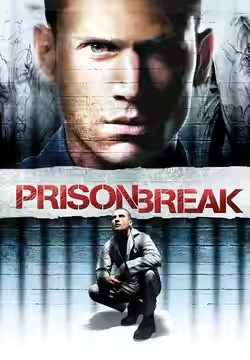
Paul Scheuring’s idea is a good one, and it is a single one. A structural engineer gets himself sent to prison to break his brother out, with the building’s plans tattooed over his body, so the guards search him daily and never find them. Everything in the first season of Prison Break follows from that: each episode is a step in the plan and a thing that goes wrong with it, and for twenty-two hours that is enough. The four seasons after it are another matter.
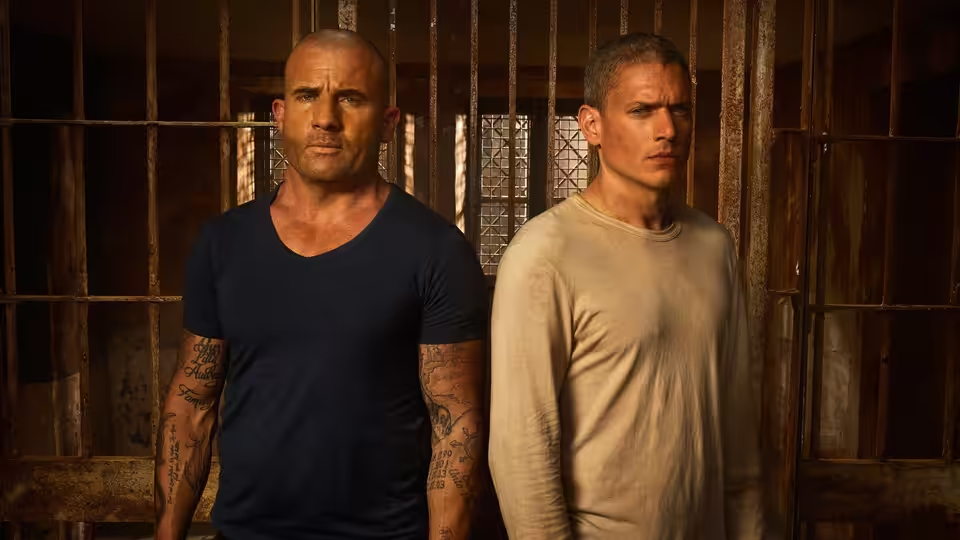
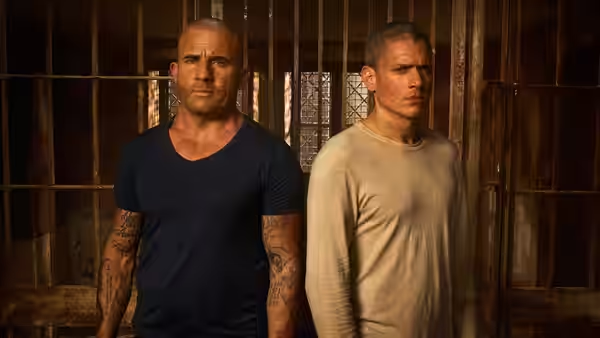
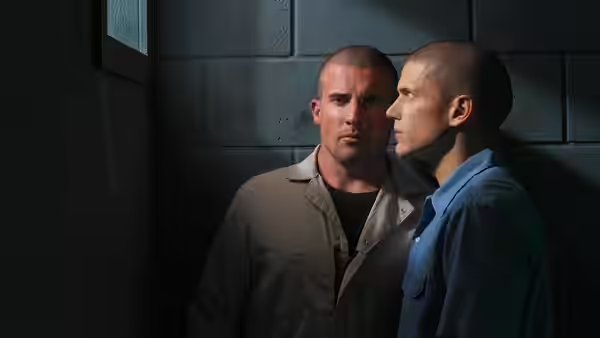
Brett Ratner directed the pilot and Dante Spinotti shot it. Fox River is grey wall, green paint and high barred windows that put stripes across every face; the yard is a flat white glare with nowhere to hide. The tattoo is a full-torso spread of demons, angels and curling script with the prison’s ducts and drains drawn into the folds, so that it looks like a bad decision made in a parlour. When Miller takes his shirt off and the show lays the blueprints over his skin, it is the one visual trick the series owns outright, and it uses it every week.
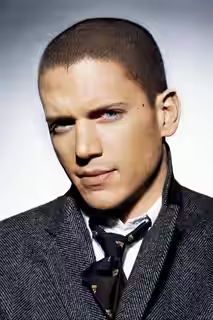
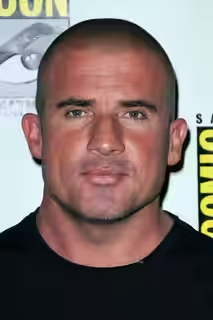
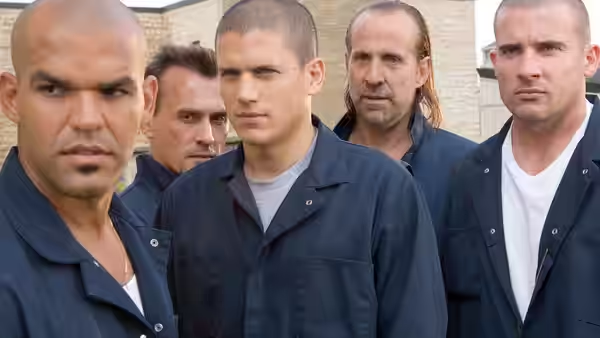
Wentworth Miller plays Michael Scofield with almost nothing: a low voice, a level gaze, a small tilt of the head when a plan changes. The man is a planner and the drama is in watching him think. Dominic Purcell, in shackles and waiting to die, can do little as Lincoln but be angry and frightened. Sarah Wayne Callies’s Sara Tancredi, the infirmary doctor Michael visits with a diabetes he does not have, is the season’s only warmth. Peter Stormare’s John Abruzzi runs the work detail like a small business. Amaury Nolasco’s Fernando Sucre wants out to see a girl. And Robert Knepper’s T-Bag, soft-spoken and courtly, inviting new arrivals to hold his pocket as they cross the yard, is the most frightening thing in it, because Knepper plays him as a man who believes he has good manners.
We were gripped, and we can say when. Early in the run Michael refuses to give Abruzzi a name he wants, and Abruzzi’s men take two of his toes with garden shears. We sat up. The show had just told us that its hero would be hurt and that it was not going to cut away. From then on every episode ends on a shut door, a found tool or a guard turning the wrong corner, and the editors cut those endings so the credits arrive before you have breathed out. We watched more in one sitting than we had meant to.
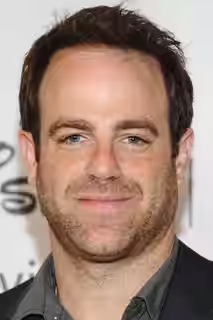
The weakness is there in the first season too, and it is everything outside the walls. Lincoln has been framed by people in government, Paul Adelstein’s Paul Kellerman smiles and kills on their behalf, and Lincoln’s son LJ (Marshall Allman) is chased by men in dark cars. These scenes are shot in the amber light of every conspiracy drama and explain themselves in the tone of a man reading a memo. Whenever the show left Fox River we waited for it to go back. Then the season ended, and the show had to leave for good, because the title had promised it would.
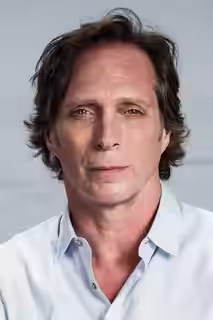
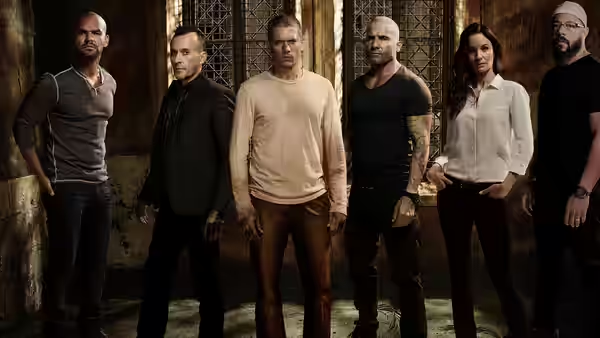
The second season is a chase, and William Fichtner rescues it as Alexander Mahone, who studies photographs of the tattoo and is the only person as clever as Scofield. The third, thirteen episodes in another prison in another country, adds Jodi Lyn O’Keefe’s Gretchen Morgan and Danay García’s Sofia Lugo and gives neither much to do; by its middle we were counting the episodes left. The fourth is a heist built around an object invented for the purpose. The nine-episode revival, Resurrection, in 2017, starts from a premise we will not describe and never persuades us it needed to exist.
Escape from Alcatraz and Le Trou both knew that the pleasure of a break-out is in the tools and the waiting, and for one season Scheuring knew it too. Watch that season and treat its last episode as an ending. If you go on, go on for Fichtner, with your hopes lowered. It began on 29 August 2005 and carries a 15 certificate.