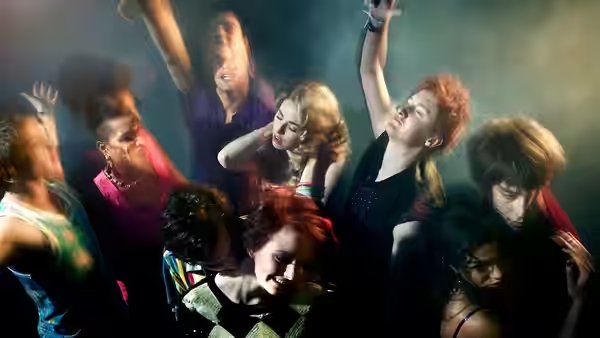
Group of young adults leaning on a metal railing in a hazy red-lit room
Series review

Skins

2007 · Created by Bryan Elsley, Jamie Brittain · Series · 44m · PISF 16

In a sentenceThe teenagers are exhausting, but we would still answer the phone if one of them rang

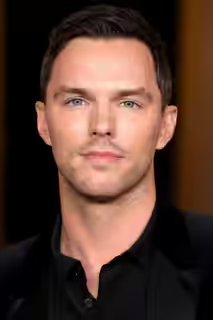
Skins follows a group of Bristol A-level students as college, parties, sex and drugs compete for their attention. Tony Stonem (Nicholas Hoult), Sid Jenkins (Mike Bailey), Michelle Richardson (April Pearson), Chris Miles (Joe Dempsie) and Jal Fazer (Larissa Wilson) are among the teenagers at its centre. Their conversations move between their own concerns and the uncertainties of growing up, while their social lives provide occasions for comedy and drama. Created by Bryan Elsley and Jamie Brittain, the series centres on adolescent self-absorption, uncertainty and the gap between how these teenagers speak and how they feel.

Fi1m review

Skins is funny, abrasive and more sympathetic to its teenagers than its appetite for shock suggests. The plotting is often predictable, but the dialogue and performances make the company worth keeping.

Skins is good company if a noisy, aggravating teenage comedy-drama is what the evening calls for. Its dialogue and cast justify the time, even when its plots are doing something we have seen coming. Creators Bryan Elsley and Jamie Brittain follow Bristol A-level students through college, parties, sex and drugs, refusing to make good behaviour a condition of our interest. The question is how much we can care about them once the initial amusement at their misbehaviour wears off.

The dialogue is the main reason to stay. Jack Thorne and Lucy Kirkwood are among the writers, and the scripts understand how adolescent self-importance can share a sentence with doubt. We felt unexpectedly protective of these irritating people. Their speech keeps exposing how unsure they are, even when they sound pleased with themselves, and the jokes leave enough room for that discomfort.

Nicholas Hoult’s Tony Stonem is an arresting presence, though Mike Bailey’s Sid Jenkins makes the warmer impression. Neither performance needs us to find the character agreeable all the time. April Pearson as Michelle Richardson, Joe Dempsie as Chris Miles and Larissa Wilson as Jal Fazer give the ensemble enough variety to keep its abrasiveness from becoming monotonous. The casting is less persuasive as a broad picture of teenage life: there is a social narrowness here that the amount of bad behaviour cannot disguise.

Sam Care’s cinematography and Matthew Robert Cooper’s music serve the programme’s considerable energy. The partying has the necessary appeal: it is easy to understand why these people want to be there. That matters in a drama which could otherwise spend all its time condemning its characters for enjoying themselves. The presentation is most useful when it draws us into their company rather than simply insisting that we notice how badly they are behaving.

This is where Elsley and Brittain’s approach becomes wearing. The sex and drug use would be less tiring if the programme did not keep treating them as sufficient reason to pay attention. There are stretches when the teenagers seem selected from a stock list, then sent towards equally familiar difficulties. By then we depend on the cast to make us care about what is coming, because the writing has made it too easy to guess.

Against the standards of teenage drama, its sympathy is worth something. A programme about adolescence should be allowed to find young people funny, selfish and difficult without deciding that they deserve whatever happens to them. Skins generally manages that, and its comedy is better for it. It is also more involving when it lets embarrassment or uncertainty matter than when it seems anxious to prove how far it can go.

Give it an evening for the cast, with some patience for the plotting. The teenagers can be exhausting, and the programme does not always know when to leave them alone. Being glad not to be that age is a perfectly reasonable response.

Critical consensus AI synthesised

71
Positive
8
Mixed
2
Negative
1

Most critics like Skins, and the praise clusters on the writing. Reviewers agree the dialogue sounds the way teenagers actually talk, mixing self-absorption with vulnerability, and several credit the show’s young writers for that. The decision to replace the cast every two series draws admiration for keeping the programme fresh, as does the habit of building each episode around a different character. Reviews written years after broadcast are warmer still, treating the series as the standard against which later teen dramas are measured.

The reservations gather around plot. The Guardian finds the characters as irritating as real teenagers and the storylines predictable, and also questions the largely middle-class casting. Collider calls it addictive but poorly plotted and implausible. The one outright negative notice, from Variety, sees shock value with no point of view underneath it. The spread is wide, from the low thirties to the nineties, and the American reviews are the coolest.

Evening Standard
25 January 2017 · Ben Travis
85*

Skins was the perfect teen show because it was ambitious, messy and inventive, much like real teenagers. It captured the era with daring storytelling, music, and constant reinvention across generations while staying entertaining.

Read the full review →
Radio Times
25 January 2017 · Huw Fullerton
80*

The first episode of Skins still holds up well a decade later, remaining fresh, funny and insightful about teenage life. It introduced characters and world convincingly with strong performances and writing that largely avoids dated pitfalls.

Read the full review →
The Telegraph
6 August 2013 · Iona McLaren
80*

Skins raised the bar for teen TV by being better written and more daring than previous youth programming. It succeeded through its authentic dialogue, young writers, and clever regeneration of cast every two seasons.

Read the full review →
Empire
24 September 2007 · Kat Brown
70*

The series is an enjoyably bitchy take on British teen life that stands out from lesser shows like Hollyoaks. It follows Bristol A-level students through parties, drugs and college, with strong cast and writing talent that should return for a second series.

Read the full review →
The Times
26 January 2007 · Ian Johns
70*

The critic praises the script for capturing the mix of self-absorption and vulnerability in teenagers, along with its heart and entertainment value over issue-raising. He notes strong performances and a sense that the series shows promise beyond its initial shock tactics.

Read the full review →
The Guardian
26 January 2007 · Lucy Mangan
50*

The critic finds the teenage characters as irritating as real ones but grants that the dialogue captures authentic adolescent speech and vulnerability. She notes the show's energy and naughtiness while critiquing the middle-class casting and predictable plotting.

Read the full review →

Straight answers AI written, from our review

Is Skins worth watching?
Skins is worth watching for anyone who wants a noisy, abrasive teenage comedy-drama and can put up with predictable plotting, and we scored it 72. The dialogue and the cast, Nicholas Hoult and Mike Bailey in particular, are the reasons to stay. The teenagers are exhausting, but we found ourselves oddly protective of them.
How long is Skins, and what is it rated?
Skins has episodes of about 44m and is rated 16 by the PISF in Poland. It is a drama and comedy series.
Where can I watch Skins in Poland?
Skins is not on any streaming or rental service in Poland at the moment. It is available in 9 other countries; change your country at the top of the page to see where. Availability is checked daily.
How violent or frightening is Skins, and is it suitable for children?
Skins is certified 18 in the UK and TV-MA in the US, and it is not for children. It is built around sex and drug use among Bristol A-level students, and it treats both as reasons to pay attention rather than things to be tutted at. It is not frightening; it is frank, and older teenagers are the youngest audience we would suggest.
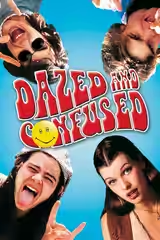
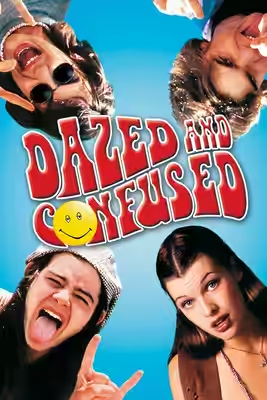
How does Skins compare to Dazed and Confused?
Skins is harsher and more concerned with shock than Dazed and Confused, which is the warmer and more relaxed of the two. Richard Linklater's film watches its teenagers over one day and lets friendships matter more than the evening's plans; the series follows its cast across episodes, with sex and drugs closer to the surface. We think the film the better piece of work; the series is for viewers who want the same bravado with rougher edges.
What should I watch after Skins?
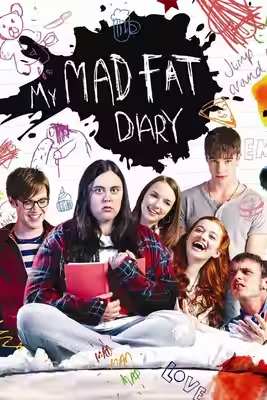
After Skins, try Dazed and Confused (1993, Fi1m 86): For adolescent bravado and friendships that matter more than the evening’s supposed plans. Then My Mad Fat Diary (2013, Fi1m 88): For another frank, funny account of adolescence with sympathy beneath the noise.

Cast

If you liked this, try…

  1. Dazed and Confused (1993, Fi1m 86)For adolescent bravado and friendships that matter more than the evening’s supposed plans.

  2. Show Me Love (1998) · not reviewed yetFor teenage loneliness and desire treated seriously without making everyone solemn.

  3. Water Lilies (2007) · not reviewed yetFor adolescent attraction, social cruelty and feelings nobody can quite explain.

  4. My Mad Fat Diary (2013, Fi1m 88)For another frank, funny account of adolescence with sympathy beneath the noise.

  5. Linda Linda Linda (2005) · not reviewed yetFor teenage friendships given room to develop without another compulsory disaster.

Free account

Know what to watch tonight

Two lists that know where things are streaming, collections you can share, your own score beside ours, and Discover that remembers what you have seen.

  • Want to see, sorted by what is streaming now
  • Seen, with your score out of ten
  • No adverts, ever