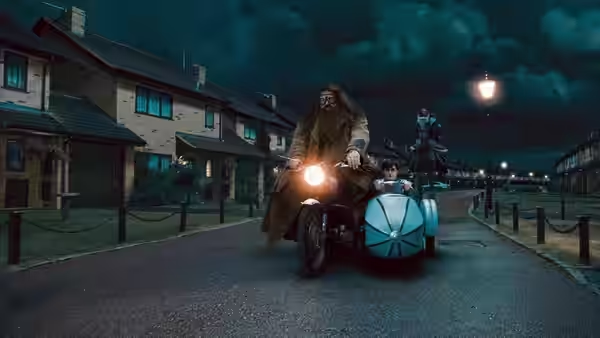
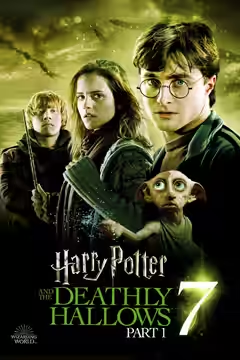
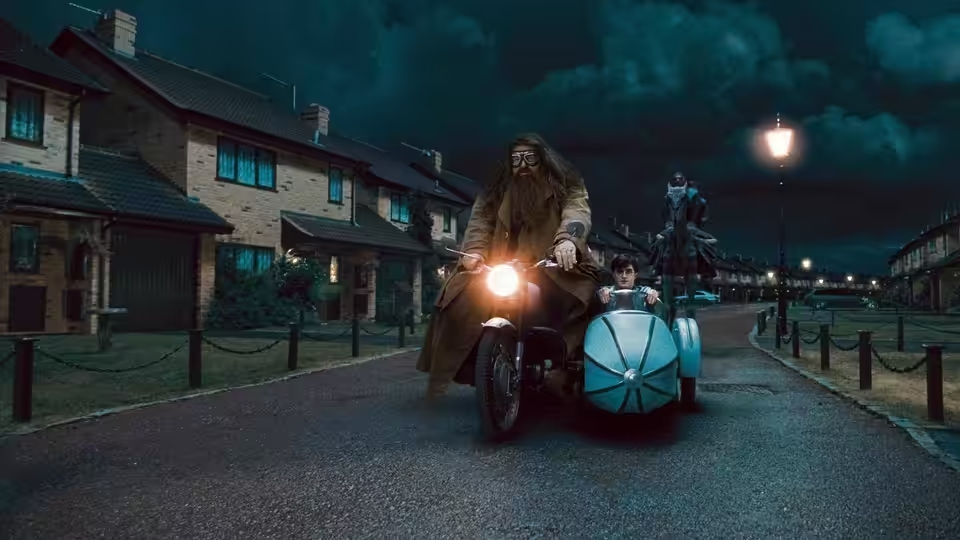
Hagrid driving a motorcycle with sidecar down a suburban street at night
Film review

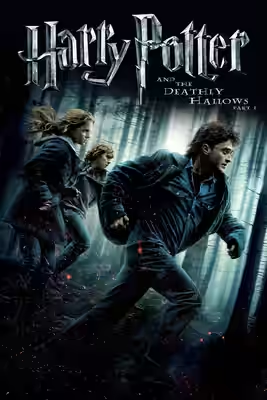
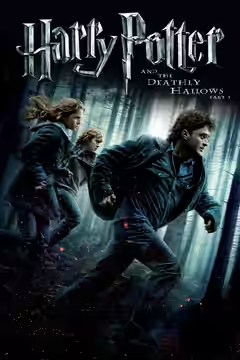
Harry Potter and the Deathly Hallows: Part 1

2010 · Directed by David Yates · 2h 26m · Medierådet 11

In a sentenceThe most expensive camping holiday ever filmed, and the weather never once lifts

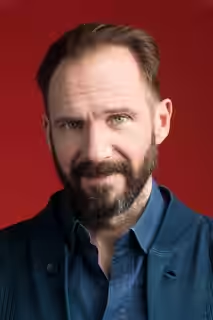
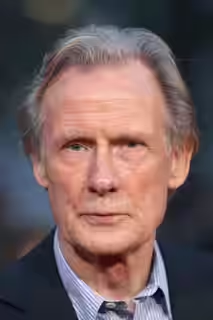
Britain, and the Ministry of Magic is losing its war. The Minister, Rufus Scrimgeour (Bill Nighy), tells the press that these are dark times while Lord Voldemort (Ralph Fiennes) gathers his Death Eaters round a long table at Malfoy Manor. Hermione Granger (Emma Watson) wipes herself from her parents’ photographs. Harry Potter (Daniel Radcliffe) leaves Privet Drive escorted by six decoys drinking Polyjuice Potion, and is chased across the night sky. At a wedding at the Weasleys’ house the Death Eaters arrive, and Harry, Hermione and Ron Weasley (Rupert Grint) flee to a London café and then to the empty house at Grimmauld Place, where the house-elf Kreacher (voiced by Simon McBurney) is waiting. They have a locket to find and no one left to tell them how.

Plays from YouTube when you press play; nothing loads from them until then.

Fi1m review

David Yates takes the seventh Potter film out of Hogwarts and into the rain, and the quiet suits the three leads better than any castle did. It is handsome, sad and honest, and for half an hour in the middle nothing happens at all.

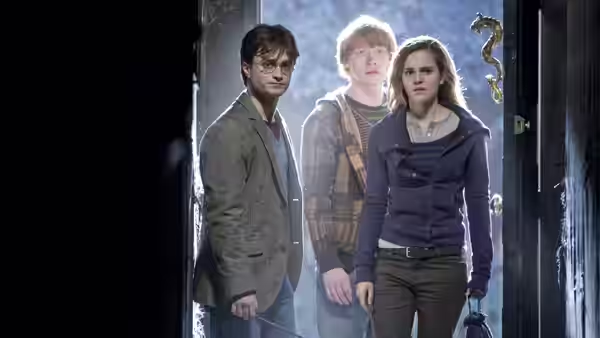
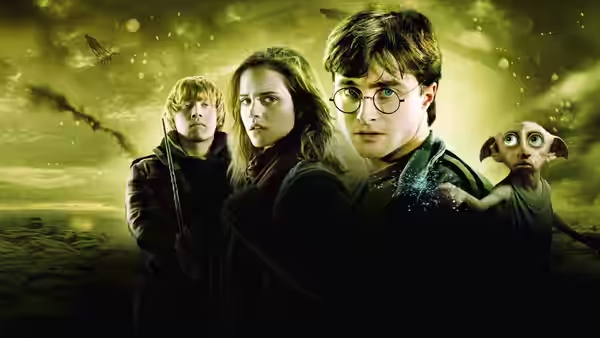
David Yates has directed the seventh Harry Potter film as if it were a different kind of film altogether, and for long stretches it is. Steve Kloves’s screenplay takes the first half of J.K. Rowling’s last book and leaves Hogwarts out of it. The Minister for Magic, Rufus Scrimgeour (Bill Nighy), tells a room of reporters that these are dark times, Lord Voldemort (Ralph Fiennes) takes a wand from one of his own followers at a long dark table, and Harry Potter (Daniel Radcliffe), Hermione Granger (Emma Watson) and Ron Weasley (Rupert Grint) go on the run with a list of objects to find and nobody left alive to tell them how. It is a fugitive film, 146 minutes long, and it is half a story.

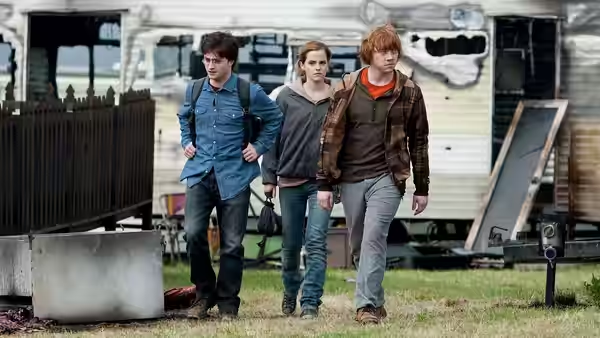
Eduardo Serra shoots it in grey, brown and the dark green of wet bracken. He puts the three of them small in wide frames of moor and cliff and forest, so the country looks enormous and empty and they look like what they are, children who have left home without a plan. Stuart Craig builds the Ministry of Magic’s atrium round a black stone monument of wizards enthroned on a heap of crushed Muggles, and the Malfoys’ dining room as a long cold hall lit from one end. Jany Temime puts the trio in jeans, hoodies and anoraks, the clothes of people with nowhere in particular to be.

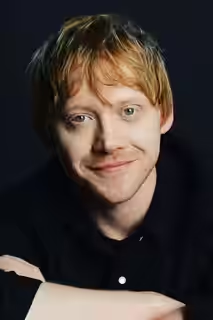
The three leads have grown into it. Grint’s Ron is the surprise, sour with hunger and jealousy and the locket round his neck, and the row that comes of it is the best scene the three of them have played together in seven films. Watson carries the film. Early on, Hermione stands in her parents’ front room and makes herself vanish from every photograph on the mantelpiece, and Watson does it without a word. It moved us more than we thought a Potter film could: a girl deleting herself from her own family so they will not miss her when she goes. Radcliffe is watchful and sad and rather good at being unable to explain himself.

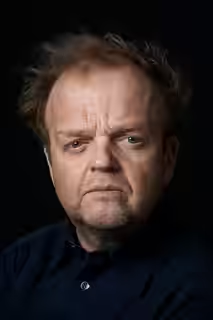
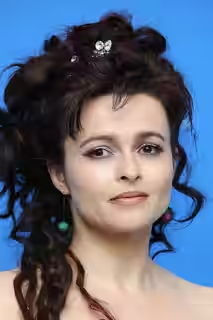
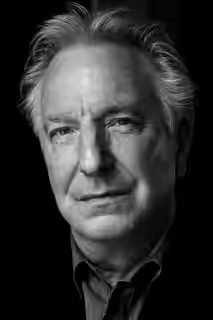
Fiennes plays Voldemort softly, all breath and courtesy, and is far more frightening for it than when he shouts. Helena Bonham Carter’s Bellatrix Lestrange twitches and grins and plainly wants to be let off the leash. Alan Rickman gets two scenes as Snape and does more with a pause than most of the cast do with a page. Rhys Ifans’s Xenophilius Lovegood is a rattled eccentric in a house shaped like a rook, Andy Linden’s Mundungus Fletcher is a small-time thief who looks it, and Toby Jones voices Dobby with a squeak that turns out to have a spine in it.

The trouble is the middle. Kloves keeps faith with the book, which means the film has to explain Horcruxes, which were explained last time, and then the Deathly Hallows, which are new, and the two sets of magical objects sit in the script like two shopping lists. Mark Day’s editing cannot find a shape for the weeks on the run: the trio Apparate to a moor, argue, Apparate to a forest, argue, Apparate to a beach. We were bored for the better part of half an hour, and then irritated, because each landscape is beautifully lit and nothing happens in it that had not happened in the last. Alexandre Desplat’s score keeps to piano and low strings and hardly ever swells, which suits the material and does nothing for the pace.

Against the series’ own record this sits in the upper half. It is more grown-up than Half-Blood Prince, less shapely than Prisoner of Azkaban, and it has the honesty to be sad without apologising for it. What it does not have is an ending, because the book’s ending is in the other half. Watch it with the second part to hand and a free evening after it. Watched alone, it stops rather than finishes, and the stopping is the one thing about it that feels like a decision made in an office.
Critical consensus AI synthesised

64
Positive
9
Mixed
9
Negative
2

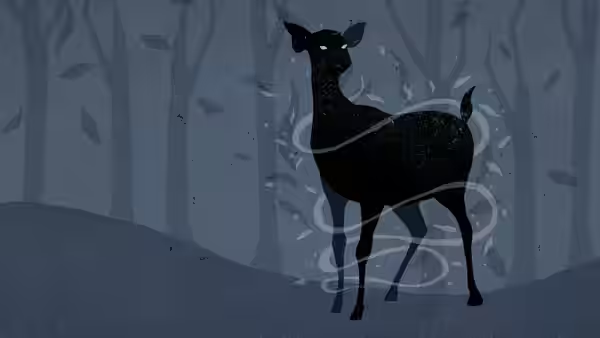
Most critics lean cautiously positive, and the praise gathers around one decision: leaving Hogwarts behind. Reviewers find this the darkest and loosest entry so far, and several credit David Yates with treating the trio’s relationships patiently now the school, its staff and its comforts are gone. The cinematography and production design are singled out, as is a short animated sequence that even the coolest reviews call the film’s best-looking passage. The three leads are widely thought to have grown into the roles.

The reservations cluster almost entirely on the middle stretch, where the trio wanders the countryside and the plot stalls under exposition; “sluggish” recurs. Many question the choice to split the book, finding this half all setup and little payoff. The spread is wide, from Collider’s near-rave to Sight and Sound and Den of Geek, who find it inert and frustrating. The fan sites are warmer than the broadsheets, which is perhaps not surprising.

Screen Daily
11 November 2010
80*

Part one reaches a level of maturity and depth that might help it cross over to skeptics and works well as a single film. It is elegantly directed with luminous cinematography and impressive production design.

Read the full review →
Los Angeles Times
18 November 2010 · Kenneth Turan
70*

The film is described as solid and dependable in the hands of Yates, who treats the source material respectfully without taking risks. It notes the challenges of the 'Part 1' split and the emphasis on fidelity to the book.

Read the full review →
The New York Times
19 November 2010 · NYT Critic’s Pick · A.O. Scott
70*

The review finds the film a somber, effective transition for the series as the young wizards leave Hogwarts behind for a dangerous adult world. It praises Yates for his sympathy with the characters and the story's rhythm.

Read the full review →
Variety
11 November 2010
70*

Yates delivers the series' most expansive and free-form chapter, dark and despairing as the trio ventures into the wilderness. It highlights resonant intimate moments and animation but notes occasional faltering under exposition.

Read the full review →
Empire
11 November 2010 · Nick de Semlyen
65*

The film leaves cosy trappings behind for a darker road-chase story but is bogged down by overplotting and a sluggish middle section with too many MacGuffins. Strong set-pieces and inventive effects stand out amid the pacing issues.

Read the full review →
Evening Standard
65*

This is the bleakest entry yet, grim in tone and colour with the trio on the run facing huge odds and no Hogwarts scenes. It is gripping with effective magic and performances but ends too abruptly, leaving viewers sad.

Read the full review →

Straight answers AI written, from our review

Is Harry Potter and the Deathly Hallows: Part 1 worth watching?
Harry Potter and the Deathly Hallows: Part 1 is worth watching if you are already following the series and have the second part ready to go afterwards; we scored it 67. The three leads are better than they have ever been, and Emma Watson in particular carries it. The middle half-hour on the run is handsome, repetitive and slow, and the film stops rather than ends.
How long is Harry Potter and the Deathly Hallows: Part 1, and what is it rated?
Harry Potter and the Deathly Hallows: Part 1 runs 2h 26m and is rated 11 by the Medierådet in Denmark. It is an adventure and fantasy film.
Where can I watch Harry Potter and the Deathly Hallows: Part 1 in Denmark?
Harry Potter and the Deathly Hallows: Part 1 is streaming on HBO Max and Amazon Prime Video in Denmark, and it is also available to rent from Amazon Prime Video and Apple TV from kr 39.00. Availability is checked daily; the links above go straight to each service.
How violent or frightening is Harry Potter and the Deathly Hallows: Part 1, and is it suitable for children?
Harry Potter and the Deathly Hallows: Part 1 is a 12A, and it is the gloomiest and most grown-up of the series so far, with a war being lost, a Ministry built on a monument of crushed Muggles and a softly spoken Voldemort who is more frightening than a shouting one. Older children who have kept pace with the earlier films should manage; younger or nervous ones will find it sad and dark with very little to lighten it.
How does Harry Potter and the Deathly Hallows: Part 1 compare to Harry Potter and the Half-Blood Prince?
Harry Potter and the Deathly Hallows: Part 1 is the sadder and more grown-up of the two, while Half-Blood Prince is the funnier and better-looking. Both have a slack middle hour in which little happens, but the seventh film gives Radcliffe, Watson and Grint the best scenes they have played together. We prefer it, with the caveat that it is only half a story.
Is Harry Potter and the Deathly Hallows: Part 1 based on a true story or a book?
Harry Potter and the Deathly Hallows: Part 1 is based on the first half of J.K. Rowling's seventh and final novel, not on a true story. Steve Kloves's screenplay keeps faith with the book, which is why it explains both Horcruxes and the Hallows at some length. Readers will follow the two lists of magical objects more easily than newcomers.
Do you need to have seen the other Harry Potter films before Harry Potter and the Deathly Hallows: Part 1?
Harry Potter and the Deathly Hallows: Part 1 is the seventh film in the series and a poor place to start, since it leaves Hogwarts behind and assumes you know who everyone is and what they are looking for. It also has no ending of its own, so it needs the concluding part watched soon after. Come to it in order, with a free evening for the second half.
What should I watch after Harry Potter and the Deathly Hallows: Part 1?
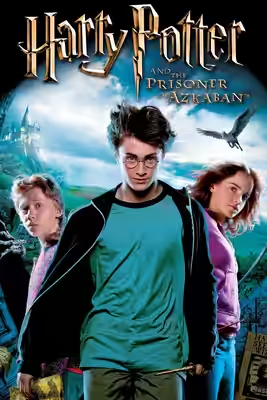
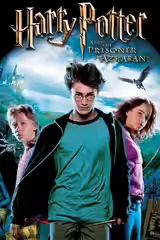
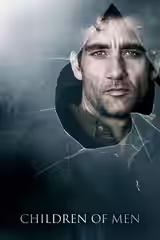
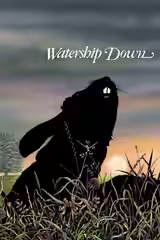
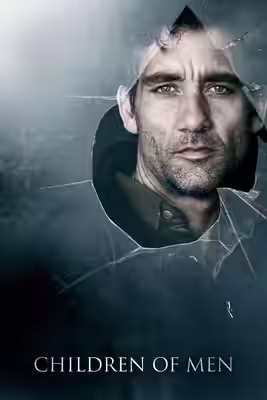
After Harry Potter and the Deathly Hallows: Part 1, try Harry Potter and the Prisoner of Azkaban (2004, Fi1m 82): The series’ first grey, grown-up entry, and still its most confidently shaped one. Then Children of Men (2006, Fi1m 85): Britain under a low sky, a fugitive with a burden, and nowhere safe to stop; and Watership Down (1978, Fi1m 81): Small creatures cross an English countryside that wants them dead; children’s fiction unafraid of grief.
What order should I watch the Harry Potter films in?
Release order is the safe choice for Harry Potter, and it is the order our collection page lists them in. Harry Potter and the Deathly Hallows: Part 1 is number 7 of the 11 Harry Potter titles on Fi1m; before it comes Harry Potter and the Half-Blood Prince and after it Harry Potter and the Deathly Hallows: Part 2. The full order.

Part of · 7 of 11

Harry Potter

11 films on Fi1m · 2001–2022 · average 66 · best Harry Potter and the Deathly Hallows: Part 2 83

All 11 in order

Cast

Awards

Academy Awards, 2011

Nominated
Best Production Design
Nominated
Best Visual Effects

BAFTA Film Awards, 2011

Nominated
BAFTA's Children & Young People Award - Feature Film

Kids' Choice Award for Favorite Movie, 2011

Nominated
Kids' Choice Award for Favorite Movie

MTV Movie Award for Best Villain, 2011

Won
MTV Movie Award for Best Villain

If you liked this, try…

  1. Harry Potter and the Prisoner of Azkaban (2004, Fi1m 82)The series’ first grey, grown-up entry, and still its most confidently shaped one.

  2. Children of Men (2006, Fi1m 85)Britain under a low sky, a fugitive with a burden, and nowhere safe to stop.

  3. Watership Down (1978, Fi1m 81)Small creatures cross an English countryside that wants them dead; children’s fiction unafraid of grief.

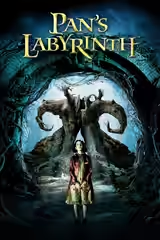
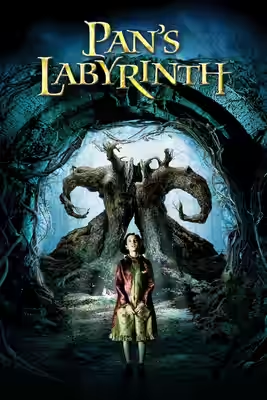
  4. Pan's Labyrinth (2006, Fi1m 87)A child, a war and a fairy tale told straight, with real teeth in it.

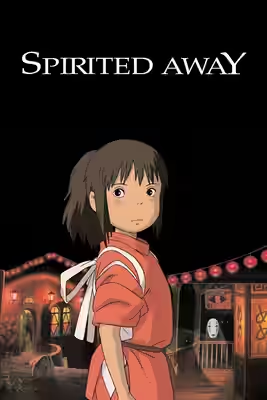
  5. Spirited Away (2001, Fi1m 92)A girl loses her parents and finds her nerve, drawn by hand from start to finish.

Free account

Know what to watch tonight

Two lists that know where things are streaming, collections you can share, your own score beside ours, and Discover that remembers what you have seen.

  • Want to see, sorted by what is streaming now
  • Seen, with your score out of ten
  • No adverts, ever