A warm, sharply acted workplace comedy with room for disappointment and embarrassment. Judd Hirsch and Marilu Henner make its small troubles matter; some of the broader jokes are less rewarding.
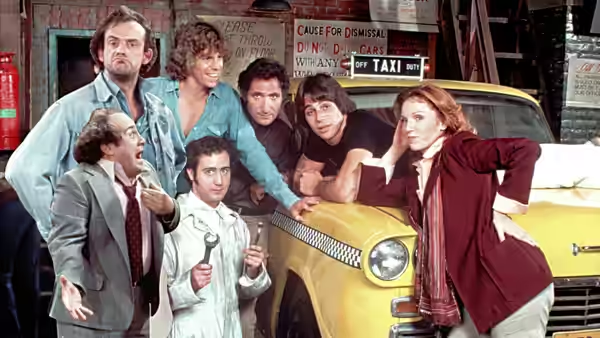
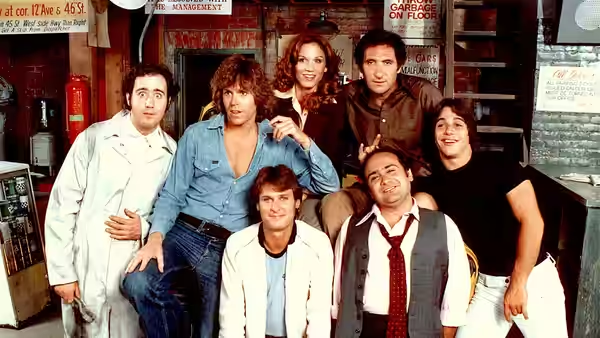
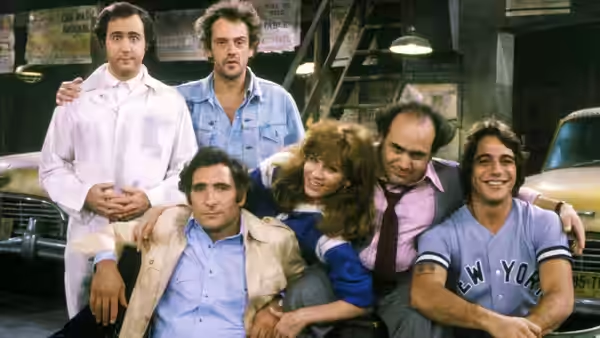
Taxi is worth watching for its actors and its patience with ordinary disappointment, despite an occasional weakness for caricature. Created by David Davis, Ed. Weinberger, Stan Daniels and James L. Brooks, it finds enough trouble in the daily business of earning a living. The New York cabbies give it a reason to bring different temperaments together without demanding that they like one another. Its scale is modest. That suits a programme whose funniest exchanges often depend on somebody being too tired, embarrassed or disappointed to answer neatly.
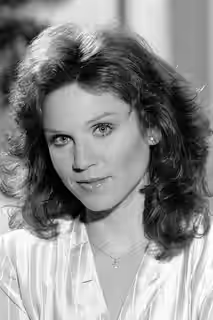
Judd Hirsch gives Alex Reiger the sort of steadiness an ensemble needs without making steadiness look dull. He can suggest that a joke has landed badly without stopping the scene to explain the hurt. Marilu Henner’s Elaine O’Connor-Nardo is just as important: she makes irritation and vulnerability feel like parts of the same person. We were more moved than we expected by the weariness in their performances. Their comic timing leaves room for a disappointment to register before the next laugh arrives.
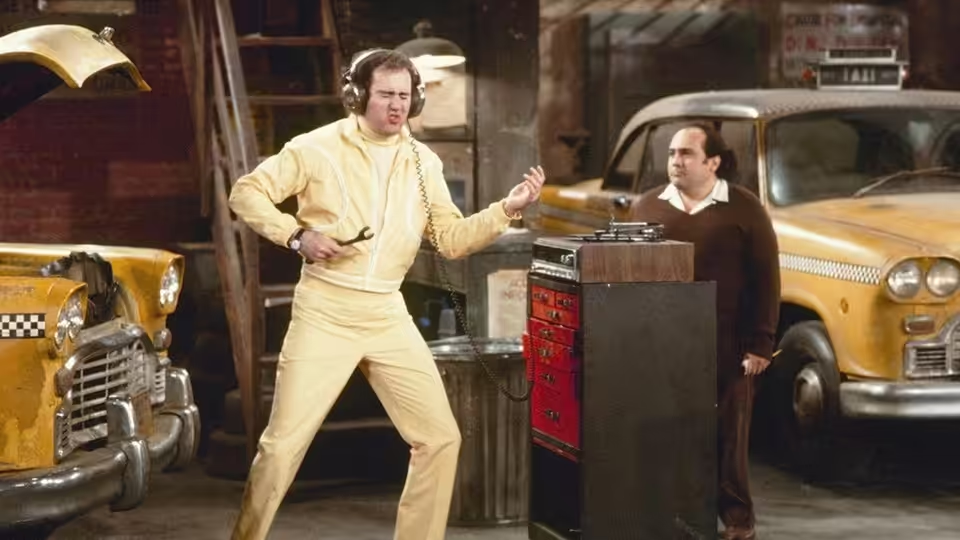
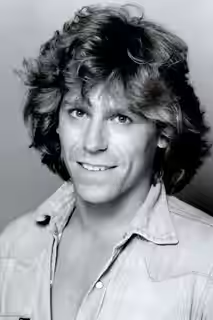
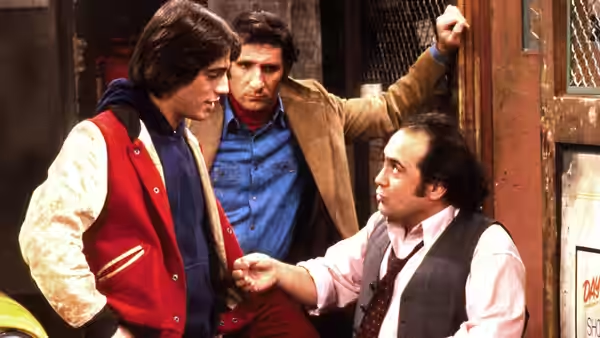
Danny DeVito’s Louie De Palma gives that restraint something abrasive to meet. He attacks a line with such relish that even a mean little remark feels carefully prepared; the pleasure is in how seriously the character takes himself. Jeff Conaway as Bobby Wheeler and Tony Danza as Tony Banta help keep the company from settling into one comic rhythm. We especially like Tony Danza’s openness, which lets a joke be affectionate without asking us to congratulate the programme on its kindness.
James Burrows is among the directors who give these performances enough room. Cinematographers Edward E. Nugent, Kenneth Peach and Kenneth Peach Jr. keep the pictures clear enough that a face need not compete for attention. That plainness is useful here: a more insistent visual style would be an interruption. The series depends on our being able to watch somebody listen, rather than merely waiting for their next line.
Editors including Andrew Chulack, M. Pam Blumenthal and Roger Tweten have an equally delicate job with the pauses. At its strongest, the cutting lets an uncomfortable beat last without allowing the exchange to go slack. Bob James’s music helps the programme feel less hurried than its supply of jokes might suggest. We like that gentleness, although the comfort it offers can sometimes soften an awkward moment before we have quite finished thinking about it.
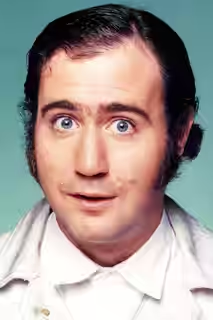
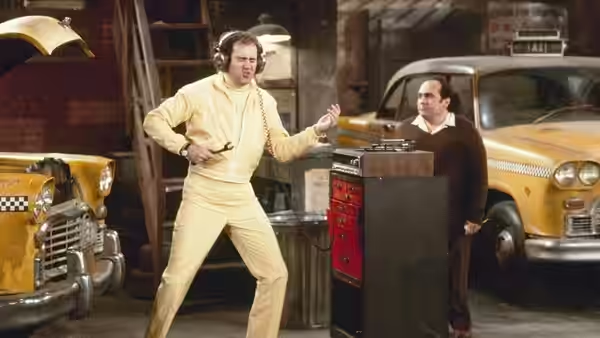
The broadness is the main caveat. Andy Kaufman’s Latka Gravas can seem to belong to a different comedy, one more interested in displaying an oddity than in staying with a person. His precision is impressive, but we do not always enjoy the result as much as the programme appears to. Across five seasons, the difference between that approach and Judd Hirsch’s quieter acting sometimes makes an episode feel less of a piece than it should.
The attraction of this workplace comedy is easy to explain: the people remain worth spending time with even when the jokes are only serviceable. It trusts ordinary disappointment to hold our attention, and usually earns that trust through the actors rather than a speech about decency. There is enough bite to keep the warmth from becoming cloying. Try it when the working day has already supplied all the excitement required.