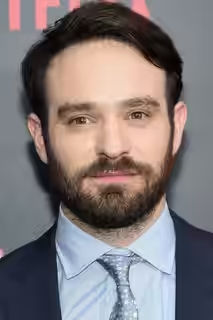
The first season is a proper crime drama with a superhero in it, carried by Charlie Cox’s bruised decency and Vincent D’Onofrio’s soft-voiced Fisk. It is also thirteen hours for a story that needed ten, and every season since has had the same trouble.
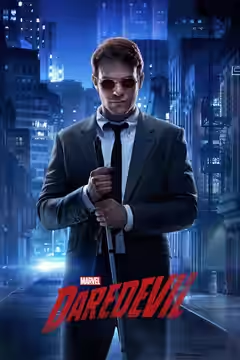
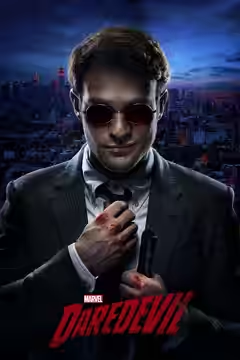
Drew Goddard’s series takes the blind lawyer from the comics and puts him in a Hell’s Kitchen that has not been swept since the seventies. Matt Murdock (Charlie Cox) defends the poor by day with Foggy Nelson (Elden Henson) and beats up the men who prey on them by night, in a black cloth mask. The first season, thirteen episodes from 10 April 2015, is a good crime drama that happens to have a superhero in it. It is better than most of what its studio has put on television, and it is too long. Both things are true of all three seasons.
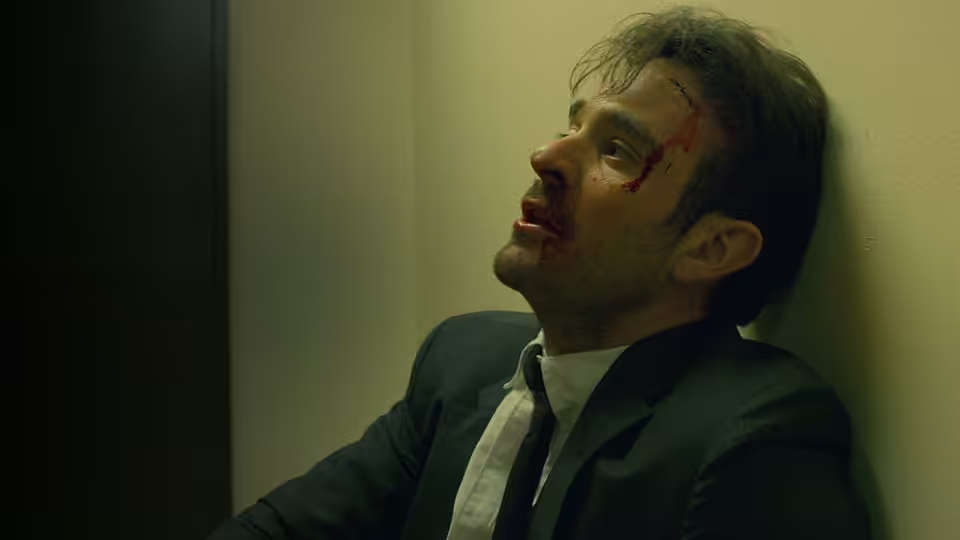
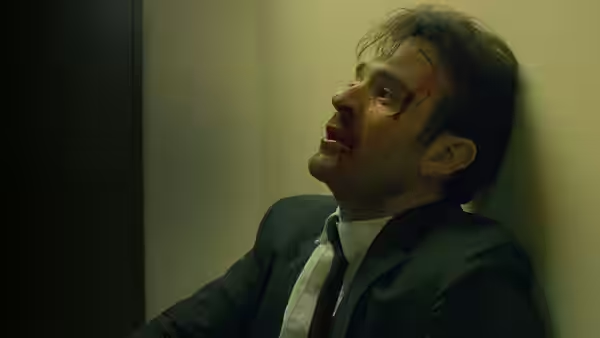
Cox is the reason it holds. He plays Murdock as charming in a courtroom and slightly frightening out of it, and he does the blindness without fuss: a hand finding a door frame, a head tilted towards a voice. The fights made the series’ name, and the one everybody remembers is in the second episode, directed by Phil Abraham, in which Murdock clears a corridor of men in one apparent take. By the end he can barely lift his arms. We winced through most of it, and the sound of the men wheezing afterwards stayed with us longer than the punches.
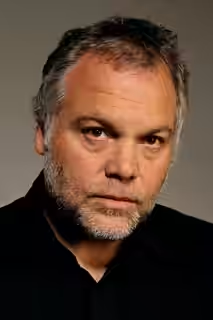
Then there is Vincent D’Onofrio. His Wilson Fisk does not appear for some time. He turns up in an art gallery, in front of a white canvas, telling a woman how it makes him feel. D’Onofrio gives him a halting, apologetic voice, as if every sentence costs him something, then lets him do something appalling without changing his expression. We found him hard to watch, which is what a villain is for. The production designers Scott P. Murphy, Loren Weeks and Adam Scher give him a flat of white walls and one painting, so when he loses his temper there is nothing to soften it.
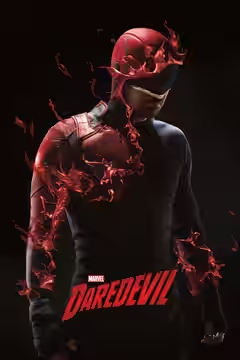
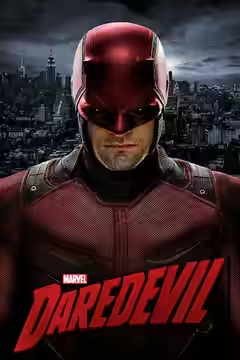
Matthew J. Lloyd shoots the whole thing in sodium yellow and black. Streets get one lamp; rooms get whatever comes through the blinds. It suits a hero who cannot see, and a real problem on an ordinary television in daylight. We drew the curtains and still missed things. John Paesano’s score is brass and low strings, and does more in the quiet scenes than in the fights, where the fists do the work. Costume designers Lorraine Z. Calvert, Elisabeth Vastola and Stephanie Maslansky keep Murdock in the mask for most of the first run, and the show is right to make us wait for the red suit. It looks daft, and by then we no longer mind.
Deborah Ann Woll’s Karen Page begins as the firm’s first client, then its secretary, then its conscience, and Woll is better than the writing in each job. Henson’s Foggy is the warmth: a decent, funny man who wanted to be a lawyer and got a friend with a secret instead. Rob Morgan’s Turk Barrett, a small-time crook who is always in the wrong alley, is a running joke the show gets right.
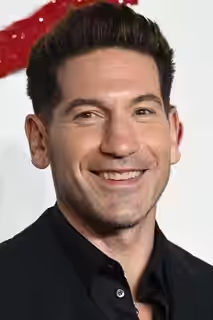
Thirteen episodes is too many for a story with one villain, and the middle of the first season stalls while the Russians (Nikolai Nikolaeff and Gideon Emery, both good) are moved around like furniture. Murdock also loses more fights than a hero should; by the eighth hour we stopped worrying whether he would get up, because he always does. The second season, from 18 March 2016, brings in Jon Bernthal as Frank Castle, and Bernthal is so good, and so plainly in a different show, that the strand involving ninjas looks thin beside him. The third, from 19 October 2018, goes back to Fisk and is the tightest of the three.
Most critics were warm about the first season and we are not far behind them. The one dissent calls it pulp dressed as noir, and there is something in that: the violence is meant to hurt, the show also wants us to enjoy it, and it does not always know which it is doing. The 18 certificate is earned. Watch it a season at a time, in the dark, with someone who does not mind the sound of bone.