Jon Cryer and a sharp supporting cast earn some laughs, but predictable jokes and the sour treatment of women make sustained viewing a chore. This is capable comedy that too often settles for the easiest laugh.
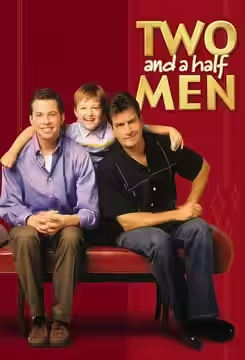
Two and a Half Men has the timing for a good sitcom and too little curiosity about the people delivering its jokes. Chuck Lorre and Lee Aronsohn make adult immaturity the starting point, then return to it so reliably that surprise becomes scarce. The cast earns some laughs, but we cannot recommend a whole evening of it. It is occasionally funny, often sour and far too satisfied with material the performers could deliver in their sleep.
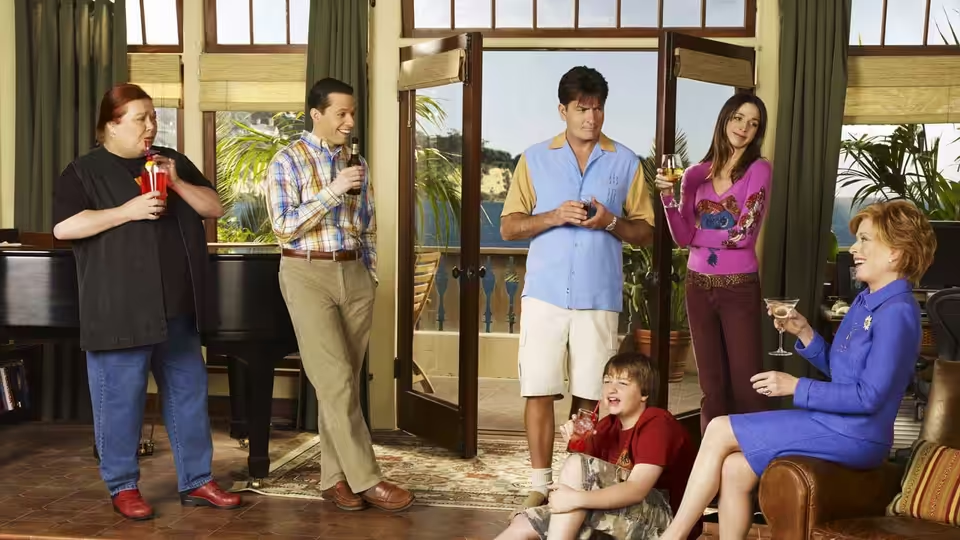
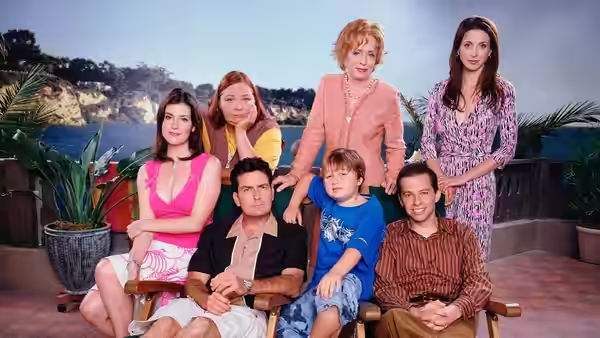
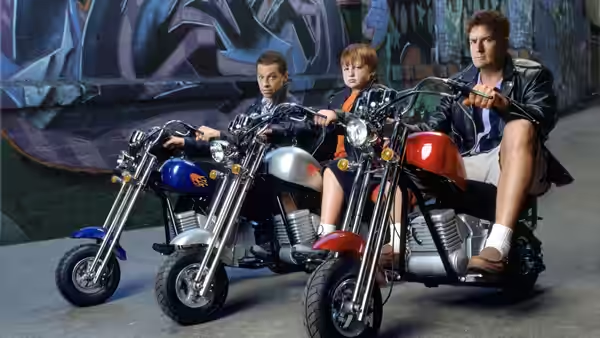
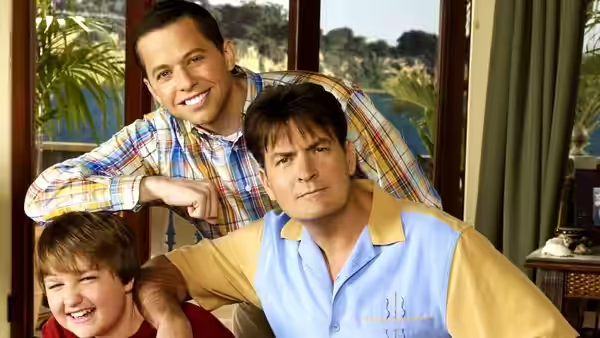
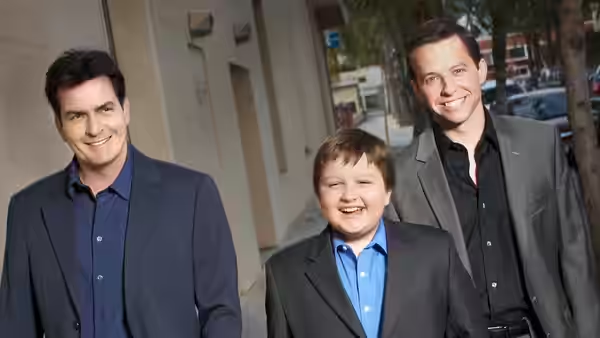
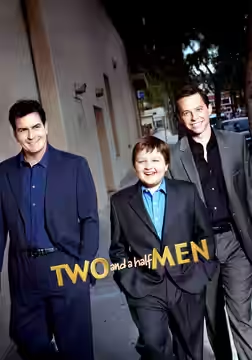
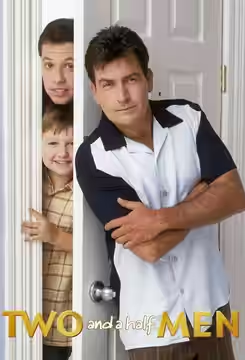
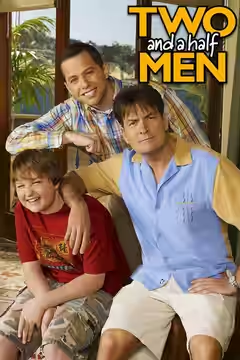
Jon Cryer does the most to keep things moving as Alan Harper, making unease funny through the timing of a hesitation or an overworked response. We laughed at his anxious delivery, even when the punchline was easy to predict. Charlie Sheen’s Charlie Harper supplies a calmer counterweight, though that ease can shade into sameness. Their contrasting rhythms are more dependable than the writing, and Angus T. Jones gives Jake Harper a useful, less practised comic presence. Too often, the performances have to supply all the variation.
Conchata Ferrell’s Berta and Holland Taylor’s Evelyn Harper sharpen the exchanges whenever the central trio threatens to become too comfortable. Melanie Lynskey is particularly valuable as Rose, bringing an uncertainty that briefly makes the next joke harder to guess. Yet the writing’s treatment of women remains a persistent irritation. Too many jokes invite us to accept male selfishness as an agreeable fact of life and women as the inconvenience attached to it. The women in this cast are funny enough that this feels wasteful as well as unpleasant.
The cinematography, credited to Mark Davison, Steven V. Silver and Tony Askins, keeps the performances easy to read; it seldom offers another reason to pay attention. That is a reasonable choice for this sort of comedy, though it makes the predictability harder to overlook. Editors Joe Bella and Peter Chakos leave the performers room to finish a joke, and the rhythm is assured enough to carry weak lines further than expected. The drawback is that an obvious punchline can feel even slower when everything around it waits so politely.
John Shaffner’s production design is similarly unobtrusive, keeping the actors at the centre of our attention. It serves the comedy, but contributes little to our sense of these people beyond what they say. The music credited to Dennis C. Brown and Grant Geissman supplies an insistence on good cheer that can feel at odds with the nastier jokes. We found that cheer wearing once the same attitudes began producing the same laughs.
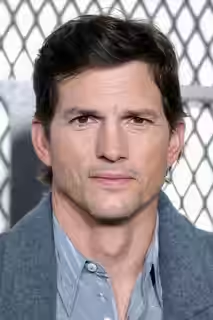
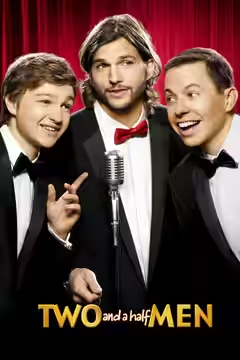
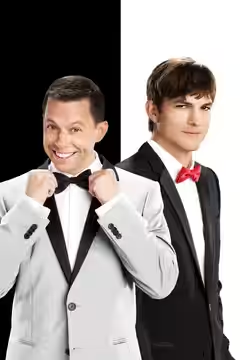
Ashton Kutcher gives Walden Schmidt a lighter comic manner, without solving the larger problem of jokes that announce themselves too early. An odd-couple comedy can get years of pleasure from familiar personalities, provided the situations keep testing them. Here, familiarity too often becomes permission to stop looking for anything fresh, and the capable playing only makes that shortage more frustrating. There is enough skill to explain the appeal, particularly for anyone who likes a broad insult delivered cleanly. One episode is a more sensible commitment than a whole evening.