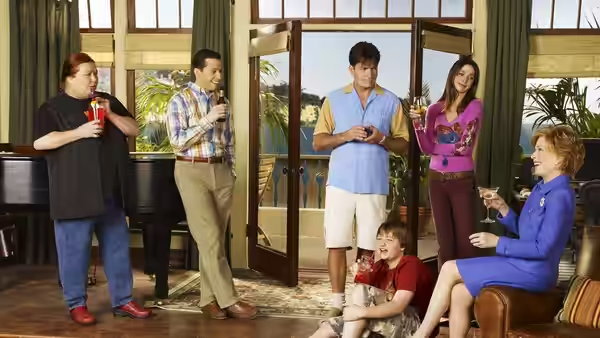
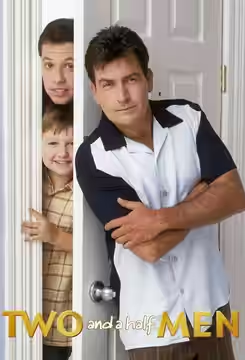
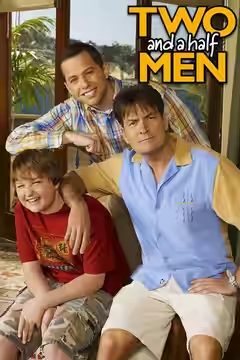
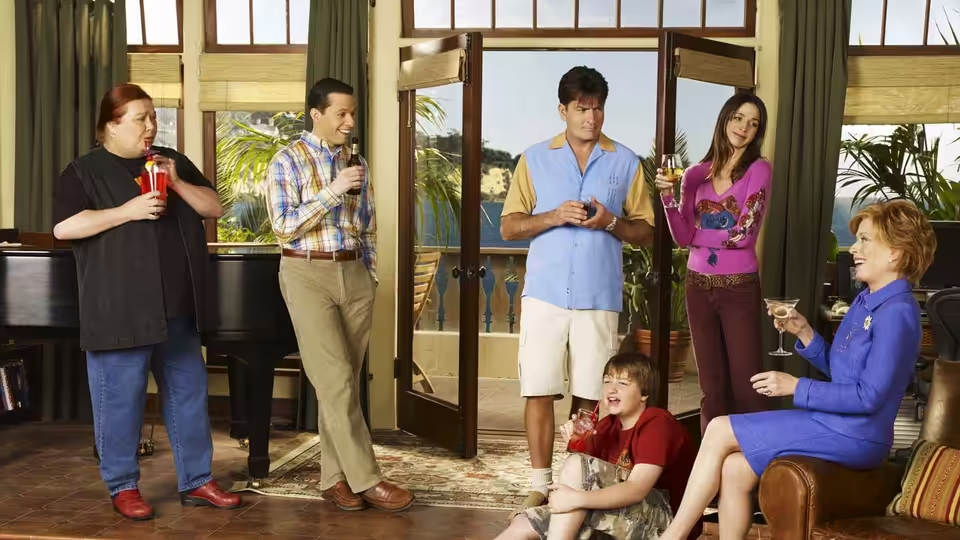
Berta, Alan, Charlie, Rose, Evelyn and Jake holding drinks in the living room
Series review

Two and a Half Men

2003 · Created by Lee Aronsohn, Chuck Lorre · Series

In a sentenceJon Cryer does the worrying while Charlie Sheen waits for the next joke about women

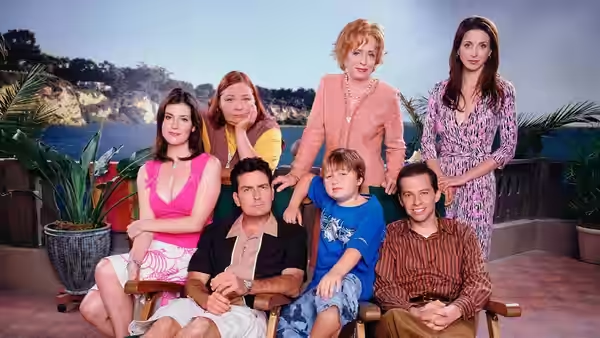
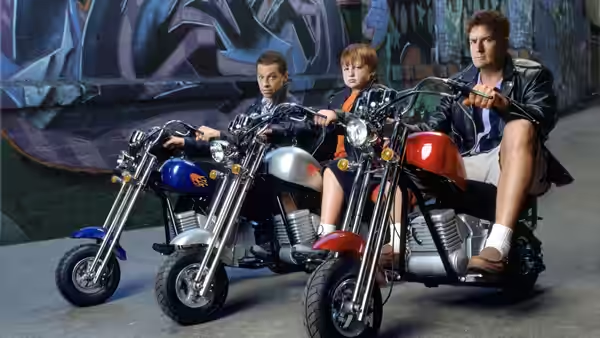
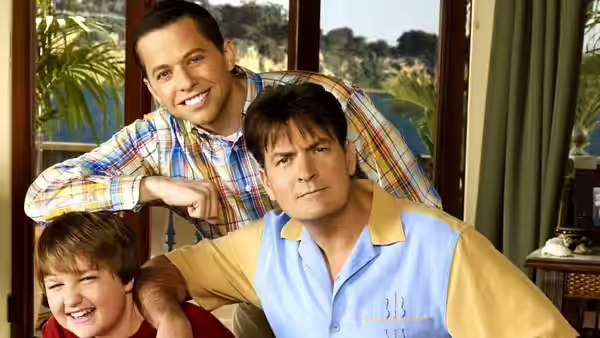
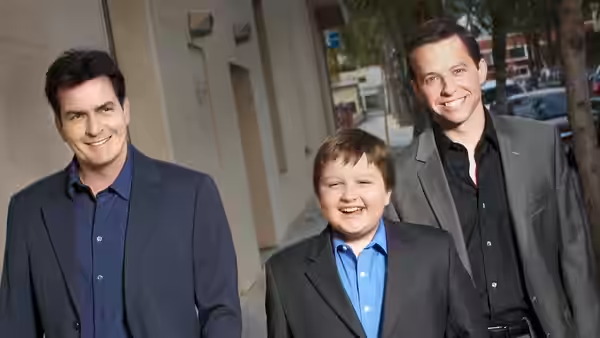
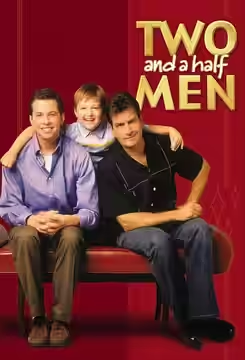
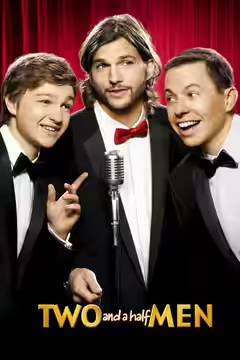
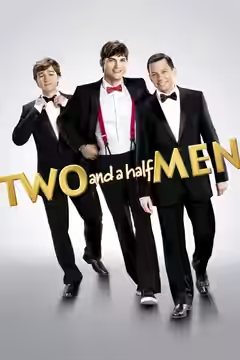
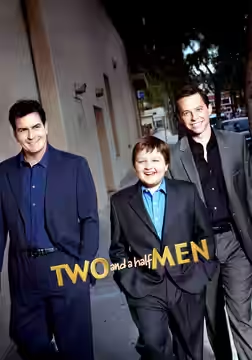
Charlie Harper (Charlie Sheen), Alan Harper (Jon Cryer) and Jake Harper (Angus T. Jones) form the central trio of a comedy about two adults and a child, with little grown-up behaviour to go round. The adults have contrasting temperaments, while the child has their examples of maturity to consider. Around them are Berta (Conchata Ferrell), Evelyn Harper (Holland Taylor), Judith Harper (Marin Hinkle) and Rose (Melanie Lynskey). The arrangement keeps raising the question of how much growing up separates the adults from the child.

Plays from YouTube when you press play; nothing loads from them until then.

Fi1m review

Jon Cryer and a sharp supporting cast earn some laughs, but predictable jokes and the sour treatment of women make sustained viewing a chore. This is capable comedy that too often settles for the easiest laugh.

Two and a Half Men has the timing for a good sitcom and too little curiosity about the people delivering its jokes. Chuck Lorre and Lee Aronsohn make adult immaturity the starting point, then return to it so reliably that surprise becomes scarce. The cast earns some laughs, but we cannot recommend a whole evening of it. It is occasionally funny, often sour and far too satisfied with material the performers could deliver in their sleep.

Jon Cryer does the most to keep things moving as Alan Harper, making unease funny through the timing of a hesitation or an overworked response. We laughed at his anxious delivery, even when the punchline was easy to predict. Charlie Sheen’s Charlie Harper supplies a calmer counterweight, though that ease can shade into sameness. Their contrasting rhythms are more dependable than the writing, and Angus T. Jones gives Jake Harper a useful, less practised comic presence. Too often, the performances have to supply all the variation.

Conchata Ferrell’s Berta and Holland Taylor’s Evelyn Harper sharpen the exchanges whenever the central trio threatens to become too comfortable. Melanie Lynskey is particularly valuable as Rose, bringing an uncertainty that briefly makes the next joke harder to guess. Yet the writing’s treatment of women remains a persistent irritation. Too many jokes invite us to accept male selfishness as an agreeable fact of life and women as the inconvenience attached to it. The women in this cast are funny enough that this feels wasteful as well as unpleasant.

The cinematography, credited to Mark Davison, Steven V. Silver and Tony Askins, keeps the performances easy to read; it seldom offers another reason to pay attention. That is a reasonable choice for this sort of comedy, though it makes the predictability harder to overlook. Editors Joe Bella and Peter Chakos leave the performers room to finish a joke, and the rhythm is assured enough to carry weak lines further than expected. The drawback is that an obvious punchline can feel even slower when everything around it waits so politely.

John Shaffner’s production design is similarly unobtrusive, keeping the actors at the centre of our attention. It serves the comedy, but contributes little to our sense of these people beyond what they say. The music credited to Dennis C. Brown and Grant Geissman supplies an insistence on good cheer that can feel at odds with the nastier jokes. We found that cheer wearing once the same attitudes began producing the same laughs.

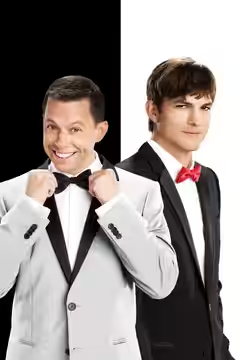
Ashton Kutcher gives Walden Schmidt a lighter comic manner, without solving the larger problem of jokes that announce themselves too early. An odd-couple comedy can get years of pleasure from familiar personalities, provided the situations keep testing them. Here, familiarity too often becomes permission to stop looking for anything fresh, and the capable playing only makes that shortage more frustrating. There is enough skill to explain the appeal, particularly for anyone who likes a broad insult delivered cleanly. One episode is a more sensible commitment than a whole evening.
Critical consensus AI synthesised

3 of 6
Positive
1
Mixed
1
Negative
1
Variety
18 September 2003 · Brian Lowry
78*

The critic finds the series smooth and self-assured in its odd-couple setup, predicting it will perform solidly in its slot. He singles out the strong cast chemistry and capable direction for praise, while noting some gags may grow stale.

Read the full review →
Vulture
11 November 2010 · Emily Nussbaum
25*

The critic finds the show depressing and unfunny rather than cleverly raunchy, with predictable gags and a misogynistic tone that feels like propaganda for its lead character. She singles out the stalker character Rose for providing some welcome energy amid the otherwise dank fantasy.

Read the full review →
Den of Geek
20 May 2008 · ★★★ · Mark Oakley
60

The season is a slow burner that improves with stronger storylines later on but starts weak, with complaints about Charlie Sheen's limited comedic range and the growing pains of young Jake's character. Jon Cryer and the stalker Rose are praised as the comedic highlights.

Read the full review →

Straight answers AI written, from our review

Is Two and a Half Men worth watching?
Two and a Half Men earns occasional laughs from its capable cast, but we score it 55 out of 100 and cannot recommend a whole evening of it. Jon Cryer’s anxious timing suits viewers who enjoy broad insults and contrasting personalities; predictable punchlines and the sour treatment of women make one episode a more sensible commitment.
Where can I watch Two and a Half Men in Thailand?
Two and a Half Men is streaming on Amazon Prime Video in Thailand. Availability is checked daily; the links above go straight to each service.
How violent or frightening is Two and a Half Men, and is it suitable for children?
Two and a Half Men carries a US TV-14 rating, which signals material that may be unsuitable for children under 14; no UK certificate is supplied. Our concern is its adult attitudes, particularly jokes about women and male selfishness, rather than any specific violence or frightening material identified in our review.
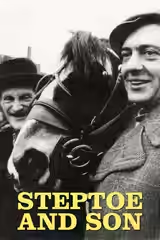
How does Two and a Half Men compare to Steptoe and Son?
Two and a Half Men is the weaker choice beside Steptoe and Son, which we recommend for sharper jokes about domestic resentment and a stronger sense of why the quarrels hurt. Both benefit from capable performers, but the former leans too heavily on predictable insults; the latter offers more feeling, though its repeated arguments can also become wearing.
What should I watch after Two and a Half Men?
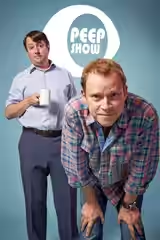
After Two and a Half Men, try Steptoe and Son (1962, Fi1m 83): Domestic resentment gets sharper jokes and a stronger sense of what hurts. Then Peep Show (2003, Fi1m 88): Two selfish men share a home and make almost every situation worse.

Cast

If you liked this, try…

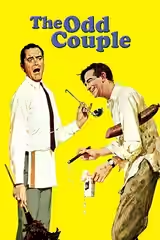
  1. The Odd Couple (1968) · not on Fi1m yetTwo incompatible men sharing space, with more affection beneath the complaints.

  2. Steptoe and Son (1962, Fi1m 83)Domestic resentment gets sharper jokes and a stronger sense of what hurts.

  3. The Dinner Game (1998) · not on Fi1m yetSmug men discover that arranging someone else’s humiliation can require considerable damage control.

  4. Peep Show (2003, Fi1m 88)Two selfish men share a home and make almost every situation worse.

  5. Mom (2013) · not on Fi1m yetAnother sharp ensemble, with more room for consequences and earned affection.