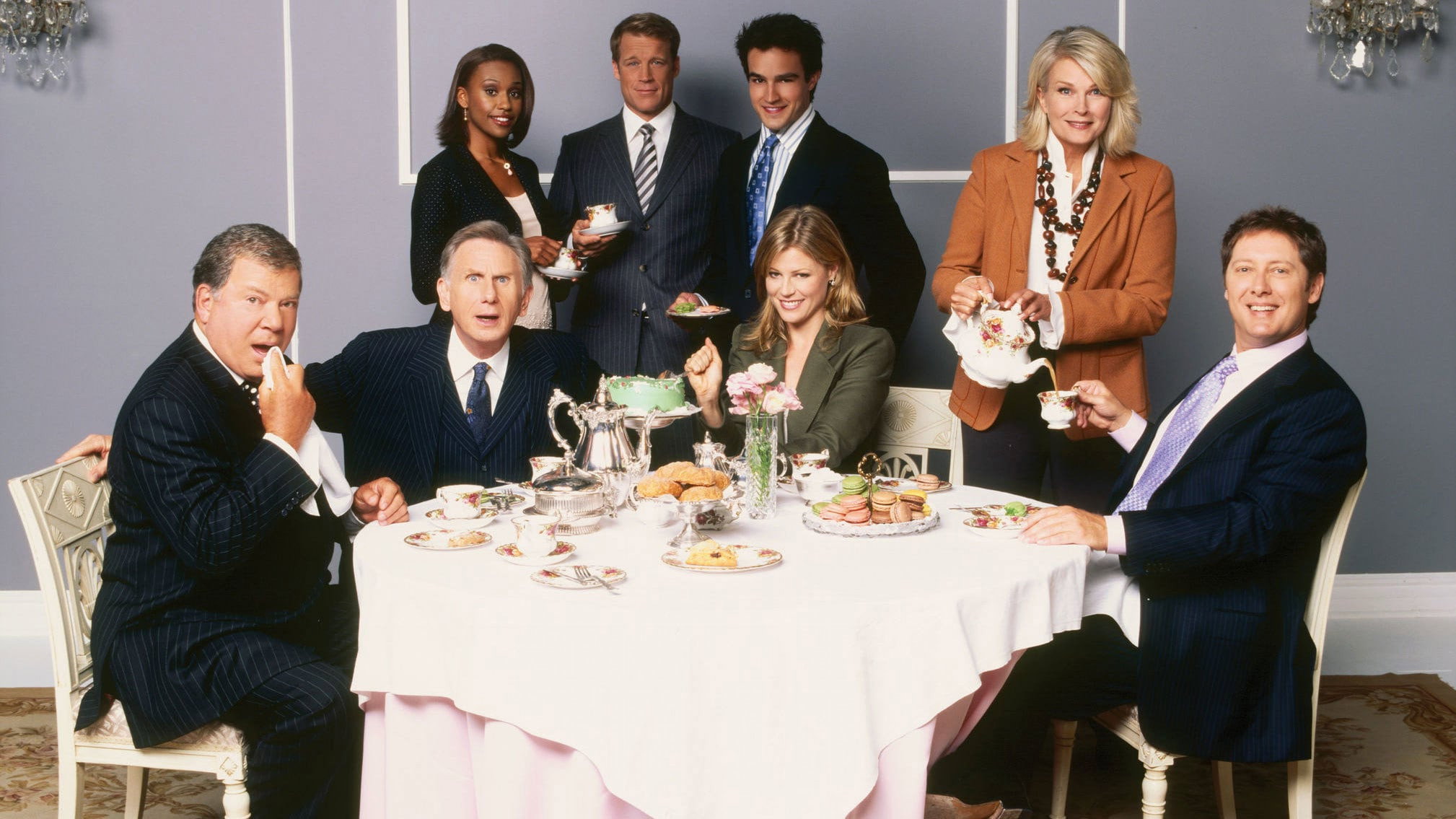
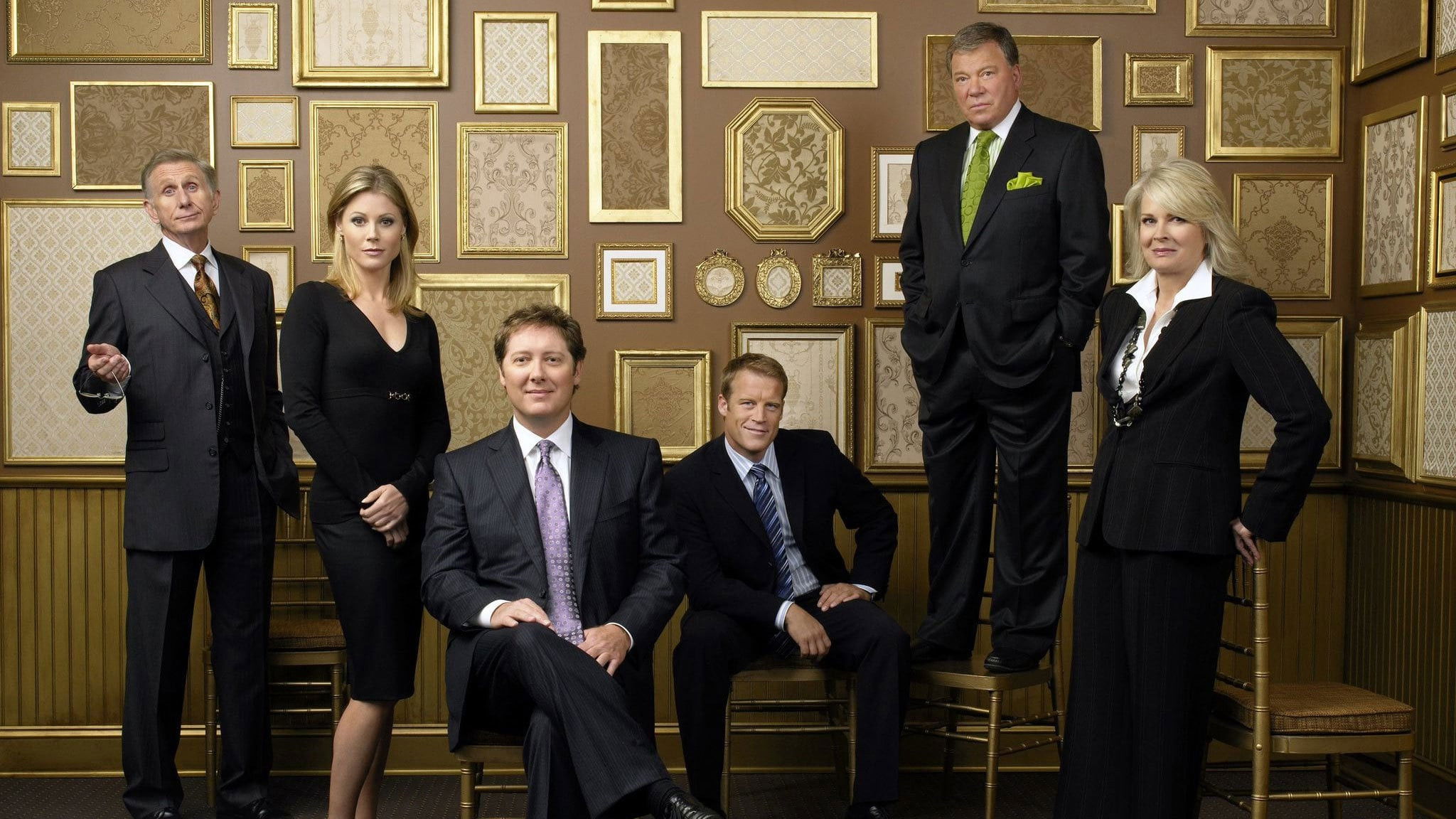
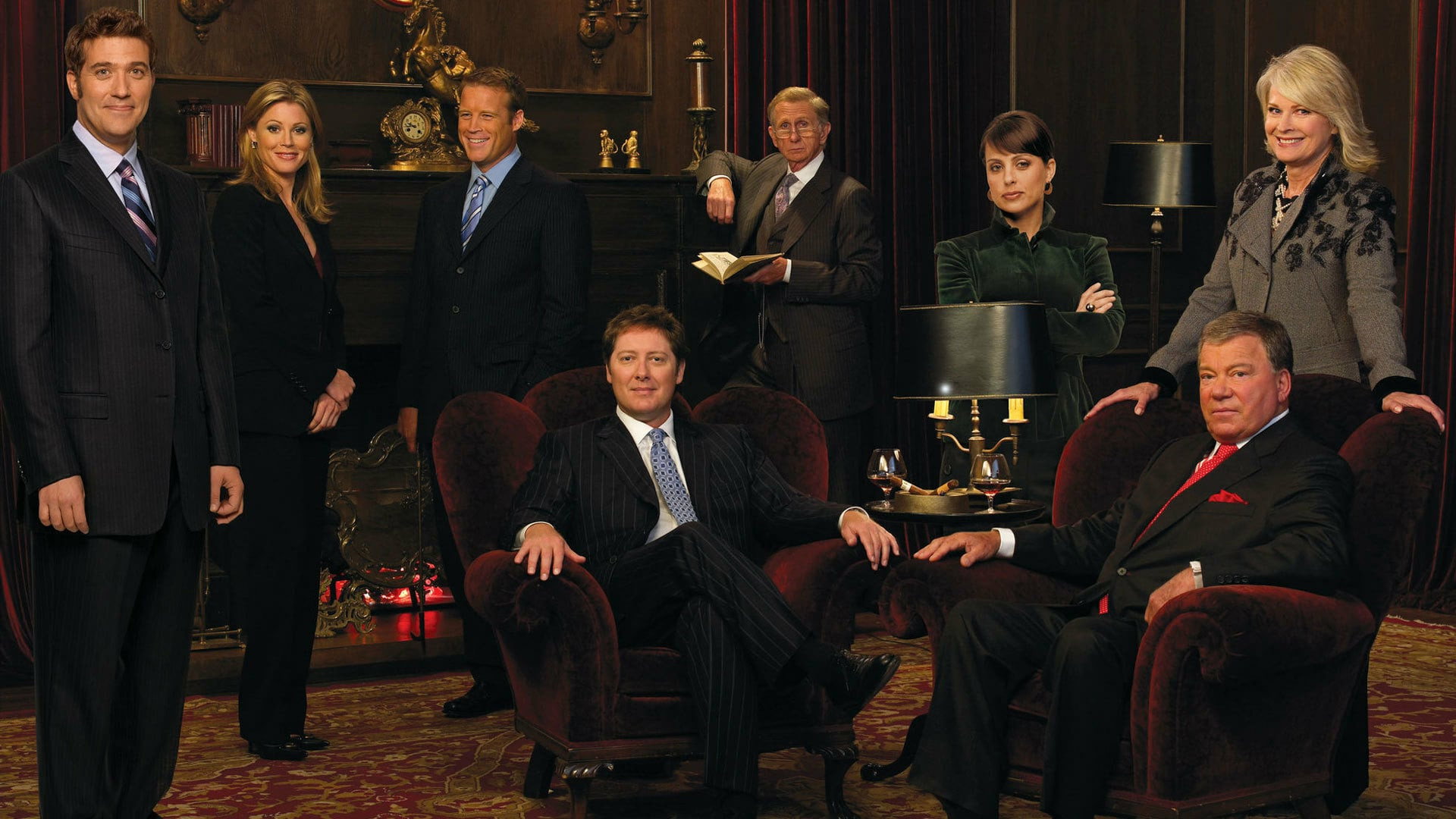
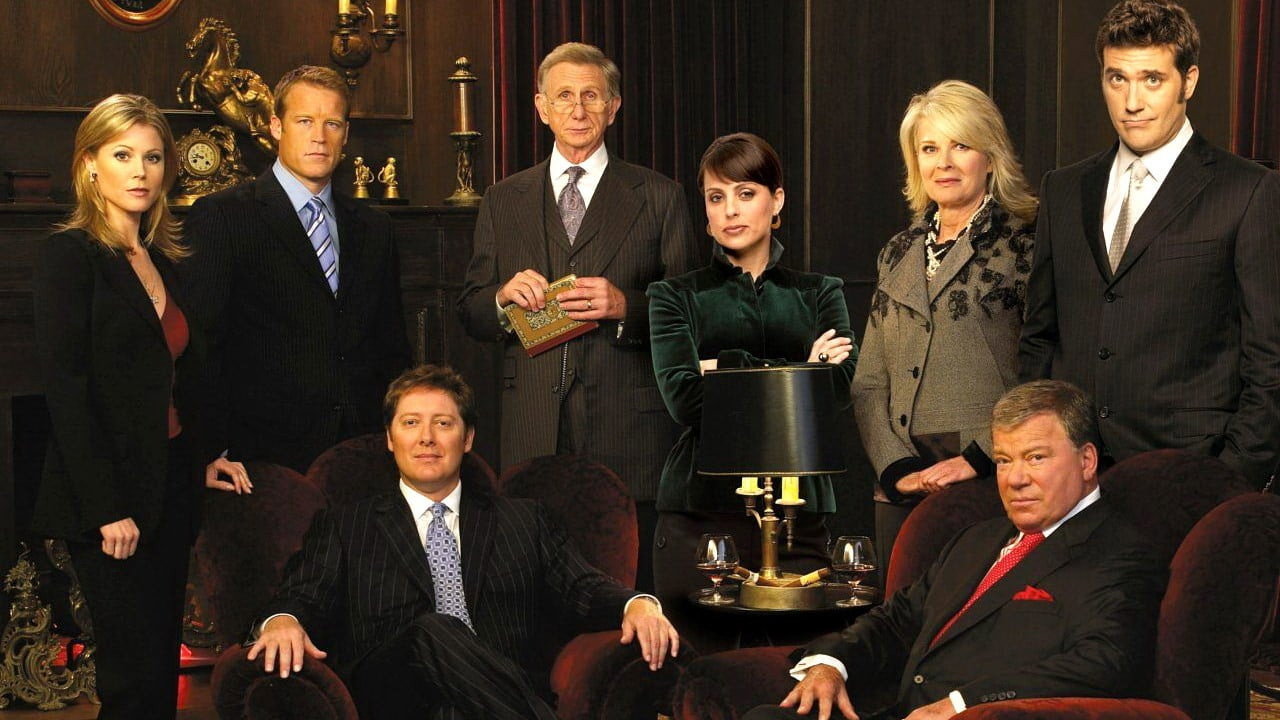
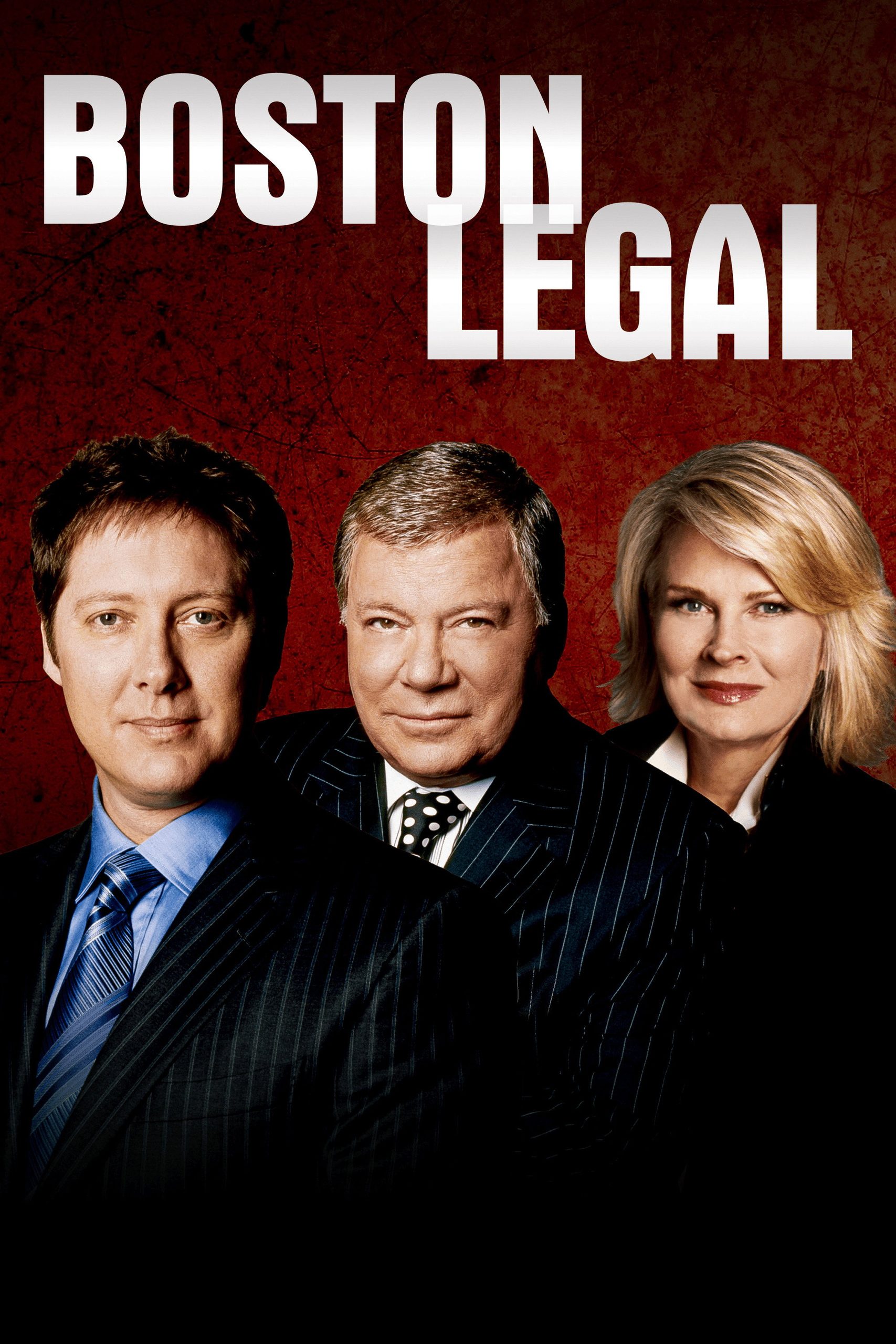
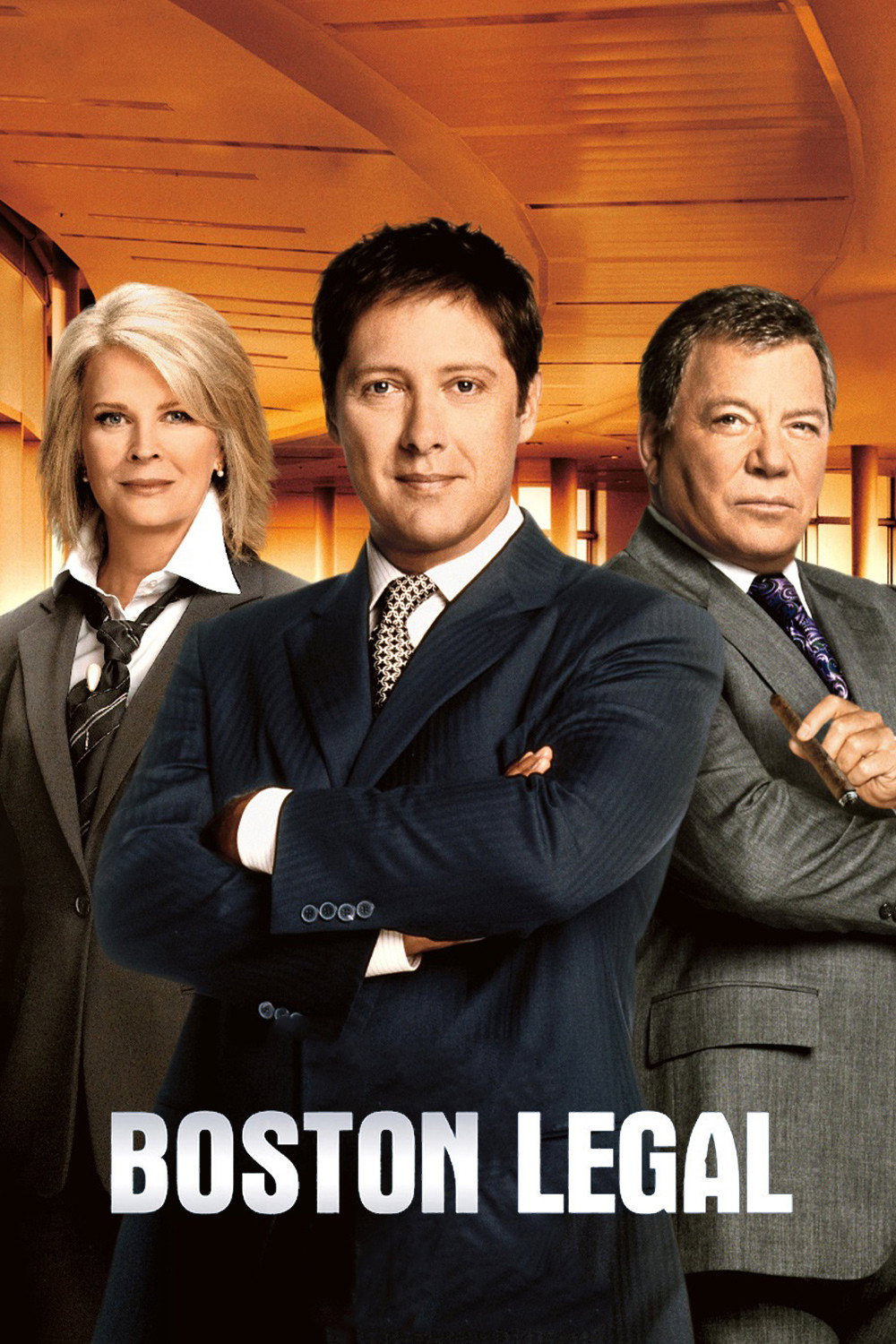
David E. Kelley’s legal series is soapbox and farce inside the same 42 minutes, and its cases are often the least of it. What holds it together is James Spader and William Shatner on a balcony, and that turns out to be enough.
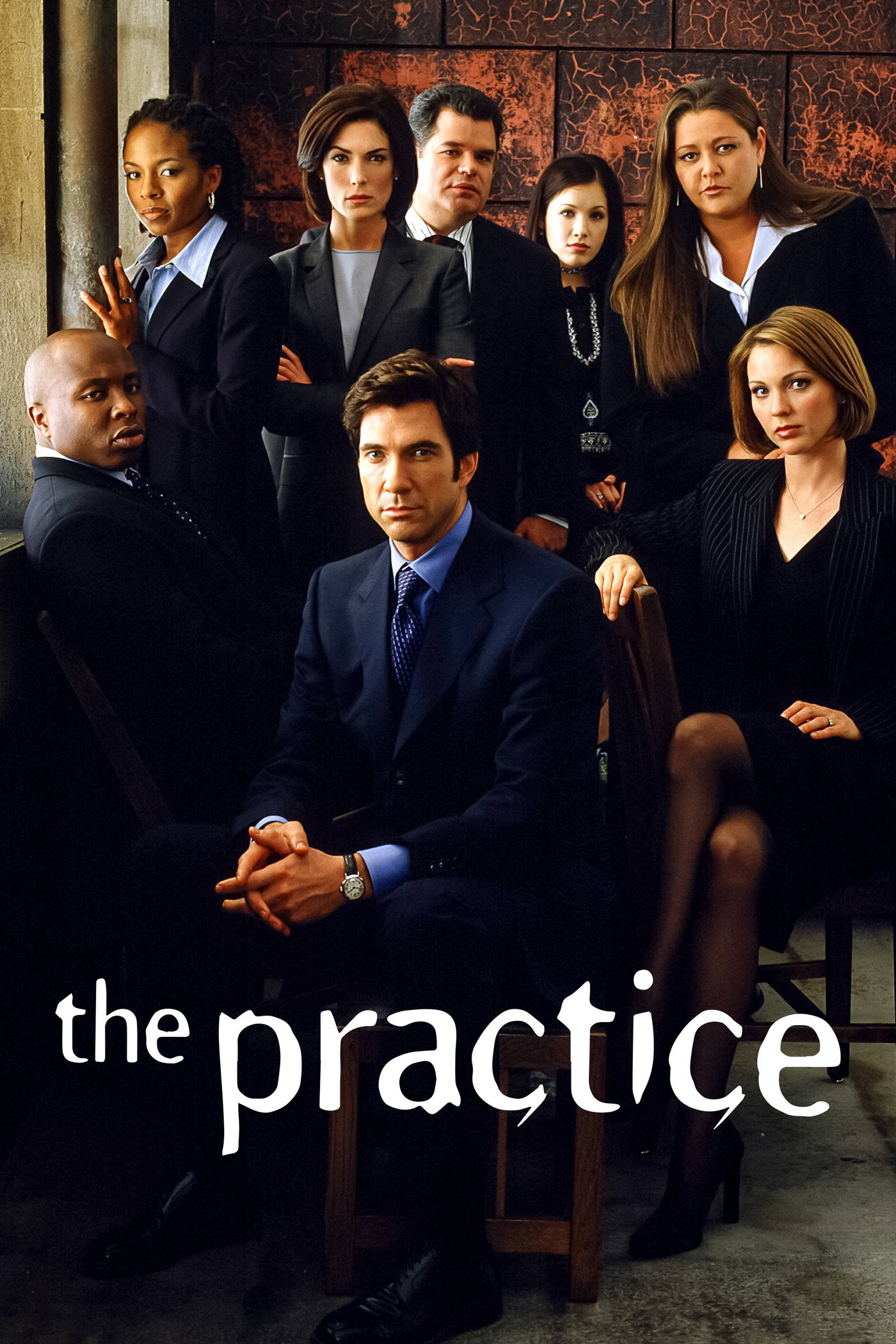
Boston Legal began as a spin-off from The Practice and stopped behaving like one almost at once. David E. Kelley moves Alan Shore across town to Crane, Poole & Schmidt, a Boston firm with a great deal of glass and a great deal of money, and over five seasons and 101 episodes turns a lawyer programme into something nearer a weekly revue. Each episode carries a case or two, and each case is an excuse to get a subject Kelley cares about in front of a jury: the death penalty, the government, whatever was in that week’s papers. It is good, it is often funny, and it is more affecting than a series this silly has any right to be. Its cases are the weakest thing in it.
James Spader plays Alan as a man who knows exactly what he is and has decided to enjoy it. He blackmails, he seduces, he wins, and when he stands to close he speaks slowly, in long sentences, and the series stops to listen. William Shatner plays Denny Crane, founding partner, gun enthusiast and self-declared legend, who says his own name as a greeting, a boast and, increasingly, a way of checking he is still there. His memory is going and he knows it. The two of them end most episodes on the balcony outside Denny’s office, in leather chairs, with cigars and scotch and the city behind them, talking about nothing in particular.
Those balcony scenes are the series. We expected to find them cute and we found them something else. We did not expect William Shatner to move us, and he did, more than once, and it was the stillness that did it: a man who has spent a career being large sitting quite still, holding a cigar, saying he is afraid, and Spader answering as a friend rather than a straight man. Nothing in the courtroom comes close.
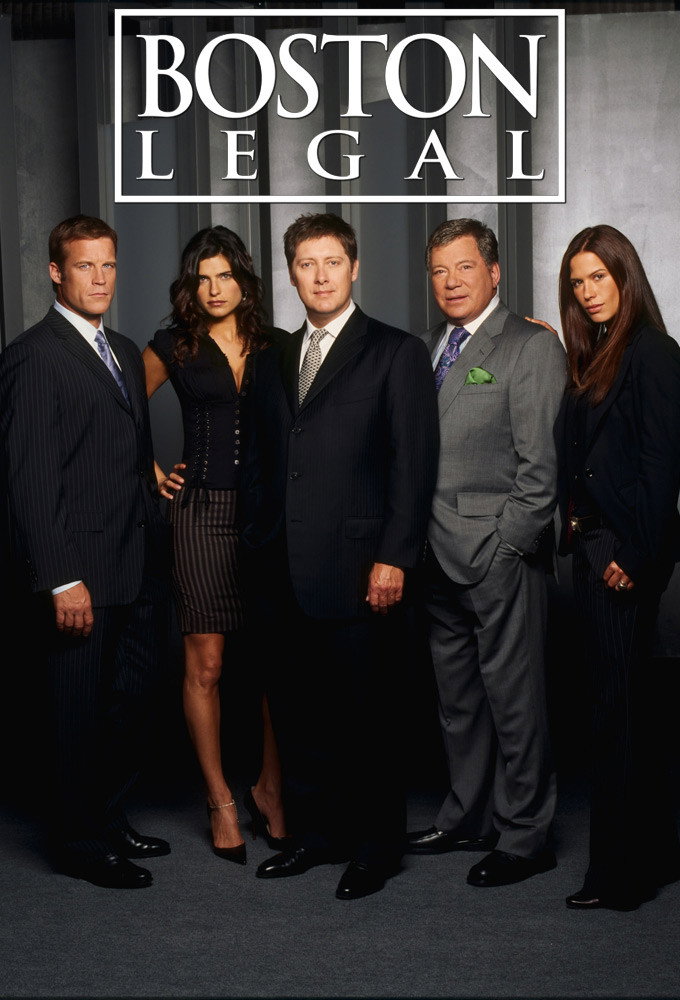
Candice Bergen’s Shirley Schmidt arrives as the only adult either of them fears, and Bergen plays her dry, amused and immovable. René Auberjonois’s Paul Lewiston runs the place in a state of permanent alarm. Christian Clemenson’s Jerry Espenson, a lawyer whose tics the office cannot make room for, is written with real tenderness and played without a shred of begging. John Larroquette turns up late as Carl Sack and is the best of the later additions. Below that tier the cast churns: Rhona Mitra, Monica Potter, Mark Valley, Julie Bowen, Saffron Burrows and Tara Summers arrive and leave with the minimum of explanation.
Six credited cinematographers, Philip Holahan and John C. Flinn III among them, tell you what kind of programme this is: it looks the same every week and is meant to. The offices are bright and glass-walled, the courtrooms are panelled wood, and the balcony is lit warm against a blue night. The editors, Tiffany Hauck, Craig Bench, Michael Hathaway and Philip Carr Neel, cut between two or three cases and the office inside 42 minutes and keep it brisk. Directors including Bill D’Elia and Mike Listo know the house style: hold still for the speeches, move for the jokes. The jokes include the characters noticing they are in a television series and remarking on the size of the cast, and this is funnier than it should be.
The speeches are the trouble. Kelley writes Alan’s closing arguments as newspaper columns, opposing counsel is handed the weaker brief, and the jury sits where the viewer is meant to. We admired the nerve and grew tired of being told what to think, and by the later stretches of the second season, which runs to 27 episodes and is too long for anyone, we were skipping ahead to the balcony. The earliest reviews found the series derivative of Kelley’s earlier shows and were not wrong about the opening run; the quirk of Ally McBeal is here, with less charm. The women are written first as things for Alan or Denny to look at and only then as lawyers, and the order shows.
Set against Kelley’s own work it is warmer than The Practice and steadier than Ally McBeal. Some critics have called it the best courtroom series ever made; we would not go that far, because Rumpole of the Bailey exists. Watch it out of order if you like. Nothing much carries over except two men, two chairs and a box of cigars, and that is what you came for.