Ben Bocquelet’s series drops a blue cat and his goldfish brother into a suburb where every character is drawn in a different style, and gets six seasons of fast, unusually clever comedy out of it. The first season is the roughest; stay past it.
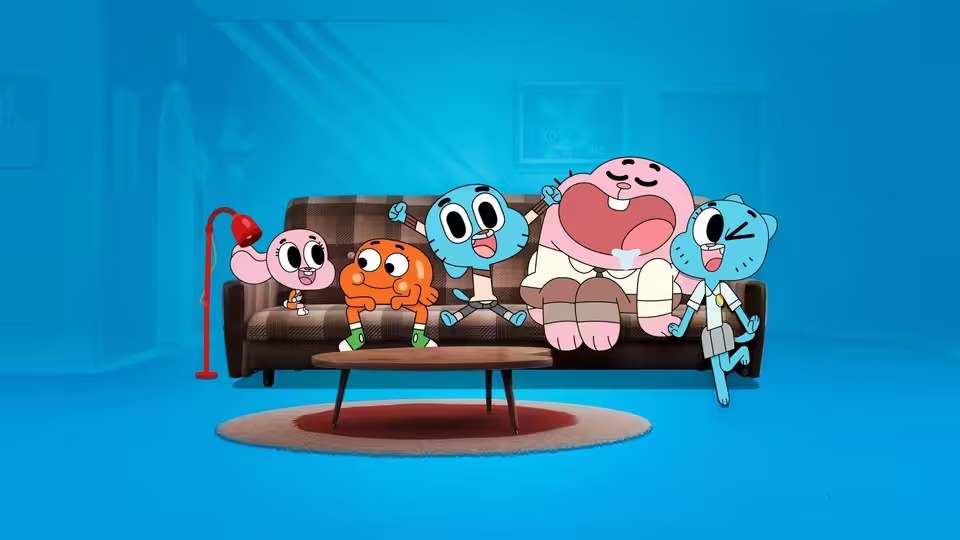
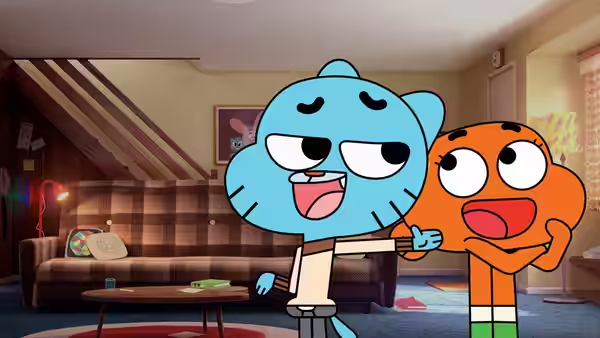
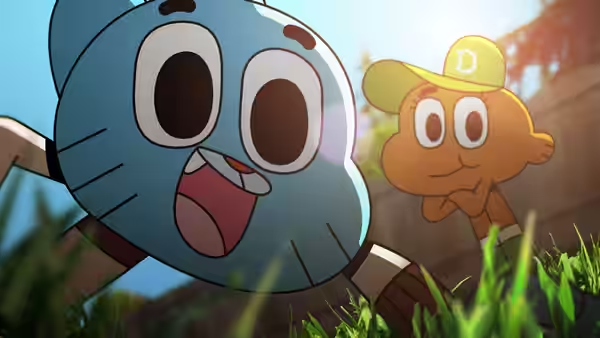
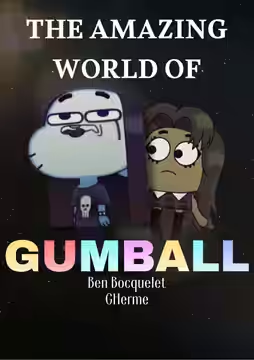
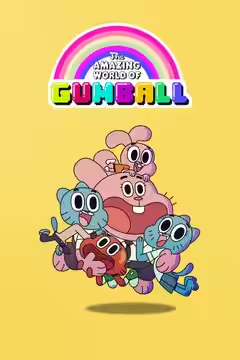
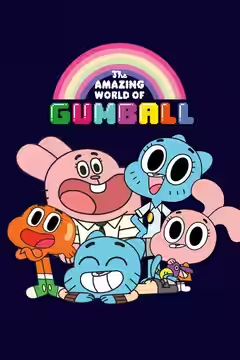
Elmore looks like any American suburb, and it is mostly photographs: real houses, real pavements, real sky. The people do not match. Gumball Watterson is a blue cartoon cat. His brother Darwin is a goldfish who grew legs and was adopted into the family. At school there is a paper bear called Teri, a robot called Bobert and a flower called Leslie, and next door lives a puppet, Mr. Robinson. Ben Bocquelet’s idea is that nobody in town finds any of this odd. The Amazing World of Gumball ran to 240 episodes over six seasons, and at its best it is as clever as any comedy made for children. We recommend it, with one caveat: the first season is the loudest and the least sure of itself, and some of the audience will have given up before it improves.
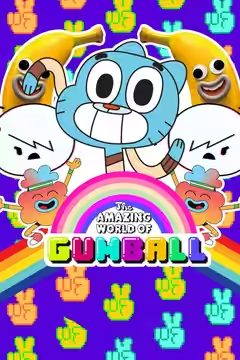
The look is the joke, and the series keeps finding new ways to tell it. Mic Graves and Antoine Perez direct, and each episode puts hand-drawn characters, three-dimensional models, puppets and cut-outs on the same photographed streets and treats the clash as ordinary. Most animated series pick a world and stay inside it. This one picks six, and after an episode or two the eye stops complaining.
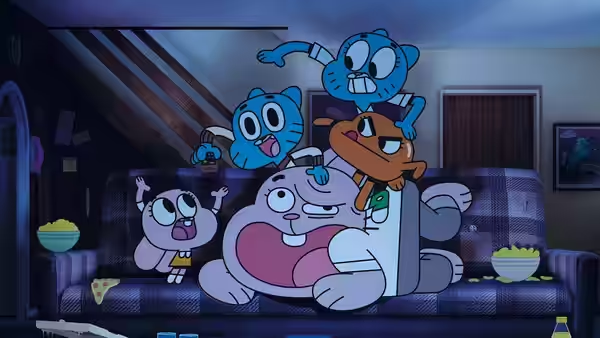
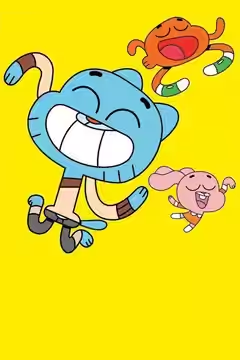
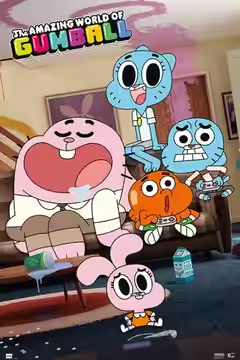
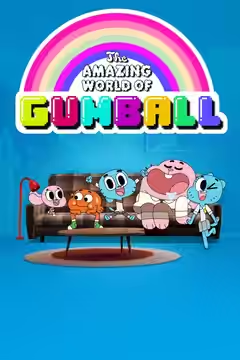
The family is the reason to stay. Teresa Gallagher voices Nicole, the mother, a cat who holds the household together by force of will, and whose temper arrives like weather. Dan Russell’s Richard, the father, is a pink rabbit built like a settee who has never held a job and treats this as a settled position. Kyla Kowalewski’s Anais, the youngest, is the only person in the house who reads. Gumball has been voiced by three boys, Logan Grove, Jacob Hopkins and Nicolas Cantu, and Darwin by four, Kwesi Boakye, Terrell Ransom Jr., Donielle T. Hansley Jr. and Christian J. Simon, because children have the bad manners to grow up. The characters survive the recasting without visible damage.
Bocquelet’s writing room runs to dozens of names, among them Jon Brittain, Cariad Lloyd, Sophie Duker and Kieran Hodgson, and the scripts move at the pace of a room with too many jokes and not enough minutes. The programme parodies advertising, soap opera, horror and video games, and it has a habit of turning on itself that most shows would find too risky for a Tuesday afternoon. The episode “The Money” does it best. The Wattersons run out of cash and the picture starts to come apart around them: the colour thins, the drawing gets rougher, until the family is arguing in something close to pencil. We went quiet. We had been laughing for ten minutes and then found ourselves moved by a cartoon cat noticing he was made of lines.
What does not work is mostly early. Season 1 leans on Gumball being an idiot and Darwin agreeing with him, and the plots repeat: a scheme, a disaster, a lesson half learned. The school is full of characters who are shapes with one trait each, and it takes the writers a while to give them a second. By the last two seasons the jokes are more often about the show than about the town, which is a pleasure for the faithful and a wall for anyone arriving late. A run of 240 short episodes is not built to be watched in bulk. Three at a sitting is about right.
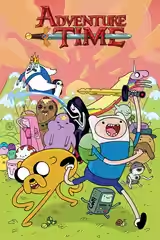
Against the animated comedies it grew up alongside, Adventure Time and Regular Show, it is the fastest and the least sentimental, and it has aged better than we expected, because the design keeps the eye busy whenever the jokes flag. It carries a PG and earns it only in the sense that a good many of the jokes are aimed over the children’s heads. Most critics liked it a little less than we do, chiefly on the thinness of the supporting cast, and they have a point about the first season.
Start with the second season, go back to the first only if you become fond of the family, and watch it with a child if there is one to hand. Do not pretend that is why.