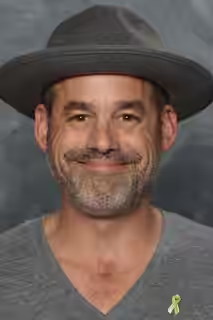
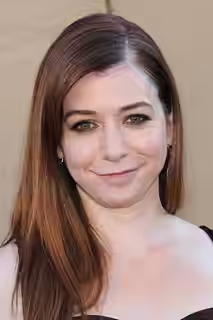
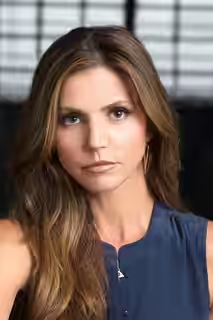
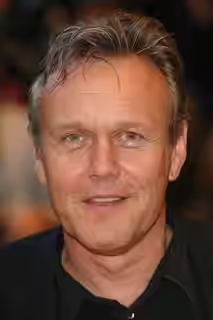
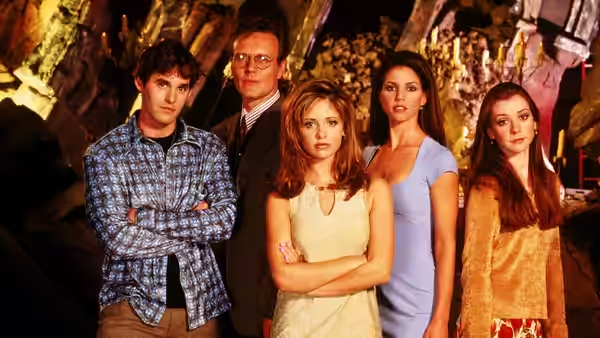
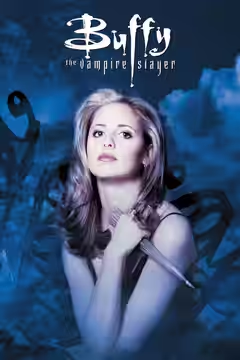
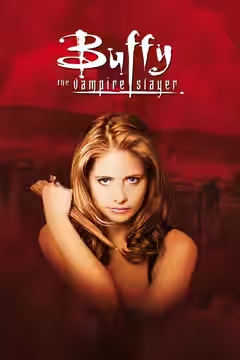
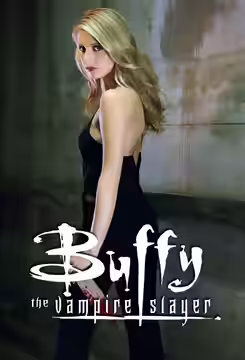
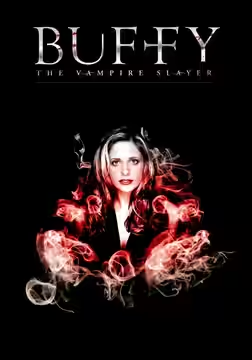
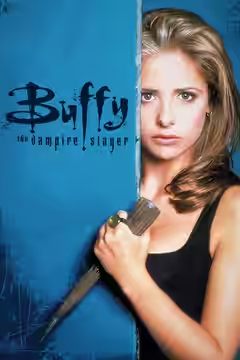
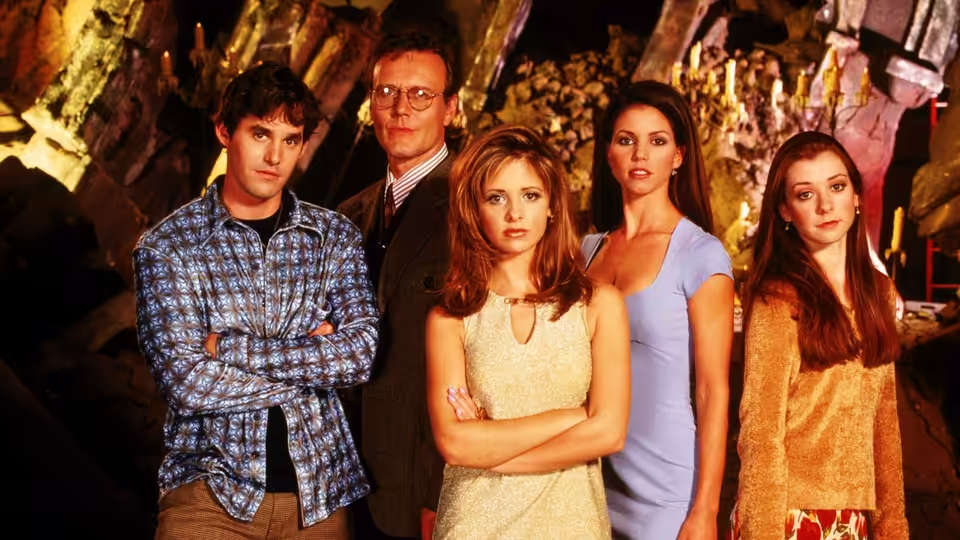
Xander Harris (Nicholas Brendon), Giles (Anthony Head), Buffy Summers (Sarah Michelle Gellar), Cordelia Chase (Charisma Carpenter) and Dawn Summers (Michelle Trachtenberg) in a cave
Series review

Buffy the Vampire Slayer

1997 · Created by Joss Whedon · Series · NMHH 16

In a sentenceThe vampires could at least have waited until after school

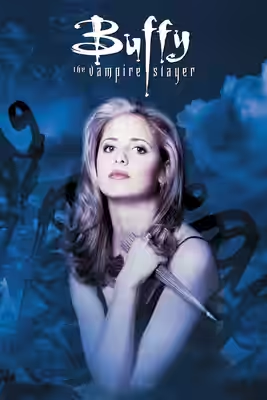
Buffy Summers (Sarah Michelle Gellar) wants a normal teenage life, but vampire danger and apocalyptic prophecies leave little room for one. High-school worries compete with the demands placed on a young heroine who would rather have fewer responsibilities. Around her are Willow Rosenberg (Alyson Hannigan), Xander Harris (Nicholas Brendon), Cordelia Chase (Charisma Carpenter) and Rupert Giles (Anthony Stewart Head). The series mixes comedy, drama and supernatural threats as Buffy tries to manage adolescent concerns that do not disappear simply because something worse is happening.

Fi1m review

Sarah Michelle Gellar makes Buffy the Vampire Slayer funny and affecting without smoothing away its heroine’s irritation. Uneven supernatural plotting needs some patience; the performances give us good reason to stay.

Buffy the Vampire Slayer takes a familiar adolescent complaint seriously: there is already quite enough to cope with. Vampires and apocalyptic prophecies make the complaint harder to dismiss, though the ordinary wish to fit in remains easy to understand. This is a funny, affecting series whose supernatural plotting sometimes tests our patience. It earns that patience through Sarah Michelle Gellar, who makes Buffy Summers seem capable of dealing with danger and thoroughly entitled to resent the interruption.

Gellar is particularly good at showing how tired Buffy is of being brave. Her comedy has an edge of impatience, and she leaves enough awkwardness in Buffy for the heroine to seem like someone still learning how to speak for herself. We felt protective of her when Gellar let Buffy’s wish for a normal life sound peevish rather than noble. That small note of irritation makes the responsibility feel unfair without asking us to pity her every time trouble arrives.

The supporting performances keep the programme from depending entirely on that appeal. Alyson Hannigan gives Willow Rosenberg a hesitant delivery that lets us notice the worry underneath a joke; Nicholas Brendon’s Xander Harris can be funny and exhausting in much the same breath. Charisma Carpenter brings a useful sharpness to Cordelia Chase, while Anthony Stewart Head makes Rupert Giles’s reserve amusing without making him seem empty. The contrast between these actors gives the conversations room for embarrassment, which is often more revealing than another polished line.

The writing is less consistent. Joss Whedon, Marti Noxon and Jane Espenson are among the writers, and the dialogue’s eagerness to be clever sometimes gives everyone a similar supply of ready answers. A joke can arrive just when a scene needs to sit with an unpleasant feeling, and the plotting occasionally stretches a threat beyond its interest. The pilot is a particular test of patience in its latter stretch, where the initial novelty has to sustain more than it comfortably can.

Michael Gershman and Kenneth Zunder are among the cinematographers, and we prefer the quieter attention to faces to the more insistent monster business. Those reaction shots give the danger some weight because we can see someone having to take it in. Editors including Regis Kimble and Skip Macdonald give awkward responses enough room after quick exchanges for the comedy to work. Occasionally the pace slackens without providing that extra interest, particularly when the supernatural plot has to carry a scene unaided.

Seven series are a substantial commitment, and the occasional slack episode is part of it. Within supernatural television, the appeal here is unusually dependent on enjoying the people when they are talking rather than fighting, so impatience with their humour is a useful warning sign. We recommend it for Gellar and for the ensemble’s ability to make embarrassment, irritation and affection interesting enough to compete with the monsters. Give it a little patience at the start, and watch for the awkward reactions as closely as the vampires.

Critical consensus AI synthesised

81
Positive
7
Mixed
1
Negative
0

Most critics like this series a good deal, and the ones writing years after its 1997 premiere like it more than the ones who saw the pilot go out. The praise clusters on the writing: dialogue that is quick and funny, plots that run long and pay off, and the habit of using monsters to stand in for grief, bullying, addiction and the ordinary misery of being sixteen. Sarah Michelle Gellar’s performance is singled out more than once, and several critics credit the show with rethinking who a television hero could be.

The reservations come almost entirely from 1997. Variety finds the pilot sagging in its second half and pitched at younger teenagers; The Hollywood Reporter is warmer but treats it as Clueless with fangs. The AV Club, revisiting the first three episodes, notes clichéd action and uneven early dialogue while praising the mother-daughter scenes. Otherwise the spread is narrow, and no one is negative.

Radio Times
6 April 2020
90*

The critic describes Buffy the Vampire Slayer as the best monster-of-the-week TV series ever made and a peerless pop-culture watermark. They single out its sharp wit, brutality, cleverness, and ahead-of-its-time storytelling for praise.

Read the full review →
The Guardian
10 March 2017
90*

The critic hails the series as a brilliant, funny and tragic synthesis of genres that was doing extraordinary things on television before The Sopranos. They single out its feminist sensibility, dense plotting, witty dialogue and emotional depth across seven seasons.

Read the full review →
Vulture
25 October 2021
90*

The piece is a personal retrospective celebrating the series' enduring impact since its 1997 premiere. The critic singles out Sarah Michelle Gellar's layered performance as Buffy and the show's fresh subversion of expectations around women, heroism, and coming-of-age for praise.

Read the full review →
The Hollywood Reporter
10 March 1997 · Michael Farkash
80*

The series is Clueless meets Dracula, with emphasis on the hip angst of high schoolers coupled with vampire danger and apocalyptic prophecies. Gellar proves sympathetic as the super heroine who just wants to lead a normal life.

Read the full review →
The AV Club
5 June 2008 · B+ / B+ / B · Noel Murray
70*

The critic finds the first three episodes a solid, fleet introduction to the premise, characters, and high-school-as-dangerous themes despite some clichéd action and uneven dialogue. He singles out the mother-daughter dynamics and witty character moments for praise while noting the show's early roughness.

Read the full review →
Variety
16 March 1997 · Todd Everett
50*

The series plays like an uneasy cross between The X-Files and Clueless, with a slightly harder edge than the original film but less gore. The story sags a bit in the second half of the pilot, though it has potential for early-teen viewing.

Read the full review →

Straight answers AI written, from our review

Is Buffy the Vampire Slayer worth watching?
Buffy the Vampire Slayer is worth watching for anyone who enjoys its people talking as much as fighting, and we scored it 80. Sarah Michelle Gellar makes Buffy funny and tired of being brave, and the ensemble makes embarrassment and irritation as interesting as the monsters. The supernatural plotting is uneven, so give the early episodes some patience.
How long is Buffy the Vampire Slayer, and what is it rated?
Buffy the Vampire Slayer is rated 16 by the NMHH in Hungary. It is a comedy and drama series.
Where can I watch Buffy the Vampire Slayer in Hungary?
Buffy the Vampire Slayer is streaming on Disney+ in Hungary. Availability is checked daily; the links above go straight to each service.
How violent or frightening is Buffy the Vampire Slayer, and is it suitable for children?
Buffy the Vampire Slayer carries a UK 15 certificate, so it is not for young children. Vampires and apocalyptic threats run through every episode, though the review finds the quieter reaction shots more effective than the monster business, which is closer to comedy than horror. Teenagers of fifteen and over who can take supernatural violence should be fine.
How does Buffy the Vampire Slayer compare to Thelma & Louise?
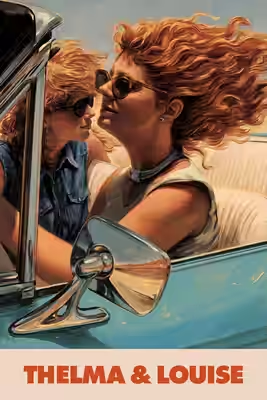
Buffy the Vampire Slayer and Thelma & Louise both take the confusion of growing up seriously, but the film does it with less wisecracking and more unease. Buffy is a long, funny, uneven series carried by Sarah Michelle Gellar and her ensemble; Ridley Scott's road film is tighter and angrier, with Susan Sarandon and Geena Davis making the friendship entirely convincing. Choose the series for company, the film for a single evening's shock.

Cast

Awards

Hugo Awards, 2003

Won
Best Dramatic Presentation, Short Form

Hugo Awards, 2002

Nominated
Best Dramatic Presentation

If you liked this, try…

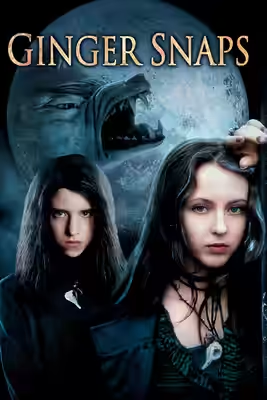
  1. Ginger Snaps (2000) · not reviewed yetAdolescent anger and female friendship make the creature business uncomfortably personal.

  2. Being Human (2008) · not reviewed yetSupernatural housemates struggle with ordinary decency, and the jokes never quite remove the pain.

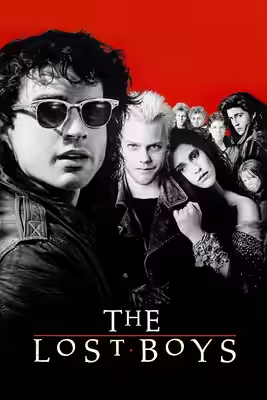
  3. The Lost Boys (1987) · not reviewed yetTeenage rebellion, vampire trouble and enough humour to keep the gloom tolerable.

  4. Thelma (2017, Fi1m 85)For the frightening confusion of growing up, with less wisecracking and more unease.

  5. Misfits (2009) · not reviewed yetYoung people acquire powers without acquiring judgement; the resulting mess is often funny.

Free account

Know what to watch tonight

Two lists that know where things are streaming, collections you can share, your own score beside ours, and Discover that remembers what you have seen.

  • Want to see, sorted by what is streaming now
  • Seen, with your score out of ten
  • No adverts, ever