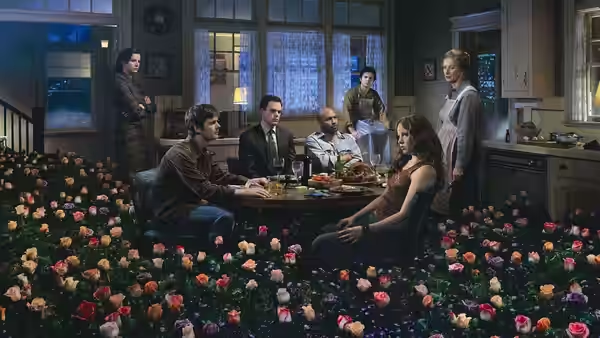
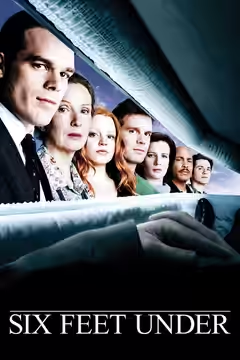
The Fishers are exhausting company, but Six Feet Under earns the time spent with them through sharp ensemble acting and comedy that does not trivialise grief. Its taste for brooding occasionally becomes an indulgence.
Six Feet Under is a family drama about people whose work makes death impossible to avoid, which does little to help them cope with one another. We recommend it for the acting and the uncomfortable humour, with a warning that its appetite for examining unhappiness can become wearing. Alan Ball is among its writers and directors, and the programme’s mixture of black comedy and psychological drama is unusually assured. The Fishers’ dysfunction supplies much of the comedy.
Ball and fellow writers Kate Robin, Craig Wright and Nancy Oliver are interested in people who can recognise a problem without becoming any better at handling it. The jokes work because knowing what is wrong with a family does not make its members behave any better. The funeral business keeps even the smaller domestic complaints uncomfortably close to grief. Its jokes can be harsh, but they rarely suggest that the suffering underneath is imaginary.
Peter Krause gives Nate Fisher enough ease to make his less attractive qualities tolerable, while Michael C. Hall’s David often seems to be doing a difficult job simply by getting through a conversation. Hall is particularly good at making restraint look tiring. Frances Conroy’s Ruth moved us more than we expected: the strain in her composure makes an ordinary exchange feel like something she has had to prepare for. Lauren Ambrose gives Claire an impatience that usefully disturbs the family’s heavier moods.
The cinematography, credited to Alan Caso, Frederick Iannone and others, is at its most persuasive when the funeral parlour feels like a workplace rather than a ready-made source of dread. Production designers Suzuki Ingerslev, Daniel Ross and Marcia Hinds help keep the setting credible as somewhere a family could spend its days. That ordinariness matters. A more insistently sinister treatment would make the domestic comedy harder to accept.
Editors Christopher Nelson, Sue Blainey and Michael Ruscio, among others, manage the changes from black comedy to psychological drama without making each change feel like a new programme. There is room for an awkward response to register before the next thought arrives. Richard Marvin’s music supports the brooding mood, though the actors often make that mood clear enough without help. The ensemble is so good at discomfort that a little less insistence elsewhere would sometimes be welcome.
The reservation is the amount of attention these people require while doing so little to improve their own company. Across five seasons and 63 episodes, psychological detail can become repetition, and the writers sometimes seem too reluctant to leave an unhappiness alone. Rachel Griffiths’s Brenda Chenowith helps because Griffiths makes difficult behaviour interesting without asking us to approve of it. Yet the series can press a character’s suffering so hard that the humour has little room left. The fanciful touches are less persuasive when they underline what the performances have already made plain.
As a family drama, Six Feet Under is especially good at letting an irritating person remain worth listening to. It asks for patience with behaviour that would end an evening’s conversation in most homes, and usually earns it. We would start it for the ensemble, not for a comforting discussion of mortality. Leave some time between episodes if the Fishers begin to make your own family seem uncomplicated.